 Anacortes Siding
 Why March Point Roofs Wear Differently Than Roofs Further Inland
March Point sits out on the water, with homes exposed to open air moving across Fidalgo Bay in a way that houses tucked into town simply aren't. That exposure changes how a roof ages. Salt-laden air corrodes exposed metal fasteners and flashing faster than it would a few miles inland. Wind off the water drives rain sideways under shingle edges and around penetrations that would stay dry in a calmer spot. And the shade, moisture, and mild temperatures that define this part of Skagit County give moss and moisture a long season to work on organic roofing materials like wood and standard asphalt.
None of that means a March Point roof is doomed to fail early. It means the roof has to be built and maintained with that exposure in mind from the start — the right materials, the right fastening and flashing details, and enough ventilation to let the roof deck actually dry out between storms. A roof replacement here isn't just about swapping old material for new; it's about correcting whatever let the last roof age faster than it should have.
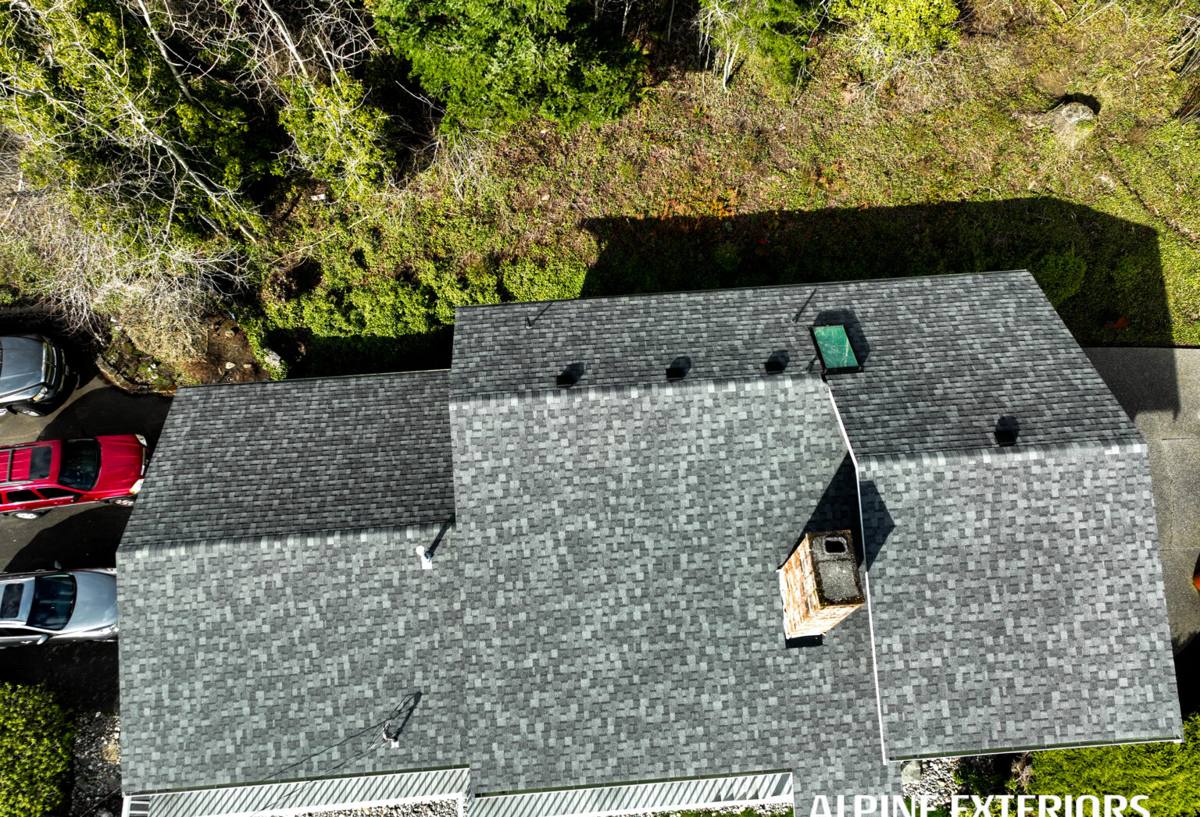
Signs a March Point Roof Needs Replacement, Not Just Repair
What You Can See From the Ground or Attic
Some damage is obvious — missing or curling shingles, granules collecting in gutters, visible sagging along the ridge or between rafters. Other signs are quieter but just as important: daylight showing through the roof deck in the attic, dark staining on rafters or sheathing, or insulation that feels damp even during a dry stretch. In a marine climate, moisture problems tend to show up as staining and soft spots well before a leak becomes obvious inside the living space.
When Repair Still Makes Sense
Not every issue calls for a full replacement. A localized flashing failure, a handful of wind-lifted shingles, or a single damaged vent boot can often be repaired without touching the rest of the roof — assuming the underlying material still has useful life left. Replacement becomes the honest recommendation when the roofing material itself is past its service life, when repairs are becoming frequent, or when the deck and underlayment beneath the surface layer have started to fail from long-term moisture exposure.
Choosing a Roofing System Built for This Exposure
Material choice matters more on March Point than it does in a sheltered inland neighborhood. Some systems handle wind, salt air, and moss pressure well; others need more frequent maintenance to hold up in the same conditions.
| Material | Wind & Wind-Driven Rain | Moss & Moisture Resistance | Typical Lifespan |
|---|---|---|---|
| Architectural asphalt shingle | Good, with proper nailing and edge detail | Moderate — benefits from moss-resistant granules and periodic cleaning | 25–30 years |
| Standing seam metal | Excellent — few seams for wind to catch | Very good — sheds moisture quickly, little surface for moss to grip | 40–60 years |
| 3-tab asphalt shingle | Fair — more prone to wind lift over time | Moderate to low, depending on shade and airflow | 15–20 years |
| Wood shake | Fair — dependent on ongoing maintenance | Low without regular treatment; holds moisture longer | 20–30 years with upkeep |
We install architectural asphalt and metal roofing on most March Point homes because both hold up well against wind-driven rain when detailed correctly, and both give homeowners a reasonable maintenance schedule rather than a demanding one. We generally steer clients away from wood shake in this exposure — not because it's a bad product, but because it holds moisture longer in a shaded, marine environment and needs more frequent upkeep to avoid moss and rot than most homeowners want to take on.
What a Correct Roof Replacement Actually Involves
Tear-Off and Deck Inspection
We remove the old roofing down to the deck rather than layering over it. That's the only way to actually see what's underneath — soft spots, delaminated sheathing, or rot around old penetrations don't show up until the surface material is gone. Any damaged decking gets replaced before anything new goes down; installing a new roof over a compromised deck just resets the clock on the same problem.
Underlayment and Flashing
Given the wind-driven rain this area sees, we pay particular attention to underlayment coverage and flashing at every valley, chimney, skylight, and wall intersection. Self-adhering ice-and-water membrane at eaves, valleys, and other vulnerable points adds a layer of protection against wind-blown moisture finding its way under the surface material — a detail that matters more here than in a sheltered inland lot.
Ventilation
A roof that can't breathe traps moisture in the attic, which shortens the life of the deck and the roofing material above it, and gives mold and moss more to work with. We check intake and exhaust ventilation as part of every replacement and correct it where it's inadequate — this is one of the most common gaps we find on older March Point homes.
Our Process, Start to Finish
- Free on-site inspection and honest assessment of whether repair or replacement is the right call
- Written estimate outlining material options, scope of work, and timeline
- Deck and structure inspection once tear-off begins, with any issues reviewed with you before we proceed
- Full tear-off, deck repair as needed, and new underlayment and flashing installation
- New roofing material installed to manufacturer specifications
- Ventilation check and correction where needed
- Full site cleanup, including magnetic sweep for nails and debris
- Final walkthrough so you can see the finished work before we consider the job done
Ventilation and Moisture: The Part Most Homeowners Never See
A lot of roofing problems in this region don't start with a leak — they start with trapped moisture that never gets the chance to dry out. Homes near the water tend to run more humid attic air than homes further inland, and if intake and exhaust vents aren't balanced, that moisture condenses on the underside of the deck. Over time it softens sheathing, feeds mold, and shortens the life of the shingles or metal above it. Correcting ventilation during a replacement is one of the simplest ways to add years to a new roof's service life, and it costs far less to address during the project than to fix after the fact.
What Affects the Cost of a March Point Roof Replacement
Every roof is different, so we don't quote pricing without seeing the job, but a few factors consistently move the number up or down:
| Factor | Why It Matters |
|---|---|
| Roof size and pitch | More surface area and steeper slopes mean more material and labor time |
| Material choice | Architectural asphalt, metal, and other systems carry different material costs and install times |
| Deck condition | Rotted or soft sheathing found during tear-off adds repair cost not visible from the ground |
| Number of penetrations | Chimneys, skylights, and vents each require additional flashing work |
| Access and layout | Steep sites or limited staging area can add time and equipment cost |
Most full roof replacements on a typical single-family home in this area land in the mid five figures to low six figures depending on size and material, with straightforward asphalt jobs on the lower end and metal roofing or larger, more complex roofs on the higher end. A firm number only comes after an on-site look — anything quoted sight unseen isn't a real estimate.
Why Hire a Crew That Already Works in March Point
A roofing crew that's worked in this specific area knows things a generalist doesn't: how the wind typically hits a roof depending on which direction it faces the water, which flashing details actually hold up to this level of salt exposure over the years, and how aggressive the moss season here really is compared to more sheltered parts of Skagit County. That local experience shows up in the details — the nailing pattern used in higher-wind spots, the underlayment coverage in valleys, the ventilation balance for a marine-humidity attic. It's the difference between a roof that's built to a general code minimum and one that's built for the specific conditions it has to survive here in Anacortes.
After the Replacement: Keeping a New Roof Performing
A correctly installed roof still benefits from basic upkeep in this climate. Keeping gutters and valleys clear of debris prevents water from backing up under the roofing material. Periodic moss treatment or gentle cleaning — never high-pressure washing, which can strip granules and shorten shingle life — keeps growth from taking hold on shaded slopes. And a quick visual check after major windstorms catches lifted material early, before it turns into a leak. We're happy to walk any homeowner through a simple maintenance schedule after installation.
If your March Point roof is showing its age, or you just want an honest opinion on whether repair or replacement makes sense, we're glad to take a look. Use the form below to request a free, no-pressure estimate.