 Anacortes Siding
 Why Sedro-Woolley Roofs Wear Differently
Sedro-Woolley sits inland from the saltwater of Fidalgo Bay but still gets the full weather package that defines Skagit County roofing: long stretches of low-angle rain, heavy tree cover on many lots, and a moss season that can run eight months or more. A roof here doesn't fail the same way a roof in a dry climate fails. It fails from the top down and the edges in, through slow, patient moisture damage that homeowners often don't see until it shows up as a stain on a ceiling.
Salt Air and Fastener Corrosion
Homes closer to the water carry salt in the air on windy days, and that salt migrates further inland than most people expect. Salt-laden moisture accelerates corrosion on exposed metal — nail heads, flashing seams, gutter fasteners — long before the shingles themselves wear out. A roof installed with the wrong fastener grade or unsealed flashing laps will show rust streaks and leak points at those metal connections years ahead of schedule.
Moss, Shade, and Slow-Drying Roofs
Sedro-Woolley's tree canopy and river valley humidity mean a lot of roofs stay damp longer between rain events than roofs in more open, sun-exposed parts of Skagit County. Moss and algae take hold fastest on north-facing slopes and shaded valleys where a roof never gets a real chance to dry out. Left alone, moss lifts shingle edges, holds water against the roof deck, and turns a cosmetic problem into a structural one.
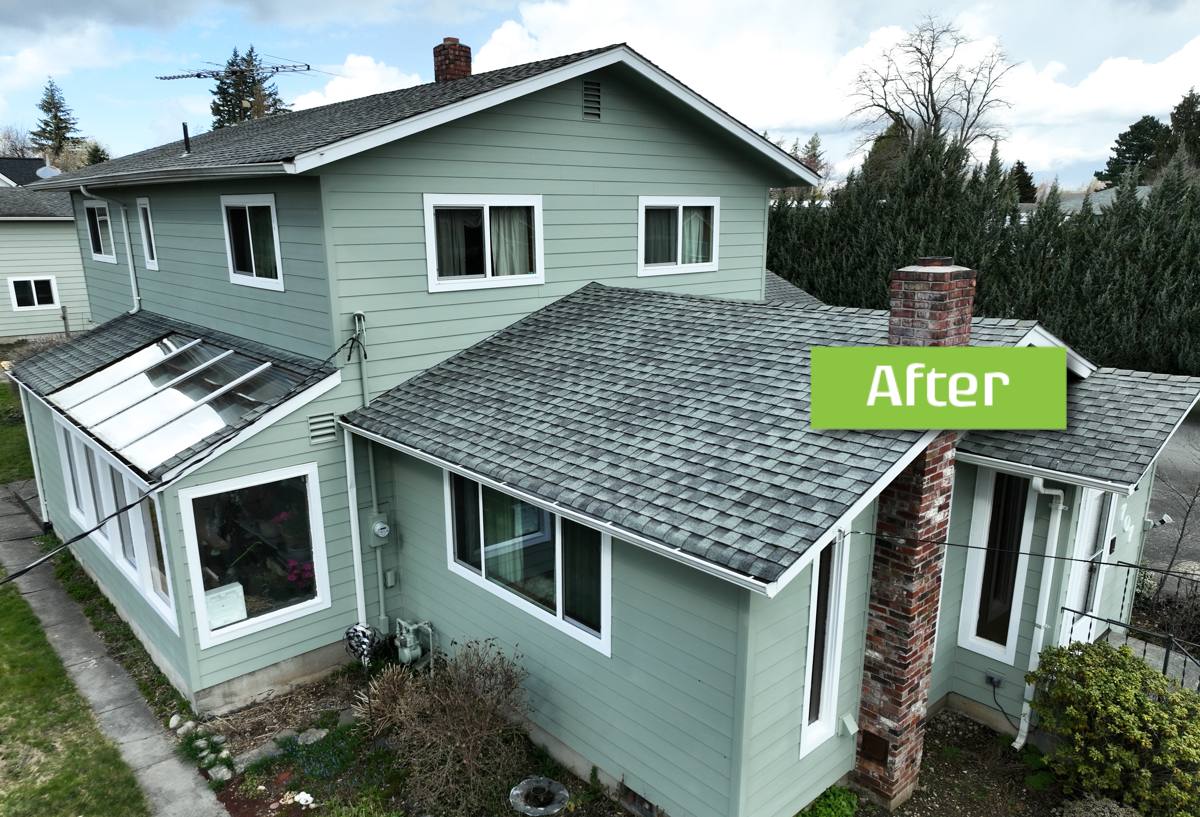
Signs a Sedro-Woolley Roof Needs Replacement, Not Another Repair
Not every roof problem calls for a full tear-off. But there's a point where patching becomes a waste of money, and it's worth knowing where that line is before you spend on repairs that won't hold.
- Granules collecting in gutters and at downspout outlets, especially after a hard rain
- Shingles that are cupping, curling at the edges, or cracking when you look closely from the ground
- Moss or dark algae streaking that keeps coming back within a season or two of cleaning
- Soft spots or noticeable sag when walked on, which points to deck damage underneath
- Daylight visible through the roof deck from inside the attic
- Flashing around chimneys, skylights, or valleys that's rusted, lifted, or missing sealant
- Interior water stains on ceilings or in the attic near exterior walls
- A roof at or past 20-25 years old for asphalt composition shingles, regardless of appearance
What a Correct Roof Installation Actually Involves
A new roof is more than shingles on plywood. Most of what determines whether a roof lasts 15 years or 30 in this climate happens in layers you never see once the job is done.
Tear-Off and Deck Inspection
A full tear-off to bare decking is the only way to properly inspect the plywood or OSB underneath. Skagit County's rain load means hidden rot around old flashing, valleys, and vent penetrations is common on roofs over 20 years old. Any soft or delaminated decking gets replaced before anything new goes down — covering rotten decking with new roofing just hides the problem for the next owner to find.
Underlayment and Ice-and-Water Barrier
A synthetic underlayment goes down over the full deck as the roof's real waterproof backup, with self-adhering ice-and-water membrane at eaves, valleys, and around every penetration — the spots where wind-driven rain is most likely to work its way underneath the shingles.
Ventilation
Balanced intake and exhaust ventilation keeps the attic close to outdoor temperature and lets moisture escape instead of condensing on the underside of the deck. In a wet climate like this, poor ventilation is one of the fastest ways to rot a roof deck from the inside, no matter how good the shingles on top are.
Flashing Details
Chimneys, skylights, valleys, and wall-to-roof transitions are where the majority of leaks start. Flashing gets replaced, not reused, and installed in the correct layered order with the underlayment and shingles so water is always shed downhill and never trapped behind a seam.
Choosing a Roofing Material for This Climate
There's no single "best" roofing material — the right choice depends on your roof's pitch, shade exposure, budget, and how long you plan to stay in the home. Here's how the common options compare for a Sedro-Woolley property.
| Material | Moss/Algae Resistance | Wind & Rain Performance | Typical Lifespan |
|---|---|---|---|
| Standard 3-tab asphalt shingle | Fair, needs regular cleaning | Good with proper nailing | 15-20 years |
| Architectural (dimensional) asphalt shingle | Better, algae-resistant granule options available | Very good, heavier and more wind-rated | 25-30 years |
| Standing seam metal | Excellent, moss struggles to hold on smooth metal | Excellent, sheds heavy rain fast | 40-50+ years |
| Synthetic/composite shake | Good, doesn't absorb moisture like wood | Very good | 30-40 years |
We generally steer homeowners away from untreated cedar shake in heavily shaded Sedro-Woolley settings — not because cedar can't perform, but because it demands a maintenance schedule most homeowners underestimate, and moisture retention in shaded valleys shortens its real-world lifespan compared to what the material is capable of in a drier location.
Our Roof Installation Process
- On-site inspection and estimate. We walk the roof, check the attic, and give you a written scope and price — no guessing from the ground or from a satellite photo.
- Material selection. We go over the options in the table above against your budget, roof pitch, and how much shade the roof gets.
- Scheduling around the weather. We plan installs for realistic dry windows and stage materials so a partially opened roof is never left exposed overnight.
- Tear-off and deck repair. Old roofing comes off down to the deck, damaged sheathing is replaced, and the deck is cleaned before anything new is installed.
- Underlayment, flashing, and ventilation installed. This is the layer that does the real waterproofing work, done before a single shingle goes down.
- Shingle or panel installation. Installed to manufacturer spec for nailing pattern, exposure, and fastener type — the details that determine wind rating and warranty validity.
- Cleanup and final walkthrough. Magnetic sweep for stray nails, gutter and yard cleanup, and a walkthrough so you know exactly what was done.
Why Hire a Crew That Already Works in Sedro-Woolley
Roofing crews that mostly work drier inland climates tend to under-detail flashing and ventilation because they can get away with it where it rains less. In Skagit County, those shortcuts show up as leaks within a few wet seasons. A crew that regularly works Sedro-Woolley and the surrounding Anacortes area already knows which roof lines in this region collect moss fastest, how local permitting and inspection works, and how to schedule a tear-off around a realistic dry weather window instead of gambling on the forecast.
Local experience also means we're not learning on your roof. We've seen how these roofs age in this specific climate, which tells us where to spend extra time during installation and where the standard approach is already enough.
Protecting Your New Roof After Installation
A correctly installed roof still benefits from basic upkeep in a climate like this. Simple habits go a long way toward hitting the full lifespan of your material:
- Keep gutters clear so water isn't backing up under the roof edge during heavy rain
- Trim back overhanging branches to cut down on shade, debris, and moss-friendly conditions
- Have moss or algae growth treated early, before it lifts shingle edges
- Schedule a visual roof check every year or two, especially after a hard windstorm
What Affects the Cost of a New Roof
Every roof is priced individually, but the same handful of factors drive most of the variation from one Sedro-Woolley home to the next: total roof square footage and pitch, how many layers of old roofing need to be torn off, how much decking repair is needed once we're down to bare wood, the material you choose, and how much access the roof allows for equipment and material staging. A steep, multi-layer tear-off with rotted decking will always cost more than a straightforward single-layer replacement on an easy-access roof, regardless of material.
The only way to get a real number is to have someone look at the actual roof — quotes based on square footage alone, without an inspection, tend to miss the deck condition and flashing work that end up driving the final price.
If your roof is showing its age or you just want an honest read on where it stands, we're happy to come take a look. The estimate is free, there's no pressure, and you'll get a straight answer about whether you need a new roof now or can reasonably wait — just fill out the form below to get started.