 Anacortes Siding
 Storm Damage Roof Repair Built for Sedro-Woolley's Climate
Sedro-Woolley sits inland from Anacortes in the Skagit River valley, but the weather that moves through here isn't much gentler than what hits the coast. Winter storms come off the Pacific and push straight up the valley, marine air off Puget Sound and the Salish Sea carries salt further inland than most homeowners realize, and long stretches of damp, shaded weather keep moss active on roofs nearly year-round. A roof out here earns every bit of the maintenance it gets, and when a storm actually damages one, the repair needs to account for all of that, not just patch the visible hole.
Marine Air and Driving Rain
Wind-driven rain doesn't behave like a normal downpour. Instead of running straight off the roof, it gets pushed sideways and upward under shingle edges, around vent boots, and behind flashing that would otherwise shed water just fine. Salt-tinged marine air adds a slower, quieter problem on top of that: it speeds up corrosion on exposed fasteners, metal flashing, and gutter hardware, which is part of why a storm repair that only replaces shingles and ignores the metal underneath tends to fail again within a few seasons.
A Long Moss Season
Skagit County's mild, wet winters and shaded lots are close to ideal growing conditions for moss, and moss holds moisture directly against the roofing material for months at a time. A roof that's already carrying a moss load going into a windstorm is more vulnerable — trapped moisture softens the mat underneath shingles and makes edges easier to lift and tear loose.
Wind Funneling Through the Skagit Valley
Valley terrain can funnel and intensify gusts during a storm system, and that stress concentrates at roof edges, ridges, and any spot where a shingle or panel has already started to lift. That's usually where we find the worst damage after a storm — not spread evenly across the roof, but concentrated at the points wind pressure had the most leverage.
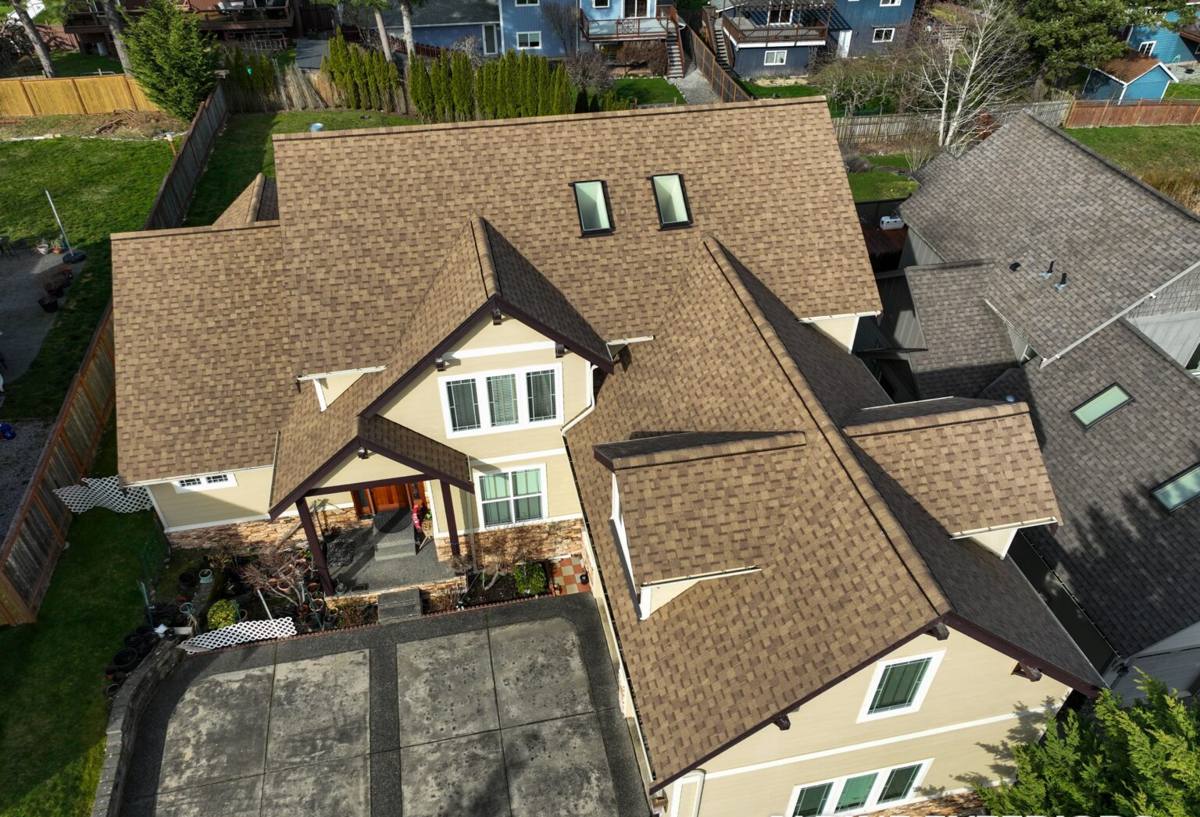
What Storm Damage Actually Looks Like on a Local Roof
Storm damage isn't always a dramatic hole in the roof. More often it's subtle enough that a homeowner doesn't notice until a leak shows up weeks later, once heavier rain finally finds the gap. Knowing what to look for after a windstorm or heavy rain event can save you from a much bigger repair down the line.
- Shingles that are missing, curled, cracked, or visibly lifted at the edges
- Granules collecting in gutters or at downspout outlets after a storm
- Bent, loose, or torn flashing around chimneys, vents, and roof valleys
- Soft or spongy spots when the roof is walked, which point to saturated decking
- Water stains or discoloration on ceilings or in the attic following a storm
- Moss mats that have shifted or lifted, exposing bare roofing underneath
- Cracked or displaced ridge caps along the roof's peak
- Dents or punctures from wind-blown debris or falling branches
How We Assess Storm Damage
A rushed inspection is how storm repairs end up incomplete. We work through the same sequence on every job so nothing gets missed, whether the damage is obvious from the driveway or hidden under a layer of moss.
- Ground-level and roof-surface inspection, checking every plane, edge, and penetration, not just the area the homeowner noticed damage on
- Attic and interior check for water intrusion, staining, or damp insulation that points to a leak the roof surface alone doesn't show
- Close inspection of flashing, vent boots, and valleys, since these fail more often than the field of the roof itself in wind and rain events
- Photo documentation of the damage, useful both for our own scoping and for an insurance claim if you decide to file one
- A written scope of work with a clear repair-versus-replacement recommendation and the reasoning behind it, before any work starts
Repair or Replace? Weighing the Factors
Not every storm-damaged roof needs to come off. But a repair that's patched onto an already-failing roof usually costs more in the long run than doing the job right the first time. Here's how we walk homeowners through that decision.
| Factor | Leans Toward Repair | Leans Toward Replacement |
|---|---|---|
| Roof age | Roof is well within its expected service life | Roof is at or past the end of its typical lifespan |
| Extent of damage | Damage is isolated to a section, slope, or single penetration | Damage is spread across multiple planes or the whole roof |
| Repair history | This is the first significant repair on the roof | The roof has been patched repeatedly over the years |
| Decking condition | Decking underneath is sound and dry | Decking is soft, rotted, or delaminated |
| Budget and timeline | A targeted repair fits the situation and the wallet | Replacement is a better long-term value given the roof's condition |
Most storm calls we get in Sedro-Woolley end up being repairs, not full replacements. But we'd rather tell you honestly if a repair is just delaying a bigger problem than sell you a patch we know won't hold.
What a Correct Storm Repair Involves
Flashing and Underlayment First
The shingles or panels you can see aren't usually where a storm repair starts. Flashing at valleys, chimneys, and vent penetrations, along with the underlayment beneath the roofing surface, is what actually keeps wind-driven rain out. If we replace visible shingles without addressing damaged or corroded flashing underneath, the repair looks fine and fails the next time it storms.
Matching Existing Materials
A storm repair should blend into the existing roof, both in appearance and in how the materials perform together. Mismatched shingle profiles, colors, or metal types can create their own moisture problems at the seams where old and new materials meet, on top of just looking patched.
Sealing Against Wind-Driven Rain
Because our storms push rain sideways and upward as often as straight down, repairs here need attention to details that matter less in calmer climates — proper fastener placement, correctly lapped underlayment, and flashing that's sealed rather than just nailed down. It's the difference between a repair that holds through the next windstorm and one that needs redoing by spring.
Insurance Claims and Storm Repairs
Most homeowner policies cover sudden, accidental damage from wind, falling debris, or storm events, but they generally don't cover damage from gradual wear, neglect, or moss that's been left untreated for years. If you think a storm caused real damage, document what you can safely see, note the date of the storm, and get a written inspection and repair estimate before deciding whether filing a claim makes sense for your situation.
Be cautious of anyone going door-to-door after a storm offering to handle your insurance claim for you or pushing you to sign paperwork on the spot. A legitimate estimate should explain what's actually damaged and why, in writing, with no pressure to decide immediately.
Moss, Debris, and Ongoing Roof Care After a Storm
A storm repair is a good moment to also address the conditions that made the damage worse in the first place. In Skagit County, that almost always comes back to moss and moisture management.
- Clear gutters and downspouts of debris so storm runoff has somewhere to go
- Treat or remove moss buildup rather than letting it hold moisture against the roof through another winter
- Trim back tree limbs that overhang the roof, which drop debris and keep shaded areas damp longer
- Check attic ventilation, since poor airflow traps moisture and accelerates decking damage from the inside out
- Schedule a roof check after major storm events, even when there's no visible leak yet
Why a Crew That Already Works in Sedro-Woolley Matters
A roofer who works Skagit County regularly already knows what a Sedro-Woolley roof is up against — the combination of valley wind exposure, marine-influenced moisture, and a moss season that barely lets up. That local familiarity shows up in practical ways: knowing which flashing details tend to fail first in this area, recognizing storm damage patterns before they turn into leaks, and being able to respond quickly after a storm event instead of scheduling you weeks out. It also means accountability. A crew that plans to keep working in this community has every reason to do the repair right the first time, not just get the appearance fixed and move on to the next town.
If a recent storm has you wondering whether your roof needs attention, we're glad to take a look and give you a straight answer, whether that's a small repair, a bigger fix, or just confirmation that your roof came through fine. Reach out for a free, no-pressure estimate using the form below.