 Anacortes Siding
 Decks Built for Ship Harbor, Not a Generic Backyard
Ship Harbor sits right where Fidalgo Island meets the water, and that location cuts both ways. It's part of what makes this stretch of Anacortes such a good place to build an outdoor living space — but it's also why decks here take a beating that inland decks never see. Salt-laden air off the water, driving rain funneled in off Rosario Strait, and a damp shoulder season that grows moss on anything that sits still too long all shorten the life of an outdoor structure if it isn't built and maintained with that reality in mind.
We build decks specifically for Skagit County's marine climate, and Ship Harbor is one of the neighborhoods where we see the clearest evidence of what happens when a deck is built to a generic spec instead of a coastal one. This page is about what a Ship Harbor deck actually needs — not a general deck-building overview.
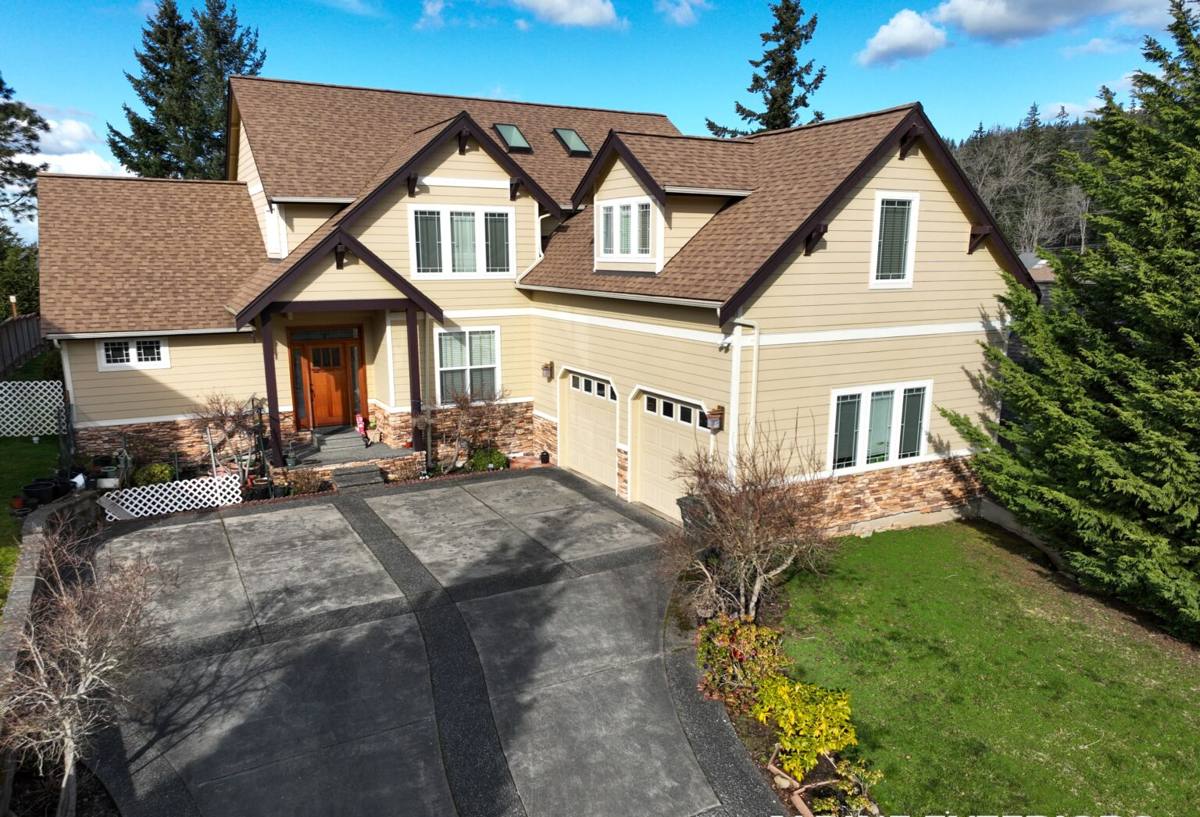
What Salt Air, Rain, and Moss Actually Do to a Deck
Homeowners often assume a deck fails because the wood "just wears out." In practice, most deck failures we see in this area come down to three specific mechanisms, and understanding them changes what you should ask for when you hire someone to build one.
Salt Air and Corrosion
Airborne salt accelerates corrosion on any exposed metal — fasteners, joist hangers, post bases, and railing hardware. Standard hot-dip galvanized coatings can hold up fine inland but degrade faster this close to the water, especially where two dissimilar metals touch or where a fastener coating gets scratched during installation. Once corrosion starts on a structural fastener, it's happening inside the wood where you can't see it until there's a problem.
Driving Rain and Trapped Moisture
Rain that comes in sideways off the water finds every gap in flashing, every un-sealed end cut, and every spot where decking boards are laid too tight to drain. The issue usually isn't the total rainfall — it's how much of it gets driven horizontally into ledger boards, railing posts, and stair stringers, and how long it stays trapped against wood or masonry before it can dry out.
Moss and Surface Buildup
Anacortes doesn't get long, hard freezes, but it does get long stretches of damp, shaded, low-sun weather — exactly what moss and algae need. On a deck, moss buildup isn't just cosmetic. It holds moisture against the board surface, makes the deck slick and unsafe, and on wood decking it can work into checks and cracks and accelerate rot from the top down.
Choosing Materials That Actually Hold Up in This Climate
There's no single "best" decking material — there's a best material for your budget, your maintenance appetite, and how exposed your particular deck will be to wind-driven rain and salt air. Here's how the common options actually compare for a Ship Harbor property.
| Material | How it handles salt air & rain | Maintenance | Typical lifespan here |
|---|---|---|---|
| Pressure-treated fir/hem-fir | Needs consistent sealing; end cuts and fastener holes are vulnerable points | Re-seal every 1-2 years | 10-15 years with upkeep |
| Cedar | Naturally rot-resistant, but still absorbs moisture without regular sealing | Sealing/staining every 2-3 years | 15-20 years with upkeep |
| Composite decking | Doesn't absorb water into the board itself; performance depends on hidden fastener and framing quality | Periodic washing, no sealing | 25-30+ years (manufacturer-dependent) |
| PVC/capped polymer | Fully sealed surface, best resistance to moisture and salt exposure | Lowest maintenance of the group | 25-30+ years |
We'll walk you through this trade-off honestly rather than pushing whatever has the best margin. A well-built, properly maintained wood deck can serve a Ship Harbor home for years — but it requires an owner who's willing to stay on top of sealing and cleaning. If you want to spend your weekends doing something other than deck maintenance, composite or capped polymer earns its higher upfront cost back in avoided labor over the deck's life.
Fasteners and Hardware Matter More Than the Decking
We get more callbacks from failed hardware than from failed decking boards. For anything within a few blocks of the water, we spec stainless steel or the highest-grade coated fasteners and connectors available for the application — not because it looks better on a proposal, but because the framing underneath the decking is what actually holds the structure together, and it's the part you won't see again once the boards go down.
What a Correctly Built Deck Involves
A deck that's going to last in this environment is decided mostly by decisions made before the first decking board is ever installed. The visible surface gets the attention, but the framing and flashing underneath determine whether the deck is still solid in fifteen years.
- Footings sized and set below frost depth, on undisturbed or properly compacted soil — not resting on fill
- Ledger board flashing that actually sheds water away from the house rim joist, not just a bead of caulk
- Joist hangers and structural connectors rated and coated for the level of moisture and salt exposure the site actually sees
- Proper board spacing so water drains through instead of pooling on the surface
- End-cut sealing on any wood component cut on site, since factory sealant doesn't cover field cuts
- Railing posts through-bolted to framing, not just lag-screwed into a single joist
- Stair stringers sized and supported for the actual rise, not a shortcut spec
Skipping any one of these doesn't usually show up as a problem in year one. It shows up in year five or eight, as soft spots, rust streaks bleeding through decking, or a railing that's developed some give. That delay is exactly why cutting corners on framing is such an easy mistake to make — and such an expensive one to fix later, since it usually means tearing out finished decking to get at the structure underneath.
Our Process for a Ship Harbor Deck Project
- On-site assessment. We look at sun/wind exposure, drainage, existing structure condition (for replacements), and how the deck ties into the house.
- Material and layout discussion. We go over the trade-offs above in the context of your specific site and budget — no pressure toward the highest-margin option.
- Written estimate. Clear scope, materials, and price before any work begins.
- Permitting. Deck projects in Skagit County and the City of Anacortes typically require a permit; we handle that process rather than leaving it to you.
- Demo (if replacing). Old decking and, where needed, old framing removed and hauled off.
- Framing and structural work. Footings, ledger flashing, joists, and hardware — the part that determines the deck's real lifespan.
- Decking, railing, and finish work. Installed to the spacing and fastening standards above.
- Final walkthrough. We go over care and maintenance specific to the material you chose before we consider the job done.
Maintaining a Deck Once It's Built
Even the best-built deck needs some ongoing attention in this climate. What that attention looks like depends heavily on material, but a few things apply across the board.
- Sweep debris off the surface regularly — trapped leaves and needles hold moisture against the boards
- Wash down moss and algae growth before it gets a foothold, rather than after it's established
- Check fastener heads and hardware visually once or twice a year for rust streaking
- Keep gutters and downspouts near the deck clear so runoff isn't dumping directly onto or under it
- Re-seal wood decking on the schedule appropriate to the product — don't wait until it's visibly gray and dry
- Trim back vegetation that's shading the deck and keeping it damp longer than it needs to be
Repair, Resurface, or Full Rebuild?
Not every aging deck needs to be torn out. The right call depends on where the damage actually is.
| Situation | Likely fix |
|---|---|
| Decking is worn/graying but framing is solid | Resurface — replace boards, keep structure |
| Isolated soft spots near a specific post or ledger point | Targeted structural repair |
| Rust bleeding through boards near multiple fasteners | Hardware and fastener replacement, possible partial rebuild |
| Ledger flashing failure or rot at the house connection | Full rebuild — this is a structural safety issue, not cosmetic |
| Widespread soft or spongy decking across the whole surface | Full rebuild |
We'll tell you honestly which category your deck falls into. A lot of aging decks in this area only need the wearing surface replaced, and we're not going to sell you a full rebuild when a resurface will do the job.
Why a Local Anacortes Crew Matters for This Job
Deck building isn't exotic work, but building one that holds up specifically in a marine, salt-exposed climate is a different set of habits than building one in a dry inland town. A crew that works Ship Harbor and the rest of Anacortes regularly already knows which hardware grade holds up here, how far to carry flashing details, and what kind of moss and moisture problems show up on this side of Fidalgo Island versus elsewhere in Skagit County. That's knowledge you accumulate by doing the work here repeatedly, not by reading a spec sheet once.
It also means we're around after the job is done — for the maintenance questions that come up in year two or three, not just for the initial sale.
If you're planning a new deck or dealing with one that's showing its age, we're happy to come take a look and give you a straightforward, no-pressure estimate. Use the form below to get started.