 Anacortes Siding
 West Anacortes Sits Right in the Weather
West Anacortes homes sit closer to the water than most of the city — nearer the currents of Rosario Strait and Guemes Channel, under a canopy of fir and cedar that keeps yards shaded and cool through the summer. That same setting is exactly what makes siding work harder here than it does a few miles inland. Salt-laden air off the water accelerates corrosion on anything metal. Wind-driven rain finds its way into seams and laps that would stay dry on a more sheltered lot. And the tree cover that makes these streets so pleasant to live on also keeps north- and east-facing walls damp and shaded long after the rain stops, which is exactly the recipe moss and algae need.
None of this means West Anacortes is a bad place to own a home — it's one of the reasons people choose to live here. But it does mean the siding on these homes needs to be installed with that environment in mind, not with a generic approach that would work fine somewhere drier.
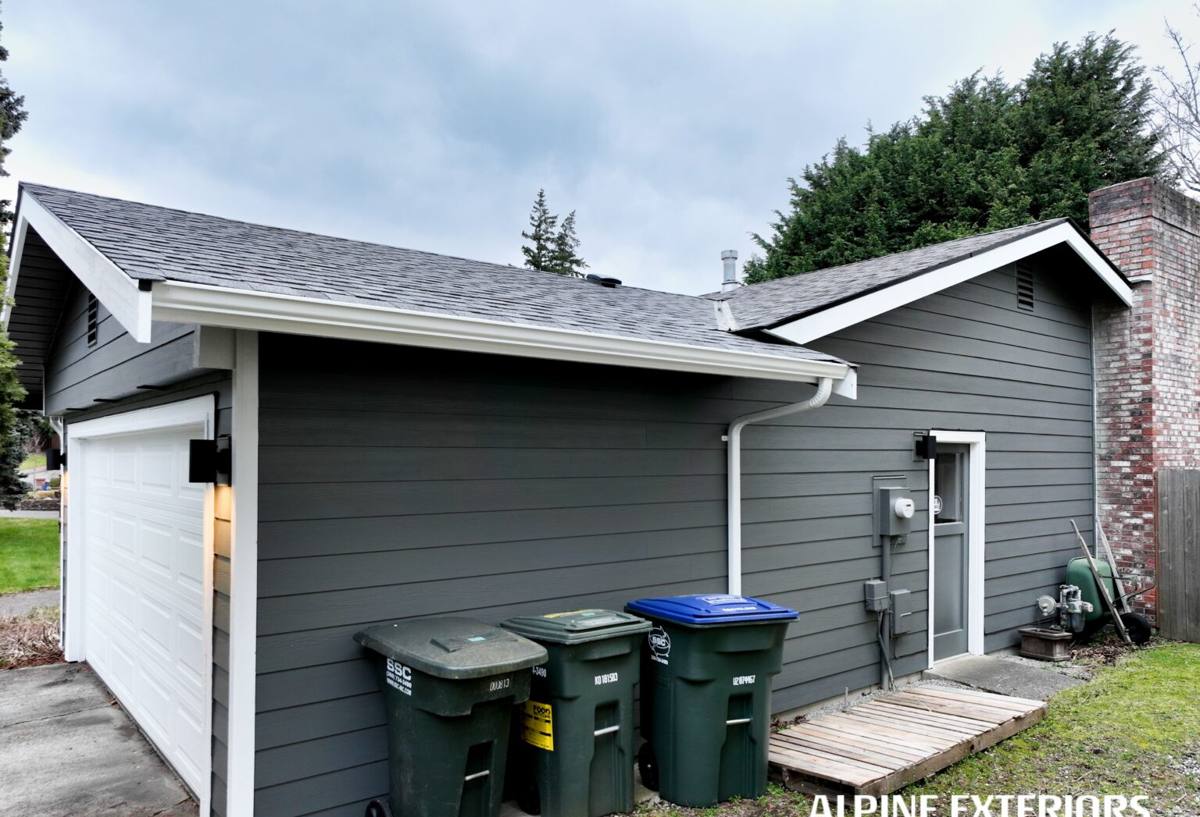
What Correct Installation Requires in This Environment
A siding job can look right from the street and still fail in five years if the details behind the surface weren't done correctly. In a marine, high-rainfall climate like Skagit County's coastline, three details matter more than usual.
A Working Drainage Gap
Any water that gets past the siding surface — and some always does, eventually — needs a path to drain and dry out instead of sitting against the wall sheathing. A rainscreen or drainage gap behind the siding gives that moisture somewhere to go. Skip this detail, or install it poorly, and you're trapping damp air against the house in exactly the climate where damp air lingers longest.
Flashing at Every Penetration
Windows, doors, hose bibs, vents, and deck ledgers are all places where water wants to get behind the siding. Proper flashing — installed in the right sequence with the weather-resistive barrier, not just caulked over the top of it — is what actually stops that. Caulk fails over time; correctly lapped flashing doesn't rely on a bead of sealant to keep water out.
Corrosion-Resistant Fasteners and Hardware
Salt air corrodes standard fasteners faster than homeowners expect, and a rusting nail head or corroded trim screw eventually stains the siding and weakens its hold. Homes closer to the water need fastener and hardware specs that account for that exposure, not the cheapest option that would pass inspection anywhere else.
Why We Install Only James Hardie Fiber Cement
We don't install vinyl, LP SmartSide, or wood siding, and West Anacortes' climate is a big part of why. James Hardie fiber cement is engineered specifically for moisture-heavy, coastal-influenced climates like the Pacific Northwest — Hardie's HZ5 product line is formulated for exactly this kind of weather exposure. It's non-combustible, it doesn't feed moss and rot the way wood fiber does, and its factory-applied ColorPlus finish is baked on and warranted against fading and peeling in a way that field-applied paint isn't.
| Factor | James Hardie HZ5 | Vinyl | Cedar / Wood | LP SmartSide |
|---|---|---|---|---|
| Moisture tolerance | Engineered for wet, coastal climates | Doesn't absorb, but seams and edges can trap water behind it | Absorbs moisture; prone to rot if finish fails | Wood-based; moisture exposure is a known weak point |
| Moss / algae behavior | Can grow on the surface but won't rot the material underneath | Moss grows on surface; material itself doesn't degrade | Moss retains moisture against wood, accelerating decay | Similar risk to wood if surface is compromised |
| Fire resistance | Non-combustible | Melts/deforms under heat | Combustible | Combustible (engineered wood) |
| Finish durability | Factory-baked ColorPlus finish, warranted | Color molded in, but can fade and become brittle | Requires repainting/staining on a recurring cycle | Field-applied or factory finish, shorter track record |
| Long-term maintenance | Occasional wash; no repainting needed with ColorPlus | Low, but cracks and fades over time | Regular painting, staining, and moisture checks | Manufacturer-specified caulking and finish maintenance |
We're upfront that every siding product has trade-offs, and Hardie isn't magic — it still has to be installed correctly to perform the way it's designed to. But between the non-combustible core, the climate-engineered HZ5 formulation, and a factory finish that's actually warranted, it's the product we're willing to stand behind on homes exposed to this kind of weather.
Our Installation Process
- Assessment and tear-off. We remove the existing siding and inspect the sheathing underneath for any moisture damage that's already occurred — this is often the first time hidden problems become visible.
- Sheathing repair and weather barrier. Any compromised sheathing gets replaced before we move forward, and a new weather-resistive barrier goes on correctly lapped, top over bottom, at every seam.
- Drainage gap installation. The rainscreen furring goes on next, giving incidental moisture a path to drain and the wall assembly a chance to dry.
- Flashing at all penetrations. Windows, doors, and any wall penetrations are flashed in the correct sequence before siding goes over them.
- Hardie siding installation. Panels or lap siding go on to Hardie's fastening and clearance specifications, using corrosion-resistant fasteners appropriate for this environment.
- Trim, caulking, and final inspection. We finish trim details, seal where sealant is actually appropriate (not as a substitute for flashing), and walk the job before calling it complete.
Moss, Algae, and the Long Wet Season
Anyone who's lived in West Anacortes through a Skagit County winter knows the wet season runs long, and shaded, tree-covered lots stay damp well after a storm passes. Moss and algae are a fact of life here on almost any exterior surface — siding, roofs, decking, fences. Fiber cement doesn't stop moss from landing on it, but unlike wood, moss sitting on Hardie siding isn't feeding on the material or causing it to rot underneath. Combined with a properly installed drainage gap that lets the wall assembly dry between rain events, a correctly installed Hardie exterior handles that long wet season with far less risk than an exterior that traps moisture against organic material.
That said, homeowners still play a role. Gutters that overflow onto siding, vegetation pressed right up against a wall, and shaded corners with no airflow will all accelerate moss and algae buildup regardless of what the siding is made of.
What Drives the Cost of a West Anacortes Siding Project
Every home is different, so we don't quote a number without seeing the house, but a few factors consistently move the price up or down.
| Cost Factor | Why It Matters |
|---|---|
| Tear-off vs. new construction | Removing old siding and hauling it away adds labor that new construction doesn't require |
| Hidden moisture or sheathing damage | Damage found once old siding comes off has to be repaired before new siding goes on — this is common on older, water-exposed homes |
| Home size and number of stories | More square footage and taller walls mean more material, more staging, and more labor |
| Trim, gable, and detail complexity | Homes with more architectural detail take more time to flash and finish correctly |
| Product line and finish | Hardie's climate-specific HZ5 line and ColorPlus finish options vary in cost from standard offerings |
| Site access | Tree cover, tight lots, or slope can affect staging and scaffolding needs |
Why It Matters That We Already Work in This Neighborhood
A crew that's worked in West Anacortes before already knows what to expect before the tear-off starts: the moisture patterns on shaded, tree-lined lots, how exposed a given elevation is to wind off the water, and what the City of Anacortes permitting process requires. That familiarity means fewer surprises mid-project and a better read on which details — drainage gap, flashing sequence, fastener spec — need the most attention on a given house. It's a different level of preparation than a crew seeing this kind of coastal exposure for the first time.
A Quick Checklist Before You Hire
- Do they install a documented rainscreen/drainage gap, not just siding directly over the weather barrier?
- Do they flash windows, doors, and penetrations before siding goes on, rather than relying on caulk?
- Do they specify corrosion-resistant fasteners appropriate for a marine-influenced climate?
- Will they inspect and repair sheathing if moisture damage is found during tear-off, and explain that cost before proceeding?
- Do they carry manufacturer certification for the specific siding product they're installing?
- Can they explain, in plain terms, why they chose the product line they're recommending for your home?
Maintaining Hardie Siding in West Anacortes
- Rinse siding periodically to remove surface moss, algae, and salt residue — a garden hose and soft brush is enough; avoid high-pressure washing directly into seams.
- Keep gutters and downspouts clear so overflow doesn't run down the wall face.
- Trim back vegetation and tree limbs so shaded walls get some airflow and sun exposure.
- Check caulking at trim joints and penetrations annually, since sealant is a maintenance item even when the siding itself isn't.
- Watch for soft spots or discoloration near ground level, where splashback and standing water are most common.
- Have the exterior looked at every few years by someone who can catch small issues before they become sheathing repairs.
If you're planning a siding project in West Anacortes, we're happy to come take a look at your home, walk you through what we'd recommend for your specific exposure, and put together a free, no-pressure estimate.