 Anacortes Siding
 Why Fidalgo Island Siding Takes a Different Kind of Beating
Fidalgo Island sits right where Skagit County meets the Salish Sea, and that location comes with a specific set of problems for exterior siding. Salt-laden air off the water works on fasteners and metal trim year-round. Wind-driven rain off Rosario Strait and the surrounding channels doesn't just fall straight down — it gets pushed sideways into wall assemblies, seams, and butt joints that were never designed to handle water moving in that direction. Add in the tree cover and shade pockets common on parts of the island, and you get a long moss and algae season that keeps siding damp far longer than siding in a drier, more open part of the county.
None of this means siding on Fidalgo Island is doomed. It means siding here needs to be installed and repaired with those conditions in mind, not treated the same way you'd treat a wall on the dry side of the Cascades. A repair that would hold up fine in a low-moisture climate can fail fast here if it doesn't account for salt exposure, wind-driven rain, and sustained moisture.
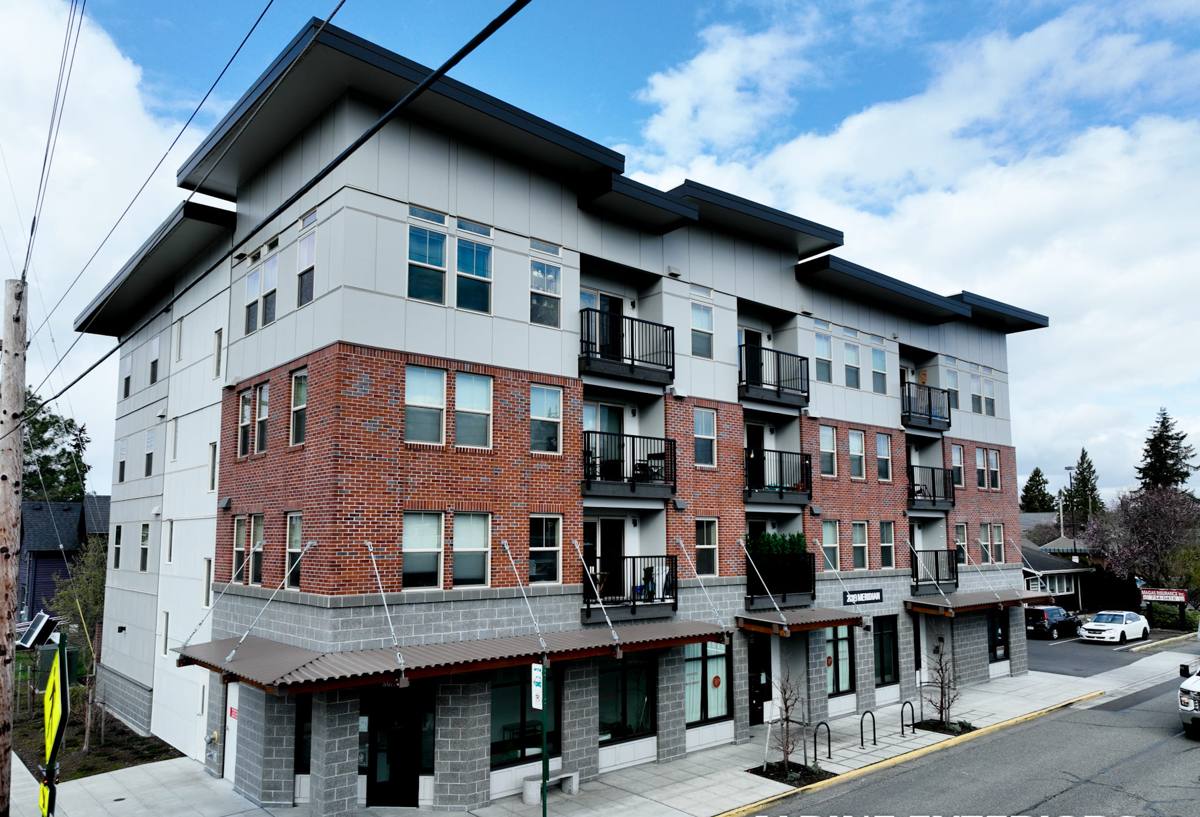
Signs Your Siding Needs Repair, Not Just a Repaint
A lot of homeowners reach for paint when siding starts looking rough, and sometimes that's the right call. Other times, paint is covering up a problem that's going to come back within a season or two. Watch for these signs that point to an actual repair need rather than a cosmetic fix:
- Soft or spongy spots when you press on the siding, especially near the bottom courses or around windows and doors
- Persistent dark streaking or moss growth that returns within weeks of cleaning, particularly on north-facing or shaded walls
- Visible cracking, buckling, or separation at seams and butt joints
- Paint that's peeling or bubbling in a localized area rather than uniformly across the wall
- Rust staining running down from nail heads or trim fasteners
- Gaps opening up around window and door trim where caulk has failed
- A musty smell near an exterior wall, which often means moisture has already gotten past the siding
Any one of these can be minor. Several showing up in the same area, especially on a wall that takes direct weather off the water, usually means water has been getting behind the cladding for a while.
What a Correct Siding Repair Actually Involves
Diagnosis before demolition
The first step isn't pulling boards off the wall — it's figuring out why the damage happened in the first place. On Fidalgo Island homes, that usually means checking a few things in order: where the water is actually entering, whether the house wrap or building paper behind the siding is still intact, whether flashing above windows, doors, and trim boards is doing its job, and how far moisture has traveled once it got in. Replacing damaged boards without fixing the entry point just buys a few years before the same repair is needed again.
Matching material and reveal
A repair that looks patched is almost as frustrating as one that fails. Matching the existing reveal (the exposed width of each course), the profile, and the finish matters for how the repair reads from the street. This is a lot more consistent when the original siding is a manufactured product like James Hardie fiber cement, where the plank dimensions and factory finish are standardized, versus older cedar or site-finished materials where boards have weathered unevenly over the years and an exact match is harder to find.
Fasteners and flashing, not just boards
Because of the salt air here, we pay close attention to fastener corrosion during any repair, not just the visible siding damage. Corroded nails or screws get replaced with fasteners rated for coastal exposure, and any flashing that's failed gets redone rather than caulked over. Caulk is a maintenance item, not a repair strategy — it buys time, it doesn't fix a flashing problem.
Repairing Different Siding Types: What's Possible, What's Not
What a repair can realistically accomplish depends heavily on what's already on the wall. We install James Hardie fiber cement exclusively for new work and full re-sides, but repair calls bring us to homes with all kinds of existing siding, and it's worth being straight about what each material allows.
| Siding Type | Repair Realities in a Marine Climate | Our Take |
|---|---|---|
| Vinyl | Panels lock together in a system; a cracked or warped panel usually means finding a discontinued or faded-mismatched replacement, since color fades unevenly over time | Repairable short-term, but exact color matches get harder every year the siding ages |
| LP SmartSide (engineered wood) | Edge and butt-joint swelling from moisture intrusion is the most common issue we see; once the wood substrate has swollen, the board itself is compromised and needs full replacement, not a patch | Repairs are board-replacement, not touch-up, once moisture has gotten in |
| Cedar (untreated or site-finished) | Individual boards can be replaced and blended with re-staining, but matching decades of natural weathering is difficult and ongoing maintenance is required indefinitely | Repairable, but the maintenance cycle doesn't stop |
| Primed spruce / wood composite | Prone to moisture absorption at cut ends and fastener points; repairs need careful end-sealing or the same failure repeats nearby | Short-term fix unless end grain and fasteners are addressed |
| James Hardie fiber cement | Non-combustible, dimensionally stable, and manufactured to a consistent profile — damaged boards can be cut out and replaced with a close match without redoing the whole wall | The most repair-friendly material we work with, and what we recommend for any full re-side |
This isn't a knock on every other product — cedar has real appeal, and vinyl is inexpensive for a reason. It's why, when a repair call turns into "this wall needs more than a patch," we're upfront that our own installation work only uses Hardie going forward, and we'll explain why rather than just handing over an invoice.
Our Repair Process
- On-site inspection of the damaged area and a walk of the full elevation it's on, since problems rarely stay isolated to one board
- Moisture check behind the affected siding where access allows, to see whether water has reached the sheathing or framing
- Diagnosis of the actual cause — flashing, caulk failure, fastener corrosion, grade or drainage issue, or a combination
- A written explanation of what's found and what it will take to fix it properly, including whether a small patch is genuinely sufficient
- Repair work: removing only the affected material, correcting the underlying cause, and installing matched replacement siding and trim
- A final check of caulking, flashing laps, and fastener condition in the repaired area before we call it done
We don't pad repair scope to make a job bigger than it is, and we don't quietly caulk over a flashing problem to make it look fixed cheaper. If a small repair is genuinely all a section needs, that's what we do.
Why a Local Anacortes Crew Matters Here
Siding repair on Fidalgo Island benefits from knowing the island's microclimates, not just general Pacific Northwest weather patterns. Homes closer to the water take more direct salt exposure and wind-driven rain; homes tucked under tree cover further inland deal with more shade, slower drying, and heavier moss growth. A crew that works this area regularly recognizes which failure pattern is which on sight, instead of treating every job the same way a generic regional contractor might.
Being local also means we're not disappearing after the invoice is paid. If a repair doesn't hold up the way it should, or a homeowner has a follow-up question the next wet season, a Skagit County-based crew is a phone call away, not a drive from out of the area.
Repair vs. Replacement: When to Draw the Line
Repair makes sense when damage is localized, the underlying wall assembly is sound, and the existing siding material can still be matched reasonably well. Replacement becomes the more honest recommendation when damage has spread across multiple areas of a wall, when the siding material itself has an inherent moisture problem that repair won't solve, or when a home is on its second or third round of the same repair in the same spot.
We'd rather tell a homeowner honestly that a wall is past the point of patching than keep collecting repair invoices on a system that's failing. That's also part of why full re-sides on Fidalgo Island homes go on with James Hardie fiber cement — it's non-combustible, holds up to sustained moisture exposure far better than wood-based products, and comes with a factory ColorPlus finish and a strong transferable warranty, so the next round of "does this need repair" conversations happens a lot less often.
Maintenance Checklist to Extend the Life of a Repair
Whatever siding is on your Fidalgo Island home right now, a few habits go a long way toward making any repair last:
- Rinse salt residue and moss off siding at least once a year, more often on shaded or water-facing walls
- Trim back vegetation and tree limbs that keep a wall section shaded and slow to dry
- Check caulk joints around windows, doors, and trim every year and recaulk before gaps open up
- Keep gutters clear so overflow isn't running down and pooling behind siding at the corners
- Walk the exterior after major windstorms and check for loose or lifted boards before the next rain
- Address small paint failures or hairline cracks promptly rather than waiting a season or two
What Repair Costs Depend On
Repair pricing on Fidalgo Island varies more than people expect, mainly because the cause of the damage — not just its visible size — drives the scope of work. A few factors that move the number:
| Factor | Why It Matters |
|---|---|
| Extent of hidden moisture damage | Sheathing or framing repair behind the siding adds real cost beyond the visible boards |
| Material match availability | Discontinued vinyl colors or heavily weathered cedar can turn a simple swap into a larger blending job |
| Flashing and fastener condition | Corroded fasteners or failed flashing found during the repair need to be addressed, not left in place |
| Wall accessibility | Second-story sections, tight setbacks, or landscaping can add labor time |
| Number of affected elevations | Damage confined to one small area costs less than the same issue showing up on multiple walls |
We'll walk through these factors on-site rather than quoting a number sight unseen, since guessing at scope before we've actually looked behind the siding does homeowners a disservice either way.
If you're seeing signs of siding trouble on a Fidalgo Island home, a free, no-pressure estimate is the easiest way to find out whether you're looking at a straightforward repair or something bigger. Fill out the form below and we'll take a look.