 Anacortes Siding
 Ship Harbor's Siding Takes a Different Kind of Beating
Ship Harbor sits close to open water on Fidalgo Island, near the ferry terminal, which means homes here get a version of Anacortes weather that inland Skagit County neighborhoods don't see as intensely. Salt-laden air off the water accelerates corrosion on fasteners, trim, and any exposed metal. Wind-driven rain comes at siding sideways instead of straight down, which pushes water into laps, seams, and corner boards that were never designed to shed water from that angle. And the long gray stretch from fall through spring keeps north- and west-facing walls damp enough, long enough, for moss and algae to take hold and stay there.
None of that is unique to one house. It's the baseline condition for anything built close to the water in this part of Skagit County. Siding repair here isn't just about matching a color or replacing a cracked board — it's about understanding why that board failed in the first place and making sure the fix doesn't fail the same way in three years.
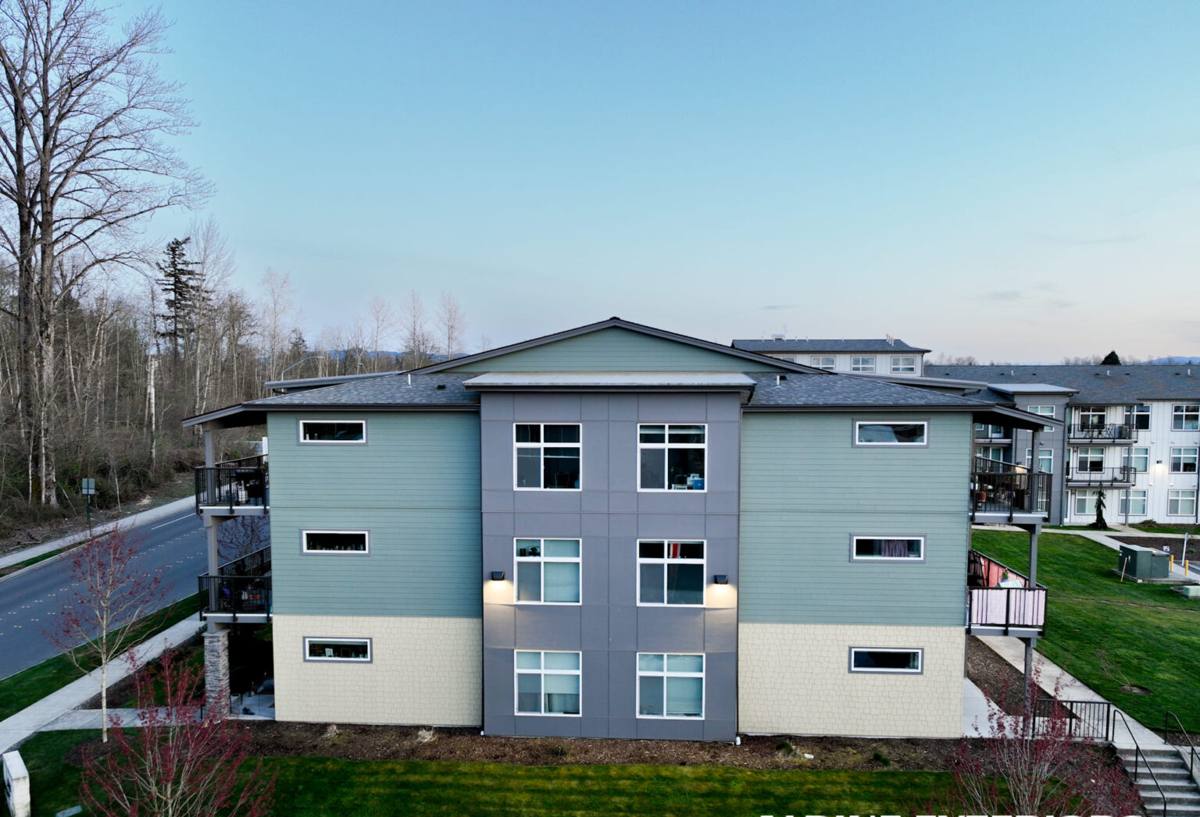
What "Repair" Actually Means on a Ship Harbor Home
Homeowners usually call us about something visible: a stained patch, a soft spot near a downspout, boards that have started to bow or separate at the seams. But the visible damage is rarely the whole story. Two questions matter more than the cosmetic one:
- Is water actually getting behind the siding, or is this surface weathering only?
- If water is getting in, where is it entering — and is the siding the actual problem, or just where the damage happens to show up?
A lot of siding failure near the water starts somewhere else: a flashing detail above a window, a gap where trim meets siding, a downspout dumping water against a wall instead of away from it. Replacing the damaged siding without fixing the entry point just buys a few years before the same spot fails again. A correct repair traces the water path first, then addresses both the entry point and the damaged material.
Signs Worth a Closer Look
Some symptoms are more urgent than others. Dark staining that wipes away is usually just algae or moss and can often wait for routine cleaning. Staining that comes back quickly, soft or spongy boards, visible gaps at seams, or paint that's bubbling and peeling in one concentrated area are signs that moisture has already gotten past the surface and needs attention before it spreads.
How Different Siding Materials Hold Up Near the Water
Not all siding fails the same way, and that matters when we're deciding whether a repair will actually hold. Here's what we typically see across the material types still common on Ship Harbor and greater Anacortes homes:
| Material | Common Failure Mode Near Water | Repair Difficulty |
|---|---|---|
| Vinyl | Cracks and warps from temperature swings; wind can pull panels loose at the coast | Panels are simple to swap, but exact color/profile matches get harder as vinyl fades and discontinues over time |
| Cedar / untreated wood | Absorbs moisture directly, swells, cups, and rots from the back side where you can't see it starting | Often requires removing more material than expected once rot is traced back to its source |
| Primed spruce / OSB-based products | Edge and seam swelling once the factory seal is compromised; moisture wicks along the panel | Damaged sections usually need full-panel replacement, not spot patching |
| James Hardie fiber cement | Failures are almost always installation-related (bad caulking, missing flashing, poor clearance) rather than the material itself breaking down | Durable board, straightforward to repair when the underlying detail is corrected |
This is exactly why we standardized on James Hardie for the homes we work on. It's not that other materials can't be repaired — it's that fiber cement gives us a material that doesn't absorb water and swell the way wood-based products do, which means repairs actually solve the problem instead of buying time.
What a Correct Repair Involves
A repair that's built to last through another Anacortes winter follows the same basic sequence every time, regardless of the material involved:
1. Find the Actual Water Path
We look at the damaged area and everything above and around it — flashing, trim, window and door details, caulk joints, and drainage. Siding damage is frequently a downstream symptom of a detail problem somewhere else on the wall.
2. Confirm What's Underneath
Once siding is opened up, we check the water-resistive barrier and sheathing behind it. If moisture has reached the sheathing or framing, that has to be addressed before any new siding goes back on — covering it up doesn't stop the rot, it just hides it.
3. Match and Replace
Damaged sections are cut back to sound material and replaced with matching profile and, where possible, matching finish. On Hardie siding with a factory ColorPlus finish, this is far more consistent than trying to hand-match a field-painted repair.
4. Rebuild the Water Management
Flashing, house wrap laps, and caulk joints get corrected as part of the repair — not left as-is. This is the step that actually determines whether the repair holds.
5. Final Check
We walk the repaired area and the surrounding wall to make sure drainage, clearances, and fastening are right before calling the job done.
Repair or Replace? How We Make That Call Honestly
Not every damaged area needs a full re-side, and we won't tell you it does. But there's a point where patch-repairing a wall costs more over time than replacing the affected section or elevation outright. A few factors we weigh with you:
| Factor | Leans Toward Repair | Leans Toward Replacement |
|---|---|---|
| Extent of damage | Isolated to one area or elevation | Recurring in multiple spots, or spreading |
| Underlying material condition | Sound outside the damaged zone | Widespread swelling, soft spots, or delamination |
| Age of existing siding | Newer installation, isolated defect | Nearing or past expected service life |
| Match availability | Product and color still available or blends acceptably | Discontinued profile/color makes patching visually obvious |
| Root cause | Easily corrected detail (one flashing, one joint) | Systemic water management issues across the wall |
We'll always give you the repair option first if it genuinely solves the problem. If it doesn't, we'll explain why in plain terms rather than pushing a bigger job than the house needs.
Our Process for Ship Harbor Repairs
- Free on-site assessment — we look at the damage and the surrounding wall, not just the spot you called about
- Honest scope — repair, partial replacement, or full re-side, explained with the reasoning behind it
- Written estimate with materials and labor spelled out, no vague allowances
- Correct water management addressed as part of the work, not treated as optional
- Cleanup and a final walkthrough before we consider the job finished
Why We Recommend James Hardie for This Exposure
We only install James Hardie fiber cement siding, and repair calls near the water are a big part of why. Hardie's HZ product lines are engineered for specific climate conditions, including the wet, marine-influenced weather common along Puget Sound. The material itself doesn't absorb and swell with moisture the way wood-based sidings do, and the factory-applied ColorPlus finish resists the fading and cracking that repeated damp cycles cause on field-painted surfaces. That doesn't mean Hardie siding is immune to problems — as the table above shows, the failures we see are almost always tied to an installation detail, not the board itself. But when we do repair Hardie siding, we're repairing a material built to handle this climate, backed by a strong transferable warranty, rather than fighting the material's own tendency to hold water.
Why Local Experience in Ship Harbor Matters
A siding repair crew that works Anacortes and Skagit County regularly knows what to check first on a Ship Harbor home — where wind-driven rain tends to concentrate, which elevations hold moss longest, and how salt air affects fasteners and trim differently than it would on a house twenty miles inland. That's not a marketing point; it changes where we look for the actual source of a leak and how we detail the repair so it holds up through the next wet season instead of just through the summer.
After the Repair: Keeping It From Coming Back
A good repair reduces future maintenance, but it doesn't eliminate it. A few habits that matter more here than in drier parts of the state:
- Keep gutters and downspouts clear so water is actually leaving the wall, not running down it
- Trim back vegetation and tree cover that keeps a wall shaded and damp longer than it needs to be
- Rinse off moss and algae buildup before it has a chance to hold moisture against the siding
- Have caulk joints and trim checked periodically — they're usually the first thing to fail, well before the siding itself
If you're seeing staining, soft spots, or separated seams on a Ship Harbor home, we're happy to take a look and give you a straight answer about what's actually going on and what it'll take to fix it right. The estimate is free, there's no pressure, and you'll get a clear explanation either way.