 Anacortes Siding
 Why Edison Homes Wear Out Siding Faster Than You'd Expect
Edison sits low, close to the water, and out in the open where weather off the Salish Sea hits buildings directly. That combination — salt-laden air, wind-driven rain, and long stretches of gray, damp weather every fall through spring — is harder on exterior siding than most homeowners realize until they're standing in front of a wall that's failing years before it should. A siding job that would hold up fine on a sheltered inland lot in Mount Vernon or Burlington can start showing problems on an Edison home well ahead of schedule if it wasn't built for these specific conditions.
This page is about one thing: replacing siding on homes in the Edison area, done correctly for the climate they actually sit in, not a generic install. If you're noticing paint failure, soft spots, or moss creeping up your walls, this is the context that matters before you decide what to put back up.
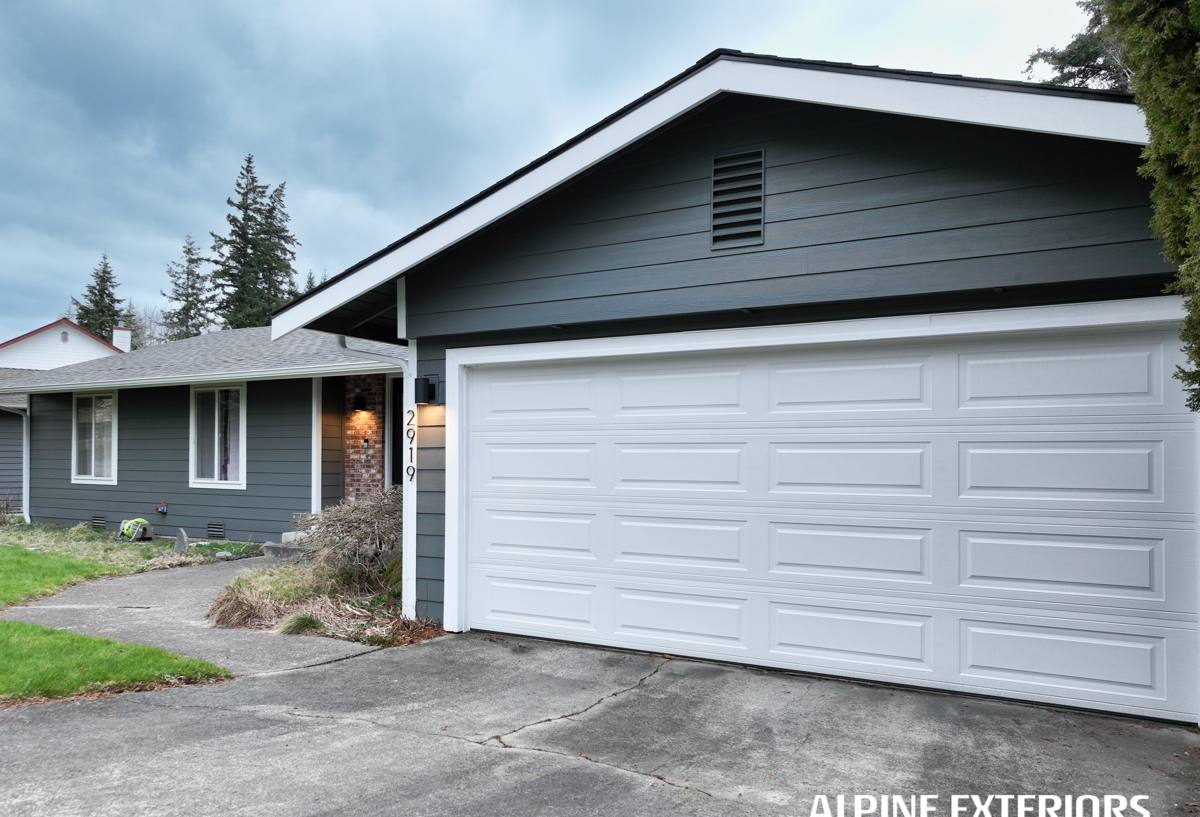
What Salt Air, Driving Rain, and Moss Actually Do to a Wall
Each of these factors attacks siding in a different way, and Edison homes typically deal with all three at once:
- Salt air accelerates corrosion on exposed fasteners, metal trim, and flashing. Once a fastener starts to rust, it can telegraph a stain through paint and eventually lose its grip on the siding it's holding.
- Driving rain off open water doesn't just fall straight down — it gets pushed sideways into seams, laps, and butt joints that were only ever designed to shed water falling vertically. Over time, wind-driven rain finds every gap in flashing or caulk that a calmer climate would never test.
- Moss and algae thrive in the shade and moisture that shows up on north- and west-facing walls for months at a stretch. Moss doesn't just look bad — it holds moisture against the siding surface far longer than open air would, which is exactly the condition that rots wood-based products and breaks down paint film.
None of these are exotic problems. They're the same slow, cumulative wear you'd expect anywhere on the Skagit County coast — but Edison's exposure means it shows up sooner and progresses faster than it would a few miles inland.
Signs Your Edison Home Needs Siding Replacement, Not Just Repair
Some siding problems are cosmetic. Others mean the wall assembly underneath is compromised. Here's how to tell the difference before you spend money:
- Paint that's peeling, bubbling, or chalking heavily on more than one elevation, especially the sides facing prevailing wind and rain
- Soft, spongy, or crumbling spots when you press on the siding, particularly near the bottom courses, around windows, and at butt joints
- Persistent moss or dark algae staining that comes back within a season or two of cleaning
- Visible gaps, warping, or cupping in individual boards or panels
- Rust streaks running down from nail heads or trim fasteners
- A musty smell near exterior walls, or interior signs like peeling paint or soft drywall on the same wall as damaged siding
- Siding that's original to a home built more than 20-25 years ago, especially wood-based products that were never rated for this kind of coastal exposure
One or two of these on a small section can sometimes be addressed with a targeted repair. Multiple signs across several walls, or any sign paired with soft sheathing underneath, usually means it's time to replace rather than patch.
What a Correct Siding Replacement Actually Involves Here
A siding replacement in Edison isn't just stripping old material and nailing up new. Given the exposure this area gets, the work underneath the visible siding matters as much as the siding itself:
Tear-off and inspection
Once the old siding comes off, the sheathing and framing underneath get inspected for rot, soft spots, and existing moisture damage. This is the point where hidden problems — often caused by years of water working its way behind failed siding — get found and dealt with, rather than sealed back up under new material.
Weather-resistive barrier and flashing
A proper weather barrier, correctly lapped and sealed, is the layer that actually keeps wind-driven rain out of the wall assembly. Window, door, and penetration flashing gets checked and redone where needed. This step is invisible once the job is done, but it's the difference between siding that sheds Edison's weather for decades and siding that looks fine for a few years before problems resurface from behind.
Fastening and joint treatment
Fastener choice and placement matter more in a salt-air environment — corrosion-resistant fasteners, driven and spaced to manufacturer spec, reduce the rust staining and loosening that shows up early on jobs done with the wrong hardware or a rushed nailing pattern.
Product selection
This is where the biggest long-term decision gets made. Not every siding product handles this climate the same way.
| Material | Moisture behavior | Maintenance in this climate | Typical lifespan here |
|---|---|---|---|
| James Hardie fiber cement | Non-combustible, engineered moisture resistance, factory-cured | Low — ColorPlus finish resists moss staining and fading | Decades, per manufacturer warranty |
| Vinyl siding | Sheds water on the surface but seams and J-channels can trap moisture behind panels | Can crack or fade with prolonged UV and cold snaps; hard to repair invisibly | Variable, often shorter in coastal wind exposure |
| Primed wood or spruce | Absorbs moisture readily once paint film fails | High — repainting and moss treatment on a recurring cycle | Shortest of the group in this exposure |
| Other fiber cement (LP SmartSide, Cemplank, Allura) | Varies by product engineering and installation sensitivity | Depends on product line and correct installation | Varies |
Why We Only Install James Hardie in Edison
We install James Hardie fiber cement exclusively, and it's a standard we hold to on every job, including here. Hardie's HZ product lines are engineered specifically for different climate zones, which matters in a spot like Edison where salt exposure, moisture, and temperature swings all come into play. The ColorPlus factory finish is baked on under controlled conditions rather than field-applied, which gives it real resistance to the fading, chalking, and moss staining that plague field-painted siding on homes exposed to this much damp, shaded weather. It's also non-combustible, which matters anywhere wildfire smoke and dry summer stretches have become a regular part of the Pacific Northwest calendar.
We've made a deliberate choice not to install vinyl, LP SmartSide, Cemplank, Allura, primed spruce, or cedar. Each of those products has legitimate uses and each gets some things right — but for the specific combination of salt air, driving rain, and moss exposure that Edison homes deal with year-round, we don't think they hold up as reliably as Hardie does, and we'd rather turn down work than install something we don't stand behind fully in this climate.
Our Process for an Edison Siding Replacement
- On-site assessment. We walk the exterior, check for soft spots, moisture intrusion, and problem areas specific to your home's orientation and exposure.
- Scope and estimate. You get a clear picture of what's being replaced, what Hardie product and profile fits the home, and an honest estimate — no pressure, no upsell for its own sake.
- Tear-off and sheathing check. Old siding comes off, and any rotted sheathing or framing gets addressed before anything new goes up.
- Weather barrier and flashing. New house wrap or building paper installed correctly, with flashing detailed around every window, door, and penetration.
- Hardie installation. Installed to manufacturer specification — proper fastener type, spacing, clearances, and joint treatment, since Hardie's own warranty depends on correct installation.
- Trim, caulking, and final detail. The small details — caulk joints, trim transitions, touch-up — are what keep water from finding a way in over the next several winters.
- Walkthrough. We go over the finished work with you before calling the job done.
Cost Factors for Siding Replacement in Edison
Every home is different, but the same factors tend to move the price up or down on a replacement job in this area:
| Factor | Why it matters here |
|---|---|
| Home size and wall complexity | More corners, gables, and dormers mean more cutting, flashing, and labor time |
| Condition of sheathing underneath | Rot found during tear-off — more likely on homes with a history of moisture exposure — adds repair scope |
| Existing siding removal and disposal | Multiple layers of old siding or hard-to-remove material add time |
| Hardie product and profile chosen | Lap siding, panel systems, and trim packages vary in material cost |
| Trim, fascia, and accessory work | Water-damaged trim exposed to the same weather often needs replacing alongside the siding |
| Access and site conditions | Waterfront and low-lying lots can affect equipment access and scheduling around weather windows |
We give straightforward, itemized estimates so you can see exactly what's driving the number, rather than a flat price with no explanation behind it.
Why It Matters That We Already Work in Edison
A crew that only occasionally works this far out toward the water doesn't always plan for what Edison's exposure requires — the flashing details, the fastener choices, the extra attention to moisture barriers on the walls facing the weather. We work throughout Skagit County, including Edison and the surrounding Anacortes area, and that means we're not guessing at how this specific stretch of coastline treats a house. We know to look closer at the sheathing on a water-facing wall, and we know Hardie's climate-engineered product lines are worth the standard we hold ourselves to here.
If your siding is showing wear, or you're just not sure whether what you're seeing is a repair or a replacement situation, we're happy to take a look. There's a free, no-pressure estimate form below — reach out and we'll walk the property with you and give you a straight answer.