 Anacortes Siding
 Why Mount Vernon's Climate Wears Out Siding Faster Than People Expect
Mount Vernon sits a few miles inland from Anacortes and Puget Sound, in the flat, fertile bottom of the Skagit River valley. Being off the immediate shoreline doesn't spare it from the moisture problems that define siding failure in this part of Skagit County. The valley traps fog and humidity from the river and surrounding farmland, and the same Pacific storm systems that push driving rain and salt-laden air across Anacortes and Fidalgo Island still reach Mount Vernon with plenty of force. Add mature street trees, shaded lots, and long stretches of overcast weather, and you get a climate that's tough on any exterior material that isn't built to shed water and resist organic growth.
Older wood siding, aging vinyl, and engineered wood products like LP SmartSide were not designed with this specific combination of wind-driven rain, sustained humidity, and moss pressure in mind. Over enough winters, that mismatch shows up as cupped boards, failed paint, soft spots, and siding that never quite looks clean no matter how often it's washed.
Driving Rain Finds Every Weak Point
Wind-driven rain off the valley doesn't fall straight down — it pushes sideways into lap joints, butt seams, and trim intersections. On a correctly installed system, that water sheds harmlessly. On siding that's aging, poorly caulked, or missing proper flashing, it works its way behind the cladding and into the sheathing, where it can sit for weeks during a typical Skagit County winter.
A Long Moss and Mildew Season
Between the tree cover common on Mount Vernon lots and the valley's humidity, moss and mildew get a long runway here — often close to nine months of the year when conditions stay damp enough for spores to take hold. North-facing walls and shaded siding sections are usually the first to show green-black staining, and once organic growth gets a foothold on a porous or textured surface, pressure washing only knocks it back temporarily.
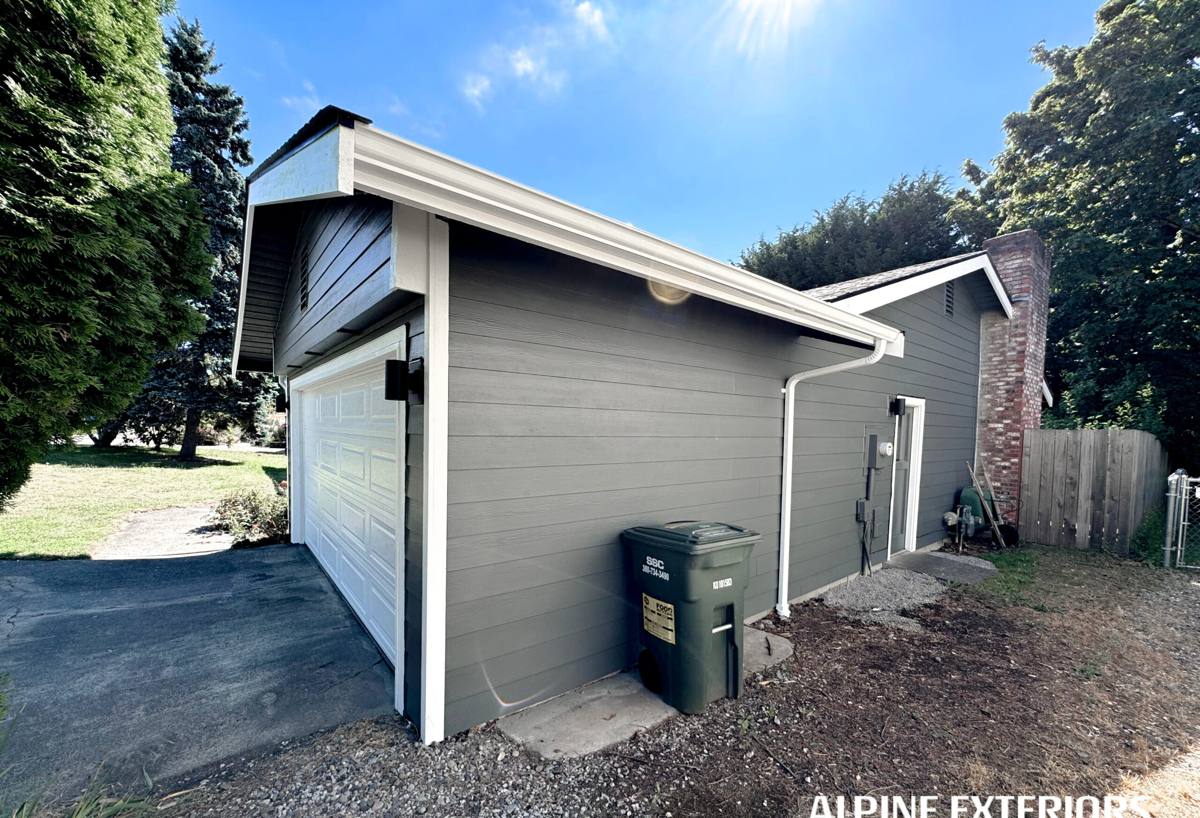
Signs a Mount Vernon Home Needs Replacement, Not Just Repair
Not every siding problem calls for a full tear-off. But when several of these show up together, patching individual boards usually just delays a bigger job — and can waste money on a wall system that's already failing underneath.
- Siding that feels soft, spongy, or gives slightly when pressed near the bottom edges or seams
- Paint that keeps failing within a year or two of repainting, even after prep work
- Moss, algae, or dark staining that returns within months of cleaning
- Boards that are cupping, bowing, or separating at the seams
- Visible gaps opening up at trim, corners, or window and door casings
- A noticeable rise in heating bills that points to air and moisture getting past the exterior wall
- Original siding that's 20-25+ years old, especially wood or older engineered wood products
What a Correct Siding Replacement Actually Involves
A siding replacement is a wall system project, not a cosmetic swap. Skipping the parts underneath the visible surface is exactly how homes end up back in the same spot ten years later.
Full Tear-Off and Sheathing Inspection
Old siding comes off completely so the sheathing underneath can be inspected, not guessed at. In a valley climate like Mount Vernon's, it's common to find soft or water-stained sheathing behind siding that looked fine from the curb. Any damaged sheathing gets identified and addressed before anything new goes up — covering over a compromised wall doesn't fix it, it just hides it again.
Moisture Barrier and Rainscreen Detailing
A weather-resistant barrier goes on correctly lapped, sealed at penetrations, and integrated with window and door flashing so water has a clear path down and out. Depending on the wall assembly, a rainscreen gap behind the siding gives any moisture that does get past the cladding somewhere to drain and dry, instead of sitting trapped against the sheathing — a detail that matters more in a humid valley environment than in a drier climate.
Flashing, Trim, and Penetration Details
Every window, door, hose bib, vent, and light fixture is a place water can get behind the siding if it's not flashed and sealed properly. This is the detail work that separates a siding job that lasts thirty-plus years from one that starts failing at the seams within five.
Why We Only Install James Hardie Fiber Cement
We made the decision to install James Hardie exclusively and not offer vinyl, LP SmartSide, primed spruce, cedar, or other fiber cement brands. That's not a marketing position — it's a standard based on what actually holds up in Pacific Northwest valley conditions over decades, not just years.
Engineered for This Region
Hardie's HZ5 product line is engineered specifically for climate zones like ours, with freeze-thaw cycling, sustained moisture, and wind-driven rain factored into the product itself. Fiber cement is dimensionally stable — it doesn't swell, cup, or warp the way wood-based products can when they take on and release moisture repeatedly through a wet Skagit Valley winter.
ColorPlus Factory Finish
Hardie's ColorPlus finish is baked on in a factory-controlled process, not brushed on at the jobsite. It resists fading and holds up to the kind of grime and mildew staining that plagues field-painted siding here, and it doesn't need repainting on the same cycle wood or LP siding typically demands. Fiber cement is also non-combustible, which matters more every wildfire season in Washington, and it carries a strong, transferable manufacturer warranty when installed to spec — something we can back up because installing to spec is the only way we work.
How Our Mount Vernon Siding Replacement Process Works
- On-site inspection and estimate — we look at your current siding, trim, and any visible trouble spots, and give you an honest read on what's actually going on underneath before quoting anything.
- Product and color selection — we walk through Hardie's plank profiles, textures, and ColorPlus palette so the finished look fits your home and the neighborhood.
- Scheduling around Skagit weather — siding needs a reasonably dry install window, so we plan around the valley's weather patterns rather than rushing a job into a wet stretch.
- Tear-off and structural check — old siding comes off, sheathing gets inspected, and any repairs happen before anything new is installed.
- Installation to manufacturer specification — proper fastening, clearances, flashing, and rainscreen detailing, done the same way every time, not shortcut to save a day.
- Final walkthrough and cleanup — we go over the finished work with you and make sure the site is left clean.
Siding Options Compared for Skagit Valley Conditions
| Factor | James Hardie Fiber Cement | Vinyl | Wood / LP SmartSide |
|---|---|---|---|
| Moisture resistance | Engineered for wet climates; dimensionally stable | Sheds water but can warp and gap over time | Absorbs moisture; prone to swelling and rot |
| Moss and mildew resistance | ColorPlus finish resists staining | Can trap moisture behind panels | Porous surface feeds organic growth |
| Maintenance | Occasional rinse; minimal repainting | Low upkeep but prone to cracking/fading | Regular repainting and sealing needed |
| Fire resistance | Non-combustible | Combustible | Combustible |
| Typical lifespan when installed correctly | 30-50+ years | 20-30 years | 15-25 years |
Why Hiring a Crew That Already Works in Mount Vernon Matters
A crew that installs siding across Skagit County regularly already knows the details that matter here: how to time a tear-off around the valley's weather windows, how older Mount Vernon homes were framed and sided across different building eras, and which flashing and rainscreen details actually hold up against sustained regional moisture rather than just meeting a minimum code requirement. That local pattern recognition is hard to replace with a crew that mostly works drier inland climates and treats every job the same way. It also means faster response if a warranty question or minor issue comes up after the job is done — we're not driving in from three counties away.
Protecting Your New Siding After Installation
James Hardie siding is low-maintenance, not zero-maintenance. A little basic upkeep keeps it looking and performing the way it should for decades.
- Rinse the exterior once or twice a year with a garden hose to keep grime and early moss spores from building up
- Keep gutters clear so overflow doesn't run down the siding face repeatedly
- Trim back trees and shrubs that keep sections of the wall shaded and damp
- Check caulking at trim and penetrations every year or two and touch up as needed
- Address any impact damage or chips promptly rather than letting them sit exposed
If your Mount Vernon home's siding is showing its age, or you just want an honest opinion on whether repair or replacement makes more sense, we're happy to take a look. Request a free, no-pressure estimate using the form below and we'll walk the property with you and talk through what we find.