 Anacortes Siding
 Roofing Built for the Similk Beach Environment
Homes along the Similk Bay shoreline sit in one of the more demanding micro-climates in Skagit County. You've got open water on one side pushing salt-laden air and wind-driven rain straight at the roof, and on the other side, mature tree cover that keeps large sections of the roof deck shaded and damp for most of the year. That combination is exactly what shortens the life of a roof that wasn't built or maintained with this setting in mind. An asphalt shingle roof can absolutely handle this environment — but only when the materials, ventilation, and detailing are chosen for it, not just for a standard subdivision lot.
This page is about one job in one place: asphalt shingle roofing for homes in and around Similk Beach. Not a general overview of every roofing material we offer — the specific things that matter when a shingle roof has to survive salt air, driving rain, and a long moss season year after year.
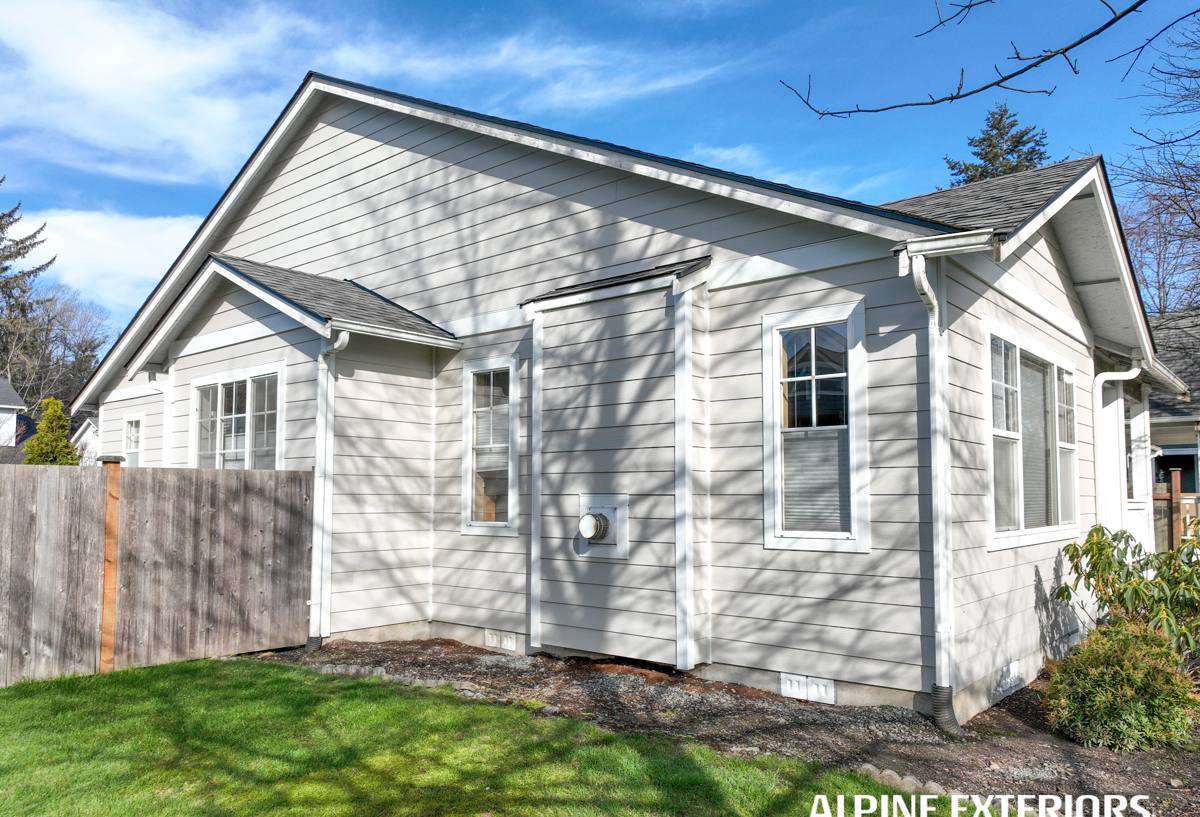
Why Asphalt Shingles Still Make Sense Here
Asphalt shingles remain the most practical roofing choice for the large majority of homes in this area, and there's no reason a waterfront or tree-shaded lot should change that — as long as the roof is specified correctly. They're proven in wet marine climates, they're serviceable (a damaged section can be repaired without touching the whole roof), and the cost of materials and labor stays reasonable compared to standing seam metal or synthetic slate, both of which get expensive fast on anything but a small roof.
Architectural vs. 3-Tab
For a home exposed to the wind that comes off open water, we steer most homeowners toward architectural (laminated) shingles rather than older-style 3-tab. Architectural shingles are heavier, have a higher wind rating, and their layered construction sheds wind-driven rain better at the tab edges — the exact failure point where 3-tab shingles tend to lift first in a gusty, water-adjacent location.
Wind and Impact Ratings
Look for a Class F or Class H wind rating on any shingle going onto a Similk Beach roof, not the baseline rating manufacturers put on their entry-level product. It costs little more up front and it's the difference between a shingle that stays put through a January windstorm off the Sound and one that doesn't.
The Moss, Algae, and Salt Air Problem
If you've owned a home in this part of Skagit County for more than a season or two, you already know moss isn't a cosmetic issue — it's a moisture-retention problem that sits directly on top of your shingles and slowly works granules and mat material loose. Salt air adds a second front: airborne salt accelerates corrosion on exposed metal fasteners, flashing, and vent components, which is often where a roof actually starts leaking long before the shingles themselves fail.
Why Moss Takes Hold So Fast Here
Shaded, north-facing slopes near tree lines stay damp far longer after a rain than a roof in an open, sunny lot. Add the region's long wet season and you get conditions where moss spores establish within a year or two of a roof going untreated. Once moss roots into the shingle mat, it holds water against the surface even on the rare dry, sunny day — which is what actually breaks shingles down, not the moss itself.
Preventing Regrowth Instead of Just Removing It
Scraping moss off without addressing why it grew back just resets the clock. A correct approach combines algae-resistant shingles (granules embedded with copper or zinc that inhibit growth), zinc or copper strips at the ridge on shaded slopes, and keeping overhanging branches trimmed back so the roof actually gets sun and airflow. We treat moss control as part of the roofing job, not an afterthought sold separately.
What a Correct Asphalt Shingle Install Involves
A shingle roof is only as good as what's underneath it. In a marine environment, the layers most homeowners never see are the ones that determine whether the roof lasts 20 years or 12.
Tear-Off and Deck Inspection
We don't install new shingles over old ones, and we don't recommend it for this area. A full tear-off is the only way to actually inspect the roof deck for the soft, water-damaged plywood or sheathing that's common on older homes near the water — problems that get hidden, not fixed, by a layover.
Underlayment and Flashing
Given the volume of driving rain this stretch of the county gets, we use synthetic or self-adhering underlayment rather than the older felt products, and ice-and-water shield at eaves, valleys, and any roof-to-wall transition — the spots where wind-driven rain most often finds its way under the shingle field. Flashing around chimneys, skylights, and vent penetrations gets replaced, not reused, and we favor corrosion-resistant metal given the salt air exposure.
Ventilation
A shaded, damp roof needs to breathe more than most. Proper intake at the eaves and exhaust at the ridge keeps the underside of the deck dry and reduces the moisture that feeds moss growth from below as well as above. Skipping or shortcutting ventilation is one of the more common corner-cutting moves we see on older reroofs in this area, and it shows up later as premature shingle curling and deck rot.
Repair or Full Replacement?
Not every problem roof in Similk Beach needs to come off. The honest answer depends on the roof's age, how widespread the damage is, and what's happening at the deck level.
| Factor | Repair Is Usually Enough | Replacement Is the Better Call |
|---|---|---|
| Roof age | Under 12–15 years | Approaching or past 18–20 years |
| Damage extent | Isolated to one slope or a few shingles | Spread across multiple slopes |
| Moss/algae staining | Surface only, mat still intact | Moss rooted into the mat, granule loss visible |
| Deck condition | Solid, no soft spots | Soft or spongy sheathing found during inspection |
| Flashing/vents | Localized corrosion or gaps | Widespread rust or failed seals throughout |
We'll give you a straight answer either way. If a repair genuinely solves the problem, that's what we'll recommend — a full replacement isn't the right sell just because it's the bigger job.
How We Handle a Similk Beach Job
- On-site inspection — we walk the roof, check the deck from the attic side where possible, and look at flashing, vents, and moss patterns before quoting anything.
- Written scope and estimate — what's being torn off, what underlayment and shingle grade we're specifying, and why, in plain terms.
- Material staging with weather in mind — we schedule tear-off days around the forecast so the deck isn't left exposed to a Similk Bay rain event overnight.
- Tear-off, deck repair, and dry-in — any damaged sheathing gets replaced before underlayment goes down, not patched around.
- Shingle install and detail work — starter strips, valleys, flashing, and ridge vent installed to spec, not rushed.
- Final walkthrough — we go over the finished roof with you, including where the algae-resistant granules or zinc strips are and what to expect from them over time.
Why It Matters to Hire a Crew That Already Works This Neighborhood
Roofing crews that mostly work inland, sunnier parts of Skagit County sometimes underestimate what a waterfront, tree-shaded roof actually needs — they'll spec a standard shingle and standard underlayment because that's what works fine elsewhere. A crew that regularly works Similk Beach and similar shoreline neighborhoods already knows to ask about tree cover before quoting, already defaults to a higher wind-rated shingle, and already accounts for salt air when choosing fasteners and flashing metal. That local pattern-recognition is worth more than it sounds like on paper — it's the difference between a roof that's still doing fine in year 15 and one that's showing granule loss and soft valleys by year 8.
Maintenance That Actually Extends the Roof's Life
A correctly installed shingle roof still needs some attention in this climate. Most of it is simple and cheap compared to a premature replacement.
- Have gutters cleared at least twice a year — clogged gutters back water up under the eave line, which is exactly where ice-and-water shield matters most.
- Trim back branches that shade or touch the roof surface to cut down on moss-friendly conditions.
- Have a professional check and gently clear moss growth rather than pressure-washing it, which can strip protective granules.
- Walk the roofline visually after any major windstorm and look for lifted or missing shingles.
- Get flashing and vent boots inspected every few years — these corrode and fail well before the shingle field does in a salt air environment.
- Address a small leak or a handful of lifted shingles right away; deck damage from a slow, ignored leak is what turns a repair into a full replacement.
Get a Straight Answer on Your Roof
If you're dealing with moss buildup, a roof that's getting up in years, or you just want an honest read on what condition your shingles are actually in, we're glad to take a look. We offer a free, no-pressure estimate for homeowners in Similk Beach and the surrounding Anacortes area — use the form below to get started.