 Anacortes Siding
 Why West Anacortes Roofs Wear Differently Than Roofs Inland
West Anacortes sits close enough to the water that homes here deal with a combination most inland Skagit County roofs never see: salt-laden air, wind-driven rain coming off Rosario Strait and the surrounding waterways, and a moss season that runs longer than almost anywhere else in Western Washington. Any one of those on its own is manageable. Together, they shorten the life of flashing, fasteners, and shingles faster than a standard roofing warranty accounts for.
Salt air is corrosive to exposed metal — nail heads, flashing, gutter hangers, and vent boots all take the hit over time. Wind-driven rain doesn't just fall on a roof, it gets pushed sideways and upward under laps and around penetrations that would stay dry in a calmer climate. And moss, fed by our wet winters and mild shoulder seasons, holds moisture against the roof surface for months at a stretch, working its way under shingle edges and into fastener holes. A repair that doesn't account for all three isn't really a West Anacortes repair — it's a generic repair done in a location that needed something more specific.
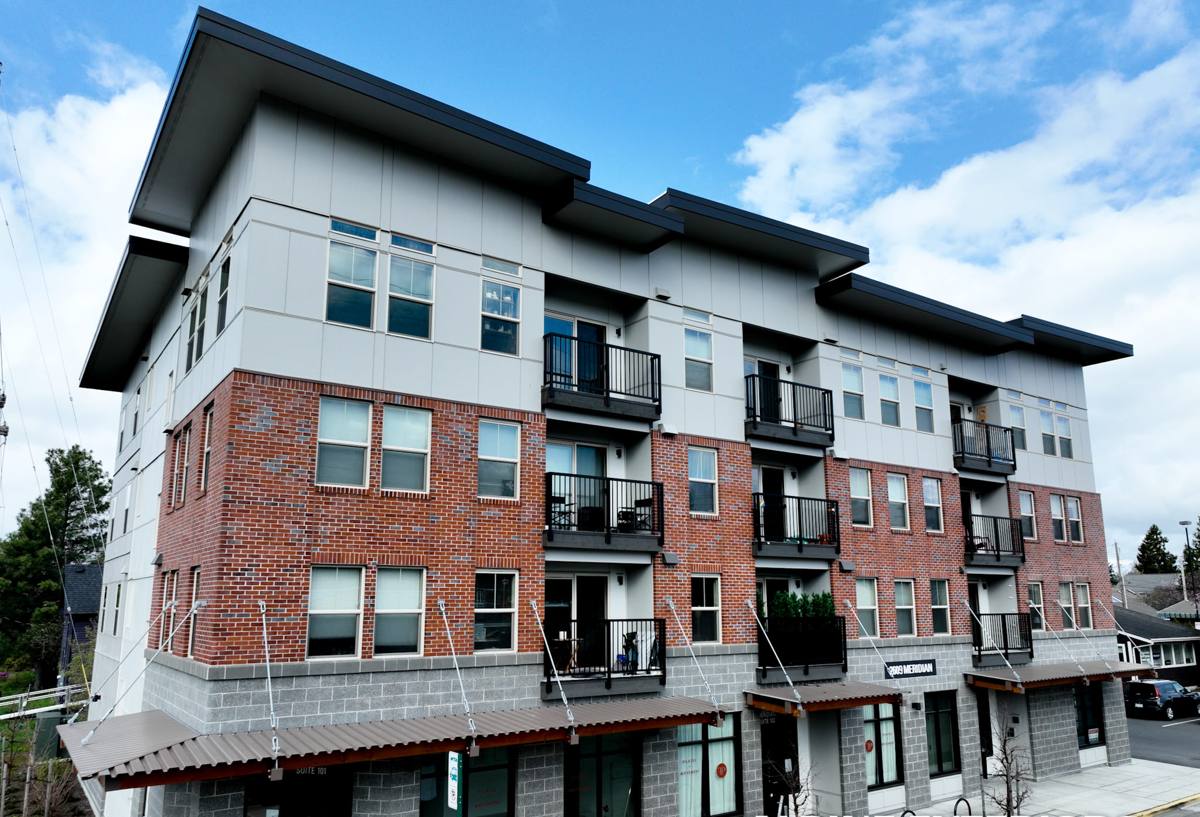
Signs a West Anacortes Roof Needs Repair
Most roof failures out here don't start as a dramatic leak. They start small and get ignored because the symptoms don't look like "the roof" at first. Here's what we'd want you to watch for between inspections:
- Dark streaking or green-black growth concentrated on north-facing or shaded slopes — early moss and algae colonization
- Granule buildup in gutters or at downspout outlets, especially after a windy rain event
- Rust staining below metal flashing, vent caps, or exposed fasteners
- Soft or spongy decking felt underfoot near valleys, chimneys, or skylights
- Curling, cupping, or lifted shingle edges, particularly on the windward (typically west or southwest) side of the roof
- Water stains on interior ceilings that appear only during storms with strong wind, not steady rain
- Daylight visible through the attic at roof penetrations or ridge vents
- Gutters pulling away from the fascia or sagging under moss and debris weight
That last symptom — leaks that only show up during wind-driven storms — is a strong clue you're dealing with a flashing or lap issue rather than a worn-out roof surface. It's one of the most common repair calls we get from this part of Anacortes, and it's very fixable when caught early.
Repair vs. Replacement: How We Draw the Line
Not every problem roof needs a full tear-off, and we don't default to recommending one. If the underlying decking is sound, the roof is under 15-20 years old, and the damage is localized — a section of flashing, a run of damaged shingles, a failed pipe boot — targeted repair is the honest answer and the one we'll give you. Replacement becomes the right call when decking has gone soft in multiple areas, the shingle mat itself is brittle and failing broadly (not just at one stress point), or repeated repairs to the same section are no longer holding. We'll walk you through which situation you're in before any work starts, not after.
What a Correct Repair Actually Involves
A roof repair that's going to hold up on this coastline needs to do more than patch the visible symptom. We're looking at the whole assembly around the failure point:
Diagnosis First
We trace leaks to their actual source before touching anything. Water travels — a stain on a bedroom ceiling can originate from a valley, a chimney flashing, or a roof penetration several feet away. Guessing wrong means a "repair" that doesn't fix the leak and costs you twice.
Flashing and Fastener Condition
Given the salt air out here, we check flashing and exposed fasteners for corrosion even when they're not the source of the current leak. Corroded metal near a repair area is a near-guarantee of a callback within a year or two if it's left in place.
Decking Integrity
Any repair that opens up a section of roof gets a check of the decking underneath. Soft, delaminated, or water-stained sheathing gets replaced before new shingles or flashing go back down — covering compromised decking with new material just hides the problem for a while.
Matching Materials Correctly
Shingle color runs change over the years, and exposure fades existing roofing unevenly. We match as closely as the market allows and are upfront when an exact match isn't possible, rather than surprising you with a patchwork look after the fact.
Sealing for Wind-Driven Rain, Not Just Vertical Rain
Standard installation assumes rain falls mostly straight down. Repairs on this stretch of coastline need extra attention to lap direction, underlayment overlap, and sealant at vulnerable joints because wind pushes water sideways and up under standard laps during storms.
Common Roofing Materials in West Anacortes Homes
Repair approach and expected service life vary by roofing material. Here's how the systems we most commonly repair in this area compare:
| Roofing Material | Typical Lifespan Here | Common Repair Issues in West Anacortes |
|---|---|---|
| Asphalt composition shingle | 18-25 years | Granule loss from wind-driven rain, moss lifting edges, nail pop corrosion |
| Cedar shake | 25-30 years with upkeep | Moss and moisture retention, split shakes, higher maintenance burden in wet shoulder seasons |
| Standing seam metal | 40+ years | Fastener and seam sealant fatigue near coastal salt exposure, panel oil-canning after impact |
| Torch-down / membrane (low slope) | 15-20 years | Seam separation, ponding at low points, flashing pull-away at walls |
Whatever material is on your roof, the underlying repair principles are the same: find the real source of the failure, address the metal and decking around it, and use materials and sealing methods suited to wind-driven coastal weather — not just a generic patch.
Our Repair Process
- On-site inspection. We look at the roof, attic (when accessible), gutters, and the areas around any reported leak — not just the spot you pointed us to.
- Honest assessment. We tell you what's actually wrong, whether it's a repair or a bigger conversation, and why.
- Written estimate. Scope and price before any work begins — no verbal-only quotes.
- Repair work. Decking replaced where needed, flashing and fasteners addressed, matched materials installed, and everything sealed for wind-driven rain conditions.
- Cleanup and walkthrough. Debris and old materials hauled off, and we show you what was done before we call it finished.
What Roof Repair Typically Costs
Every roof and every leak is different, so treat these as broad ranges rather than a quote. Actual cost depends on roof pitch, access, material, and how much decking (if any) needs replacing.
| Repair Type | Typical Cost Range | What Drives the Price |
|---|---|---|
| Flashing repair/replacement (single area) | Low hundreds to around $1,000 | Location, roof pitch, corrosion extent |
| Localized shingle repair | Few hundred to $1,000+ | Size of affected area, material match availability |
| Decking replacement + repair | $1,000-$3,000+ | Square footage of soft decking, structural framing condition |
| Moss treatment and debris removal | Low hundreds | Roof size, moss severity, access for equipment |
We'd rather give you a real number after we've seen the roof than a lowball figure over the phone that changes once we're up there. The written estimate step in our process exists specifically so there are no surprises.
Moss and Ongoing Maintenance in a Wet Climate
Because West Anacortes stays damp for a large part of the year, moss isn't a one-time problem you solve and forget — it's an ongoing maintenance item, similar to gutter cleaning. Left alone, moss holds moisture against the shingle surface, works into fastener holes, and can lift shingle edges enough for wind-driven rain to get underneath. Regular moss removal and gutter clearing, ideally before the wet season builds and again mid-winter, does more to extend a roof's life here than almost any single repair. If your roof already has active moss growth, we can address it as part of a repair visit rather than as a separate trip.
Why Hiring a Crew That Already Works West Anacortes Matters
A roof repair here isn't the same job as a repair thirty miles inland. Crews unfamiliar with this coastline sometimes underestimate how much wind-driven rain and salt exposure change what "sealed" and "protected" actually mean, and a repair that would hold up fine in a drier, calmer location can fail here within a season or two. Working this specific stretch of Skagit County regularly means knowing which fastener and flashing choices actually hold up against salt air corrosion, how local moss patterns behave through the wet months, and where wind tends to drive rain into laps that look fine on a calm day. That local pattern recognition is the difference between a repair that lasts and one you're calling us back about next winter.
If you're dealing with a leak, visible moss, damaged flashing, or just want a second opinion on a roof that's been giving you trouble, we're glad to take a look. We offer free, no-pressure estimates — fill out the form below and we'll get you scheduled.