 Anacortes Siding
 West Anacortes sits close enough to the water that homes here take a different kind of weather than properties tucked further inland on Fidalgo Island. Wind off the Salish Sea drives rain sideways into wall assemblies that a calmer, more sheltered lot would rarely have to deal with, and the salt content in that air works on siding, fasteners, and trim in ways a generic installation guide doesn't fully account for. When siding replacement comes up in this part of Anacortes, we treat it as its own project, not a one-size swap of one material for another, because the exposure here changes what actually holds up over time.
We do siding replacement work throughout Skagit County, and West Anacortes is one of the areas where the gap between a correctly detailed job and a corner-cut one shows up fastest. A long moss season, near-constant dampness for much of the year, and direct wind exposure off the water all put more stress on a wall system than a typical inland home ever sees. This page walks through what that means for a siding replacement project specifically, what a correct job actually involves, and why we install one product system rather than offering a menu of options.
Why West Anacortes Siding Wears Out Faster
Several conditions stack up in this part of town. Wind-driven rain off the water pushes moisture sideways into siding joints and trim connections instead of letting gravity keep it moving downward, which is exactly the kind of load a standard, inland-rated installation wasn't built to shed. Salt-laden air accelerates corrosion on fasteners, flashing, and any lower-grade hardware, and it breaks down cheaper paints and coatings well before their rated lifespan. Add in the shade from mature trees common on older Anacortes lots and a mild, damp climate that rarely dries out completely, and you have ideal conditions for moss and algae to take hold on siding that doesn't shed water and dry quickly.
None of this means siding fails overnight. It means the failure timeline compresses — problems that might take twenty-five years to show up on a sheltered, inland property can surface in half that time on a West Anacortes home facing the water directly. A lot of the housing stock in this part of town is also older, which means original siding, flashing, and trim details were often built to a lower moisture standard than what the site actually demands.
Common Warning Signs We Look For
- Siding that's visibly cracked, buckled, or separating at the seams
- Soft or spongy spots near window trim, corner boards, or where siding meets the foundation
- Paint that's chalking, peeling, or has failed faster than expected on one side of the house
- Moss or algae creeping up from the base of the wall or spreading across shaded siding
- Caulking that's cracked, shrunk, or pulled away from trim and joints
- Rust streaks below fasteners or flashing, a sign hardware isn't rated for coastal exposure
- A musty smell or visible staining on interior walls that share an exterior wall with problem siding
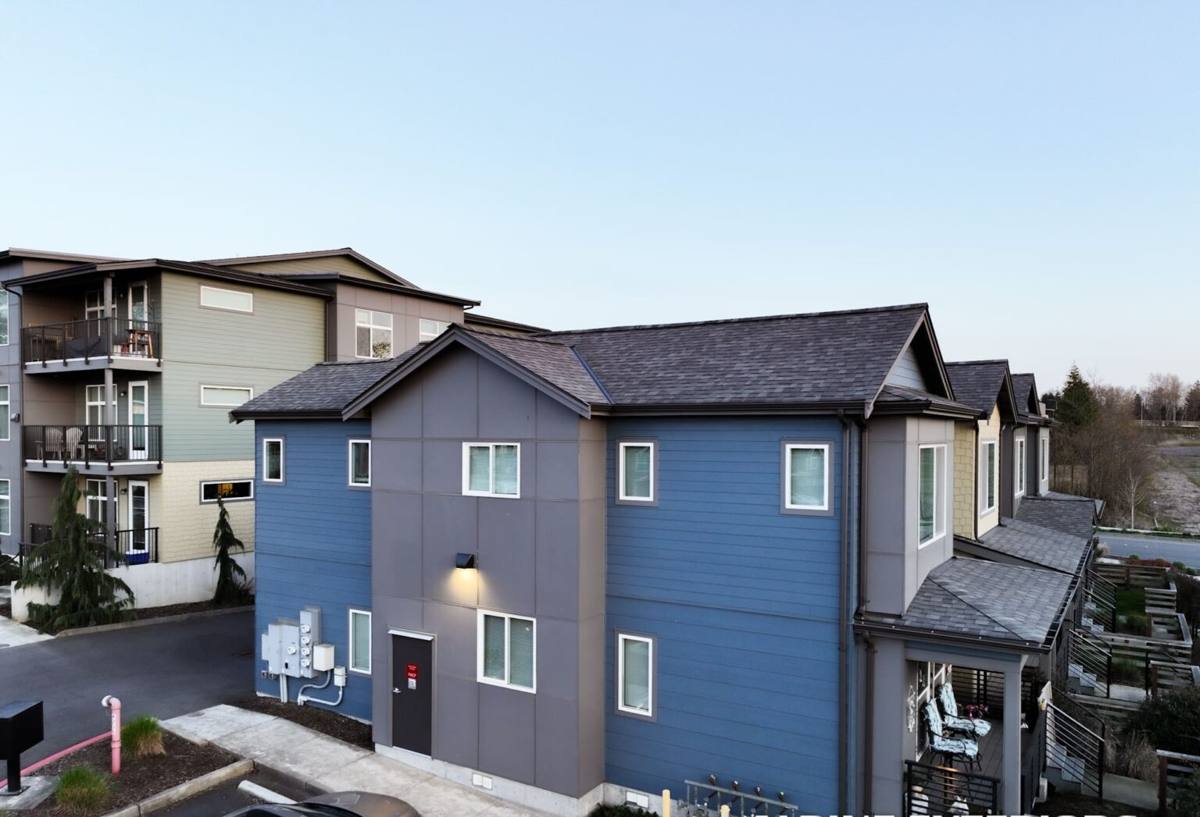
What a Correct Siding Replacement Actually Involves
Siding replacement isn't just pulling off old boards and nailing up new ones. On a West Anacortes home, the parts you don't see when the job is finished — the sheathing, the weather-resistive barrier, the flashing — matter more than the finish material itself, because those layers are what actually keep water out of the wall.
Tear-Off and What's Underneath
Once the old siding comes off, we inspect the sheathing and framing underneath before anything new goes up. This is often the first real look anyone has had at that wall in decades, and on a water-exposed lot it's common to find soft or water-damaged sheathing near window openings, corners, or low on the wall where moisture has been working its way in slowly. Replacing siding without addressing damaged sheathing just seals the same problem behind a new surface.
Sheathing, Weather-Resistive Barrier, and Flashing
Any compromised sheathing gets replaced, not patched over. A new weather-resistive barrier goes on correctly lapped so water sheds downward and outward rather than working its way behind seams. Flashing at windows, doors, and any wall penetration gets detailed to handle wind-driven rain specifically, since that's the failure mode we see most often on homes facing the water directly — gravity-only flashing details that were never built for rain coming in sideways.
Fastening and Fit
Fastener choice and placement matter more here than in a sheltered inland location. Corrosion-resistant fasteners, driven and spaced to manufacturer specification, keep siding secure without the small gaps that let water track in around a loose or improperly seated nail. Panels and boards also need proper clearance at the bottom to avoid wicking moisture up from grade or a hard surface below.
Finish and Caulking
The visible finish work — caulking at joints, trim integration, and touch-up paint where field cuts expose raw material — is what most homeowners judge a job by, but it only holds up if everything underneath was done correctly first. We treat this as the last step, not a way to cover for shortcuts taken earlier in the process.
Why We Only Install James Hardie Fiber Cement
We install James Hardie fiber cement siding exclusively. We don't install vinyl, LP SmartSide, Cemplank, Allura, primed spruce, or cedar. That's a professional standard we settled on after seeing how different materials actually perform in this specific climate, and a West Anacortes lot, with direct water exposure and a long wet season, is about as demanding a test as this region offers.
Vinyl can become brittle with age and UV exposure, and it isn't a water barrier on its own — it depends entirely on the assembly behind it, which is a real liability on a wall that takes direct wind-driven rain. Wood products, including cedar, need consistent repainting or staining and are vulnerable to rot if moisture gets behind the finish, which is a difficult maintenance cycle to keep up with on an exposed, water-facing home. Hardie's fiber cement is non-combustible, dimensionally stable, and factory-finished with ColorPlus coating engineered to resist fading and cracking under sustained UV and salt exposure — the exact combination West Anacortes homes deal with every year.
Siding Material Comparison for This Climate
| Material | Moisture Behavior | Maintenance | Fit for West Anacortes |
|---|---|---|---|
| Vinyl | Not a water barrier itself; relies on the assembly behind it | Low, but brittles and fades with age and UV exposure | Weak match for direct wind-driven rain exposure |
| Cedar | Absorbs moisture; rot risk if the finish fails | Regular staining or painting required | Demanding upkeep on a shaded, damp, water-facing lot |
| LP SmartSide (engineered wood) | Wood-based; sensitive to sustained moisture at cut edges and joints | Moderate; edge sealing and caulk maintenance matter | Installation-sensitive in a marine climate |
| James Hardie fiber cement | Non-combustible, dimensionally stable, factory-sealed edges | Low; ColorPlus finish resists fading and cracking | Engineered HZ10 line built for wetter, harsher climate zones like this one |
Our Siding Replacement Process, Start to Finish
- On-site assessment — we walk the exterior, note problem areas, and give you an honest read on what's failing from age versus exposure or a past installation shortcut
- Tear-off and inspection — old siding comes off and we inspect the sheathing and framing before anything new goes up
- Repair what's underneath — any damaged sheathing or framing is replaced, not patched over or sealed behind new siding
- Weather-resistive barrier and flashing — a new barrier and flashing system are installed and detailed for wind-driven rain, not just gravity drainage
- Hardie siding installation — panels or lap siding are fastened to spec, with proper clearance and corrosion-resistant fasteners throughout
- Trim, caulking, and finish — trim is integrated cleanly and joints are sealed, with touch-up matched to the ColorPlus factory finish
- Final walkthrough — we go over the finished work with you before calling the job done
Cost Factors for a West Anacortes Siding Replacement
We won't quote a number without seeing the house in person, since the condition underneath the old siding often isn't clear until tear-off. That said, a few factors consistently move the price on a project like this.
| Factor | Why It Matters |
|---|---|
| Home size and wall area | More square footage means more material and labor, in fairly direct proportion |
| Condition of sheathing underneath | Water-damaged sheathing found at tear-off adds repair scope that can't always be predicted beforehand |
| Number of stories and access | Second-story and steep-lot work takes more scaffolding and time than a single-story, easy-access home |
| Trim and architectural detail | Homes with more corners, gables, and trim transitions take more labor to flash and finish correctly |
| Product line chosen | HardiePlank, HardiePanel, and the HZ10 climate-engineered line carry different material costs |
| Old siding removal and disposal | Full tear-off and haul-away adds scope compared to sites where less demolition is needed |
Why a Local West Anacortes Crew Matters
Skagit County's coastal microclimates aren't uniform, and West Anacortes' particular combination of direct water exposure, wind, and shade is something you learn by working on homes here repeatedly, not by reading a manufacturer's spec sheet. We know which walls in this part of town take the brunt of a winter storm, where moss keeps coming back no matter what gets done to it, and which flashing details actually matter here versus which ones are just building-code minimums written for a milder, drier climate.
That local knowledge shapes how we scope a job before a single board comes off the house. It also means we're not guessing about permitting requirements in Anacortes and Skagit County, or about the practical realities of narrow lots, mature tree cover affecting scaffolding and staging, or the access challenges that come up more often on West Anacortes properties than on a flat, open inland lot elsewhere in the county.
What to Ask Before Hiring for Siding Replacement Here
- Ask what happens if damaged sheathing is found during tear-off, and how that's handled in the estimate
- Ask how flashing is detailed at windows, doors, and corners specifically for wind-driven rain
- Confirm current Washington state contractor licensing and insurance
- Ask what siding material they install and why, not just what it costs
- Get a written scope of work before committing to a schedule
- Ask how the crew handles moss and mildew concerns on shaded or north-facing walls
What to Expect From Your Estimate
A siding replacement estimate for a West Anacortes home starts with a real walk-around, not a drive-by guess. We look at current siding condition, trim, flashing at openings, and any visible signs of moisture damage, and we're straightforward about what's failing due to age versus what's failing because of this location's exposure. You'll get a clear explanation of why we recommend James Hardie fiber cement for this specific site, a written scope, and a price — with no pressure to sign anything on the spot.
If you own a home in West Anacortes and you're seeing cracked or buckling siding, moss creeping up the wall, soft spots near trim, or paint that's failing faster than it should, it's worth having someone take a real look before the damage underneath gets worse. Reach out for a free, no-pressure estimate — we'll give you a straight answer about what your home actually needs and why.