 Anacortes Siding
 Window Replacement in Sedro-Woolley: A Skagit Valley Problem
Sedro-Woolley sits at the edge of the Skagit Valley, where the flat farmland gives way to the foothills of the North Cascades. It's not a waterfront town, but it still sits inside a weather pattern that's harder on window systems than most homeowners realize until something starts leaking or fogging. Driving rain gets funneled up the valley off Puget Sound, humidity lingers longer here than in breezier parts of Skagit County, and a long moss season keeps window sills and trim damp for much of the year. Windows take the brunt of that exposure more than almost any other part of a home's exterior, because a window opening is where the building envelope has the most seams, the most moving hardware, and the most places for water to find a way in.
We're an Anacortes-based crew that handles window replacement, siding, roofing, and deck projects across Skagit County, including Sedro-Woolley on a regular basis. On window work specifically, we treat the flashing and installation detail as being every bit as important as the window unit itself — a well-made window installed with sloppy flashing will leak in this climate, while a solid mid-grade window installed correctly will often outperform it.
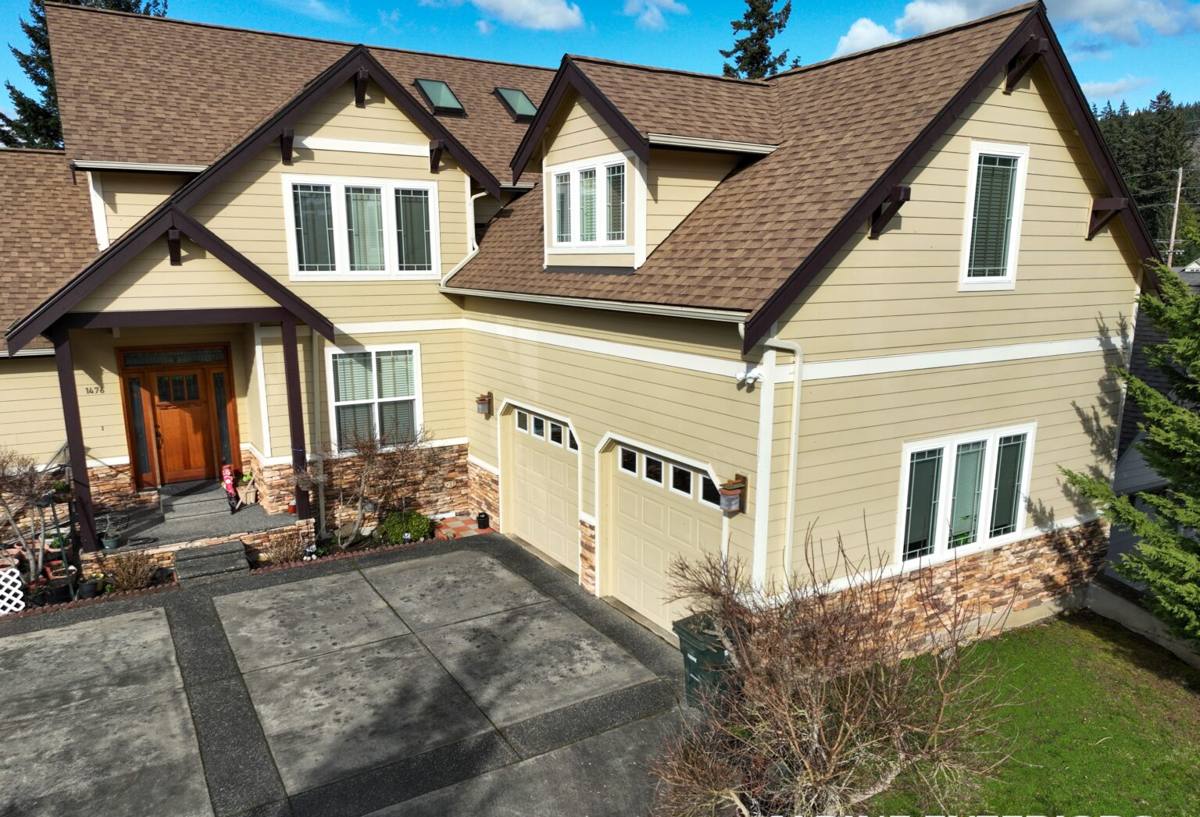
What Sedro-Woolley's Climate Does to Windows
Driving Rain Funneled Up the Valley
Weather systems moving in off Puget Sound often get compressed and intensified as they push up the Skagit Valley, and Sedro-Woolley catches a real share of that driving rain. Wind-driven rain doesn't fall straight down onto a window — it's forced sideways into the gap between the frame and the rough opening, which is exactly the seam a window unit alone can't protect on its own. That's a flashing and installation problem as much as it is a product problem, and it's the single biggest factor in whether a window stays dry through a valley winter.
A Long Moss Season
Mild temperatures, filtered light from surrounding trees, and near-constant moisture add up to a moss and mildew season that runs most of the year in this part of Skagit County. Window sills, trim, and the wood framing around older windows are common places we find it taking hold, especially on shaded or north-facing elevations. Once moss establishes on a sill or trim board, it holds moisture against the surface underneath, which speeds up whatever wood rot or seal failure was already starting.
Salt Air That Still Reaches This Far Inland
Sedro-Woolley doesn't sit on the water, so it doesn't take the direct salt spray a waterfront Anacortes property does. But Skagit County's salt-laden marine air still travels up the valley on windier storm patterns, and over years that adds a low, steady corrosion load to window hardware, hinges, and fasteners. It's a smaller factor here than closer to the Sound, but it's still enough to make cheap hardware age faster than it would in a drier, more sheltered inland climate.
Temperature Swings and Condensation
Sedro-Woolley's proximity to the foothills means slightly cooler overnight temperatures and more freeze-thaw cycling than towns closer to the water. Combined with the valley's damp winters, that creates real condensation pressure on window glass and frames — the temperature gap between a warm interior and cold, wet exterior is what drives fogging, moisture between panes, and water pooling on interior sills. That's usually a sign a seal has failed, not just a cosmetic nuisance.
Signs a Sedro-Woolley Home Needs Window Attention
- Fogging or visible moisture trapped between the panes of a double-pane window
- Drafts or cold spots near the frame even when the window is fully latched
- Sills or trim that feel soft, look discolored, or show green or black staining
- Windows that stick, won't latch fully, or have hardware that's stiff or corroded
- Visible gaps or daylight where the frame meets the siding or trim
- Paint or finish peeling or chalking faster on window trim than on the rest of the wall
Repair vs. Replacement: How We Make the Call
Not every window on a Sedro-Woolley property needs full replacement, and we don't default to replacement just because it's the bigger job. A window with a failed seal but a sound frame and working hardware is often a fair repair or reglaze candidate. A window with rotted framing, a warped sash, or hardware that's been failing for years usually isn't — at that point, repeated patching typically ends up costing more over time than doing the replacement once, correctly.
| Condition | Repair Usually Makes Sense | Replacement Usually Makes Sense |
|---|---|---|
| Fogged glass, sound frame | Yes — reglaze or seal replacement | Only if the frame is also compromised |
| Stiff, stuck, or corroded hardware | Yes — hardware replacement | Not on its own |
| Soft or rotted sill and frame wood | Rarely a lasting fix | Yes |
| Persistent drafts despite sealing | Sometimes, if flashing is the cause | Yes, if the sash or frame is the source |
| Single-pane, no storm window | Possible short-term fix | Yes, for real energy and comfort gains |
Window Flashing: The Detail That Actually Determines Performance
We talk about flashing more than we talk about window brands, because in a valley climate like Sedro-Woolley's, flashing is what separates a window that stays dry for decades from one that starts leaking within a few wet seasons. Correct installation means the flashing laps in the right order with the surrounding weather-resistive barrier and siding, water is directed out and away from the rough opening rather than trapped behind it, and every seam is sealed with materials rated for sustained moisture exposure. That's standard practice on every window we install, not an upgrade a homeowner has to request.
Where Flashing Gets Cut Corners
On repair and replacement calls around Sedro-Woolley, the water damage we find almost never traces back to the window unit itself failing. It traces back to flashing that was never lapped correctly, or caulk that was used as a substitute for flashing instead of a supplement to it. Caulk alone cracks and breaks down over time — it was never meant to be the only barrier against wind-driven rain, and treating it that way is one of the most common shortcuts we see on older installs.
Choosing Windows for a Valley Climate
We install vinyl and fiberglass window systems built for the Pacific Northwest's wet, mild climate, and we walk homeowners through the real trade-offs rather than pushing one brand as the only right answer. What matters most for a Sedro-Woolley home is a tight, well-engineered frame, a glazing package that handles both energy performance and condensation resistance, and hardware rated to hold up under the marine air that still reaches this far up the valley.
- Frame material: Vinyl and fiberglass both resist rot in a way uncladded wood frames don't, which matters given how much moisture this valley holds onto through fall and winter.
- Glazing package: Double or triple-pane options with low-E coatings help with energy performance and cut down on the interior condensation that's common in Sedro-Woolley homes during cold, damp stretches.
- Hardware grade: Corrosion-resistant hardware holds up longer against the marine air that reaches inland on storm patterns than standard-grade hardware does.
- Warranty structure: A manufacturer's product warranty is only as good as the installation behind it — we stand behind our installation work separately from whatever the window manufacturer covers.
Windows also don't perform in isolation from the rest of the wall. A window installed without attention to the surrounding siding, trim, and drainage plane can look fine for a season or two and still leak, because water that gets past a poorly integrated window travels into the wall assembly rather than staying visible on the surface. That's part of why we handle siding and roofing as well as windows — the person detailing the flashing understands how it needs to tie into the siding and roofline around it, rather than treating the window as a standalone product install.
Cost Factors for a Sedro-Woolley Window Project
We don't post fixed prices because every home and every opening is different, but the variables that move the number on a Sedro-Woolley window job are consistent from house to house:
- Number of windows involved and whether they're standard sizes or custom-built to match existing openings
- Condition of the framing and sill under each window, and whether rot repair is needed before a new unit goes in
- Frame material and glazing package selected, since triple-pane and upgraded low-E coatings cost more than base options
- Amount of trim and exterior detail work involved in tying the new window into the existing siding
- Site access, since some of the larger rural lots common around Sedro-Woolley add setup and staging time
Why a Local Anacortes Crew Matters for Sedro-Woolley Window Work
A window installed correctly for a wind-exposed waterfront Anacortes property isn't automatically installed the same way for a valley setting like Sedro-Woolley, and the reverse is just as true. A crew that works this county regularly knows how the valley's rain behaves across a full year, where moss and slow-drying trim show up first, and how much hardware corrosion to expect on a property this far from the water. That repeated, local exposure shapes flashing choices, hardware selection, and glazing decisions that hold up for decades rather than just looking good on install day.
Our Process
We start with an on-site look at the existing windows — checking frame condition, seal integrity, hardware function, and how the current flashing ties into the siding around each opening. From there we give a straightforward read on which windows are reasonable repair candidates and which make more sense to replace, along with a written scope before any work begins. Flashing and drainage detailing are handled as standard practice on every job we do, not offered as an optional upgrade.
If you're dealing with drafty, foggy, or hard-to-operate windows on a Sedro-Woolley home, or you're just not sure whether repair or replacement is the right call, we're glad to take a look and give you a straight assessment. No pressure, no upsell script — just an honest read on what your windows need. Use the form below to schedule a free estimate.