 Anacortes Siding
 Why Bow Decks Wear Out Faster Than People Expect
Bow sits close enough to Samish Bay and the greater Salish Sea shoreline that salt-laden air is a daily fact of life, not an occasional storm event. Add in Skagit County's long wet season, heavy moss growth on anything shaded or north-facing, and the freeze-thaw cycles that show up most winters, and you have a climate that is genuinely rough on outdoor structures. Decks take the worst of it because they're horizontal, exposed to standing water, and in constant contact with whatever the ground and air throw at them.
Homeowners in this area often tell us their old deck looked fine for the first few years, then started showing problems all at once: soft spots near the house, green film on the boards by late fall, corroded fasteners, or a railing post that suddenly felt loose. That pattern is almost always a sign the deck was built to a generic spec rather than to what this specific location actually demands.
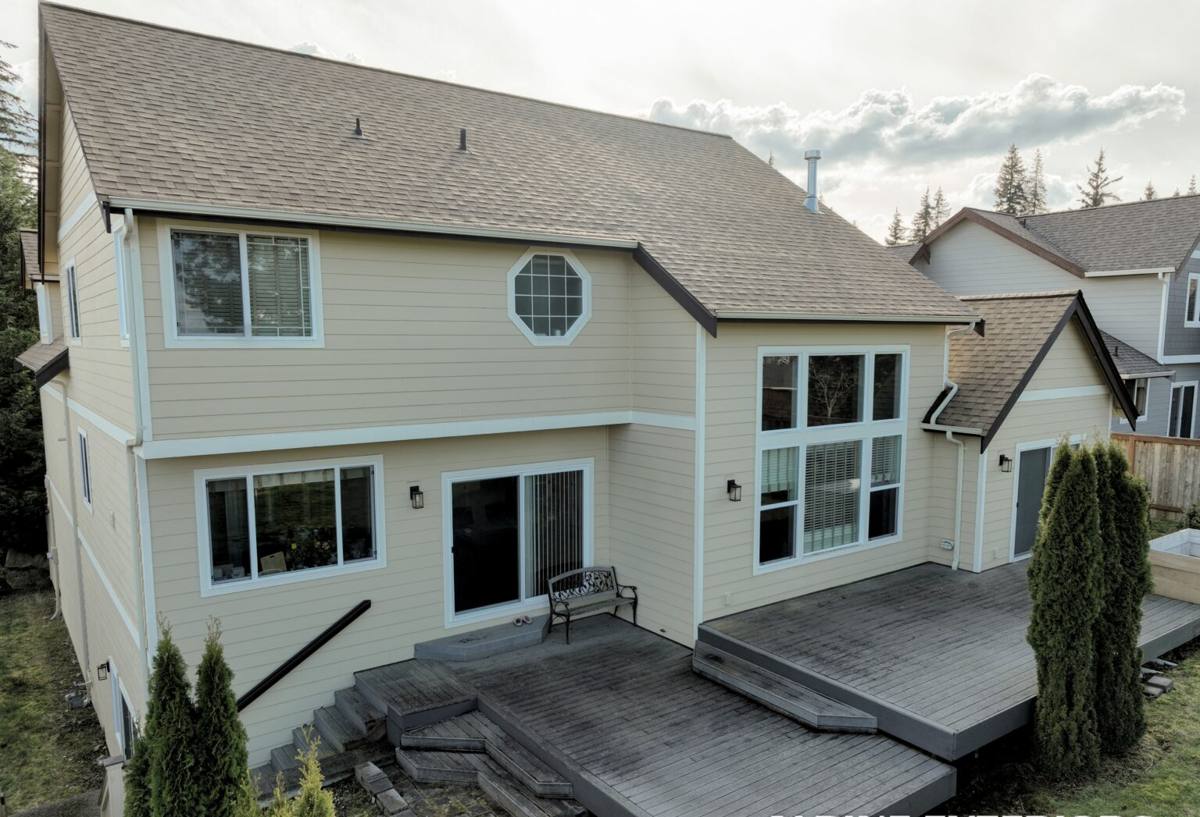
What Salt Air, Rain, and Moss Actually Do to a Deck
Salt Air
Airborne salt accelerates corrosion on anything metal — screws, joist hangers, post bases, railing brackets. Standard zinc-coated fasteners can start showing rust streaks within a couple of seasons this close to the water. It doesn't ruin composite decking boards themselves, but it will quietly destroy the hardware holding the structure together if the wrong fasteners were used.
Driving Rain
Rain here doesn't fall straight down — wind off the water pushes it sideways, which means it gets under railings, into end grain, and behind ledger boards more than people expect. A deck that isn't flashed and sloped correctly will trap water exactly where it does the most damage: at the house connection and between boards.
Moss and Algae
Shaded or low-airflow areas in this climate grow moss and algae film readily, especially through the fall and winter months. On a deck surface, that film isn't just cosmetic — it holds moisture against the board and makes the surface slick, which is a real slip hazard on stairs and ramps.
What a Correct Composite Deck Build Involves Here
Composite decking is a good match for this climate because the boards themselves don't rot, splinter, or need staining. But the material only performs as well as the build underneath it. In Bow, that means paying attention to details that matter more here than they would in a drier inland climate:
- Joist tape or a flashing membrane on every joist, not just the ledger, to keep moisture out of the framing lumber under the deck boards
- Stainless or heavy-duty coated structural fasteners and connectors rated for coastal exposure, not standard interior-grade hardware
- Proper board spacing and consistent slope away from the house so water actually sheds instead of pooling
- Ventilation underneath the deck so the framing can dry out between rain events instead of staying damp for weeks
- Hidden fastener systems installed to the manufacturer's exact spacing, since gaps that are too tight or too loose change how the boards drain and dry
None of this is exotic. It's standard good practice — but it's the kind of detail that gets skipped when a crew is used to building in a milder or drier area and doesn't adjust for what a Skagit County coastal site actually needs.
Choosing the Right Composite Board for This Climate
Not all composite decking is built the same way, and the differences matter more here than the marketing usually lets on.
Capped vs. Uncapped Composite
Capped composite boards have a plastic shell wrapped around a wood-plastic core, which resists moisture absorption, staining, and moss growth far better than older uncapped composite. Given how much moss and algae pressure this area gets, we recommend capped composite as the standard for anything at or near ground level or in a shaded spot.
Board Texture and Color
Lighter, smoother board finishes show algae film faster than deep wood-grain textures in mid-tone colors. It's a small choice, but it affects how often a homeowner needs to clean the surface to keep it looking good through a Pacific Northwest winter.
Fastening Systems
Hidden fastener clips keep the surface free of exposed screw heads, which is both a cleaner look and one less place for corrosion to show through the board face. We install these to spec rather than "close enough," since improper clip spacing is one of the more common causes of boards loosening over time.
Our Process, Start to Finish
- On-site assessment — we look at drainage, sun exposure, existing structure condition (if replacing a deck), and how the site sits relative to prevailing wind and rain direction
- Honest scope and estimate — a clear breakdown of framing work, decking material, railings, and any structural repairs needed before decking goes down
- Permitting — most deck projects in Skagit County require a permit, and we handle that paperwork rather than leaving it to the homeowner
- Framing and moisture protection — joist tape, corrosion-resistant hardware, and correct slope before a single deck board is installed
- Decking, railing, and trim installation — installed to manufacturer spec so warranty coverage stays valid
- Final walkthrough — we go over basic care with the homeowner before we consider the job done
Composite, Wood, and PVC: How They Actually Compare Here
| Factor | Composite (capped) | Pressure-Treated Wood | PVC |
|---|---|---|---|
| Moss/algae resistance | Good with regular cleaning | Poor without frequent treatment | Good, very smooth surface |
| Salt air impact on the board itself | Minimal | Accelerates weathering and checking | Minimal |
| Maintenance routine | Occasional wash, no staining | Annual cleaning, staining, or sealing | Occasional wash, no staining |
| Upfront cost | Mid to upper range | Lowest | Highest |
| Feel underfoot in cold, wet weather | Warmer than PVC | Warm, but can feel rough or splintered over time | Can feel harder and cooler |
| Typical warranty | 25-30 years, fade/stain coverage | Limited, structural only | 25+ years, fade/stain coverage |
Wood is still a reasonable option for homeowners on a tighter budget who are willing to keep up with annual maintenance. But in a climate that already fights moss and moisture this hard, most homeowners in Bow end up choosing composite because it removes staining and sealing from the yearly to-do list.
What Cost Actually Depends On
| Cost Factor | Why It Matters |
|---|---|
| Deck size and shape | More cuts, angles, and picture-framing add labor time |
| Height off the ground | Taller decks need more substantial railing and structural support |
| Existing structure condition | Rotted or undersized framing has to be addressed before decking goes down |
| Board tier chosen | Entry-level capped composite vs. premium lines vary meaningfully in price |
| Railing style | Composite and metal cable railing cost more than basic baluster systems |
| Site access | Difficult access for materials and equipment adds time and cost |
We give straightforward, itemized estimates so homeowners can see exactly where the money goes rather than a single lump-sum number.
Keeping a Composite Deck Looking Good Through a Skagit Winter
Composite decking is genuinely low-maintenance, but "low-maintenance" doesn't mean "no maintenance" in a climate with this much moss and moisture pressure. A simple seasonal routine keeps most decks looking new for years:
- Sweep debris and standing organic matter (leaves, needles, moss buildup) off the surface regularly through fall
- Wash the deck surface with a soft-bristle brush and mild soap and water once or twice a year, more often in shaded areas
- Rinse salt residue off railings and hardware periodically, especially after windy weather off the water
- Check that gaps between boards stay clear so water continues to drain properly
- Inspect fasteners and railing connections annually for any early signs of corrosion
- Trim back overhanging vegetation that keeps the deck surface shaded and damp
Why It Matters That We Already Work in Bow
A lot of deck problems we get called out to fix aren't failures of the composite material — they're failures of a build that didn't account for this specific location. A crew that regularly works Skagit County's coastal and near-water communities already knows to spec corrosion-resistant hardware by default, already knows which sites need extra attention to drainage and slope, and already understands how much moss pressure a shaded, low-airflow deck will see through the winter. That's the difference between a deck that needs real repair work in five years and one that just needs an occasional wash.
We also know the practical side: what Skagit County permitting for a deck project typically involves, how to sequence work around this area's wet stretches, and what it takes to get a deck built correctly the first time so it isn't costing anyone money again in a few years.
If you're planning a new composite deck or replacing one that hasn't held up to Bow's weather, we're happy to take a look and give you a straightforward, no-pressure estimate. Fill out the form below and we'll get in touch to schedule a time that works.