 Anacortes Siding
 Bow's Climate Is Genuinely Hard on Windows
Bow sits along Samish Bay in Skagit County, close enough to the water that salt air is part of daily life for homes in the area. Add the region's driving winter rain and a moss season that can run from fall well into spring, and you have a climate that wears on windows in ways that inland Skagit County properties rarely see. Frames swell and stick. Weatherstripping and seals fail years earlier than the manufacturer's rating suggests. Metal hardware pits and corrodes. A wood sash that looks fine from the yard can be soft at the corners the moment a screwdriver gets near it.
Custom window work on a Bow property is not the same job as custom window work in a dry inland town. The rough opening, the flashing details, the frame material, and the glass package all need to account for salt-laden air moving off the bay, wind-driven rain that hits some walls and elevations far harder than others, and the steady moisture load that keeps moss and algae active on this side of the Cascades most of the year. Get any one of those pieces wrong and the result isn't a cosmetic problem down the road — it's rot, mold, and a failed opening that has to be torn out and redone.
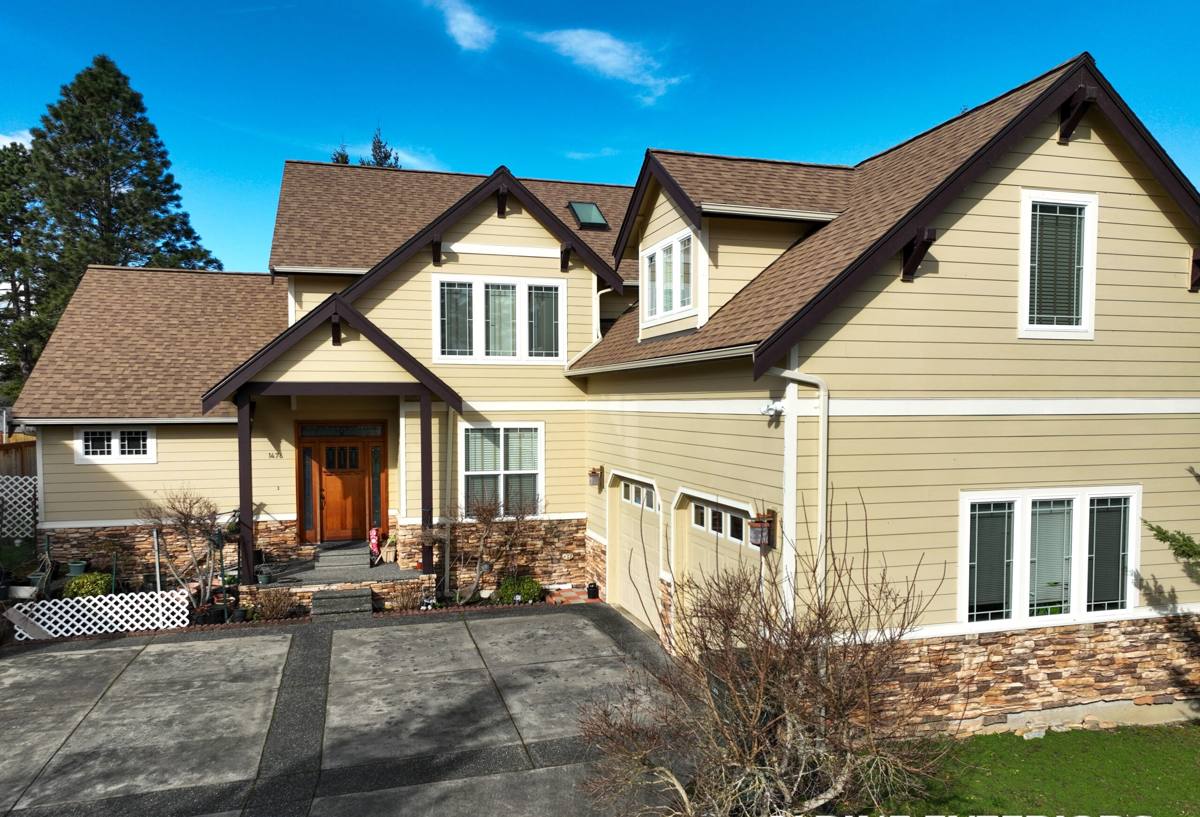
What "Custom" Means for Bow Homes Specifically
Bow is a small, spread-out community of farmhouses, remodeled older homes, newer builds, and properties with water or pastoral views. That mix means "custom windows" covers a wide range of real situations, not a single standard replacement.
Older and Farmhouse-Style Homes
Many homes in and around Bow are several decades old, with original wood-frame windows or a prior generation of aluminum replacements that were never a great match for the climate. These openings are frequently out of square after decades of settling, and the original flashing — if there was any — was rarely designed for the amount of wind-driven rain this area actually sees. Replacing these correctly means treating each opening as its own project, not assuming a standard-size unit will drop in cleanly.
Water-Adjacent and Exposed Properties
Homes with a clear line to Samish Bay or open farmland get more direct salt exposure and more wind. On these properties, hardware finish, frame material, and sealant choice matter more than they would on a sheltered lot a mile inland. We size up wind and salt exposure on the actual walls being worked on, not just the general neighborhood.
Additions, Remodels, and Mixed Openings
A lot of Bow properties have had additions or partial remodels over the years, which means a single house can have three or four different window styles and ages. Custom work here often means matching sightlines and proportions across old and new sections so the house reads as one building, not a patchwork.
Signs Your Current Windows Are Losing the Battle
Coastal Skagit County conditions tend to produce the same handful of failure patterns. Worth checking before you decide whether you need a repair, a partial replacement, or a full custom job:
- Condensation building up between the panes of a double-pane unit — this means the seal has failed and the gas fill (if any) is gone
- Frames that feel soft, spongy, or discolored at the bottom corners, a common early sign of moisture getting behind the trim
- Sashes that stick, drag, or won't stay open, often from swelling caused by repeated wetting and drying
- Visible moss, algae, or black staining collecting in the sill or bottom track and not washing away with rain
- A noticeable draft or cold spot at the frame edge during winter storms, especially on walls that face the prevailing wind and rain
- Hardware — locks, cranks, hinges — that's pitted, stiff, or corroded even though the glass and frame still look serviceable
Any one of these can be a minor fix. Several of them together on the same window, or the same symptom repeating across multiple windows on one exposure, usually means the openings themselves need to be addressed, not just the hardware or the glass.
What a Correct Custom Window Installation Involves
The window unit itself gets most of the attention, but in this climate the installation details around the unit are what actually determine whether it lasts.
Flashing and Moisture Management
This is the single most important part of the job and the one that's easiest to shortcut. Every opening needs a properly lapped flashing system — sill pan, jamb flashing, and head flashing installed in the right order so that any water that gets past the exterior finish is directed back out, not trapped against the framing. On a driving-rain, high-moisture site like Bow, a flashing detail done out of sequence or skipped to save time is often the actual root cause when a "good" window fails within a few years.
Frame Material Selection
Salt air is hard on some materials and largely indifferent to others. We walk through the real trade-offs for your specific exposure — maintenance burden, expected service life near salt air, and appearance — rather than defaulting to one product for every job. There isn't a single "best" material for every Bow property; the right call depends on how exposed the wall is and how much upkeep you want to take on.
Glass Package
Low-E coatings and gas-filled insulated glass units are standard on any quality replacement window today, and they matter more here than in a mild inland climate because they reduce condensation on the interior pane during cold, damp stretches — one of the more common complaints we hear from homeowners with older single or standard double-pane glass.
Sealing and Trim
Exterior sealants need to be rated for sustained UV and salt exposure, not a generic caulk that will chalk and crack within a couple seasons. Interior and exterior trim gets back-primed and sealed on all sides before installation, not just face-nailed and caulked at the joint, so moisture can't wick in from behind.
Frame Material Comparison for Coastal Skagit County
| Material | Salt Air / Moisture Performance | Maintenance | Typical Trade-Off |
|---|---|---|---|
| Vinyl | Good — won't rust or rot; UV-stable finishes hold up well near salt air | Low — rinse occasionally, no painting | Fewer custom color and profile options than wood or fiberglass |
| Fiberglass | Very good — dimensionally stable, resists pitting and corrosion | Low to moderate | Higher upfront cost than vinyl |
| Wood (properly clad) | Good on the exterior if cladding and flashing are correct; interior wood still needs care | Moderate — periodic finish maintenance on interior wood | More installation-sensitive; a flashing mistake shows up faster |
| Bare aluminum | Poor in salt air without upgraded, marine-grade hardware and finish | Higher — hardware and finish need more frequent attention | We generally steer clients away from unclad aluminum this close to the bay |
None of these are automatically wrong for a given house — a wood-clad window on a sheltered, less-exposed wall can perform fine for decades if the installation is done correctly. What we won't do is put a material in a location where its known weaknesses line up directly with the site's exposure, because that's how a homeowner ends up paying for the same window twice.
Our Process, Start to Finish
- On-site assessment. We look at each opening individually — orientation, wind and rain exposure, current framing condition, and any existing moisture damage — before recommending anything.
- Honest scoping. You get a clear picture of what's actually needed: full replacement, partial reframe, or in some cases a repair rather than a replacement, if that's the more honest answer.
- Custom measurement. Because so many Bow openings are out of square or non-standard after years of settling, we measure for the actual opening, not a catalog size.
- Correct flashing and installation. Sill pan, jamb, and head flashing installed in the right sequence, unit set plumb and square, and shimmed and sealed properly before trim goes back on.
- Interior and exterior finish work. Trim is back-primed, sealed, and finished to match the rest of the house, inside and out.
- Final walkthrough. We check operation, look for gaps or draft points, and walk the job with you before we consider it done.
Why a Crew That Already Works Bow Matters
Bow doesn't have the density of contractor traffic that a bigger town does, and that cuts both ways. On the plus side, it means fewer crews cutting corners to churn through volume. On the downside, it means it's easier for an out-of-area contractor to treat your project as a generic install and miss details specific to your site — the direction your prevailing weather actually comes from, how much salt exposure a given wall really gets, or how the local building department in unincorporated Skagit County handles permitting for window replacements versus new openings.
A crew that already works in Bow and the surrounding Anacortes and Skagit County area has already seen what this climate does to windows over ten, twenty, and thirty years — which materials hold up on exposed walls, which flashing shortcuts show up as callbacks two winters later, and which older homes need extra attention at the framing before a new window ever goes in. That experience shows up in fewer surprises during the job and a window system that's actually sized to the conditions it has to survive, not a best guess.
Maintenance Checklist for Coastal Skagit County Windows
Even a correctly installed window benefits from a little seasonal attention in this climate. A short list worth working through once or twice a year:
- Rinse frames and sills with fresh water periodically to reduce salt buildup, especially on wind- and rain-exposed walls
- Check and clear weep holes at the bottom of the frame so trapped water can drain instead of sitting against the sill
- Wipe down and lightly lubricate hardware — locks, cranks, hinges — to slow corrosion from salt air
- Remove moss and algae from sills and tracks before it holds moisture against the frame for months at a time
- Inspect exterior caulk and sealant lines annually and re-seal any that have cracked or pulled away
- Look for soft spots, discoloration, or bubbling paint at the bottom corners of frames, an early sign of moisture getting behind the trim
Cost Factors for Custom Window Projects in Bow
| Factor | Why It Matters Here |
|---|---|
| Number and size of openings | Straightforward driver of material and labor cost |
| Frame material chosen | Vinyl, fiberglass, and clad wood carry different upfront costs and different long-term maintenance costs |
| Condition of the existing opening | Rot or damage found once the old window is out adds framing repair before the new unit can go in |
| Wind and salt exposure of the wall | More exposed walls may call for upgraded hardware finishes or sealant systems |
| Non-standard or out-of-square openings | Older Bow homes often need custom sizing rather than a stock-size unit, which affects both material and labor |
| Glass package | Low-E coatings and gas fills add cost but reduce condensation and heat loss through the long wet season |
We give you real numbers for your actual house, not a per-window average pulled from a national price list — the honest range depends heavily on how many of the factors above apply to your specific openings.
Getting Started
If your windows are showing their age, fogging between the panes, or just never felt right for how much wind and rain this stretch of Skagit County gets, we're glad to take a look. Reach out for a free, no-pressure estimate using the form below — we'll walk your home, tell you honestly what each opening needs, and give you real numbers before any work begins.