 Anacortes Siding
 Deck Replacement Built for Bow's Climate
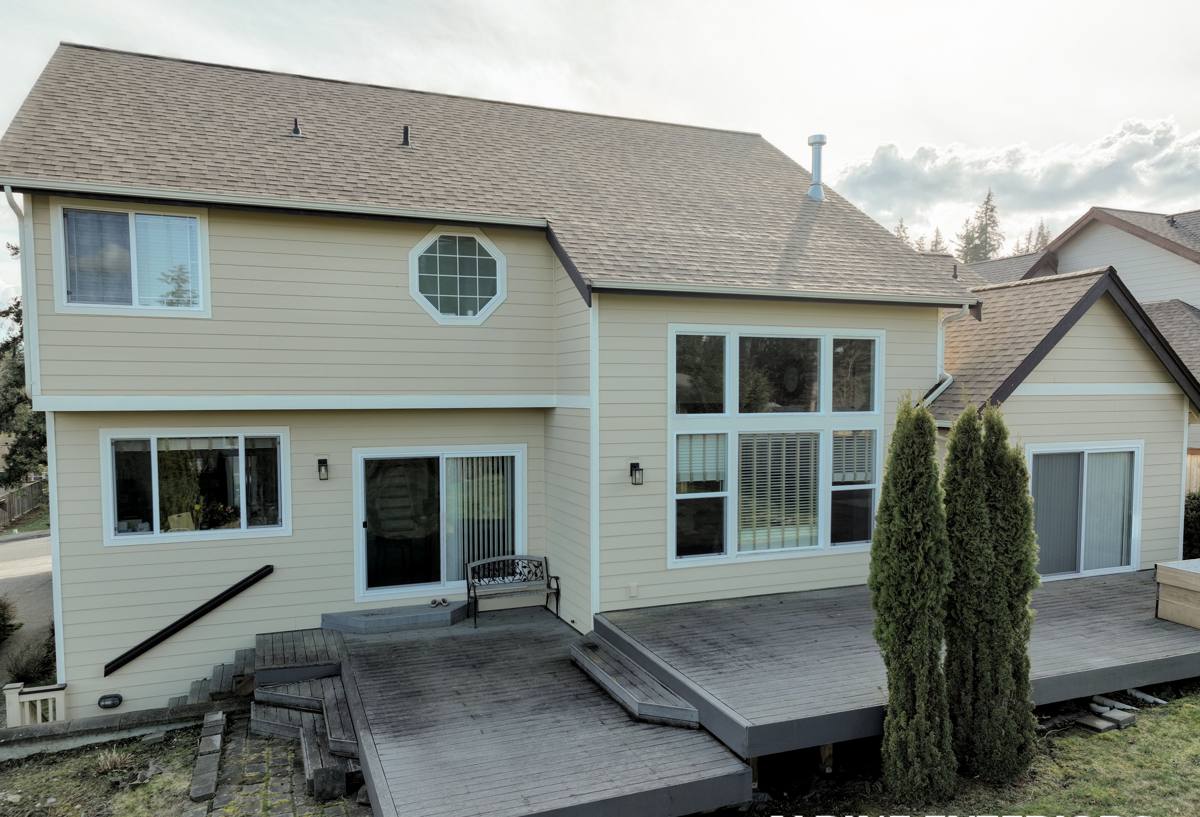
Bow sits in that stretch of Skagit County where the Samish Bay air, low tree cover in some spots and heavy tree cover in others, and near-constant winter dampness combine to age a deck faster than most homeowners expect. If you're looking at a deck that's cupping, graying unevenly, growing moss in the shady corners, or just starting to feel soft underfoot, you're not imagining it — you're seeing what salt-tinged, moisture-heavy air does to wood and fasteners over a decade or two of Northwest winters.
A deck replacement isn't just tearing off old boards and nailing down new ones. Done right, it's a chance to fix whatever caused the original deck to fail in the first place — usually drainage, fastening, or material choice — so the new one actually lasts through the next twenty Bow winters instead of the next five.
Why Decks in This Area Fail Early
Salt Air and Driving Rain
Proximity to Samish Bay means the air here carries more salt than it does further inland. Salt accelerates corrosion on any exposed metal — nails, screws, joist hangers, ledger bolts — and once fasteners start to weaken, the whole structure is only as sound as its worst connection. Add in wind-driven rain that hits decks at an angle rather than falling straight down, and you get moisture finding its way into end grain, fastener holes, and any spot where flashing was skipped or done poorly the first time.
The Long Moss Season
Skagit County's moss season runs long — often eight months or more of conditions damp enough for moss and algae to take hold on any horizontal wood surface that doesn't get much sun or airflow. Moss holds moisture against the board surface, which is exactly the environment that leads to rot, and it makes decking surfaces slick and genuinely dangerous underfoot, especially on stairs.
Freeze-Thaw and Ground Movement
Bow gets its share of frosty mornings and the occasional hard freeze. Water that's worked its way into a post base or a poorly sealed cut end expands when it freezes, which splits wood fibers and loosens joints a little more each winter. Over years, that's how a deck that looked fine on the surface turns out to have soft, compromised framing underneath.
Signs Your Bow Deck Needs Replacing, Not Just Repair
- Soft or spongy spots in decking boards, especially near the house or at board ends
- Ledger board (where the deck attaches to the house) shows staining, gaps, or soft wood
- Posts that wobble, or a railing that flexes more than it used to
- Persistent moss or algae that comes back within weeks of cleaning
- Rust streaks below fastener heads or joist hangers
- Boards that have cupped, twisted, or split along more than a few linear feet
- The deck is original to a home built more than 20-25 years ago and has never had structural work done
A single rotten board can often be repaired. Widespread softness, a compromised ledger connection, or corroded framing hardware is a structural issue — that's when replacement is the honest recommendation, not an upsell.
What a Correct Deck Replacement Involves
Tear-Off and Structural Inspection
We remove the old decking and railings and inspect what's underneath — posts, beams, joists, and especially the ledger connection to the house. This is where a lot of corner-cutting happens on cheap deck jobs, and it's also where most structural failures start. We don't cover up a bad ledger connection or undersized framing; we fix it.
Flashing and Ledger Detail
Given how much driving rain this area sees, the ledger flashing detail matters more here than it would in a drier climate. Properly installed flashing keeps water from wicking behind the ledger board and into the house rim joist — a failure point that's expensive to fix later because it's hidden until the damage is severe.
Framing and Fasteners
We use corrosion-resistant, code-rated hardware throughout — hot-dip galvanized or stainless steel connectors and fasteners rated for ground contact and coastal exposure. This is a non-negotiable for us in a salt-air environment; standard interior-rated hardware corrodes faster here than most homeowners expect, and a corroded joist hanger is a hidden safety issue, not a cosmetic one.
Decking Material Selection
We walk through the honest tradeoffs of each decking option for your specific site — how much sun and airflow the deck gets, how much moss and cleaning maintenance you're willing to take on, and your budget. There's no single "best" material; there's a best fit for your situation.
Drainage and Airflow Underneath
Low decks with poor airflow underneath are where moss and rot problems concentrate. Where the site allows, we build in ventilation gaps and make sure grading directs water away from posts rather than pooling around them.
Decking Material Comparison for Bow Conditions
| Material | Moss/Moisture Resistance | Maintenance | Typical Lifespan Here |
|---|---|---|---|
| Pressure-treated wood | Good if sealed and cleaned regularly | Annual cleaning, periodic re-sealing | 15-20 years |
| Cedar | Naturally decay-resistant but still needs sealing | Sealing every 2-3 years, regular cleaning | 15-20 years |
| Composite decking | Very good — doesn't absorb moisture like wood | Occasional washing, no sealing | 25-30 years |
| PVC/synthetic decking | Excellent — fully moisture-resistant | Low — occasional washing | 25-30+ years |
Composite and PVC decking cost more upfront but hold up noticeably better against the moss and moisture cycle that's hard on wood decks in this area. Wood costs less initially but asks for more consistent upkeep — cleaning and sealing on a schedule, not just when it starts looking bad. We're honest about that tradeoff rather than steering everyone toward the highest-margin product.
Cost Factors for a Bow Deck Replacement
| Factor | Why It Matters |
|---|---|
| Deck size and shape | Multiple levels, angles, or built-in features add labor and material |
| Height above grade | Taller decks need more substantial framing and railings, and more safety measures during construction |
| Ledger and framing condition | Structural repairs found during tear-off add scope but prevent a shorter-lived deck |
| Material choice | Composite and PVC cost more per square foot than pressure-treated wood, but reduce future maintenance |
| Railing style | Cable, glass, and custom railings cost more than standard wood or metal baluster systems |
| Site access | Decks with difficult equipment or material access can add labor time |
We give a firm, itemized quote after we've actually looked at your deck and site — not a ballpark over the phone. Anyone quoting a deck replacement sight-unseen is guessing, and that guess usually turns into a change order later.
Our Process, Start to Finish
- On-site assessment of the existing deck, structure, and ledger connection
- Honest conversation about material options and what fits your budget and maintenance preference
- Written estimate with clear scope, so there are no surprise add-ons for anything we could see up front
- Permit handling where required by the county or your jurisdiction
- Tear-off, structural repair as needed, and new framing with corrosion-resistant hardware
- Decking, railing, and finish work
- Final walkthrough with you before we consider the job done
Why a Crew That Already Works in Bow Matters
Skagit County covers a lot of different micro-climates — the exposure a deck gets in Bow, close to the water and often more open to wind, is different from a deck tucked into the trees a few miles inland. A crew that already builds and repairs decks in this specific area knows which fastener grades hold up, which framing details actually keep driving rain out, and how much airflow a deck needs underneath to avoid a moss problem within the first two years. That's not something you get from a national franchise working off a generic spec sheet — it comes from having done this work, in this weather, on homes like yours.
We also know the permitting expectations for deck work in this part of Skagit County, which keeps the project moving instead of stalling on paperwork nobody warned you about.
Maintaining Your New Deck
- Sweep leaves and debris off the deck regularly, especially in fall — trapped organic matter feeds moss growth
- Clean wood decking annually with a deck cleaner appropriate for the material; re-seal on the schedule your material calls for
- Check railings and stair connections once a year for looseness
- Keep gutters and downspouts near the deck clear so water isn't dumping directly onto or under it
- Address any soft spots or fastener corrosion early — small repairs now prevent structural work later
If your Bow deck is showing its age or you're planning ahead before it becomes a safety issue, we'd be glad to take a look. We offer free, no-pressure estimates — just fill out the form below and we'll get back to you to schedule a visit.