 Anacortes Siding
 Why Siding Fails Faster in Bow
Bow sits along Samish Bay in Skagit County, and that location shapes what happens to a house's exterior over time. Homes here take on a steady mix of salt-laden air off the bay, wind-driven rain that gets pushed sideways rather than falling straight down, and long stretches of shade and dampness that let moss and algae take hold on siding, trim, and roof lines for much of the year. None of that damage happens overnight. It shows up gradually, as soft spots, staining, gapped joints, and paint that won't hold — and by the time it's visible from the ground, there's usually more going on behind the siding than in front of it.
Siding repair in this kind of environment is not the same job as siding repair in a dry inland climate. A contractor who mostly works subdivisions an hour from the water may not think to check for salt corrosion on fasteners or trim, or to recognize how far moisture has traveled behind a panel that only looks damaged in one small spot. That's the gap we aim to close for homeowners in Bow.
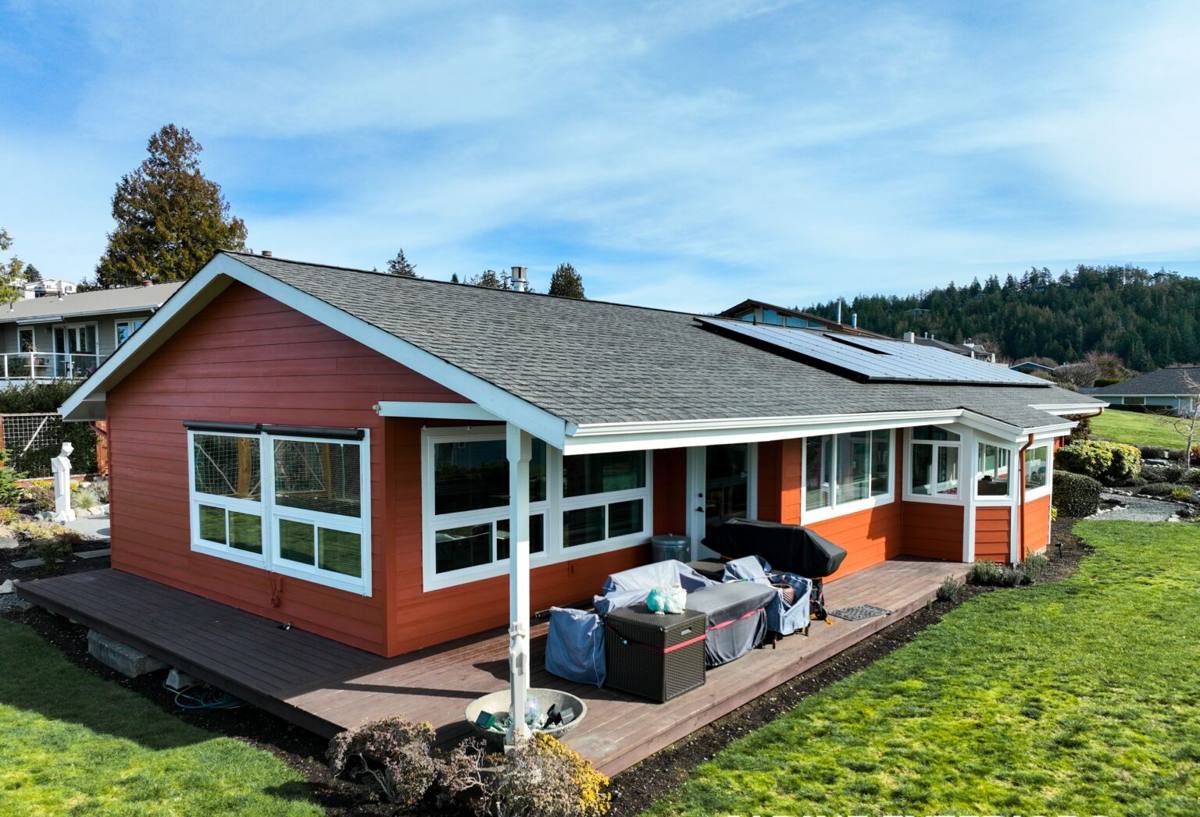
Signs Your Siding Needs Repair, Not Just a Repaint
A lot of homeowners reach for paint first, because it's the cheapest fix and it makes the problem look better for a season or two. But paint can't fix what's underneath it. Watch for these signs that the siding itself — not just the finish — needs attention:
- Soft, spongy, or bubbling sections when you press on the siding, especially near the bottom courses and around windows and doors
- Dark streaking or persistent moss and algae growth that comes back within a season of cleaning
- Visible gaps, cracking, or separation at seams, corners, and butt joints
- Paint that's peeling or blistering in patches rather than fading evenly across the whole wall
- A musty smell in an interior room that backs up to an exterior wall
- Rust streaks or corrosion around nail heads, trim fasteners, or flashing
Any one of these can be minor. Two or three together, especially in the same area of the house, usually mean water has been getting behind the siding for a while.
What's Actually Happening Behind Damaged Siding
Siding is the visible layer, but it's not the only layer doing work. Behind it is a water-resistive barrier (house wrap or building paper), flashing at every penetration and transition, and the wall sheathing itself. When siding fails — from a cracked panel, a gap at a joint, or fasteners that have corroded and backed out — water doesn't stop at the surface. It tracks down behind the panel, follows gravity, and finds the first place it can pool or soak in: usually a bottom plate, a window sill, or a seam in the barrier.
This is why a repair that only addresses what's visible from the outside can leave the real problem in place. A patched or re-caulked panel might look fine for a year, and then the rot that was already established behind it keeps spreading regardless. A proper repair has to check what's behind the siding, not just what's on it.
Repair vs. Replace: How We Decide
Not every damaged section needs to come off the whole house, and not every problem can be solved by patching. The honest answer depends on how far the damage has spread and what's causing it.
| Situation | Likely Approach | Why |
|---|---|---|
| Isolated cracked or damaged panel, sound sheathing behind it | Spot repair — remove and replace the affected pieces | Damage hasn't spread; matching material restores the wall without disturbing sound siding nearby |
| Recurring moss/algae staining with no soft spots | Clean, treat, and address the moisture/shade source (drainage, gutters, overhanging vegetation) | Cosmetic issue driven by conditions, not siding failure |
| Soft sheathing or visible rot found behind multiple panels | Section replacement, including sheathing and barrier repair | The water problem has already spread past the siding layer |
| Original material is failing systemically (delamination, widespread swelling, chronic paint failure) | Full elevation or full re-side | Patching a failing product only delays the same failure elsewhere on the wall |
We'll tell you plainly which category your home falls into, and we won't recommend a full re-side when a targeted repair will genuinely hold up.
Common Siding We Find on Bow Homes
Bow has a mix of older farmhouses, waterfront properties, and newer builds, which means we run into a range of existing siding materials when we go out for repair calls. Each one behaves differently once water gets involved.
| Existing Material | Repair Difficulty | Moisture Behavior |
|---|---|---|
| Cedar (lap or shingle) | Moderate — matching weathered wood is hard | Absorbs water, prone to rot and pest damage if coatings fail |
| Vinyl | Low for cosmetic damage, but discontinued colors/profiles are common and hard to match | Doesn't rot itself, but traps moisture behind it if installed with poor drainage |
| Hardboard/LP-style panel | High — damaged sections often mean the material is failing broadly | Very sensitive to sustained moisture; edges swell and delaminate |
| James Hardie fiber cement | Low to moderate — ColorPlus matching needs care | Non-combustible and moisture-resistant by design; failures are usually installation-related, not material-related |
When a section of aging cedar or hardboard siding is failing, a repair is sometimes the right near-term move — but it's also a natural point to ask whether that elevation, or eventually the whole house, is worth transitioning to a product that won't put you back in this position in a few years.
What a Correct Repair Actually Involves
We install James Hardie fiber cement exclusively, and that shapes how we approach repairs, even on homes that don't currently have Hardie siding. A repair that's done right — regardless of material — includes:
- Removing enough siding to see the real extent of the damage, not just the boards that look bad from the ground
- Checking and repairing the water-resistive barrier and flashing underneath, since that's usually where the actual failure started
- Replacing any soft or rotted sheathing before new siding goes back on
- Matching material, profile, and reveal so the repaired section reads as part of the wall, not a patch
- Correct fastening and joint treatment per manufacturer specification — this matters even more in a salt-air environment, where the wrong fastener corrodes and fails again within a few years
- Proper caulking and sealant at trim, corners, and penetrations, using products rated for the exposure
On Hardie siding specifically, repairs need to respect the product's engineered lines — HZ5 panels, for instance, are formulated for wetter, harsher climates, and mixing repair material or fastening methods that don't match the original installation undercuts the reason Hardie holds up in the first place. When we do a repair, we do it to the same standard as a full installation, not as a shortcut.
Our Repair Process
- On-site inspection. We look at the visible damage, but we also check moisture levels, probe suspect areas, and look at gutters, grading, and vegetation that may be contributing to the problem.
- Honest assessment. We tell you whether this is a spot repair, a section replacement, or something bigger — and why, in plain terms.
- Scope and estimate. You get a clear picture of what's being replaced, what material we're using, and what it costs before any work starts.
- Repair work. Damaged material comes off, the barrier and sheathing underneath get addressed, and new siding goes in to match the surrounding wall as closely as possible.
- Final check. We walk the repair with you so you can see exactly what was done and ask questions before we consider the job finished.
What We Check on Every Repair Inspection
- Moisture readings at and around the damaged area, not just a visual look
- Condition of flashing at windows, doors, and roof-to-wall transitions
- Fastener condition — corrosion, backing out, or improper spacing
- Sheathing condition once siding is pulled back
- Gutter function and water drainage away from the affected wall
- Vegetation, shade, or airflow issues contributing to moss and prolonged dampness
- Whether the damage is isolated or a sign of a broader material or installation issue
Why a Crew That Already Works This Area Matters
A contractor who regularly works Bow, Edison, and the rest of the Samish Bay corridor has already seen how salt air corrodes the wrong fasteners, how driving rain off the water finds its way into joints that would stay dry a few miles inland, and how quickly moss re-establishes itself under the tree cover common to this area. That's not something you can fully account for with a generic repair approach built for a drier, more sheltered part of Skagit County. It affects fastener choice, sealant selection, and how conservative we are about checking behind siding that looks only lightly damaged from the outside.
It also means faster, more accurate estimates. We're not guessing at conditions we've never dealt with — we're applying what we already know about how this specific stretch of coastline treats exterior materials.
If you're seeing soft spots, staining, or gaps in your siding, it's worth getting a straight answer on what's really going on before it spreads further. We're happy to take a look and give you a free, no-pressure estimate — no obligation, just an honest read on what your home needs.