 Anacortes Siding
 Siding Built for the Edison Microclimate
Edison sits in the low, damp corner of Skagit County near Samish Bay, where farmland, tidal flats, and timber line meet. Homes out here deal with a specific combination of stresses that siding in drier parts of the state never has to handle: salt-laden air drifting in off the bay, long stretches of driving rain pushed sideways by wind, and shaded, moisture-trapping conditions that keep moss and algae established on north and west walls for most of the year. Any siding material installed here has to shed water fast, resist the slow chemical creep of salt exposure, and hold its finish without constant re-coating.
We're based out of Anacortes and work the Edison area regularly, so this isn't a generic climate description pulled from a manual — it's the actual set of conditions we plan around every time we bid a job out here. That planning starts with material selection, and it's why we install exactly one siding system on every home we work on.
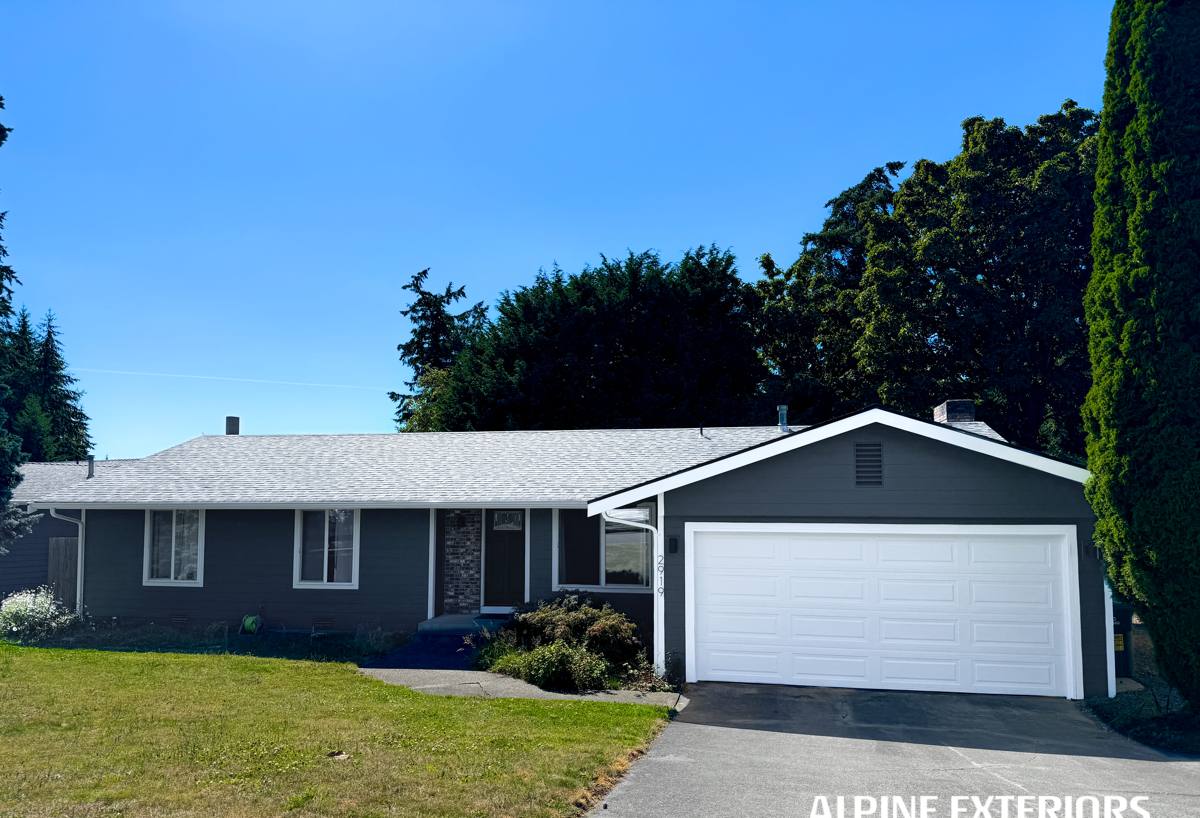
Why We Install Only James Hardie Fiber Cement
We don't offer vinyl, LP SmartSide, primed wood, or other fiber cement brands. That's a deliberate standard, not a lack of options. Vinyl expands and contracts significantly with temperature swings and can warp or crack under wind-driven debris; it also isn't fire-rated in the way fiber cement is. Engineered wood products like LP SmartSide perform well in some climates but rely on factory-applied treatments and careful field sealing to resist moisture — a maintenance margin that's thinner than we're comfortable putting our name behind in a bay-adjacent, high-moisture environment like Edison. Other fiber cement brands exist, but James Hardie's HardieZone engineering, factory-cured ColorPlus finish, and transferable warranty structure are the combination we've found holds up best to salt air and sustained wet weather with the least homeowner upkeep. We'd rather tell a homeowner honestly why we won't install something than sell a product we don't fully stand behind.
What HZ5 Engineering Means for This Area
James Hardie manufactures its siding in different formulations for different climate zones. Western Washington, including Skagit County, falls in the HZ5 zone — engineered for high moisture exposure and freeze-thaw cycling. That's a meaningfully different product than the HZ10 formulation sold in hot, dry Southwest markets. It matters because the moisture-resistance characteristics of the board itself are matched to conditions like Edison's, not a generic national spec.
ColorPlus Factory Finish
Field-painted siding is only as good as the coat applied on-site, and repainting every few years is an ongoing cost most homeowners underestimate when they're comparing materials up front. ColorPlus finish is baked on at the factory in multiple coats under controlled conditions, which gives it better fade and moisture resistance than a job-site paint job, and it comes backed by its own finish warranty separate from the substrate warranty.
What a Correct Installation Actually Involves
Fiber cement siding is only as good as the water management system underneath it. This is where most siding failures we see actually originate — not in the board itself, but in shortcuts taken during prep and installation that let water get behind the cladding and stay there.
Water-Resistive Barrier and Flashing
Every project starts with a continuous weather-resistive barrier over the sheathing, with flashing integrated at every penetration — windows, doors, hose bibs, light fixtures, and roof-to-wall transitions. In an area that gets sustained driving rain off the bay, gaps here are exactly where moisture works its way in behind the siding and stays trapped against the wall assembly.
Clearances and Fastening
James Hardie specifies minimum clearances from grade, roofing, and decking so the bottom edge of the siding never sits in standing water or gets trapped moisture from splash-back. Fastener spacing, type, and placement also matter more than most homeowners realize — under- or over-driven nails, or fasteners in the wrong zone of the board, are a common cause of premature cracking and reduced wind resistance.
Caulking and Expansion Joints
Fiber cement moves slightly with temperature and moisture changes, so joints, seams, and butt splices need the right sealant and the right gap — not caulked solid, which can trap moisture, and not left open, which lets water in. This detail work is where installation experience shows up years later, either as a wall that's still tight or one that's showing staining and soft trim.
Signs Existing Siding in the Edison Area Is Failing
Because of the moss, moisture, and salt exposure common here, siding problems tend to show up in a specific set of ways. Worth checking before they become structural:
- Persistent moss or dark algae streaking on north- and west-facing walls that returns quickly after cleaning
- Paint that's chalking, peeling, or bubbling, especially on wood or engineered wood siding
- Soft or spongy spots when pressed near the bottom courses or around window trim
- Visible gaps, cracks, or separated caulk lines at seams and corners
- Warping, bowing, or panels that no longer sit flush against the wall
- Musty odor or visible staining on interior walls that share an exterior wall with problem siding
Any one of these on its own might be minor. Several together usually mean the water-resistive barrier or flashing behind the siding has already been compromised, which is a bigger repair than the siding surface alone.
Our Process, Start to Finish
- On-site assessment — we walk the exterior, check existing siding and trim condition, and note drainage, grade clearance, and any moisture entry points.
- Written estimate — a clear scope covering tear-off (if applicable), water barrier and flashing work, Hardie product line and color, and trim.
- Prep and water management — removal of failed material, sheathing repair where needed, and installation of a continuous weather-resistive barrier with flashing at every penetration.
- Siding installation — Hardie panels or lap siding installed to manufacturer clearance and fastening specs.
- Trim, caulking, and final detailing — seams, corners, and joints sealed correctly for long-term movement and moisture control.
- Final walkthrough — we review the finished work with the homeowner before calling the job complete.
Cost Factors for a Fiber Cement Project in Edison
Every home is different, but the same variables tend to drive the price of a job in this area up or down. We put together written estimates after a walkthrough, but this gives a sense of what shapes the number:
| Factor | Why It Matters Here |
|---|---|
| Existing siding removal | Tear-off and disposal of old material adds labor, especially if moisture damage to sheathing is found underneath |
| Sheathing or framing repair | Common where moss and trapped moisture have been sitting against a wall for years |
| Siding profile (lap vs. panel vs. shingle-style) | Labor time and trim detail vary by profile |
| Trim and accessory work | Window, door, and corner detailing adds time proportional to home complexity |
| Home height and access | Multi-story sections or limited equipment access affect scaffolding and labor |
| Color and finish selection | ColorPlus factory finishes vs. field-painted trim can shift material cost |
Why a Crew That Already Works This Area Matters
Edison isn't a big market, and it's easy for an out-of-area contractor to underestimate what the site conditions actually demand — grade clearance near low-lying, moisture-prone lots, flashing details suited to sustained wind-driven rain, and realistic expectations about how fast moss re-establishes on shaded walls. A crew that regularly works Anacortes and the surrounding Skagit County communities has already seen how these conditions play out on real homes over multiple seasons, not just in a spec sheet. That translates into fewer surprises during the job and a finished install that's detailed for the actual weather it has to survive, not generic best practices from a drier climate.
Maintenance After Installation
One of the practical advantages of correctly installed James Hardie siding in a climate like this is how little ongoing maintenance it asks for compared to wood or vinyl. It doesn't need repainting on the schedule that field-painted wood does, and it holds up to washing without the warping risk vinyl carries in strong impacts. A yearly rinse to knock back moss and organic buildup on shaded walls, and a periodic check of caulking at seams and trim, is generally enough to keep it performing the way it was installed.
If you're seeing early signs of siding trouble on a home in the Edison area, or you're planning ahead for a replacement, we're happy to walk the exterior and give you a straight, no-pressure estimate — just fill out the form below.