 Anacortes Siding
 Why Bow's Climate Is Hard on Siding
Bow sits in the rural stretch of Skagit County between Burlington and Bellingham, close enough to Samish Bay and the broader Puget Sound corridor that homes here take on a steady dose of salt-laden marine air. That air doesn't just smell different than it does inland — it behaves differently against a house. Salt-bearing moisture works into fastener heads, trim joints, and any gap in a weather barrier, and it accelerates corrosion and material breakdown in ways that a purely inland home never experiences.
Layer on top of that the driving rain that comes through this part of Skagit County during fall and winter storms. Wind off the water doesn't let rain fall straight down — it pushes it sideways, into lap joints, corner trim, and anywhere a siding system relies on gravity alone to shed water. And because so many Bow properties sit on tree-covered or shaded lots, moss season here runs long — often eight months or more — coating north-facing walls, eaves, and anything that doesn't get much direct sun.
None of this means siding is doomed in Bow. It means the margin for error is smaller than it is in drier, more sheltered parts of the state, and the products and installation details that matter on paper matter a lot more in practice.
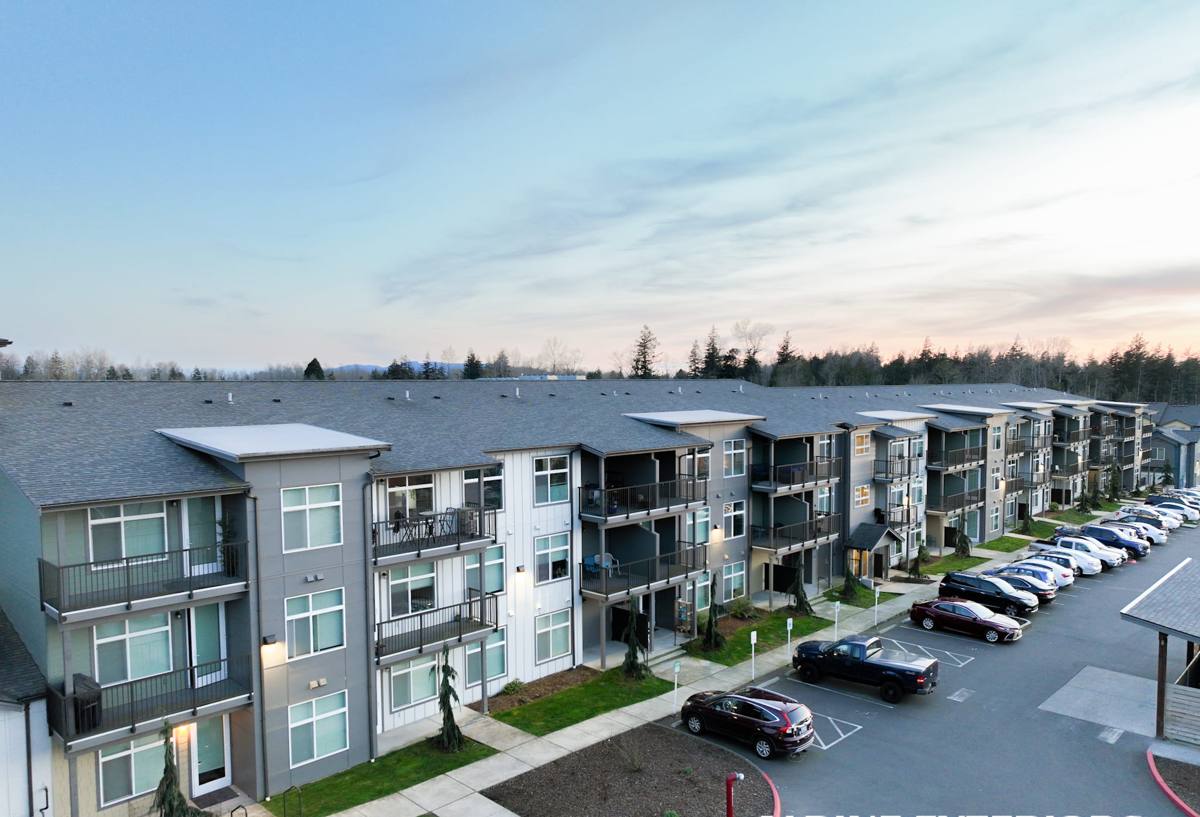
What Actually Fails First on Bow-Area Homes
When we look at siding failures on homes in this area, they rarely start in the middle of a wall. They start at the details:
- Butt joints and seams where two pieces of siding meet, especially if they weren't caulked or flashed correctly
- Corners and trim boards, where two materials and two installation crews' work come together
- The bottom courses near grade, where splashback and standing moisture do the most damage
- Shaded, north-facing walls and areas under limited roof overhang, where moss and algae get a foothold and stay wet longer between rain events
Rural and wooded lots — common around Bow — often have more shade and slower air movement across the siding than an open, sunny lot would. That keeps moisture sitting against the wall longer, which is exactly the condition that breaks down wood-based and poorly sealed siding products over time.
Why Correct Installation Matters More Here Than Almost Anywhere
Every siding manufacturer publishes installation specs — fastener spacing, clearance from grade and roof lines, flashing details around windows and penetrations, and how laps and joints should be treated. In a mild, dry climate, a crew that skips a few of those details might get away with it for a decade. In Bow's combination of salt air, driving rain, and long wet seasons, the same shortcuts tend to show up as visible problems within a few years, not decades.
That's why we treat the "boring" parts of the job — the weather-resistive barrier, the flashing at every window and door, the drainage gap behind the panels, correct fastener depth — as the part of the job that actually determines whether the siding performs. The finished look is the same whether those details are done right or not. The difference only shows up later, and by then it's expensive to fix.
Why We Only Install James Hardie Fiber Cement
We made a decision as a company to install James Hardie fiber cement siding exclusively — not LP SmartSide, not vinyl, not Cemplank or Allura, not primed spruce or cedar. That's not a marketing position; it's a standard we hold because of what we've seen these products do over time in exactly the kind of climate Bow sits in.
Fiber cement is non-combustible, which matters in Skagit County's mix of wooded rural properties and dry-season wildfire risk. Hardie's ColorPlus factory-applied finish is baked on under controlled conditions, so it holds color and resists chipping and peeling far better than a coat of paint applied on site after installation — a real advantage in an area where UV, salt air, and moisture all work against a painted surface. Hardie also engineers its product lines by climate zone; the version installed here (HZ5) is built specifically for regions with significant moisture exposure and freeze-thaw cycling, which describes western Washington well.
Just as important is what fiber cement doesn't do. It doesn't swell, delaminate, or take on water the way wood-based composite sidings can when a seam opens up or caulking fails. It holds its shape and doesn't rot the way solid wood siding can when moss and moisture sit against it season after season. And it comes with a strong, transferable manufacturer warranty backed by a product with a long track record — something that matters to us when we're putting our name on a job that has to hold up against Bow's weather for decades, not just look good on installation day.
Our Siding Replacement Process
A siding replacement is really a sequence of smaller jobs that all have to be done right, in order. Here's how we approach it:
- Inspection and moisture assessment. We look at the existing siding, trim, and — where accessible — the sheathing underneath for soft spots, rot, or existing moisture damage before we ever quote the job.
- Tear-off and sheathing check. Removing the old siding is also when hidden problems get found. Any damaged or compromised sheathing gets identified and repaired before anything new goes on the wall.
- Weather-resistive barrier and flashing. A new drainage plane and correctly lapped, sealed flashing around every window, door, and penetration go on before the siding does. This is the layer that actually keeps driving rain out.
- Hardie panel or lap installation. Panels go up to manufacturer specification — correct fastener type, spacing, and embedment, proper clearance from grade, roof lines, and decks, and correctly treated joints and corners.
- Caulking and finish work. Joints, trim, and penetrations get sealed with appropriate sealants, and any factory-finish touch-up is done to spec.
- Final walk-through. We go over the finished job with the homeowner before calling it done.
Signs Your Bow Home May Need Siding Replacement
- Soft or spongy spots when you press on the siding, especially near the bottom courses
- Moss or algae staining that comes back quickly after cleaning, rather than staying off for a season or more
- Paint that's peeling, bubbling, or chalking heavily, particularly on wood or wood-composite siding
- Visible warping, cupping, or separation at seams and corners
- Gaps that have opened up at trim boards or butt joints
- Siding that's simply past the age you'd expect it to still be performing well
Any one of these on its own might be a minor repair. Several at once, especially combined with rot found during a closer look, usually means it's time to talk about full replacement rather than another round of patching.
What Affects the Cost of a Siding Replacement
Every home is different, so we don't quote off a generic price list — but a few factors consistently move the scope and cost of a job up or down:
| Factor | Why It Matters |
|---|---|
| Home size and wall complexity | More square footage, more corners, dormers, and rooflines mean more material and labor |
| Condition of existing sheathing | Rot or moisture damage found during tear-off has to be repaired before new siding can go on, which adds scope |
| Existing siding type | Some materials remove faster and cleaner than others; more layers or more fasteners mean more removal time |
| Site access | Long rural driveways, tree cover, slopes, or limited equipment access — common on Bow-area lots — can add setup and staging time |
| Trim and color complexity | Custom trim details and multiple colors add labor beyond a simple single-color lap install |
| Building height | Second-story and steep-site homes require scaffolding or lift equipment, which adds cost |
Why Hiring a Crew That Already Works Bow Matters
A lot of what separates a siding job that holds up from one that doesn't isn't visible on the surface — it's judgment calls made during installation, and those judgment calls are better informed by local experience. A crew that regularly works this part of Skagit County knows which walls tend to hold moisture longest, how much clearance actually matters given the amount of rain this area gets, and how rural property logistics — longer driveways, well and septic locations, tree-heavy lots — affect scheduling and site setup. That familiarity shows up in fewer surprises during the job and a finished product that's actually built for the conditions it has to survive, not just for a generic spec sheet.
Keeping Your Siding Performing After Installation
Correctly installed fiber cement siding is low-maintenance, but "low-maintenance" isn't "no-maintenance," especially in Bow's climate:
- Rinse siding gently once or twice a year to keep moss and algae from building up, especially on shaded walls
- Keep trees and shrubs trimmed back from the siding so walls get airflow and sun exposure
- Check caulking at windows, doors, and trim every couple of years and have any cracked or missing sealant redone
- Keep soil, mulch, and debris from piling up against the bottom of the siding, which traps moisture at the most vulnerable point
A few minutes of attention a couple times a year is usually all it takes to get the full lifespan out of a correctly installed system.
If your Bow-area home has siding that's showing its age — or you're planning ahead before the next wet season sets in — we're happy to take a look and give you a straightforward, no-pressure estimate. There's no obligation, just an honest read on what your home actually needs.