 Anacortes Siding
 Flounder Bay Sits Right in the Path of Fidalgo Island's Toughest Weather
Flounder Bay faces the marine waters that surround Fidalgo Island, and that location comes with a specific set of siding problems most inland Skagit County homes never deal with. Salt-laden air moves off the water and settles on exterior walls year-round. Wind-driven rain hits siding at an angle instead of falling straight down, working its way into laps, seams, and fastener points that would stay dry in a more sheltered spot. And the long gray stretch from fall through spring keeps north- and west-facing walls damp long enough for moss and algae to take hold.
None of that is unusual for this part of Washington. But it means siding material and installation quality matter more here than they do in drier climates. A product that performs fine in Spokane or Boise can struggle on a home a few hundred feet from Flounder Bay's shoreline. That's the starting point for every job we do in this neighborhood.
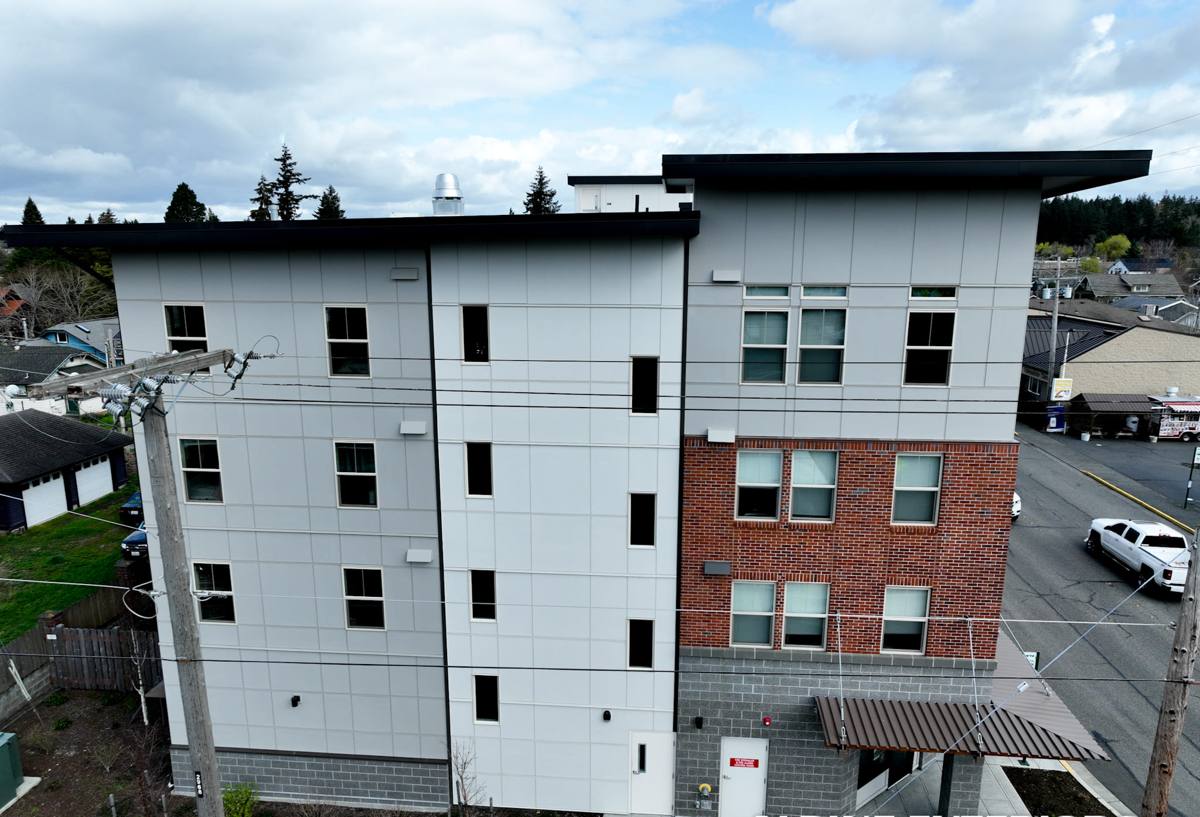
Why We Install James Hardie Fiber Cement — and Nothing Else
We are a James Hardie-only siding contractor. We don't install vinyl, LP SmartSide, Cemplank, Allura, primed spruce, or cedar, and we won't quote those products even if a homeowner asks for them. That's a deliberate standard, not a sales pitch, and it matters more in a salt-air environment like Flounder Bay than almost anywhere else we work.
Fiber cement is non-combustible and dimensionally stable — it doesn't expand and contract with humidity swings the way wood-based products do, and it doesn't trap moisture against the wall the way vinyl can when a seam fails. James Hardie's ColorPlus factory finish is baked on and warranted separately from the panel itself, which matters in a coastal microclimate where field-applied paint tends to fail faster on horizontal siding profiles exposed to blowing rain. We've seen enough of the alternatives fail early in similar conditions elsewhere in Skagit County that we stopped installing them.
What This Means for a Flounder Bay Project
In practice, every siding quote we write for this area uses Hardie's engineered lap, shingle, or panel products, matched to the wall's actual exposure. A wall facing open water gets treated differently than a sheltered side yard, even on the same house.
James Hardie's HZ Product Line Is Built for This Exact Climate
James Hardie engineers its siding by climate zone, and the Pacific Northwest falls under the HZ5 formulation — designed specifically for regions with high moisture exposure and freeze-thaw cycling, which describes Flounder Bay's winters accurately. HZ5 fiber cement is formulated to resist moisture absorption and crack resistance in wet, temperate coastal conditions, rather than the wildfire- or humidity-driven formulations used in other parts of the country.
This matters because siding failures in marine environments usually trace back to one of two causes: water intrusion behind the cladding, or a material that wasn't rated for the moisture load it's sitting in. Using the correct HZ formulation eliminates the second cause. Correct installation — flashing, gapping, fastening, and drainage — eliminates the first. You need both.
What Correct Fiber Cement Installation Involves Here
Fiber cement siding is only as good as the wall assembly behind it. In a high-moisture, salt-exposed setting like Flounder Bay, a few details matter more than they would in a drier climate:
- Weather-resistive barrier and drainage plane: a correctly lapped and sealed WRB with a drainage gap behind the siding lets any moisture that does get past the cladding drain out instead of sitting against the sheathing.
- Flashing at every penetration: windows, doors, hose bibs, light fixtures, and deck ledgers all need proper flashing detail — these are the most common failure points we find on older homes near the water.
- Manufacturer-specified fastening: corrosion-resistant fasteners driven to Hardie's spec, at the correct depth, in the correct location on the plank — over-driven or under-driven nails are a leading cause of premature siding problems in coastal wind.
- Proper clearance and gapping: ground clearance, deck and roof-line clearance, and expansion gaps at trim and butt joints, sealed or left open per Hardie's guidelines depending on the detail.
- Factory-finished ColorPlus edges sealed correctly: cut edges and any exposed fiber cement need proper edge treatment so the factory finish's moisture protection isn't compromised at the cut line.
Skipping or rushing any one of these steps doesn't usually show up as a visible problem for a year or two. It shows up later, as staining, soft trim, or siding that's holding moisture at the bottom courses — by which point the fix is more involved than it would have been to do it right the first time.
Our Process for a Flounder Bay Siding Project
The sequence doesn't change from house to house, but what we're watching for at each step is shaped by this specific location.
1. On-Site Assessment
We walk the exterior and identify which walls take the most direct exposure to wind-driven rain and salt air off the water, since those walls often warrant closer attention to flashing and drainage detail even if the rest of the house is in good shape.
2. Tear-Off and Sheathing Inspection
Removing the old siding is when we find out what's actually going on behind it — soft sheathing, missed flashing, or moisture staining that wasn't visible from outside. We address what we find before anything new goes up; there's no point installing new siding over a compromised wall.
3. Weather Barrier and Flashing Install
New WRB, flashing at every penetration, and a drainage gap where the wall assembly calls for one. This is the step that determines whether the siding performs for its full service life or not.
4. James Hardie Installation to Manufacturer Spec
Panels, laps, or shingle siding installed with correct fastening, clearances, and joint treatment, per James Hardie's published installation guidelines — not shortcuts, since doing so can also void the manufacturer warranty.
5. Trim, Caulking, and Final Detail
Corner boards, trim, and touch-up work finished with materials and sealants suited to a marine environment, not generic hardware-store caulk that hardens and cracks within a couple of seasons.
James Hardie HZ5 Compared to the Alternatives
| Factor | James Hardie HZ5 Fiber Cement | Vinyl | Wood / LP-Style Products |
|---|---|---|---|
| Moisture behavior in coastal exposure | Engineered for high-moisture climates; dimensionally stable | Can warp or bow with temperature swings; seams are a moisture entry point | Susceptible to swelling, rot, and moisture-driven failure without diligent upkeep |
| Salt air / coastal durability | Non-combustible, resists moisture absorption | Can become brittle and fade under UV and salt exposure over time | Prone to accelerated weathering near saltwater |
| Finish | Factory-baked ColorPlus, separately warranted | Color molded through material, fades over time | Field-applied paint or primer, needs more frequent recoating |
| Fire rating | Non-combustible | Combustible | Combustible |
| Typical service life when installed to spec | Multiple decades | Moderate, seam and fastener issues common over time | Shorter without consistent maintenance |
We're not going to claim the alternatives are unusable products — they have legitimate uses in the right setting. But for the moisture load and salt exposure a Flounder Bay home deals with, we don't think they hold up as well over the long run, and we'd rather not install something we don't stand behind fully.
Moss, Mildew, and Salt Film: What to Expect After Installation
Even correctly installed Hardie siding will pick up surface moss and mildew in this climate — that's a function of the Pacific Northwest's wet season, not a defect in the product. What changes with fiber cement is how easy that buildup is to deal with. ColorPlus finish can be gently rinsed without the coating lifting or fading the way some painted surfaces do, and the panel itself won't soften or swell from repeated exposure to moisture the way untreated wood products can.
A light annual rinse on north- and water-facing walls, and keeping vegetation and sprinklers from holding water against the siding, goes a long way toward keeping a Flounder Bay home looking clean between the more thorough cleanings most homes need every few years regardless of siding material.
Signs Your Current Siding Is Already Losing the Fight
If your home is on or near the water at Flounder Bay, a few warning signs are worth checking for before they turn into a bigger repair:
- Soft or spongy spots near the bottom courses or around windows and doors
- Persistent staining or streaking that doesn't rinse off
- Visible gaps, warping, or buckling at seams and corners
- Peeling or bubbling paint, especially on walls facing the water
- Moss or algae that keeps returning within weeks of cleaning
- Musty smell near exterior walls, which can indicate moisture behind the siding
Any one of these on its own isn't necessarily an emergency, but several together — especially on a wall with direct wind or water exposure — are worth having looked at before the next wet season.
Why Hiring a Crew That Already Works Flounder Bay Matters
Siding installation isn't a one-size-fits-all trade. A crew that mostly works drier, inland parts of Skagit County can still do competent work, but they may not default to the flashing and drainage detail a marine-exposure wall actually needs, simply because they don't run into that exposure level as often. A crew that regularly works Flounder Bay and the surrounding Anacortes waterfront treats those details as standard practice, not an upgrade.
There's also a practical side to local familiarity: knowing how Fidalgo Island's wind patterns hit different sides of a house, understanding how quickly moss returns on north-facing walls in this specific microclimate, and having already worked through the permitting and inspection process with local jurisdictions. None of that replaces good technique, but it does mean fewer surprises during the project.
What Affects the Cost of a Flounder Bay Siding Project
| Factor | Why It Matters |
|---|---|
| Home size and wall complexity | More corners, dormers, and cutouts mean more trim, flashing, and labor |
| Condition of existing sheathing | Rot or water damage found at tear-off adds repair scope before new siding goes up |
| Siding profile chosen | Lap, shingle, and panel Hardie products carry different material and labor costs |
| Exposure level of the site | Walls facing open water may need additional flashing and drainage detail |
| Trim and accessory scope | Corner boards, fascia, and soffit work done alongside siding affects total cost |
| Site access | Waterfront lots, retaining walls, and tight setbacks can affect staging and labor time |
We don't publish blanket per-square-foot pricing because these factors vary too much house to house to make a generic number useful — an accurate number comes from actually seeing the walls.
Questions Worth Asking Before You Sign a Siding Contract
- Is the quote based on James Hardie's published installation specifications, or a general approach the crew uses on every siding brand?
- Does the proposal include flashing and drainage plane detail, or just the visible siding install?
- Is the crew factory-trained or experienced specifically with fiber cement, not just vinyl or wood siding?
- What happens if rot or damage is found once the old siding comes off?
- Is the manufacturer's product warranty passed through in full, and is it clear what voids it?
If your Flounder Bay home is due for new siding, or you want a second opinion on something you're already seeing on the exterior, we're happy to take a look. Reach out through the form below for a free, no-pressure estimate — we'll walk the house with you and tell you honestly what it needs.