 Anacortes Siding
 Deck Replacement Built for Burlington's Climate
Burlington sits in the Skagit Valley, close enough to the water and low enough in the flats that decks here take on moisture from more directions than most homeowners realize: rain soaking down from above, damp ground moisture wicking up from below, and humid, slow-drying air sitting on the surface for days at a time. Add in the moss and algae that thrive in our mild, wet winters, and a deck that isn't built or replaced with this climate in mind will show its age fast — soft boards, rusted fasteners, slick surfaces, and framing that rots from the inside before the top boards ever look bad.
We replace decks for homeowners throughout Burlington and the surrounding Skagit County area, and the decks that hold up longest here aren't necessarily the most expensive ones — they're the ones built with the right ventilation, the right fasteners, and materials matched honestly to how much upkeep the homeowner actually wants to do.
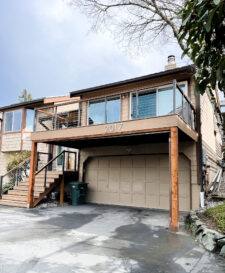
Why Decks Fail Faster in the Skagit Valley
Ground Moisture and Poor Airflow
A lot of older decks in this area were built low to the ground with minimal clearance underneath. That might look fine when it's new, but it traps moisture against the framing and posts. Without airflow, wood underneath a deck stays damp for days after a storm, and that's exactly the environment rot and mold need to take hold. Replacement is often the only real fix, because you can't retrofit proper clearance and ventilation into an existing structure without rebuilding the substructure anyway.
Moss and Algae on the Surface
Skagit County's long wet season — mild temperatures, low sun angle, months of overcast skies — is close to ideal moss-growing weather. Moss holds moisture against the deck boards and turns walking surfaces slick and dangerous, especially on stairs. Once moss has been growing on a deck for a few seasons, it's usually left permanent staining and softened the wood fibers underneath it, even if the boards look okay after a pressure wash.
Fastener and Hardware Corrosion
Salt-tinged air off the Sound and Skagit Bay accelerates corrosion on anything less than fully rated hardware. We regularly find decks where the boards themselves are salvageable but the ledger bolts, joist hangers, or post bases have corroded to the point of being a structural liability. Once fasteners go, the deck's connection to the house is compromised — this is one of the most common reasons a deck that "looks fine" actually needs to come down.
What a Correct Deck Replacement Involves
Replacing a deck properly in this climate is not just pulling old boards and screwing down new ones. A correct job addresses the structure, the water path, and the connection points — not just the walking surface.
- Full removal of old decking, framing, and any compromised posts or footings
- Inspection of ledger board attachment to the house, including flashing behind the ledger — this is the single most common source of hidden rot on Burlington decks
- Proper joist spacing and sizing for the decking material chosen, not just matching what was there before
- Corrosion-resistant, code-rated fasteners and structural hardware throughout — not standard exterior screws
- Adequate clearance and airflow beneath the deck to keep framing dry between storms
- Correct drainage slope away from the house on the decking surface
- Guardrails, stair stringers, and baluster spacing built to current code, since older decks are frequently out of compliance even if they were fine when built
Skipping any of these steps to save money up front is exactly how homeowners end up replacing a deck again in eight or ten years instead of twenty-five or thirty.
Decking Material Choices for Burlington Homes
There isn't one "best" decking material for every home — it depends on how much maintenance a homeowner wants to do and what budget they're working with. We'll walk through the honest trade-offs rather than pushing whatever has the best margin.
| Material | Moisture Performance Here | Maintenance | Typical Lifespan |
|---|---|---|---|
| Pressure-treated wood | Good if sealed and maintained; prone to moss without upkeep | Annual cleaning and periodic sealing | 15-20 years |
| Cedar | Naturally moisture-resistant, ages gracefully if maintained | Regular cleaning, occasional oiling | 15-25 years |
| Composite decking | Excellent — doesn't absorb water or rot | Occasional washing to prevent surface algae film | 25-30+ years |
| PVC decking | Excellent — fully moisture-proof surface | Low; occasional washing | 25-30+ years |
Composite and PVC decking have become popular choices in our area specifically because they don't feed moss the way wood does and they don't need annual sealing to keep moisture out. That said, we still see homeowners choose cedar or treated wood for cost or appearance reasons, and that's a perfectly reasonable choice as long as the maintenance commitment is understood going in — a wood deck in Skagit County that isn't cleaned and resealed on schedule will develop moss and moisture problems well before the wood itself is actually worn out.
Substructure and Framing: Where the Real Value Is
Homeowners often focus on the decking material because it's what they see and touch, but the framing underneath is what actually determines how long a deck lasts and how safe it is. In our climate, we pay particular attention to:
- Post bases: set above grade on proper footings, never buried directly in soil where they'll wick moisture year-round
- Joist protection: capped or wrapped to keep water from soaking into end grain, which is where rot typically starts
- Ledger flashing: properly integrated with the house's siding and weather barrier so water is directed away from the structure rather than behind it
- Hardware rating: hot-dip galvanized or stainless fasteners and connectors suited to damp, occasionally salt-tinged air
A deck can have beautiful, expensive decking on top and still fail in under a decade if the framing underneath wasn't built for this environment. We treat the substructure as the part of the job that determines whether the homeowner is happy with the deck in year two or still happy with it in year twenty.
Our Replacement Process
1. On-Site Assessment
We start by looking at the existing deck in person — the framing, the ledger connection, the posts and footings, and the overall condition of the structure. This tells us honestly whether a full replacement is warranted or whether targeted repair could extend the deck's life instead.
2. Straightforward Plan and Estimate
We walk through material options and what they mean for cost and long-term upkeep, and provide a clear, written estimate. No pressure to upgrade to the most expensive material — just an honest recommendation based on what we see and what the homeowner wants out of the deck.
3. Removal and Structural Rebuild
Old decking, framing, and any compromised structural elements are removed and replaced. We correct drainage, clearance, and ventilation issues at this stage rather than building a new deck on top of an old problem.
4. Decking Installation and Final Details
New decking, railing, and stairs are installed to current code, with attention to fastening patterns and spacing that will hold up through wet seasons rather than just looking good on installation day.
5. Walkthrough
We go over the finished deck together, including basic maintenance guidance specific to whatever material was installed, so the homeowner knows what upkeep — if any — is needed to get the most life out of it.
Signs Your Burlington Deck Needs Replacing, Not Just Repair
- Soft or spongy spots in the decking or framing when you walk across them
- Persistent moss or algae that returns within weeks of cleaning
- Visible gaps, rust streaks, or corrosion around fasteners and connectors
- Wobbly railings or posts that move when pushed
- Ledger board separating even slightly from the house
- A deck built low to the ground with little to no airflow underneath
- Boards that have been resealed repeatedly but keep absorbing water
If you're only seeing one or two of these signs and the framing is otherwise sound, repair may be a reasonable option. Once framing and connection points are compromised, replacement is almost always the more cost-effective path — patching a failing substructure rarely holds up through another Skagit County winter.
Why Local Experience with Burlington Homes Matters
Deck problems in Burlington aren't identical to deck problems in a drier climate, and they're not identical to what you'd see right on the coast either. Our crew works decks throughout Skagit County regularly, so we're not guessing at how ground moisture, moss growth, and driving rain off the water interact with a given lot or a given home's orientation. That experience shows up in decisions homeowners might not think to ask about — how much clearance to build under the deck, which side needs extra attention to drainage, or where moss is likely to become a recurring problem based on sun exposure and tree cover.
A deck built without that local context can still look right the day it's finished. The difference shows up two or three winters later, when a deck built for this climate is still solid and a generic build is already showing rot, movement, or moss coming back no matter how often it's cleaned.
If your deck is showing its age or you're planning ahead for a replacement, we're happy to take a look and give you a straightforward, no-pressure estimate — just fill out the form below to get started.