 Anacortes Siding
 Why Burlington Siding Has to Work Harder Than It Looks
Burlington sits in the Skagit Valley, close enough to Skagit Bay and Puget Sound that marine air moves through the area most of the year, and far enough inland that the valley traps moisture instead of letting it blow through quickly. That combination is rough on exterior siding. Homes here deal with long stretches of wind-driven rain, humidity that never fully clears between storms, and shaded north- and west-facing walls that stay damp for days after a system passes through. Add a moss season that can run from fall through spring, and you have a climate that punishes any siding material with a weak point.
Most siding failures we get called out for in Skagit County are not dramatic. They are slow: a caulk joint that cracked two winters ago, a panel that has been wicking moisture from the bottom edge, or a shaded corner where moss has been holding water against the wall since last October. Fiber cement siding, installed correctly, is built to shrug off exactly these conditions. Installed carelessly, it can fail in the same ways any other material does.
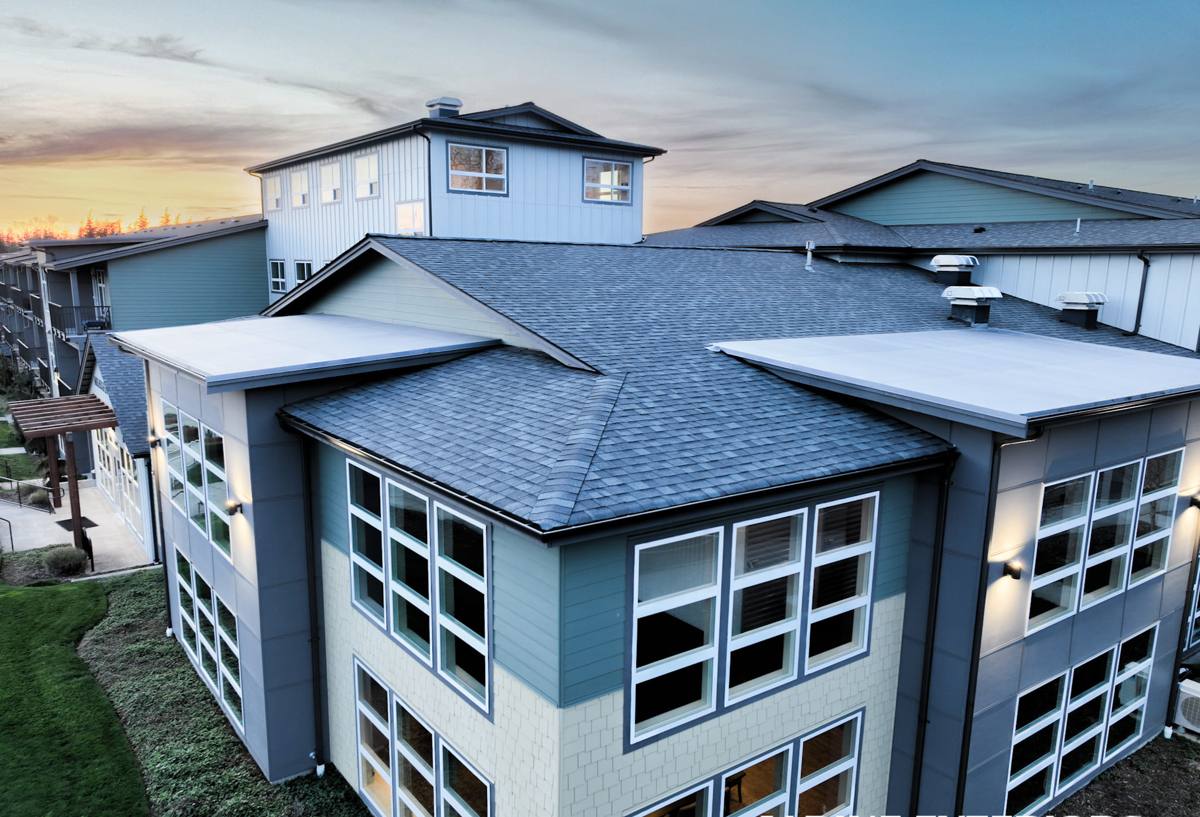
What Fiber Cement Actually Solves for a Burlington Home
Fiber cement is a mix of cement, sand, and cellulose fiber, pressed and cured into planks and panels. It does not absorb water the way wood-based products can, it does not warp or cup in humidity swings, and it holds paint and factory finish far longer than wood siding because it expands and contracts far less with temperature and moisture changes. For a house in the Skagit Valley, that stability matters more than almost any other property, because the siding is rarely bone dry for long.
It is also non-combustible, which is a real advantage during the drier, smoky stretches of late summer that the Pacific Northwest has seen more of in recent years. And because it is dense and rigid, it holds fasteners and trim details tightly over time instead of loosening the way lighter, moisture-sensitive materials can.
This is why we install James Hardie exclusively
We are a James Hardie-only siding contractor. We do not install vinyl, LP SmartSide, Cemplank, Allura, or bare cedar and primed wood siding, and we are upfront with every Burlington homeowner about why. Hardie's fiber cement is engineered specifically for regional climate zones, backed by a factory finish system that is warranted separately from the substrate, and it is the product we trust to perform after fifteen or twenty years in this valley, not just on day one.
The James Hardie Products We Put on Burlington Homes
Hardie makes several product lines, and the right one depends on the home's style and exposure, not a one-size-fits-all pick.
- HardiePlank lap siding — the standard for most Burlington homes, available in several exposure widths and textures, engineered for climates like ours under Hardie's HZ5 zone specification.
- HardiePanel vertical siding — used for board-and-batten looks or as an accent on gables and entry features.
- HardieTrim — fascia, corner boards, and window trim that match the siding's durability instead of pairing fiber cement with wood trim that will fail on its own timeline.
- ColorPlus factory finish — a baked-on finish applied under controlled conditions, which resists fading and chipping far better than field-applied paint and carries its own dedicated warranty.
HZ5 matters specifically for this region. It is Hardie's engineering designation for products formulated to handle the freeze-thaw cycles, sustained moisture, and humidity swings common to the Pacific Northwest, as opposed to hotter or drier climate zones elsewhere in the country. We only order HZ5-spec product for Skagit County jobs.
What a Correct Installation Actually Involves
Fiber cement is only as good as the installation behind it. Most of the failures homeowners blame on the "siding" are actually flashing, gap, or fastening mistakes made during the install. A correct job on a Burlington home includes:
Before the first plank goes up
- Removing the old siding and inspecting the sheathing underneath for rot, soft spots, or hidden moisture damage before covering anything back up.
- Installing or verifying a proper water-resistive barrier, lapped correctly so water sheds down and out rather than behind the wall.
- Detailing flashing at every window, door, and roof-to-wall transition, since these are the points where wind-driven rain finds its way in first.
During installation
- Following Hardie's fastening pattern and nail placement exactly, since over-driven or misplaced fasteners crack the board or void the warranty.
- Leaving the manufacturer-specified gaps and clearances at trim, foundation, and adjoining materials so the siding can move slightly without binding or cracking.
- Sealing factory-cut field edges with the correct product, since raw cut edges are the one place fiber cement can absorb water if left untreated.
- Caulking only where Hardie's installation guide actually calls for it — over-caulking traps moisture behind the siding instead of letting it drain.
This is the level of detail that separates a fiber cement install that looks fine for two years from one that performs correctly for decades. It is also why we do not treat Hardie installation as interchangeable with any other siding material — the fastening, clearances, and flashing details are specific to the product.
What We Commonly Find on Existing Burlington Siding
When we inspect an older home in the Burlington area, a handful of issues show up again and again:
| What We Find | Why It Happens Here |
|---|---|
| Moss and algae buildup on north- and west-facing walls | Shaded walls stay damp longer through the Skagit Valley's long wet season, giving moss time to establish and hold moisture against the surface |
| Cracked or failed caulk joints | Older caulk formulations were not built for the constant expansion and contraction cycles our humidity and temperature swings create |
| Trapped moisture behind siding | Missing or poorly lapped house wrap, often from decades-old installation practices that predate current moisture-barrier standards |
| Warped or delaminated panels | Wood-based and some engineered siding products absorb water at cut edges and joints over repeated wet seasons |
| Nail pops and loose trim | Fasteners driven improperly or into materials that swell and shrink with moisture, gradually working themselves loose |
Our Process, From Estimate to Finished Wall
We keep the process straightforward and honest, without pressure tactics or inflated urgency.
- On-site inspection. We walk the exterior, check for existing moisture or rot issues, and talk through what the home actually needs — not a generic package.
- Product and color selection. We help you choose the right HardiePlank exposure, texture, and ColorPlus color for the home's style and the Skagit Valley's light.
- Written estimate. A clear scope and price before any work begins, with no vague allowances.
- Tear-off and inspection. Old siding comes off, sheathing gets checked, and any rot or hidden damage is addressed before new material goes up.
- Installation to Hardie spec. Water-resistive barrier, flashing, fastening pattern, and clearances all done to manufacturer specification, not shortcuts.
- Final walkthrough. We review the finished work with you and answer questions before we call the job done.
Cost Factors for a Burlington Fiber Cement Project
Every home is different, so we do not quote a number without seeing the house, but these are the main factors that move a Burlington siding estimate up or down:
| Factor | Why It Affects Cost |
|---|---|
| Tear-off complexity | Multiple layers of old siding or extensive rot repair adds labor before new siding can go up |
| Home size and wall complexity | More linear footage, gables, and dormers mean more cutting, fitting, and trim work |
| Siding profile and texture | Lap width, smooth versus textured finish, and vertical accent panels vary in material cost |
| Trim scope | Full HardieTrim replacement on corners, fascia, and window surrounds adds to material and labor |
| Sheathing or structural repair | Rot found during tear-off has to be fixed before siding installation continues |
| Access and site conditions | Steep lots, tight setbacks, or multi-story walls affect staging and labor time |
Keeping Fiber Cement Siding Performing Long-Term in This Climate
Fiber cement is low-maintenance compared to wood, but "low-maintenance" does not mean "no-maintenance" in a climate like ours. A simple annual routine keeps a Hardie exterior performing the way it is designed to:
- Rinse the siding once a year, focusing on shaded and north-facing walls where moss and algae get a head start.
- Trim back shrubs, trees, and vines so foliage is not holding moisture against the wall.
- Keep gutters clear so overflow does not run down the siding face during heavy Skagit Valley storms.
- Inspect caulk joints at trim and penetrations annually, and re-caulk before a small crack becomes a moisture entry point.
- Check for nail pops or lifted boards after major windstorms, which are common in the valley in fall and winter.
- Watch flashing at rooflines and windows for signs of wear, since these are the highest-consequence failure points on any siding system.
Why It Matters That We Already Work in Burlington
Siding installation is not identical from one town to the next, even within Skagit County. A crew that already works in Burlington understands how the valley's shade patterns, wind exposure, and wet-season timing differ from a job in drier or more sheltered parts of Washington. We know what local building departments expect for permitting, we know which wall orientations on a typical Burlington lot need the most attention during flashing and moisture-barrier work, and we are not learning the region's climate on your home. That local familiarity, paired with strict adherence to James Hardie's installation specifications, is what keeps a fiber cement exterior performing for decades instead of years.
If you are weighing a siding replacement or repair in Burlington, we are happy to walk your home, look at what your current siding is telling us, and put together a clear, honest estimate — no pressure, no obligation. Use the form below to get started.