 Anacortes Siding
 Why Burlington Roofs Wear Out Faster Than the Brochures Suggest
Burlington sits in the Skagit Valley, close enough to Puget Sound and the Anacortes shoreline that homes here deal with a version of coastal weather even without an ocean view. Moist marine air moves up the valley for much of the year, driving rain comes in sideways during fall and winter storms, and the combination of shade, moisture, and mild temperatures gives moss an unusually long growing season compared to drier parts of the state. None of that is dramatic on its own. The problem is that it never really stops, and a roof that's rated for "normal" Pacific Northwest weather still takes a steady, cumulative beating year after year.
Most roofing materials are engineered and warrantied assuming reasonable drying time between wet periods. In Burlington, that drying window is often short. Underlayment stays damp longer, fasteners see more expansion and contraction, and any weak point in the flashing or ventilation gets exploited early. A roof replacement done for this climate has to account for that reality from the deck up, not just swap old shingles for new ones.
The Moss and Moisture Cycle
Moss doesn't just look bad. It holds water against the roofing surface, works into shingle laps and granule surfaces, and slowly lifts material as it grows. On older roofs, moss growth is often the first visible sign that a roof's drying capacity has declined — usually because ventilation is inadequate or the roof sits under heavy tree shade. Addressing moss at the surface level (cleaning, treatments) only buys time if the underlying roof system can still shed water and dry out properly.
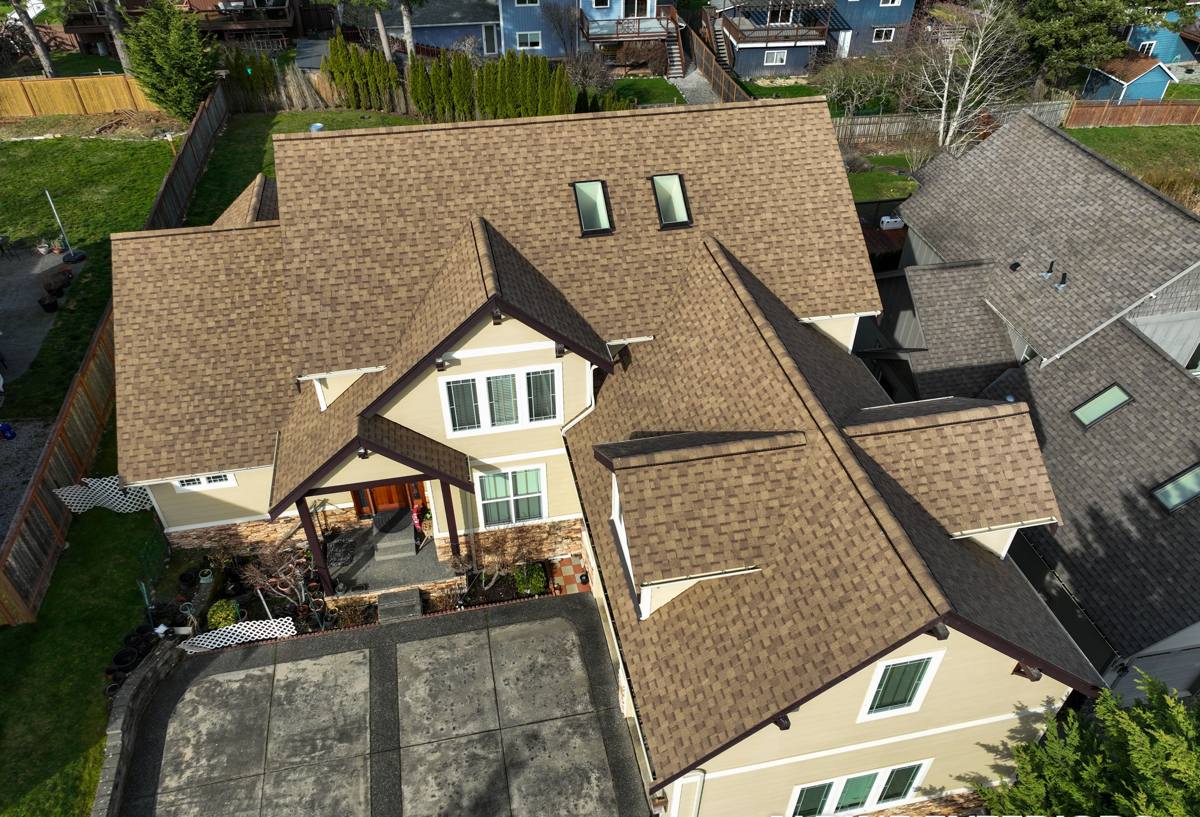
Signs It's Time to Replace, Not Repair
Not every roofing problem calls for full replacement, and a straightforward roofer should tell you that. But there's a point where patching stops making financial sense and starts masking a bigger problem. Here's what we look for when advising a Burlington homeowner one way or the other:
- Shingles that are cupping, curling, or losing granules across large sections rather than in one isolated spot
- Multiple past repairs in different areas of the roof, suggesting the whole system is aging out together
- Visible daylight, staining, or soft spots in the attic decking, especially near valleys or penetrations
- A roof that's 20+ years old (asphalt) or showing wear consistent with its expected service life
- Persistent moss regrowth within a year or two of cleaning, pointing to a ventilation or moisture problem rather than a surface issue
- Rising energy bills or uneven interior temperatures that trace back to attic ventilation or insulation tied to the roof assembly
If a roof is showing one or two of these signs in isolation, targeted repair is often the right call. When several show up together, replacement usually costs less over a five-to-ten-year horizon than continuing to chase leaks.
What a Correct Roof Replacement Actually Involves
A roof replacement is more than a new layer of shingles. In a climate like this one, the parts you don't see matter as much as the parts you do.
Tear-Off and Deck Inspection
We remove the existing roofing down to the deck rather than layering over it. That's the only way to actually see the plywood or plank sheathing underneath, which is where hidden rot from years of slow moisture intrusion tends to hide. Any damaged decking gets replaced before anything new goes down — installing new roofing over a compromised deck just resets the clock on the same problem.
Underlayment and Water Barrier
Given how much wind-driven rain the area sees, we pay close attention to underlayment coverage and self-adhered ice-and-water barrier at vulnerable spots: eaves, valleys, roof-to-wall transitions, and around every penetration. This layer is what protects the home if wind ever drives rain up under the shingles, which happens more often here than in drier regions.
Flashing Details
Flashing failures, not shingle failures, cause the majority of roof leaks we're called out for. Chimneys, skylights, dormers, and wall intersections all need properly formed and sealed flashing, not just caulk over old metal. We replace flashing as part of a full roof replacement rather than reusing it.
Ventilation
Proper intake and exhaust ventilation lets the roof deck dry between storms, which matters more here than in a dry climate. Balanced ventilation also reduces the conditions that let moss take hold in the first place and helps prevent condensation-related rot from the inside of the deck.
Choosing the Right Material for This Climate
There's no single "best" roofing material for every home — it depends on budget, roof pitch, how long you plan to stay in the house, and your tolerance for maintenance. What we won't do is recommend a product we know struggles with sustained moisture exposure just because it's cheaper up front. The table below reflects how common options actually perform under Skagit County conditions.
| Material | Typical Lifespan Here | Moss/Moisture Behavior | Maintenance Needs |
|---|---|---|---|
| Architectural asphalt shingle | 20–30 years | Good with proper ventilation; moss-resistant granule options available | Periodic moss removal, gutter checks |
| Standing seam metal | 40–50+ years | Sheds water and moss very well due to smooth, sloped surface | Low; occasional fastener/sealant checks |
| Synthetic/composite shingle | 30–50 years | Resists moisture absorption; performance varies by manufacturer | Low to moderate |
| Cedar shake | 20–30 years with upkeep | Absorbs moisture readily; needs active maintenance in this climate | High; regular treatment and inspection |
Cedar shake can still be the right choice for a homeowner who wants the look and is committed to upkeep, but we're upfront that it demands more attention here than asphalt or metal. That's a maintenance-burden and moisture-behavior conversation, not a knock on the material itself.
What Affects the Cost of Your Roof Replacement
Costs vary enough by home that we don't quote firm numbers without seeing the roof, but the main variables are consistent:
- Roof size and the number of planes, valleys, and penetrations
- Pitch and accessibility — steep or multi-story roofs take longer and require more safety setup
- Extent of any deck repair needed once the old roofing comes off
- Material chosen, from standard asphalt through metal or composite options
- Ventilation upgrades needed to bring an older attic system up to current standards
- Tear-off and disposal of existing layers, especially if the roof was previously overlaid
Homeowners in this area generally see costs land somewhere between a modest asphalt re-roof and a more involved project with deck repair, upgraded ventilation, or a metal system. We break down each of these line items in a written estimate so you can see exactly what's driving the number, rather than a single lump sum.
Our Process, From First Call to Final Walkthrough
Inspection and Estimate
We start with an on-site look at the roof, attic, and any trouble spots you've noticed. You get a written estimate that separates material cost from labor and any deck or ventilation work, so there's no guessing later.
Material Selection and Scheduling
Once you've picked a material and we've confirmed permitting requirements, we schedule around weather windows — timing matters more here than in drier climates, since an open roof deck needs a real chance of staying dry during the work.
Installation
Tear-off, deck inspection and repair, underlayment, flashing, and final roofing all happen in sequence, with the deck never left exposed longer than necessary. We keep the property protected throughout, including landscaping and gutters.
Cleanup and Final Walkthrough
We do a full magnetic sweep for nails, clear debris, and walk the finished roof with you to confirm everything, including flashing and ventilation details, was completed as scoped.
Why Hiring a Crew That Already Works in Burlington Matters
Roofing crews that mostly work in drier climates or unfamiliar regions can miss the details that matter here — like how much flashing coverage a valley really needs when driving rain is common, or how ventilation choices affect moss regrowth over time. A crew that regularly works Skagit County homes has already seen how local weather exposes shortcuts, and builds accordingly rather than learning that lesson on your roof.
Local experience also means realistic scheduling around the wet season, familiarity with permitting through the applicable jurisdiction, and an understanding of what "normal wear" looks like on a Burlington roof versus a roof somewhere drier. That context shapes better recommendations, not just faster work.
If your roof is showing its age or you just want an honest read on where it stands, we're happy to take a look. Reach out for a free, no-pressure estimate using the form below — we'll tell you what we actually see, whether that means repair, replacement, or simply keeping an eye on it for now.