 Anacortes Siding
 Siding Repair in Burlington: Built for Skagit County Weather, Not Just Patched Over
Burlington sits inland from the water, but that doesn't mean the siding on Burlington homes gets an easier ride than siding closer to Anacortes and the Salish Sea. Skagit County's weather pattern reaches the whole region: salt-tinged marine air rides in on the wind, rain rolls through in long soaking systems rather than quick storms, and the shaded, damp stretches of the year give moss and algae plenty of time to take hold. Siding here has to shed water for months at a stretch, resist fasteners corroding, and hold its finish through repeated wet-dry cycles. When it doesn't, the damage is rarely just cosmetic — and rarely limited to the one spot you can see.
A siding repair done right in this climate isn't about slapping a patch over a bad board and moving on. It's about understanding why that board failed in the first place, checking what's happening behind it, and using materials and methods that will actually hold up through the next twenty Skagit County winters. That's the standard we hold every Burlington-area repair to.
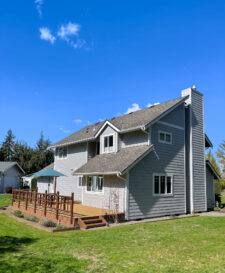
What Skagit County's Climate Does to Siding Over Time
Salt Air and Fasteners
Even set back from the water, homes in this part of Skagit County get low-level exposure to salt-laden air moving off the Salish Sea. Over years, that air accelerates corrosion on exposed or improperly coated fasteners, trim screws, and metal flashing. A single rusted-through nail can loosen a panel, open a gap, and let water start working its way behind the siding — long before the siding material itself shows any obvious wear.
Driving Rain and Water Intrusion
Skagit County doesn't get flash floods so much as long, steady, wind-driven rain. That kind of weather finds every gap in flashing, every caulk joint that's dried out, and every seam that wasn't lapped correctly. Water intrusion behind siding is one of the most common repair triggers we see, and it's almost never obvious from the street — it shows up as soft spots, staining, or a section of siding that just doesn't sit flat anymore.
Moss, Algae, and Trapped Moisture
The region's long damp season, especially on north-facing walls and shaded areas near trees, gives moss and algae a real foothold on siding surfaces. Beyond looking bad, a moss mat holds moisture directly against the siding surface for weeks at a time. On materials that aren't built to handle sustained moisture contact, that's a slow path to swelling, delamination, or paint failure — and it's a big part of why we don't recommend products that struggle with prolonged wet exposure.
Signs Your Burlington Home Needs Siding Repair (Not Just Paint)
Some siding problems are hiding behind symptoms that look like simple cosmetic wear. Before you reach for a paint sprayer, walk the exterior and check for these:
- Soft, spongy, or flexible spots when you press on a siding panel
- Visible gaps, warping, or panels that no longer sit flush against the wall
- Peeling or bubbling paint concentrated in one section rather than spread evenly
- Dark staining or streaking below seams, corners, or window trim
- Moss or algae buildup that returns quickly after cleaning
- Rust bleed around nail heads or trim fasteners
- A musty smell or visible moisture inside on an exterior wall
- Cracked or missing caulk at joints, corners, and window and door trim
Any one of these on its own might be minor. Several showing up in the same area is usually a sign that water has been getting behind the siding for a while.
Repair or Replace? How We Make the Call
Not every damaged section needs a full re-side, and we won't sell you one you don't need. The decision comes down to how contained the damage is and what's happening underneath.
| Factor | Points Toward Repair | Points Toward Replacement |
|---|---|---|
| Extent of damage | Isolated to one wall or a few panels | Spread across multiple elevations |
| Underlying sheathing/framing | Dry, solid when probed | Soft, rotted, or visibly compromised |
| Age of existing siding | Newer, still within expected service life | Original siding decades old, failing broadly |
| Water-resistive barrier condition | Intact behind the damaged section | Torn, missing, or improperly installed |
| Product currently installed | Compatible material in good condition | Product prone to repeat failure in this climate |
We won't know which column your home falls into until a panel or two comes off and we can see what's actually going on behind it. That's a normal, expected part of an honest repair estimate — not a sign something's wrong.
What a Correct Siding Repair Actually Involves
A repair that's done right addresses the cause, not just the symptom. That means:
- Diagnosing behind the panel. Removing the damaged section to check the water-resistive barrier, flashing, and sheathing underneath — not just judging from the surface.
- Confirming the drying path. Making sure water that does get behind the cladding has somewhere to go, rather than sitting trapped against wood framing.
- Matching the material correctly. Replacement panels need to match the existing product's profile, exposure, and thickness so the repaired section performs — and looks — like the rest of the wall.
- Re-flashing where needed. Corroded or improperly lapped flashing gets replaced, not caulked over and reused.
- Fastening to spec. Corrosion-resistant fasteners, set at the correct pattern and depth, so the repair doesn't become next decade's failure point.
- Finishing the joint. Proper caulking and, where the product calls for it, factory-matched touch-up so the repair blends in rather than standing out as an obvious patch.
Why We Only Use James Hardie Components for Repairs
When we repair a home that already has James Hardie fiber cement siding, matching is straightforward — Hardie's ColorPlus factory finish is manufactured to consistent standards, and replacement planks or panels can be matched to profile and color far more reliably than field-mixed paint on other materials. The fiber cement itself is non-combustible and engineered to hold up to sustained moisture exposure, which matters directly for a climate where moss and driving rain keep siding wet for extended stretches.
When we're called to a home with LP SmartSide, vinyl, cedar, or another fiber cement brand, we'll still assess the damage honestly and tell you what's actually going on. But we don't stock or install those materials, for the same reasons we explain throughout our site: engineered wood products carry moisture-sensitive edges that need diligent maintenance, vinyl can't be color-matched or repaired invisibly and tends to warp with age, and cedar demands a maintenance schedule most homeowners can't keep up with in this climate. If a repair on one of those products isn't a realistic long-term fix, we'll say so plainly and lay out what full replacement with James Hardie siding would look like — no pressure, just the honest picture.
Our Repair Process, Start to Finish
- On-site inspection. We look at the visible damage and probe the surrounding area, since siding problems in this climate rarely stay contained to one spot.
- Moisture and structural check. Where damage suggests water intrusion, we check behind the siding before quoting anything, so the estimate reflects the real scope.
- Written estimate. A clear breakdown of what needs to be repaired, why, and what it will cost — with repair and replacement options laid out separately if both are on the table.
- The repair itself. Damaged material removed, underlying issues corrected, matching material installed to spec.
- Cleanup and walkthrough. Job site cleaned up and the finished repair reviewed with you before we consider it done.
Why Hire a Crew That Already Works Burlington and the Anacortes Area
A crew that regularly works this part of Skagit County already knows what causes siding failures here, because we've opened up walls on homes facing the same salt air, the same driving rain, and the same moss season yours does. That local pattern recognition matters — it's the difference between a repair that addresses the actual cause and one that just covers the visible damage until it reopens next winter.
It also means straightforward logistics: local material sourcing, a crew that isn't driving in from out of the area for a single job, and a company you can call again if something else turns up down the road. For a repair, that accountability is worth as much as the workmanship itself.
Getting a Repair Estimate for Your Burlington Home
If you're seeing soft spots, staining, moss that keeps coming back, or siding that just doesn't look right anymore, it's worth having someone take a real look before the damage spreads further. We offer free, no-pressure estimates for siding repair in Burlington and the surrounding Skagit County area — come take a look, tell us what you're seeing, and we'll give you an honest read on what it will take to fix it right.