 Anacortes Siding
 Cap Sante's Siding Problem Is Its Location
Cap Sante sits close enough to the water that salt air is a daily fact of life for the homes up here, not an occasional nuisance. Add Skagit County's long wet season, wind-driven rain off Fidalgo Bay, and the shaded, slow-drying north sides that come with mature landscaping and hillside lots, and you get a set of conditions that ages siding faster than almost anywhere else in Anacortes. Salt-laden moisture works into seams and fasteners, driving rain finds any gap in the water-resistive barrier, and moss gets a running start any time siding stays damp for days at a stretch. None of that is a defect in any one product — it's just what this neighborhood's climate does to exterior materials over time, and it's why a siding replacement here has to be planned differently than one on a dry, inland lot.
We've worked on homes throughout Anacortes long enough to know that a siding job done to a generic spec, without accounting for Cap Sante's exposure, is a job that starts failing within a handful of years. The materials, the flashing details, and the maintenance plan all need to answer to the site conditions, not just the style of the house.
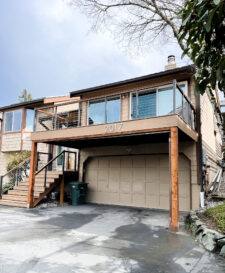
What Salt Air, Driving Rain, and Moss Actually Do to Siding
Salt Air
Airborne salt is corrosive to metal fasteners, flashing, and trim, and it accelerates the breakdown of paint films and caulking. Over years, that means fastener corrosion staining, premature caulk failure at joints, and finishes that chalk or fade faster than the manufacturer's published timelines assume.
Driving Rain
Wind off the water doesn't just wet a wall — it pushes water sideways and upward into laps, corners, and penetrations that would stay dry in a calmer climate. Siding systems that rely on gravity alone to shed water, or that have loose lap tolerances, let moisture behind the cladding, where it can sit against sheathing and framing far longer than anyone realizes.
Moss and Prolonged Dampness
Shaded elevations and tree-covered lots, common around Cap Sante, keep siding damp longer after every rain event. Moss and algae take hold on surfaces that stay wet, and once established they hold even more moisture against the material — a cycle that punishes anything without a genuinely stable, moisture-tolerant substrate.
Signs a Cap Sante Home Needs Siding Replacement, Not Just Repair
Not every issue means a full tear-off. But there's a point where patching stops making sense and a full replacement becomes the more honest recommendation. Watch for:
- Soft or spongy spots when you press on siding, especially near the bottom courses or under windows
- Persistent moss or dark streaking that returns within weeks of cleaning
- Paint or finish that's bubbling, peeling, or chalking heavily rather than just fading evenly
- Visible gaps, warping, or cupping at panel or board edges
- Rust streaks below fasteners or trim
- Interior signs — musty smell, discoloration on interior walls near exterior corners, or unexplained humidity in a room
- Siding that's original to a home built more than 20-25 years ago, particularly on the water-facing or shaded elevations
If you're seeing two or more of these on the same elevation, that's usually a sign moisture has been getting behind the cladding for a while, not just that the surface finish is due for attention.
What a Correct Siding Replacement Involves
A siding replacement is really a water-management project that happens to end with new cladding on the wall. In a location like Cap Sante, skipping any of the underlying steps is where most premature failures start. A correct job includes:
- Full tear-off and sheathing inspection — old siding comes off so the sheathing underneath can actually be checked and repaired, not covered over
- A continuous water-resistive barrier — properly lapped and sealed, so it does its job even when wind-driven rain gets behind the siding itself
- Correct flashing at every penetration — windows, doors, hose bibs, vents, and any other wall penetration, integrated with the WRB rather than just caulked over it
- Proper fastening and clearances — siding held to manufacturer nailing schedules, with correct clearance from grade, decks, and roof lines so water has somewhere to go
- Factory-finished cladding — a durable, consistent finish applied under controlled conditions, not painted on site where humidity and temperature swings affect cure quality
Any one of these done wrong can undermine an otherwise good material. That's why we treat the install details, not just the product choice, as the real determinant of how a siding job holds up in this climate.
Why We Install Only James Hardie Fiber Cement
We install James Hardie fiber cement siding exclusively — we don't offer vinyl, LP SmartSide, or unfinished wood siding, and that's a deliberate standard, not a limitation of what we're capable of installing. In an environment with sustained salt exposure, driving rain, and long damp stretches, the material's behavior under moisture matters more than almost anything else about it.
Fiber cement doesn't rot, and it won't support the kind of fungal growth that wood-based products can when they stay damp. It's also non-combustible, which matters given Washington's wildfire seasons even on the coast. Hardie's ColorPlus factory finish is baked on under controlled conditions and backed by its own finish warranty, which sidesteps the on-site paint adhesion problems that show up when finishes are applied or touched up in the field under Anacortes's damp, variable weather. Combined with Hardie's HZ5 product line, engineered for moisture and freeze-thaw exposure in climates like the Pacific Northwest, it's the system we trust to hold up on Cap Sante's more exposed elevations, and it's why we've standardized on it for every home we work on rather than offering it as one option among several.
Our Process for a Cap Sante Siding Replacement
- On-site assessment — we walk the exterior, check each elevation's exposure, and look for existing moisture damage before quoting anything
- Detailed proposal — a written scope covering tear-off, sheathing repair allowances, flashing details, product and color, and timeline
- Tear-off and inspection — old siding and building paper removed, sheathing checked and any damaged sections replaced before anything new goes up
- Water-resistive barrier and flashing — installed and integrated at every window, door, and penetration before a single piece of siding is hung
- Hardie installation — installed to manufacturer specification for fastening, clearances, and joint treatment
- Final walkthrough — we go over the finished work with you and address anything before calling the job complete
Cost Factors for Siding Replacement Near the Water
Every home is different, but a few factors consistently move the price on Cap Sante jobs more than they would on a typical inland Anacortes property:
| Factor | Why It Matters Here |
|---|---|
| Extent of hidden sheathing damage | Salt air and driving rain increase the odds of moisture damage behind old siding, which isn't visible until tear-off |
| Number of wall penetrations | Each window, vent, and fixture needs correct flashing; more penetrations mean more detail work |
| Wind and rain exposure by elevation | Water-facing and unshaded walls often need more rigorous flashing and clearance work than protected elevations |
| Access and site conditions | Sloped lots, mature landscaping, and tight setbacks common around Cap Sante can affect scaffolding and material staging |
| Trim and detail complexity | Corner boards, fascia, and architectural trim add labor beyond flat wall siding |
We'll walk through which of these apply to your home during the estimate, so you understand what's driving the number rather than getting a flat per-square-foot quote that doesn't reflect your site.
Why Hiring a Crew That Already Works Cap Sante Matters
A crew that's worked this specific area knows which elevations tend to hold moisture, how far wind-driven rain typically reaches up a wall, and where moss takes hold fastest on homes with similar exposure and landscaping. That's not something you get from general siding experience alone — it's built from seeing how houses in this exact location actually age. It also means we're not guessing at flashing details or clearance requirements for a climate we don't normally work in; the details we build into a Cap Sante installation are the same ones we've refined on other Anacortes and Skagit County homes facing the same salt air and rain exposure.
Maintenance After Your New Siding Is Installed
Correctly installed Hardie siding is low-maintenance, not no-maintenance, especially this close to the water. A simple annual routine goes a long way:
- Rinse siding gently once or twice a year to clear salt residue and organic buildup
- Keep gutters clear so overflow isn't running down the siding face
- Trim back vegetation that's shading a wall and keeping it damp longer than it needs to be
- Re-caulk joints and penetrations if you notice cracking or separation, before water gets behind them
- Have any soft spots, staining, or recurring moss checked promptly rather than waiting
If you're seeing signs of wear on your home's siding, or you just want an honest read on how much life is left in what you have, we're happy to take a look. Fill out the form below for a free, no-pressure estimate on siding replacement for your Cap Sante home.