 Anacortes Siding
 Deck Building for Edison, Washington Homes
Edison sits in the tidal flats and farmland between Anacortes and Bow, close enough to Samish Bay and the Skagit River delta that salt air and standing moisture are part of daily life. A deck built here has to do more than look good for a summer barbecue. It has to survive a wet season that runs most of the year, resist the moss and algae that colonize anything shaded and damp, and hold up to salt-laden air rolling in off the water. We build decks for homes in and around Edison with that reality in mind, not as an afterthought after the design is already picked out.
A lot of deck problems we get called out to fix didn't start as big mistakes. They started as small shortcuts — a fastener that wasn't rated for treated lumber, a ledger board without proper flashing, joists that never got sealed on the cut ends. In a dry climate those shortcuts might take a decade to show up. In Skagit County, with our rain totals and humidity, they show up in three or four years as soft spots, rust streaks, and boards that stay green with algae no matter how often you scrub them.
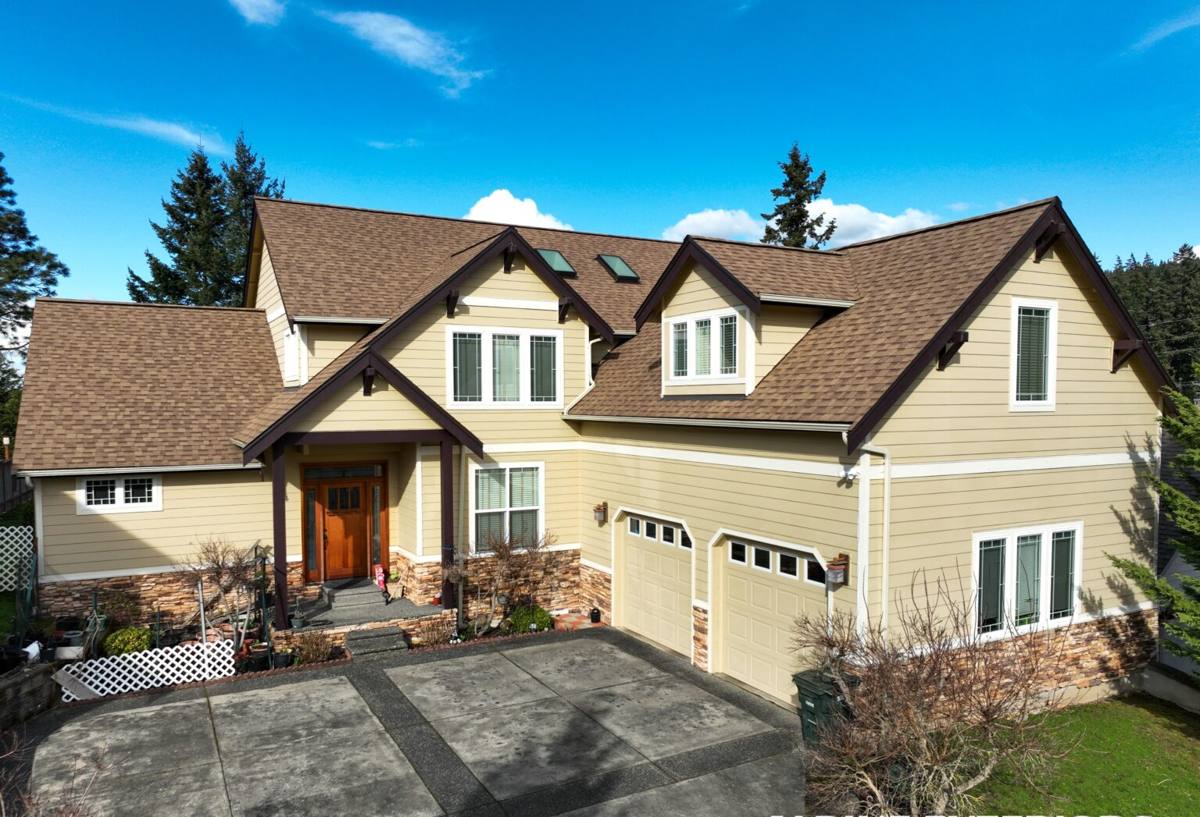
What Edison's Climate Does to a Deck
Three things drive most of the deck damage we see in this part of Skagit County, and they're worth understanding before you build.
Driving Rain
Storms coming off the water don't just fall straight down — wind pushes rain sideways into ledger connections, stair stringers, and any horizontal surface that isn't sloped to shed water. Flat-top rails, unsealed end grain, and framing tucked under low eaves all trap moisture longer than they should.
Moss and Algae
Edison's tree cover and marine humidity create long stretches of shade and dampness — exactly what moss and algae need to take hold. Wood decking, especially on the north or shaded side of a house, can stay damp for days after a storm, and moss doesn't just look bad; it holds water against the board surface and accelerates rot underneath.
Salt Air
Proximity to Samish Bay means airborne salt reaches fasteners, flashing, and any exposed metal hardware. Standard zinc-coated screws and brackets corrode faster here than they would twenty miles inland, and corroded hardware is one of the more dangerous failure points on an older deck because it's hidden until it isn't.
What a Correct Deck Build Looks Like Here
None of this means you need an unusual or exotic deck. It means the details that don't show up in a photo — the flashing, the fasteners, the drainage — need to be right the first time, because re-doing them later means tearing into a finished structure.
- Ledger boards flashed properly where the deck attaches to the house, so water is directed away from the wall framing, not into it
- Stainless steel or coated fasteners and structural hardware rated for ground contact and coastal exposure
- Joists and beams with enough airflow underneath to dry out between storms, rather than sitting low and trapping moisture
- Decking material chosen to match how much shade and moss exposure that specific spot on the property actually gets
- Footings sized and set to Skagit County frost depth and soil conditions, not just poured to a generic minimum
- Stairs and railings built to current code for rise, run, and guard height, since older decks in this area often predate the standards in force today
Choosing Deck Materials for a Wet, Shaded Property
There's no single "best" decking material — the right choice depends on how much sun and shade the deck gets, how much upkeep you want to do, and your budget. Here's how the common options compare for a property like the ones around Edison.
| Material | Moss/Algae Resistance | Maintenance | Typical Lifespan Here |
|---|---|---|---|
| Pressure-treated wood | Fair — needs regular cleaning and sealing | Annual cleaning, re-sealing every 1-2 years | 10-15 years with upkeep |
| Cedar | Good natural resistance, fades without treatment | Periodic cleaning and oil/stain to hold color | 15-20 years with upkeep |
| Composite decking | Very good — doesn't absorb moisture like wood | Occasional washing, no sealing or staining | 25+ years, varies by product warranty |
| PVC/capped polymer | Excellent — fully sealed surface | Lowest — occasional rinse | 25+ years, varies by product warranty |
For shaded, north-facing, or heavily treed lots — common in and around Edison — we generally steer homeowners toward composite or capped polymer decking, since wood in those conditions needs more frequent cleaning to keep moss from getting a foothold. For sunnier, more open sites, a well-maintained cedar or treated wood deck can perform fine and costs less up front. We'll walk the site with you and give you our honest read on which category fits your specific spot, rather than pushing one product line regardless of conditions.
Our Deck-Building Process
1. Site Walk and Assessment
We look at sun exposure, drainage patterns, existing structure (if you're replacing a deck), and how the new deck will tie into your house. This is also when we talk through material options based on what we see, not a generic catalog pitch.
2. Design and Permitting
We put together a plan that meets Skagit County permitting requirements for footings, railings, and stair geometry. If your property has setback or shoreline considerations given its proximity to the water, we account for that during design rather than discovering it mid-build.
3. Demolition and Site Prep (if applicable)
Old decking, damaged framing, and any compromised hardware get removed and hauled off. We inspect the ledger connection and rim joist on the house at this stage, since that's where hidden water damage most often shows up.
4. Framing and Footings
Footings are set to proper depth for our soil and frost conditions. Framing goes up with corrosion-resistant fasteners and hardware, with attention to airflow underneath so the structure can dry out between rain events.
5. Decking, Rails, and Stairs
Decking is installed with proper spacing for drainage and expansion. Railings and stairs are built to current code for height, spacing, and load. Any wood elements get properly sealed on cut ends before installation, not after.
6. Final Walkthrough
We go over the finished deck with you, explain what maintenance it needs and on what schedule, and make sure everything is solid before we consider the job done.
Footings, Fasteners, and the Parts You Won't See
Most deck failures start below the decking boards, not on top of them. A deck can look fine on the surface for years while a rusting bracket or an unflashed ledger slowly does damage underneath. We use stainless or coated structural hardware rated for exterior and coastal use, and we don't cut corners on footing depth just because a smaller footing would technically pass a quick inspection. In a climate that freezes and thaws and stays wet as much as ours does, the footings and connections are where a deck earns its lifespan.
Keeping Moss and Algae Off Your New Deck
Even a well-built deck needs some ongoing attention in this climate. A little regular care goes a long way toward avoiding the slick, green buildup that's common on shaded decks around Edison.
- Sweep leaves and debris off the deck regularly, especially in fall — trapped organic matter feeds moss growth
- Clean the deck surface at least once or twice a year with a wood- or composite-safe cleaner, more often in heavily shaded spots
- Check that gaps between boards stay clear so water can drain through rather than pooling
- Trim back overhanging branches where possible to let more light and air reach the deck surface
- Re-seal wood decking on the schedule recommended for the product — skipping a season lets moisture in faster than most people expect
- Inspect railings and stair connections annually for movement or rust staining, which can signal a fastener starting to fail
Why Local Experience Matters for This Job
A deck contractor who mostly works drier inland areas can still frame a structurally sound deck, but they may not think twice about ledger flashing details, fastener coatings, or how much shade a given corner of an Edison lot actually gets through the year. We build and repair decks throughout Anacortes and the surrounding Skagit County communities, including Edison, so we've seen firsthand which details hold up to our specific mix of salt air, sustained rain, and moss, and which ones fail early. That local pattern recognition is part of what you're paying for when you hire a crew that already works this area, not just a crew that builds decks somewhere.
Get a Free Estimate for Your Edison Deck Project
Whether you're planning a new deck, replacing an aging one, or want a second opinion on a deck that's showing early signs of moss or rot, we're happy to take a look and give you a straightforward assessment. There's no pressure and no obligation — just an honest read on what your property needs and what it would cost to do it right. Use the form below to request your free estimate.