 Anacortes Siding
 Sedro-Woolley's Climate Wears Down the Wrong Siding Fast
Sedro-Woolley sits inland along the Skagit River, away from direct salt spray, but it shares the same wet, marine-influenced weather system that moves through all of Skagit County. That means long stretches of drizzle, saturated ground through the winter, heavy tree cover in a lot of the older neighborhoods, and a moss and algae season that can run eight months or more in shaded, north-facing spots. Homes closer to the water toward Anacortes deal with more direct salt-air exposure, but Sedro-Woolley's combination of humidity, shade, and driving rain off the foothills is its own kind of hard on exterior materials — just from a different angle.
Wood-based products swell, check, and rot in this kind of cycle. Vinyl gets brittle and fades faster under UV and moisture stress than most homeowners expect, and it can't be repainted when it does. Siding that isn't engineered for the Pacific Northwest tends to show its age in Sedro-Woolley within the first decade — peeling paint, soft trim boards, moss creeping up from the ground line, caulk joints failing at seams. The material has to actually be built for this climate, not just rated for it on paper.
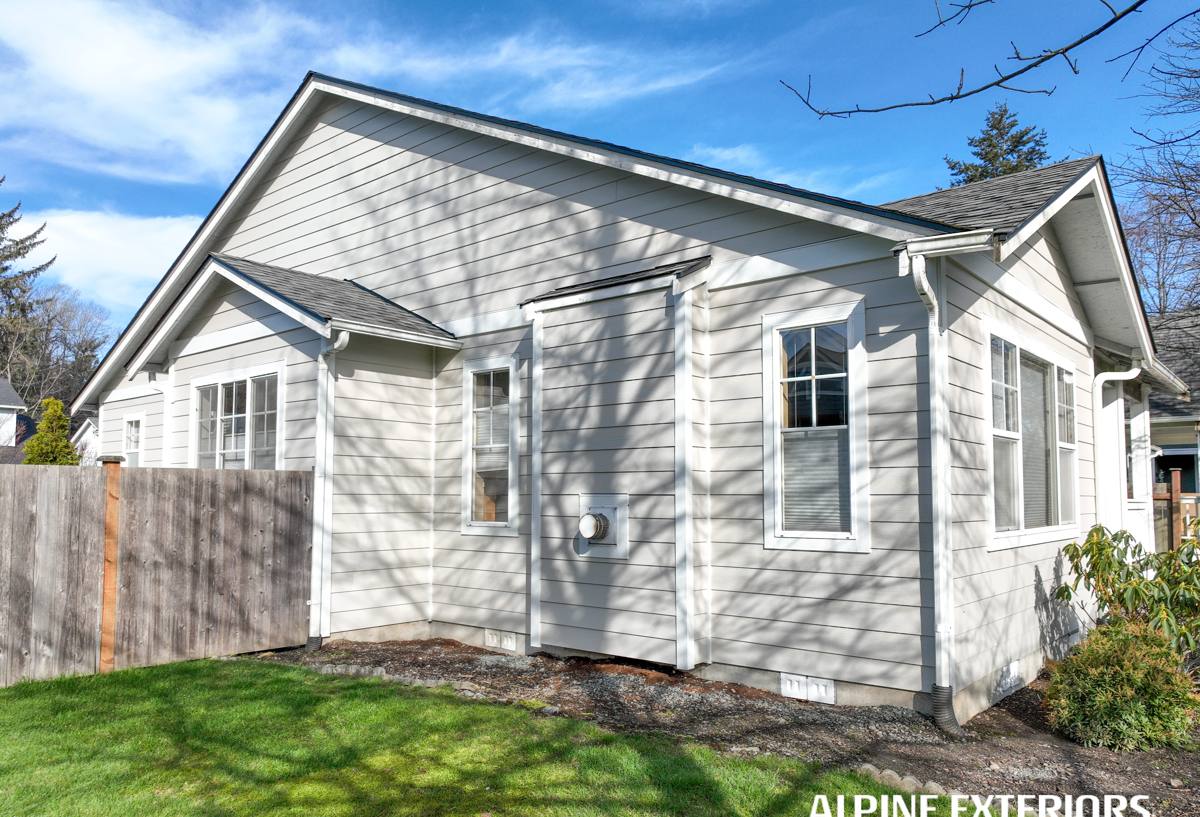
Why We Install James Hardie Fiber Cement and Nothing Else
We're a fiber cement-only siding contractor, and specifically we only install James Hardie. We don't install LP SmartSide, vinyl, Cemplank, Allura, primed spruce, or cedar. That's not a marketing position — it's a decision based on what actually holds up in Skagit County weather over 20-30 years with minimal callbacks.
James Hardie fiber cement is non-combustible, which matters more every year as wildfire risk becomes a bigger part of PNW insurance conversations. It's engineered specifically for climate zones, with a dedicated HZ5 product line built for the wetter, colder conditions found through Western Washington. It doesn't absorb water the way wood-based siding does, so it doesn't swell, rot, or delaminate the way engineered wood products can when a caulk joint fails or a flashing detail gets missed. And it comes from the factory with a baked-on ColorPlus finish that's warrantied against fading and peeling — no field-painting required, no repainting every 7-10 years like you'd budget for with wood trim.
Other fiber cement brands exist, and some are reasonable products. We standardized on James Hardie because of the combination of factory finish quality, product engineering specific to our climate zone, and a warranty structure that's transferable if the home sells — which matters in a market where siding is a real resale consideration.
How Fiber Cement Compares to the Alternatives
| Factor | James Hardie Fiber Cement | Vinyl Siding | Wood / LP SmartSide |
|---|---|---|---|
| Moisture behavior in wet climates | Doesn't absorb water; won't swell or rot | Sheds water but traps moisture behind panels if installed poorly | Absorbs moisture at cut edges and joints; prone to swelling |
| Fire resistance | Non-combustible | Melts and can contribute fuel | Combustible |
| Finish maintenance | Factory ColorPlus finish, no repainting on the warranty schedule | Never needs paint but fades and can't be refinished | Needs repainting/staining every several years |
| Moss and algae resistance | Dense, non-porous surface resists growth | Resists growth but shows algae streaking | Porous surface holds moisture, feeds moss and mildew |
| Typical lifespan when installed correctly | 30+ years | 20-30 years, often replaced sooner after fading/cracking | 15-25 years depending on maintenance |
The James Hardie Product Lines We Use in Sedro-Woolley
HardiePlank Lap Siding
The most common choice for Sedro-Woolley homes — horizontal lap boards in a range of exposures and textures, from smooth modern profiles to traditional cedar-look grain. It's what most of the neighborhood already expects a well-sided house to look like, and it gives good water shedding when the laps and flashing are done right.
HardiePanel Vertical Siding
Used for board-and-batten style homes or as an accent on gables and entry features. Vertical panels need careful attention to batten spacing and drainage behind the panel, since water runs a different path than it does on lap siding.
HardieShingle
Staggered or straight-edge shingle panels for homes that want a cottage or craftsman look without the maintenance burden of actual cedar shingles, which struggle badly with moss in shaded Skagit County lots.
HardieTrim
Fascia, corner boards, and window/door trim in matching fiber cement, so the whole exterior envelope — not just the field siding — is resistant to the same moisture and rot issues.
What a Correct Fiber Cement Installation Actually Involves
Fiber cement is a forgiving material once it's on the wall, but it's unforgiving of shortcuts during installation — this is where most siding failures we get called out to inspect actually start. A correct job includes:
- A drainage plane (weather-resistive barrier) installed and lapped correctly behind the siding, with any tears or punctures sealed before boards go up
- Rainscreen or furring strips where the wall assembly calls for a ventilation gap, so moisture that gets behind the siding can dry out instead of sitting against the sheathing
- Proper flashing at every window, door, and roof-to-wall intersection — this is the single most common point of failure on poorly installed siding jobs
- Correct fastener placement and spacing per James Hardie's published installation specs, not generic siding nailing patterns
- Minimum clearance from grade, decks, and roof lines so the bottom course of siding isn't sitting in standing water or splashback
- Factory-cut or properly sealed field cuts, since an unsealed cut edge is the one place fiber cement can take on water over time
- Caulking only where James Hardie's details call for it — over-caulking traps moisture just as badly as leaving a real gap unsealed
Skip any one of these and you can end up with a house that looks fine for a few years and then starts showing staining, soft spots, or paint failure at the seams — problems that trace back to installation, not the material.
Our Process, Start to Finish
- Free on-site estimate. We walk the exterior, check the existing wall assembly and any moisture damage, and talk through Hardie product and color options.
- Written scope and pricing. You get a clear breakdown of tear-off, prep, materials, and labor before anything is scheduled.
- Tear-off and inspection. Old siding comes off, and we inspect the sheathing underneath for rot or damage that needs to be addressed before new siding goes on — this is often where hidden problems from the old siding show up.
- Weather barrier and flashing. House wrap, flashing, and rainscreen (where applicable) go in first, since this layer does most of the actual water management work.
- Siding installation. HardiePlank, panel, or shingle installed to manufacturer spec, with trim and accessories to match.
- Final walkthrough. We go over the finished job with you before we consider it done.
What Affects the Cost of a Sedro-Woolley Siding Job
| Factor | How it affects cost |
|---|---|
| Tear-off vs. install over existing siding | Removing old siding and inspecting sheathing adds labor but is usually the right call on older homes |
| Home size and wall complexity | More corners, gables, and dormers mean more cuts, flashing details, and labor time |
| Product line and profile | Lap, panel, and shingle profiles carry different material and labor costs |
| Sheathing or framing repair | Rot found during tear-off adds cost but is far cheaper to fix now than to side over |
| Trim and accessory scope | Full HardieTrim replacement costs more than reusing sound existing trim |
| Access and site conditions | Steep lots, mature landscaping, or tight setbacks common on older Sedro-Woolley properties can add time |
We give straightforward, itemized estimates rather than a single lump number, so you can see exactly what's driving the price and where there's room to adjust scope if needed.
Keeping Fiber Cement Siding Looking Good in This Climate
Fiber cement is low-maintenance compared to wood, but "low-maintenance" isn't "no-maintenance" in a climate like Skagit County's. A light annual rinse with a garden hose or soft wash keeps moss and algae from getting a foothold, especially on north-facing walls and anything shaded by trees. Keep gutters clear so water isn't sheeting down the siding face, and keep soil, mulch, and plantings pulled back from direct contact with the bottom course. Watch caulk joints around windows and trim over the years — caulk is the one component in the whole system that does wear out and need occasional touch-up, well before the siding itself does.
Signs it's time to have your current siding evaluated:
- Paint peeling or bubbling, especially on wood trim or older wood/composite siding
- Soft or spongy spots when you press on the siding near the bottom courses or under windows
- Persistent moss or dark staining that comes right back after cleaning
- Visible gaps, warping, or cracked boards
- Rising energy bills that suggest the wall assembly isn't sealing the way it used to
Why It Matters That We Already Work in Sedro-Woolley
A crew that regularly works this part of Skagit County knows what the older housing stock here tends to have going on behind the old siding, understands the permitting expectations for exterior work in the area, and isn't guessing at how the local weather windows affect scheduling a tear-off. We're not driving in from outside the region to bid a job and then handling callbacks remotely — Sedro-Woolley and the surrounding Anacortes area is part of our regular service footprint, and we stand behind the work because we're still around to.
If you're weighing a siding replacement or just want a straight answer on whether your current siding is holding up the way it should, we'll come take a look and give you a free, no-pressure estimate — no obligation, just a clear read on where things stand.