 Anacortes Siding
 Why Fidalgo Island Decks Take More Punishment Than Most
A deck on Fidalgo Island lives a harder life than a deck built forty miles inland. You've got salt-laden air coming off the water, long stretches of driving rain through fall and winter, and a moss season that can run most of the year in shaded yards. None of that is unusual for Skagit County, but it adds up fast on a wood deck, and it changes what "correct" looks like when you're building with composite.
Composite decking handles this environment better than wood in most respects — it doesn't rot, split, or need annual staining. But composite isn't maintenance-free, and it isn't installation-proof either. The board itself is only part of the system. What's underneath it, how it's fastened, and how water is allowed to move through and off the structure matter just as much here as the decking surface people actually see.
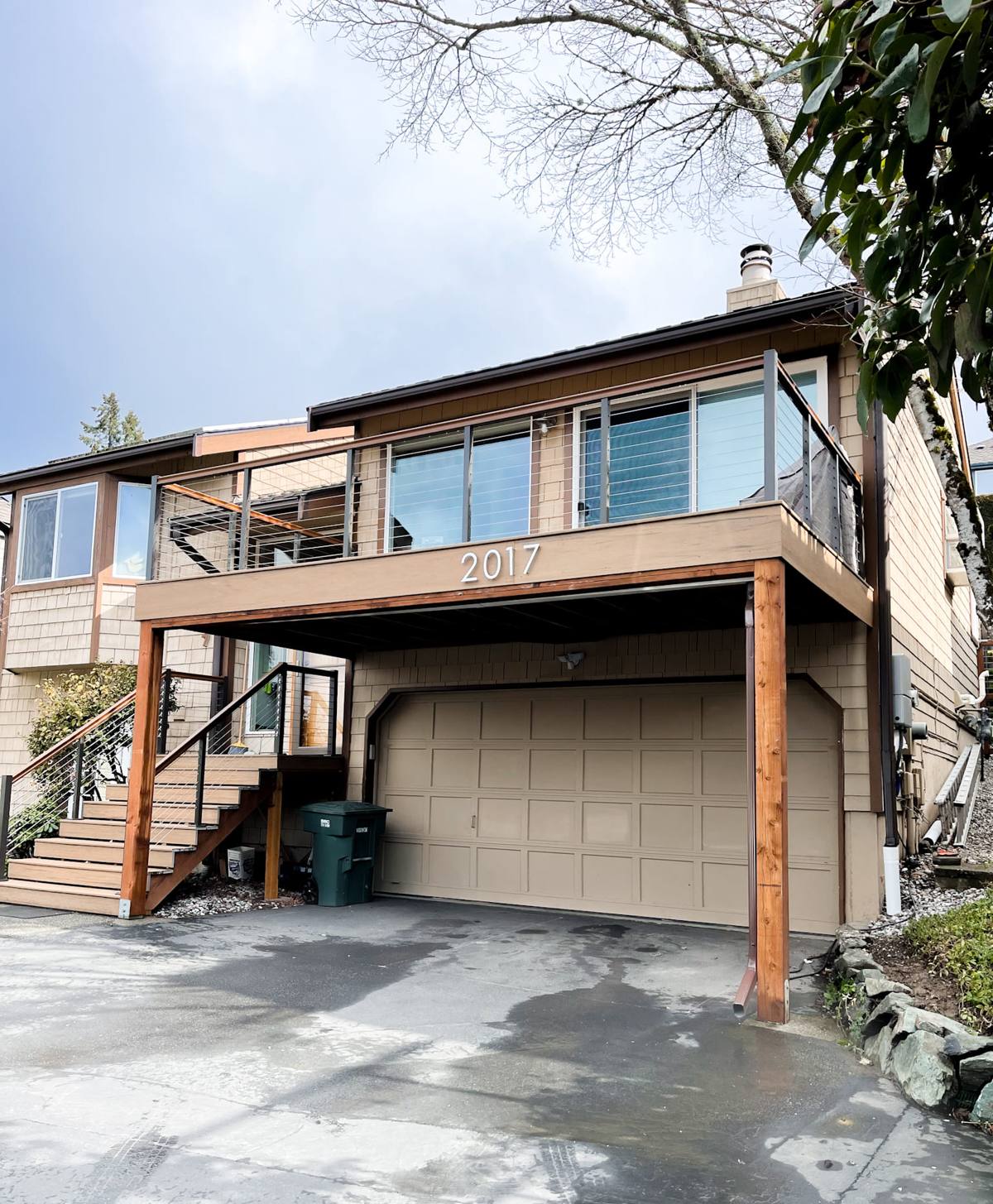
What Correct Composite Decking Installation Involves
Substructure and Moisture Management
The framing under a composite deck does the real work of keeping the structure sound. On Fidalgo Island, where rain is frequent and humidity stays high for long stretches, we treat the substructure as the part of the job that determines whether the deck is still solid in fifteen years — not just whether the boards look good this fall.
- Joist tape or a comparable flashing membrane over every joist top, to keep standing water from wicking into the wood framing under the boards
- Proper ledger board flashing where the deck attaches to the house, so water is directed away from the wall assembly rather than behind it
- Adequate slope away from the house for drainage — composite doesn't absorb standing water the way wood does, but water still needs somewhere to go
- Ventilation gaps under low-clearance decks so air can move and moisture doesn't sit trapped against the framing
Fastening and Board Spacing
Composite boards expand and contract with temperature and moisture more than most homeowners expect. Hidden fastener systems are the standard approach now, and they need to be installed with the manufacturer's specified gapping — too tight and boards can buckle or bow over a wet winter; too loose and you get an uneven, sloppy-looking deck. Getting this right is a matter of following the manufacturer's engineering, not guesswork, and it's one of the most common places we see corners cut on decks we're asked to repair or extend.
Choosing the Right Composite Board for This Climate
Not all composite decking is built the same way, and the differences matter more in a marine climate than they do somewhere dry and inland.
| Board Type | Moisture Behavior | Best Fit for Fidalgo Island |
|---|---|---|
| Uncapped composite | Wood fiber exposed at the surface can absorb moisture and is more prone to mold and mildew staining over time | Lower upfront cost, but higher maintenance burden in a wet climate |
| Capped composite | A polymer shell wraps the board, resisting moisture absorption and staining at the surface | Our standard recommendation for shaded, rain-exposed, or near-water lots |
| Cellular PVC | No wood content at all; essentially impervious to moisture | Strong option for decks with heavy shade, moss exposure, or minimal sun to dry out |
We generally steer homeowners here toward fully capped boards. It's not that uncapped composite is a bad product — it's that the extra moisture resistance earns its keep on a deck that's wet more often than it's dry for half the year. Color choice matters too: darker boards absorb more heat in the rare stretches of full sun, while lighter and variegated colors tend to hide pollen, moss spores, and water spotting better between cleanings.
Moss, Mildew, and Salt Air: What Ongoing Care Looks Like
Composite decking won't rot, but it isn't immune to what grows on it. Shaded decks under trees or on the north side of a house are the most prone to moss and algae buildup, especially with the amount of moisture Skagit County sees from fall through spring. Left alone, moss holds moisture against the board surface and can make a deck slick and hazardous underfoot.
- Rinse and sweep debris — leaves, needles, pollen — off the deck regularly so it doesn't trap moisture against the boards
- Wash with a soft-bristle brush and mild soap once or twice a year; avoid pressure washers on close settings, which can damage the cap layer on some boards
- Keep gutters and downspouts clear so runoff isn't dumping extra water directly onto the deck surface
- Trim back overhanging branches where practical to let more light and air reach the boards
- Address salt residue near the water by rinsing periodically — salt buildup won't corrode composite the way it can metal hardware, but it does mix with grime and grip moisture
None of this is heavy labor, but it's real. A composite deck in this climate that never gets cleaned will still look dingier and grow moss faster than one that gets a rinse-down a couple times a year.
Our Process for a Fidalgo Island Decking Project
We start with a site visit, not a sales pitch. That means looking at the actual exposure of the lot — how much sun and shade it gets, how close it sits to the water, what the drainage looks like around the existing structure, and what condition the current deck or ledger attachment is in if we're replacing something. Local wind and moisture exposure vary block to block on the island, and that affects material and fastening choices more than a lot of generic decking guides account for.
From there:
- We measure and design the layout, including any structural changes needed for stairs, railing, or multi-level sections
- We handle permitting through the appropriate local jurisdiction before any demo or framing work begins
- We remove and dispose of the old decking and inspect the framing underneath, replacing any joists or ledger connections that don't meet current standards
- We install moisture barriers, framing, and decking per manufacturer specification — not shortcuts we've picked up watching other jobs go wrong
- We walk the finished deck with you before calling the job done, so you know what maintenance it actually needs going forward
What Drives the Cost of a Composite Deck Here
Composite decking costs more upfront than pressure-treated wood, and less over time once you account for staining, sealing, and board replacement a wood deck needs. Beyond material choice, a few things move the price on most Fidalgo Island projects:
| Cost Factor | Why It Matters Locally |
|---|---|
| Framing condition | Older decks with rot or inadequate joist spacing often need partial or full substructure replacement, especially on homes exposed to years of coastal rain |
| Height and railing requirements | Elevated decks need code-compliant railing and stair systems, which adds material and labor |
| Access to the site | Sloped lots and lots with limited equipment access, common around the island, can add labor time |
| Board tier and brand | Capped composite and PVC boards cost more than base-tier uncapped composite, but reduce long-term maintenance |
| Ledger and flashing work | Correcting improper water management at the house connection is not optional, and it's not always visible until we open things up |
We'll walk through actual numbers for your project after we've seen the site — broad national price-per-square-foot figures don't account for what your framing, access, and design actually require.
Why Hiring a Crew That Already Works This Island Matters
Anacortes and the surrounding Fidalgo Island area have their own patterns — where moss builds up fastest, which lots catch the most wind and driving rain off the water, what the local permitting process actually requires, and how older homes in this area were typically built and attached to their existing decks. A crew that works here regularly has already seen how composite decking performs through a full Skagit County winter, not just how it looks on installation day.
That familiarity shows up in small decisions: where to add extra flashing, which board colors hold up better against the specific grime this climate produces, and how to frame a deck so it drains correctly on a lot that isn't perfectly flat. It's the difference between a deck that's installed correctly and one that's installed to a generic national spec that doesn't quite fit the site.
Signs You're Getting a Properly Installed Composite Deck
- The contractor talks about joist tape, ledger flashing, and drainage before they talk about board color
- Fastener spacing and board gapping follow the manufacturer's written specifications, not a generic rule of thumb
- They can explain why they're recommending capped composite, uncapped composite, or PVC for your specific lot's sun and shade exposure
- Permitting is handled as a normal part of the process, not an afterthought or an upcharge
- You get a clear explanation of what maintenance the finished deck will actually need
If a composite deck is on your list for this year or next, we're happy to take a look at your property, talk through what your specific lot needs given its sun, shade, and drainage, and give you a straightforward, no-pressure estimate. There's a form below — reach out and we'll get a site visit scheduled.