 Anacortes Siding
 Fidalgo Island Weather Doesn't Give Roofs Much of a Break
Fidalgo Island sits out where the Strait of Juan de Fuca, Rosario Strait, and Guemes Channel all meet, which means homes here take wind and rain from more directions than most inland Skagit County properties ever see. A roof on this island isn't just shedding water — it's dealing with salt-laden air that accelerates corrosion on fasteners and flashing, driving rain that gets pushed sideways into laps and seams that were never designed to handle horizontal water, and a moss season that runs long and wet enough to work its way under shingles if it's left unchecked. None of that shows up as a single dramatic event. It shows up as a slow accumulation of small failures that a bad storm finally exposes.
When we talk about "storm damage roof repair" for Fidalgo Island, we're talking about two related jobs: fixing what a specific windstorm or heavy rain event knocked loose, and correcting the underlying conditions — corrosion, moss intrusion, worn flashing — that made the roof vulnerable to that storm in the first place. Repairing one without addressing the other usually means we're back on the same roof in a year or two.
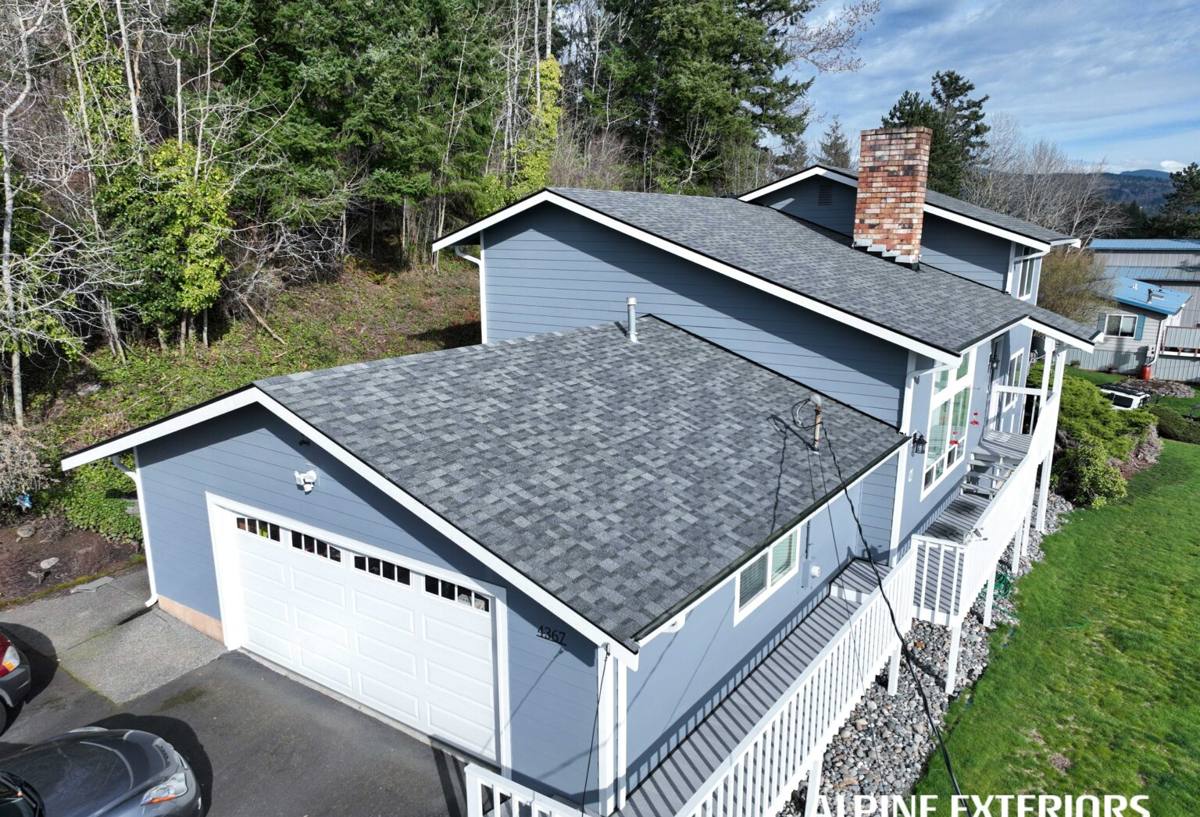
What Actually Counts as Storm Damage
Homeowners often assume storm damage means a hole punched through the roof deck, but on Fidalgo Island most storm damage is quieter than that. It's worth knowing the difference so you know what to look for and what to ask a contractor to check.
- Wind lift: Shingles or shakes with edges pried up or creased, even if they're still attached — the seal is broken and water will find its way under them on the next rain.
- Wind-driven rain intrusion: Water pushed sideways under flashing at chimneys, skylights, and roof-to-wall transitions during a storm with sustained gusts, rather than through an obvious opening.
- Debris impact: Branches, fir cones, and blown debris common around wooded island properties can crack shingles, dent metal roofing, or knock granules loose without leaving a visible hole.
- Fastener backout and flashing movement: Repeated wind cycles work nails and screws loose over time; a bad storm can be the event that finally lets water in through a fastener that's been slowly backing out for a season.
- Gutter and edge damage: Wind can tear gutters loose or bend drip edge, which then lets water run behind fascia and siding instead of off the roof.
Not everything that looks alarming after a storm is actually storm damage. Moss staining, granule loss from age, or flashing that was already failing before the wind picked up are maintenance and wear issues — we'll tell you honestly which is which rather than labeling everything "storm related" to pad a claim.
Our Process for Storm Damage Roof Repair
1. Inspection and Documentation
We walk the roof (or inspect from ladder and drone where pitch or access makes walking unsafe) and document what we find with photos — cracked or lifted shingles, flashing separation, exposed underlayment, granule loss patterns, and any interior signs of leaking if you've noticed staining or moisture inside. This documentation matters whether or not you end up filing an insurance claim; it gives you and us a clear baseline.
2. Emergency Mitigation
If there's an active leak or exposed decking, our first priority is stopping water intrusion — tarping, temporary flashing, or sealing an exposed area — before we scope the full repair. This isn't the finished fix; it's damage control while we plan the correct one.
3. Scoping the Real Repair
We separate what needs to happen now from what should happen as part of a longer-term plan. A single lifted shingle section might be a straightforward patch. Damage concentrated around a chimney or valley often means the flashing system needs to be rebuilt, not just re-sealed, because sealant over failing flashing is a short-term fix that fails again.
4. The Repair Itself
Depending on what we find, this can mean replacing individual shingles or shakes and re-securing them to match the surrounding roof, rebuilding step flashing or counterflashing at walls and chimneys, resetting or replacing damaged gutters and drip edge, and re-sealing penetrations with materials rated for the moisture exposure this area sees. We match materials as closely as possible so a repair doesn't stand out as an obvious patch.
5. Follow-Up
After a repair, we check back in on request, particularly after the first significant rain, to confirm the fix is holding under real conditions rather than just looking right on a dry day.
Common Storm Damage Patterns We See on Fidalgo Island Roofs
| Damage Type | Typical Cause Here | What the Fix Involves |
|---|---|---|
| Lifted or missing shingles | Sustained gusts off the Strait catching an edge or ridge | Re-secure or replace affected shingles, check adjacent seal integrity |
| Flashing leaks at chimneys/valleys | Wind-driven rain plus age-related sealant failure | Rebuild flashing rather than re-caulk over it |
| Corroded fasteners or metal roofing seams | Salt air exposure accelerating oxidation | Replace with corrosion-resistant fasteners rated for coastal use |
| Moss-related shingle lift | Long wet moss season working roots under shingle edges | Careful moss removal, treatment, and shingle resetting where lifted |
| Gutter and fascia damage | Wind tearing loose poorly fastened gutter runs | Re-hang or replace gutters, repair fascia water damage if present |
Repair or Replace? Honest Cost Factors
Most storm damage on Fidalgo Island can be repaired without a full roof replacement, but a few factors push the math toward replacement instead of another round of patching. We'll walk through these with you plainly rather than defaulting to the bigger job.
| Factor | Leans Toward Repair | Leans Toward Replacement |
|---|---|---|
| Roof age relative to expected lifespan | Under roughly two-thirds of expected life | Already near or past expected lifespan |
| Extent of damage | Localized to one section or a few penetrations | Spread across multiple roof planes |
| Underlying deck condition | Deck is sound where exposed | Soft or rotted decking found during inspection |
| Repair history | First or infrequent repair on this roof | Recurring repairs to the same areas |
| Material availability | Matching material still available | Discontinued product with no reasonable match |
Repair costs vary widely depending on scope — a flashing rebuild is a different job than replacing a section of shingles — so we give a firm number after inspection rather than a phone-quote guess. Broadly, isolated repairs tend to run in the low hundreds to a couple thousand dollars, while damage that involves flashing rebuilds, decking repair, or larger sections climbs from there. We'll always show you what we found and why we're recommending what we're recommending.
Insurance and Documentation
We're not insurance adjusters and we won't pretend to be, but we can give you clear, dated photo documentation and a written scope of what storm-related damage we found, which is what most carriers ask for when you file a claim. If you're not sure whether the damage is worth filing on, we'll give you our honest read on the scope and cost before you decide whether it's worth the deductible and the claim on your record.
Preventing Repeat Damage After the Repair
A repair that ignores the conditions that caused the damage tends to fail again in the next storm season. A few things make a real difference for roofs on Fidalgo Island specifically:
- Keeping gutters and downspouts clear so wind-driven rain has somewhere to go instead of backing up under the roof edge.
- Scheduling moss treatment before it establishes rather than after it's already lifted shingles.
- Using corrosion-resistant fasteners and flashing on any repair, given the salt air exposure this close to the water.
- Checking flashing at chimneys, skylights, and wall transitions annually, since these are consistently where wind-driven rain finds its way in first.
- Trimming back overhanging branches that turn into wind-driven debris during a storm.
Why It Matters to Hire a Crew That Already Works Fidalgo Island
A roofing crew that mostly works inland Skagit County jobs isn't necessarily used to detailing flashing and fastener choices for the wind and salt exposure this island gets. We work storm damage repairs on Fidalgo Island and elsewhere around Anacortes regularly enough to know which parts of a roof fail first here, and we spec repairs — fastener type, flashing detail, sealant choice — accordingly instead of treating this like a generic repair anywhere else in Washington. That's the difference between a repair that holds through the next storm season and one that opens back up.
What to Do Right After a Storm
- Check attic or ceiling areas for new staining, dampness, or drips — interior signs often show up before roof damage is visible from the ground.
- Look from ground level for obviously lifted, missing, or displaced shingles or metal panels; don't climb onto a wet or damaged roof yourself.
- Check gutters and downspouts for detachment or blockage from storm debris.
- Photograph anything you can see safely, with a date, for your own records.
- Get an inspection promptly — a small opening left through a second or third storm turns into a much larger repair.
If a recent storm has you wondering whether your roof took damage, we're happy to take a look and give you a straight answer — no pressure, no inflated scope. Use the form below to request a free estimate and we'll get an inspection scheduled.