 Anacortes Siding
 Decks Built for Flounder Bay's Marine Environment
Flounder Bay sits close enough to the water that every deck built here has to answer to the same conditions: salt-laden air rolling off the bay, driving rain that comes in sideways off Puget Sound weather systems, and a long, damp shoulder season that lets moss and algae take hold on any surface that doesn't dry out fast. A deck built to a generic spec sheet can look fine for a year or two and then start showing corrosion streaks, soft spots, or a slick green film that makes it unsafe to walk on. A deck built for this specific stretch of Anacortes is a different job from the start — different fasteners, different footing details, different material choices, and a different maintenance conversation with the homeowner before a single board goes down.
This page is about that one job — custom deck design and construction for Flounder Bay properties — not a general overview of decks everywhere. If you live in this neighborhood, the details below are the ones that actually matter for your project.
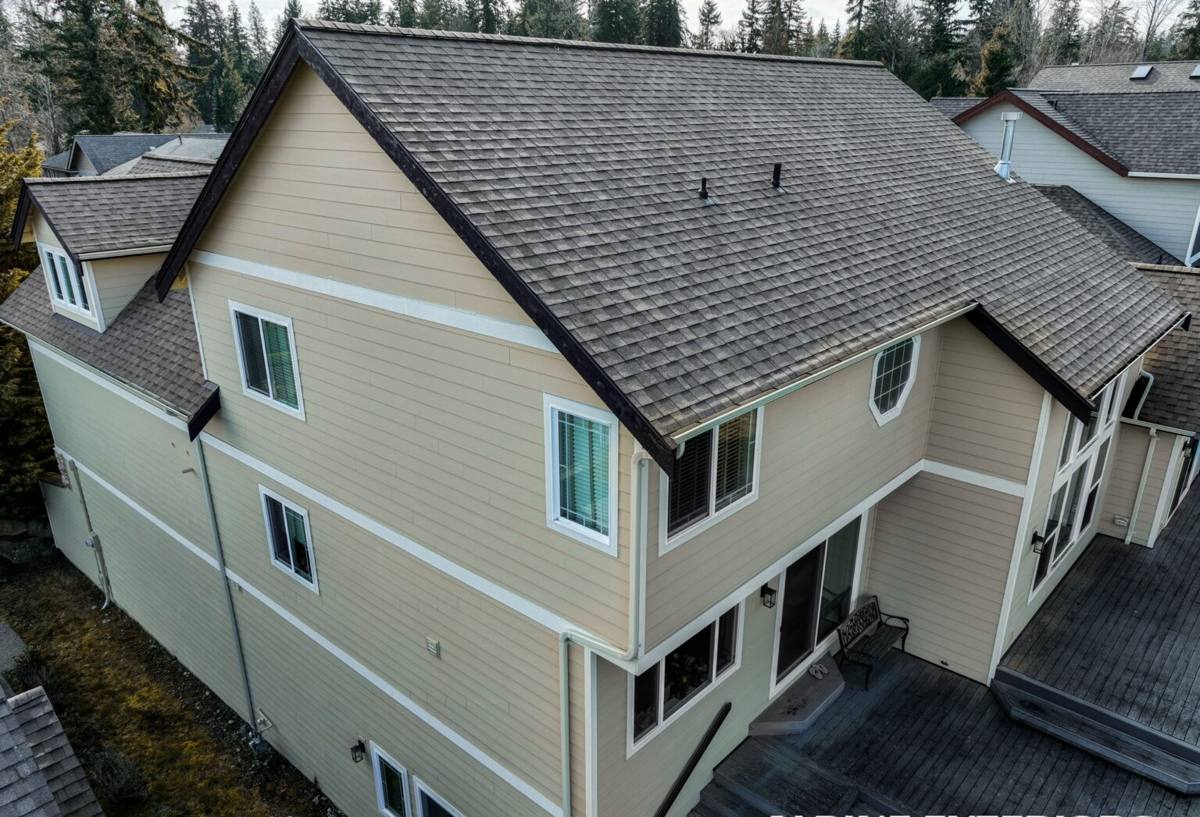
What Salt Air, Rain, and Moss Actually Do to a Deck
Salt Air and Corrosion
Airborne salt doesn't need direct wave contact to cause damage. It travels on wind and settles on every exposed surface, including metal that's tucked underneath a deck where you'd assume it's protected. Standard zinc-coated fasteners and connectors can start corroding within a few seasons this close to the water. Once a fastener weakens, the board it's holding starts to move, and movement is what turns a small problem into a structural one.
Driving Rain and Moisture Intrusion
Skagit County gets plenty of straight-down rain, but the rain that does the most damage to a deck is the kind that comes in at an angle and drives against ledger boards, rim joists, and the point where a deck attaches to the house. That connection point is the single most common source of rot and hidden water damage in decks throughout this region, and it's exactly where a shortcut during framing shows up years later as a soft, spongy deck edge or, worse, water intrusion into the house itself.
Moss and Slip Hazards
Anacortes' moss season isn't a minor cosmetic issue — it's a real slip-and-fall risk on a deck surface, especially on stairs. Moss and algae thrive wherever a deck stays damp and shaded for long stretches, which describes a lot of Flounder Bay's tree-lined, water-adjacent lots. Board spacing, surface texture, and how well a deck drains and dries between rains all affect how much of a moss problem you'll actually have to deal with each winter.
Choosing Decking Material for a Flounder Bay Property
There's no single "best" decking material — there's the material that fits your budget, your maintenance appetite, and how close your lot sits to salt air and standing moisture. Here's how the common options actually perform in this specific environment.
| Material | Salt Air / Moisture Performance | Moss Resistance | Maintenance |
|---|---|---|---|
| Pressure-treated fir/pine | Good if properly sealed and re-sealed on schedule | Moderate — needs regular cleaning | Annual cleaning, periodic sealing |
| Cedar | Naturally moisture- and rot-resistant; still benefits from finish | Moderate — surface can still host moss without upkeep | Periodic cleaning and refinishing to hold color and protection |
| Composite decking | Excellent — doesn't absorb water or rot | Good, though surface film can still form and needs washing | Low — occasional washing, no sealing or staining |
| PVC decking | Excellent — fully moisture-impervious | Good, same as composite | Low — washing only |
For a lot with heavy shade, tree cover, or close proximity to the bay, we generally steer homeowners toward composite or PVC decking for the walking surface, simply because the maintenance burden of keeping a wood deck properly sealed against this much moisture is real and ongoing. That said, plenty of homeowners want the look and feel of real wood, and cedar can perform well here for years if it's finished correctly at installation and re-treated on a realistic schedule. We'll lay out the honest trade-offs for your specific lot rather than push one product across the board.
Framing, Fasteners, and Footings: The Parts You Don't See
The decking boards get all the attention, but the structure underneath is what determines whether a deck lasts 10 years or 30 in a marine climate. For Flounder Bay projects, that means:
- Stainless steel or heavy-duty coated fasteners and structural connectors rated for corrosive/coastal exposure, not standard interior-grade hardware
- Properly flashed ledger board connections where the deck meets the house, with a drainage gap to keep water from tracking behind the siding
- Footings sized and set below frost depth and set to handle Skagit County's saturated soil conditions during the wet months
- Joist tape or equivalent moisture barrier on top of framing lumber to slow water absorption at the most vulnerable point of each board
- Adequate airflow underneath the deck so the structure can actually dry out between rain events instead of staying damp for days
None of this is visible once the deck is finished, which is exactly why it's the part most likely to get cut corners on a low-bid job. It's also the part that costs the most to fix later if it's done wrong the first time.
Designing a Deck That Works With the Site
Flounder Bay lots often have a view worth building toward, along with wind exposure and grade changes that a cookie-cutter deck layout doesn't account for. A design that actually fits the property considers:
Orientation and wind — decks facing open water or exposed to prevailing wind benefit from railing choices and layout decisions that cut wind without blocking the view entirely. Grade and elevation — many bay-adjacent lots slope toward the water, which affects footing depth, stair placement, and whether a multi-level deck makes more sense than a single flat expanse. Shade and drying time — where trees or the house itself cast long shadows on part of the deck, that section will hold moisture and grow moss faster than the rest, which should factor into board spacing and material choice in that specific zone, not just the deck as a whole.
Permitting and Waterfront Considerations
Properties near the water in Anacortes and unincorporated Skagit County can fall under shoreline setback and permitting requirements beyond a standard building permit, depending on how close the structure sits to the water and the specific zoning for the lot. We pull the required permits and handle the applications as part of the job, and if your property is close enough to the water that shoreline regulations apply, we flag that during the initial site visit rather than after design work is already underway.
Our Process From First Call to Finished Deck
The process is the same structure whether the job is a small replacement deck or a larger custom build, but every step is informed by what we see on your specific lot:
- Site visit and assessment — we look at grade, sun/shade exposure, wind exposure, drainage, and the condition of anything being replaced
- Design and material conversation — honest trade-offs between wood and composite/PVC options based on your lot's exposure and your maintenance preferences, not a one-size pitch
- Permitting — we handle the paperwork, including shoreline review where applicable
- Framing and structural work — corrosion-resistant hardware, properly flashed ledger connections, footings set for local soil and frost conditions
- Decking, railing, and finish work — installed with attention to drainage and airflow, not just appearance
- Final walkthrough — we go over the finished deck and what maintenance it actually needs going forward
Maintaining Your Deck Through Anacortes' Moss Season
A well-built deck still needs some seasonal attention in this climate — the difference is that a properly built one needs far less. A basic maintenance checklist for Flounder Bay homeowners:
- Sweep debris and fallen leaves off the deck regularly through fall — trapped organic matter is what feeds moss growth
- Rinse or lightly scrub the deck surface before moss gets a foothold, especially on shaded sections and stairs
- Check railing and stair hardware annually for early signs of corrosion, especially on lots with direct bay exposure
- Reseal or refinish wood decking on the schedule recommended for the product used — don't wait for visible graying or cracking
- Confirm gaps between boards stay clear so water keeps draining through instead of pooling on the surface
- Have the substructure checked periodically at the ledger connection and footings, since that's where hidden moisture damage shows up first
Why Hire a Crew That Already Works in Flounder Bay
A contractor who mostly builds decks inland doesn't think about corrosion-rated hardware or shoreline permitting by default, because they don't have to on most of their jobs. Working regularly in Flounder Bay and the rest of Anacortes' waterfront neighborhoods means we're already building to marine-exposure standards as a baseline, not as an upsell. That shows up in fastener selection, in how ledger connections are flashed, and in which materials we actually recommend for a shaded, damp, salt-air lot versus a sunny inland yard. It also means we're familiar with the local permitting process and the shoreline considerations specific to Skagit County waterfront property, so there are fewer surprises once the project is underway.
Cost Factors to Expect
Every deck is priced around its own footprint, material choice, and site conditions, so we won't quote a number without seeing the lot — but these are the factors that move the price up or down on a Flounder Bay project:
| Factor | Effect on Cost |
|---|---|
| Decking material (wood vs. composite/PVC) | Composite and PVC cost more upfront, less over the deck's lifespan in maintenance |
| Height and grade of the lot | Sloped or elevated sites need more substructure, stairs, and footing work |
| Corrosion-rated hardware and fasteners | A modest upcharge over standard hardware, and worth it this close to the water |
| Multi-level or custom layouts | More framing and labor than a single flat deck of the same square footage |
| Shoreline permitting requirements | Can add time and a permitting fee depending on proximity to the water |
| Railing style and materials | Cable, glass, and custom railing systems cost more than standard wood or metal balusters |
If you're planning a new deck or replacing one that's showing its age in Flounder Bay, we're happy to come take a look and walk the site with you. There's no pressure and no obligation — just a straightforward look at what your property needs and a clear estimate to work from.