 Anacortes Siding
 Siding Built for an Island in the Salish Sea
Guemes Island sits fully exposed to the Salish Sea, and that changes what a house needs from its siding compared to a home a few miles inland in Anacortes. Homes here face salt-laden air coming off the water, wind-driven rain that hits walls sideways instead of falling straight down, and a moss season that stretches from fall through spring in the shaded, damp pockets common on the island. Siding that would hold up fine in a drier part of Skagit County can struggle here if it isn't matched to these conditions and installed correctly.
We install James Hardie fiber cement siding exclusively, and on Guemes Island that choice isn't about brand preference — it's about what actually stands up to salt air and constant moisture cycling without the maintenance headaches that come with other materials.
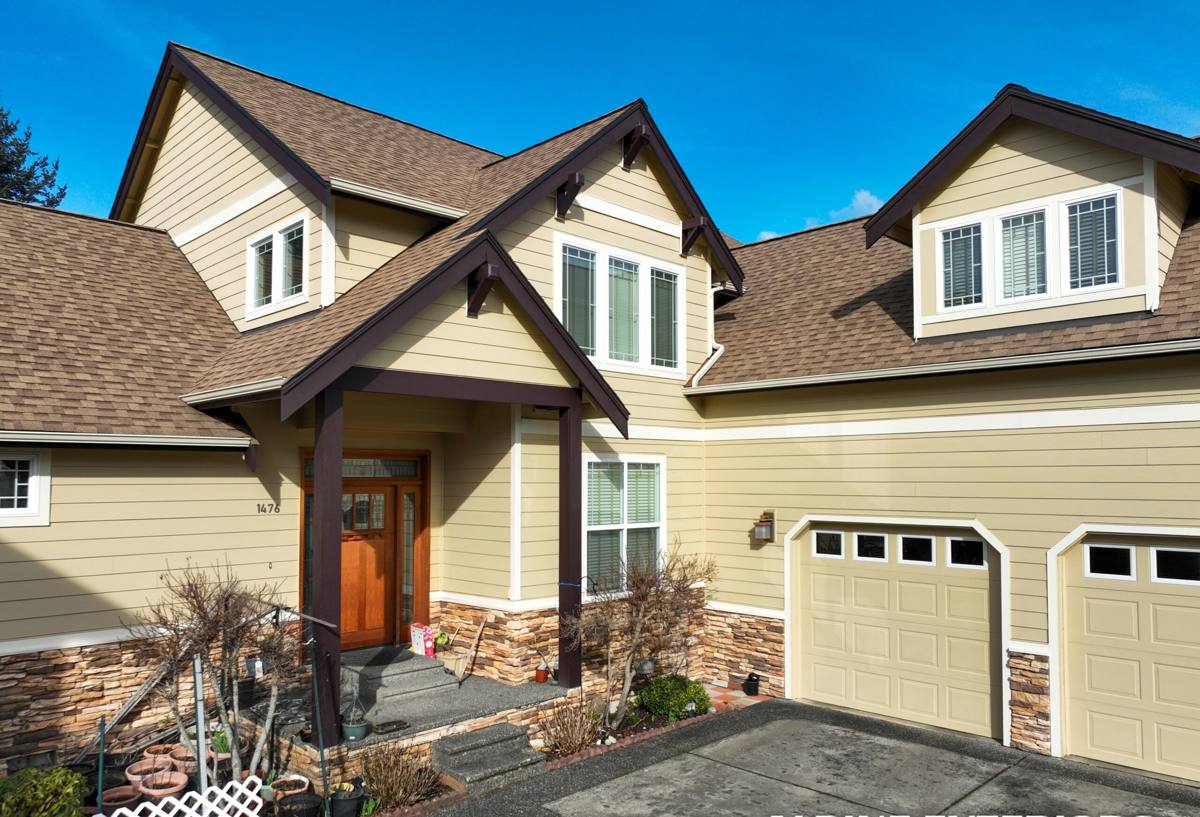
What Guemes Island's Climate Does to Siding
Salt Air and Corrosion
Airborne salt from the surrounding water settles on every exterior surface on the island, including siding, trim, and fasteners. Over years, salt exposure accelerates corrosion in metal components and can degrade the surface finish of materials that aren't formulated to resist it. Fastener choice and flashing details matter more here than on a typical mainland Anacortes job.
Wind-Driven Rain
Because the island has little to block weather coming off the water, rain frequently arrives at an angle rather than falling straight down. That means water gets pushed up under laps, into seams, and behind trim in ways that vertical-only weather protection doesn't anticipate. Siding systems and flashing details need to account for lateral water intrusion, not just runoff.
Extended Moss and Mildew Season
Shaded north- and west-facing walls, tree cover, and the general dampness of the Pacific Northwest combine to give moss and mildew a long growing season on Guemes Island — often longer than what you'd see in more open, sun-exposed parts of Skagit County. Siding that holds moisture at the surface or has seams where organic growth can take hold will show green and black staining faster here than elsewhere.
Why James Hardie Fits This Environment
James Hardie fiber cement is a cement-and-cellulose composite, not wood or wood-based board. That composition is what makes it a good match for Guemes Island's conditions:
- It doesn't rot, so trapped moisture from wind-driven rain doesn't lead to the structural decay that wood or wood-composite siding can suffer over time.
- It's non-combustible, which matters for island properties where wildfire response can take longer than in town.
- The ColorPlus factory finish is baked on and resists fading and chalking better than field-applied paint, which matters when salt air is already working against the finish.
- Hardie's HZ5 product line is engineered for higher-moisture, marine-influenced climates like this one — it's a genuine formulation difference, not just a marketing label.
Fiber cement won't stop moss from landing on a wall — nothing does — but it doesn't feed mold and mildew growth the way wood-based products can, and a properly caulked, factory-finished surface is easier to keep clean than a porous or seam-heavy one.
What a Correct Installation Looks Like Here
Hardie siding performs the way it's rated to perform only when it's installed to the manufacturer's specifications, and on an island exposure those specs aren't optional extras — they're the difference between siding that lasts decades and siding that fails early.
Flashing and Water Management
Every window, door, and penetration needs proper flashing that directs water out and away, not just caulk covering a gap. Given how often rain hits these walls at an angle, we pay particular attention to head flashing above openings and to weather-resistant barrier detailing behind the siding itself.
Fastener and Hardware Selection
In a salt-air environment, fastener corrosion resistance isn't a nice-to-have. We use corrosion-resistant fasteners rated for coastal exposure, and we follow Hardie's nailing and spacing specifications so the board performs as engineered rather than working loose over time.
Clearances and Ventilation
Hardie specifies minimum clearances from grade, roofing, and decking so water and moisture-laden air can drain and dry rather than sitting against the bottom edge of the siding. On a damp, shaded island lot, skipping these clearances is one of the fastest ways to create a chronic moisture problem at the base of a wall.
Joints and Caulking
Butt joints and seams are where wind-driven rain finds its way in if they're done sloppily. Correct joint treatment — proper caulking or, where the design allows, flashed joints — keeps water out of the wall assembly instead of just slowing it down.
Our Process for a Guemes Island Project
- On-site assessment. We look at wall exposure, wind direction, shade patterns, and existing moisture or moss issues specific to your lot, not a generic checklist.
- Product and line selection. We recommend the Hardie product line and profile suited to your home's exposure — including HZ5 formulation where the marine exposure calls for it.
- Tear-off and inspection. Removing the old siding lets us check the sheathing and framing underneath for hidden moisture damage before anything new goes up — important on a wall that's been absorbing salt air and driving rain for years.
- Weather barrier and flashing installation. This layer does as much work as the siding itself, and it's not visible once the job is done, so it has to be right the first time.
- Hardie board installation to spec. Correct fasteners, spacing, clearances, and joint treatment, following manufacturer installation requirements rather than shortcuts.
- Final inspection and walkthrough. We review the completed work with you and explain any care specifics for your home's exposure.
Why It Matters to Hire a Crew That Already Works Guemes Island
Access and logistics on Guemes Island are different from a job in downtown Anacortes — materials, crew, and equipment typically move by ferry, and scheduling has to account for that instead of treating it as an afterthought. A crew that has already run projects on the island knows how to plan delivery timing, staging, and crew logistics so the ferry schedule doesn't turn into delays on your project.
More importantly, a crew with island experience has already seen how salt air, wind-driven rain, and extended moss season actually play out on real homes here — which walls take the worst of it, where moisture tends to collect, and which details are worth extra attention. That's knowledge you don't get from a spec sheet.
Comparing Siding Options for Island Exposure
| Factor | James Hardie Fiber Cement | Vinyl | Wood / Wood-Composite |
|---|---|---|---|
| Salt air resistance | Strong — non-organic, factory-finished | Doesn't corrode, but can become brittle and fade with UV/salt exposure over time | Vulnerable to moisture-driven decay in salt air |
| Wind-driven rain performance | Strong when flashed and installed to spec | Prone to water intrusion at seams and panel joints | Water intrusion often leads to rot at joints and edges |
| Moss/mildew resistance | Doesn't feed organic growth; cleans up well | Doesn't feed growth but seams trap grime | Wood fibers can support mold and moss growth |
| Fire resistance | Non-combustible | Melts/deforms under heat | Combustible |
| Finish longevity | Factory ColorPlus finish, long fade resistance | Color molded in but can fade and chalk | Requires repainting/staining on a recurring cycle |
Cost Factors for a Guemes Island Hardie Project
Every home is different, but a few factors specifically affect cost and timeline for island jobs:
- Ferry logistics. Material delivery and crew scheduling around ferry sailings can affect project timeline more than it would on the mainland.
- Existing damage. Homes with long-standing moisture issues from prior siding may need sheathing repair before new siding goes up, which affects scope.
- Exposure level. A home fully open to the water and prevailing wind may warrant a higher-spec product line (like HZ5) or extra flashing detail compared to a more sheltered lot.
- Access. Driveway, staging area, and site access on the island can vary widely and affect labor time.
What to Check Before You Hire Anyone
Whether you're comparing us to another contractor or just want to know what a legitimate siding job looks like, this is a reasonable checklist:
- Do they install to the manufacturer's written specifications, including fastener type and clearances?
- Will they inspect and repair sheathing before installing new siding, not just cover over existing damage?
- Can they explain how they'll handle flashing at windows, doors, and joints — specifically, not in general terms?
- Do they have experience with island or marine-exposure projects, including logistics?
- Is the warranty they're offering tied to certified installation, or is it just the manufacturer's material warranty with no installation backing?
If your Guemes Island home is due for new siding, we're happy to walk the property, look at your specific exposure, and put together a straightforward estimate — no pressure, no upsell games. Use the form below to request a free estimate.