 Anacortes Siding
 Metal Roofing on Guemes Island: A Different Set of Conditions
Guemes Island sits just across the water from Anacortes, but the roofs out there work harder than most roofs on the mainland side of Skagit County. Homes on the island get the full weather package: salt-laden air coming off the water, wind-driven rain that finds every gap in a roof system, and long stretches of shade and dampness that keep moss and algae active almost year-round. A roof that holds up fine in a drier, more sheltered part of the county can still fail early out here if it wasn't specified and installed with those conditions in mind.
Metal roofing is a strong fit for this environment when it's the right metal, the right finish, and the right installation details. It isn't automatically bulletproof just because it's metal — the wrong fastener, the wrong flashing detail, or the wrong panel choice can shorten its life just like any other roofing material. This page covers what actually matters for a metal roof on Guemes Island, not generic metal roofing marketing.
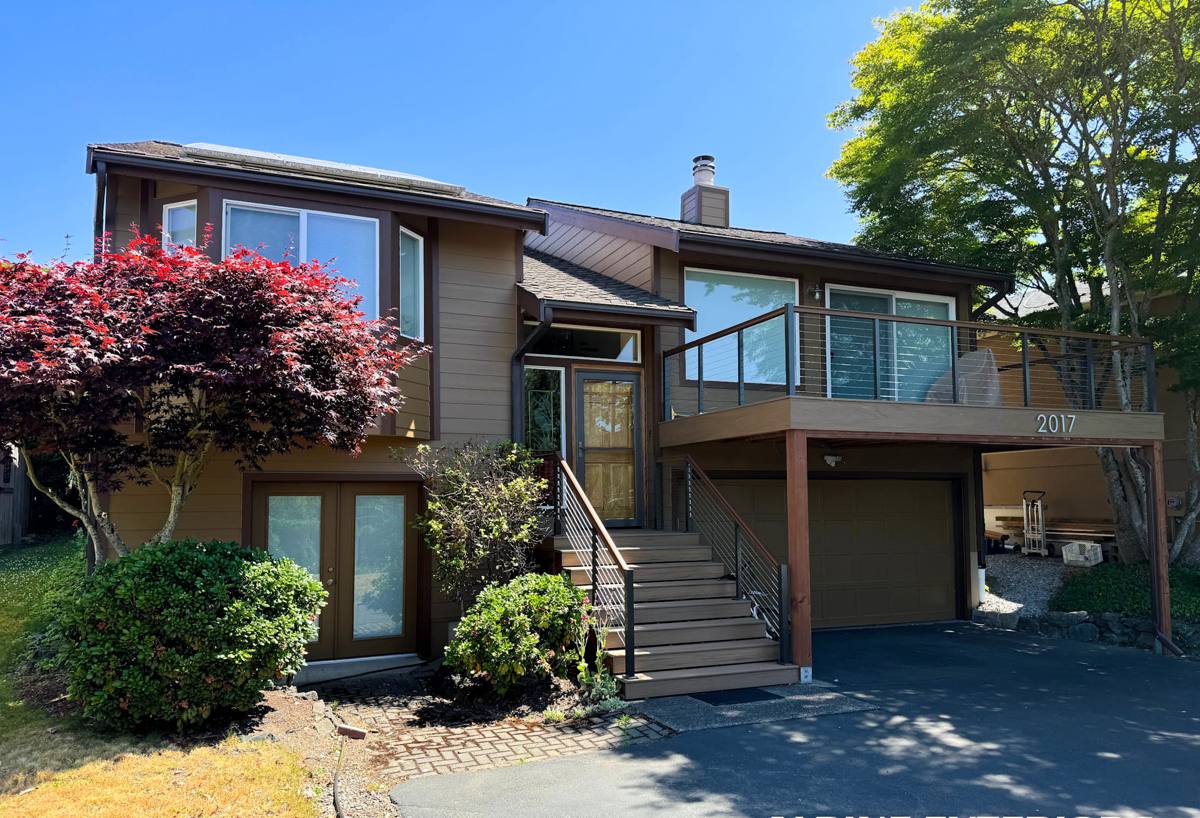
Why Salt Air Changes the Calculation
Anacortes and the surrounding islands sit close enough to saltwater that airborne salt is a real factor in material selection, not a theoretical one. Salt accelerates corrosion on exposed metal — fasteners, flashing, cut edges, and any place the protective coating has been scratched or worn through. Over years, that corrosion shows up first as rust streaking, then as failed seals around penetrations, and eventually as pinholes or weakened panel edges.
This doesn't mean metal roofing is a poor choice near the water — it's actually one of the more corrosion-resistant roofing materials available when it's built correctly. It means the details that get overlooked inland (fastener grade, coating quality, how cut edges are treated) become the details that determine whether a roof lasts fifteen years or forty on an island property.
What Salt Exposure Actually Attacks
- Exposed steel fasteners and screws that aren't rated for coastal exposure
- Cut panel edges where bare metal is exposed and not properly sealed or coated
- Dissimilar metal contact points (galvanic corrosion) where the wrong flashing or fastener metal touches the panel metal
- Scratches and scuffs from installation that expose bare substrate under the finish
Moss, Algae, and a Long Damp Season
The other half of the equation is moisture. Shaded roof sections, north-facing slopes, and areas under overhanging trees stay damp for extended stretches through the fall, winter, and spring. On roofing materials that give moss and algae something to grip — rough-textured shingles, for example — that dampness turns into sustained organic growth that holds moisture against the roof surface and slowly degrades it from the top down.
Metal roofing's smooth, hard surface gives moss and algae very little to anchor into compared to more textured materials, and proper panel slope keeps water moving instead of pooling. That's a real advantage for island homes dealing with a long wet season, but it isn't a total pass — moss can still take hold in seams, at rooftop debris buildup, or wherever leaves and needles collect and stay wet. A metal roof still needs periodic debris clearing to get the full benefit.
Choosing the Right Metal Roofing System
Not all metal roofing is built the same, and the right choice depends on the home, the roof slope, and how exposed the site is to wind and salt spray. The two systems most homeowners compare are standing seam and exposed-fastener panel systems.
| Factor | Standing Seam | Exposed Fastener |
|---|---|---|
| Fasteners | Concealed under the seam, not exposed to weather | Visible screws through the panel face |
| Long-term seal reliability in driving rain | Higher — fewer penetration points | Lower — gasketed screws can loosen or wear over decades |
| Upfront cost | Higher | More affordable |
| Best fit | Full re-roofs on exposed or waterfront-adjacent lots | Outbuildings, shops, budget-conscious projects on sheltered sites |
| Maintenance | Minimal fastener upkeep | Periodic fastener inspection recommended |
For a primary residence on Guemes Island facing open water or prevailing wind, we generally steer homeowners toward standing seam because it has far fewer places for wind-driven rain to work its way in over time. Exposed-fastener panels still have their place — a detached shop or a more sheltered building can do well with that system at a lower cost — but we're honest about the trade-off up front rather than letting cost be the only factor discussed.
Coatings and Metal Choice Matter as Much as the Panel Style
The panel profile gets most of the attention, but the metal substrate and finish coating do most of the work against salt exposure. Aluminum is naturally more corrosion-resistant than steel and is often the better call for homes closest to the water, since it doesn't rust even if the finish gets scratched. Steel panels can absolutely perform well too, but they depend more heavily on an intact, high-quality coating system to keep moisture off the base metal.
On the finish side, a quality PVDF-based coating (often referred to by the resin name Kynar) holds color and chalk resistance far longer under UV and salt exposure than lower-grade paint systems. We treat coating quality as a real spec item on island jobs, not an upsell — it's the difference between a roof that still looks and performs like new after a couple decades and one that's visibly fading and chalking within a handful of years.
Fasteners and Flashing Deserve Attention Too
A high-end panel installed with mismatched or under-rated fasteners will still corrode early. We use fasteners and flashing metals matched to the panel material to avoid galvanic corrosion, and we treat every cut edge so bare metal isn't left exposed to salt air. These are small line items on an estimate that make a large difference in how the roof ages.
Installation Details That Actually Determine Roof Life
Metal roofing performs as well as its underlayment, flashing, and ventilation allow it to. On a driving-rain, high-humidity site like Guemes Island, we pay particular attention to a few details that are easy to shortcut and hard to fix later without tearing into the roof:
- Underlayment: a synthetic or self-adhered underlayment rated for the wind-driven rain conditions common to open, exposed lots — not a bargain-grade felt that degrades under sustained moisture.
- Flashing at every penetration: chimneys, vents, skylights, and wall transitions are where roofs actually leak. Correct step flashing, counter-flashing, and sealant choice matter more here than the panel itself.
- Ridge and eave detailing: proper closures at the ridge and eave keep wind-driven rain and blown debris from working underneath the panels.
- Attic and roof ventilation: trapped moisture under a metal roof leads to condensation on the underside of the panels, which causes its own corrosion problems independent of the weather outside. Balanced intake and exhaust ventilation is part of doing the job right, not an optional add-on.
How Our Process Works for a Guemes Island Job
Working on the island adds a logistics layer that a mainland Anacortes job doesn't have, and we plan for it rather than treating it as a surprise mid-project.
- On-site assessment: we look at roof slope, exposure to wind and water, existing decking condition, and ventilation before recommending a system — we don't quote a panel type without seeing the roof.
- Material and system selection: based on exposure, we recommend standing seam or exposed-fastener, the substrate metal, and coating grade, with the trade-offs explained plainly.
- Scheduling around ferry logistics: material deliveries and crew transport are planned around the ferry crossing so the job isn't stalled mid-install waiting on a load of panels or flashing stock.
- Tear-off and deck inspection: we check the decking for rot or moisture damage before anything new goes down — a new roof over a compromised deck fails early regardless of panel quality.
- Underlayment, flashing, and panel installation: installed to the details above, not to the minimum code requirement.
- Final walkthrough: we go over penetrations, ridge and eave details, and ventilation with the homeowner before calling the job complete.
Living With and Maintaining a Metal Roof on the Island
A correctly installed metal roof is genuinely low-maintenance compared to most alternatives, but "low-maintenance" isn't "no-maintenance," especially in a wet, salt-exposed setting. A short annual routine keeps a good roof performing for decades instead of just "a long time."
- Clear debris (needles, leaves, moss fragments) from valleys and behind chimneys or skylights where it collects and holds moisture
- Check gutters and downspouts so water is actually leaving the roof rather than backing up at the eaves
- Look over flashing and sealant at penetrations every year or two for cracking or separation
- Rinse off accumulated salt film and grime periodically, especially on roof sections most exposed to wind off the water
- Address any scratches or coating damage promptly rather than letting bare metal sit exposed
Why Local, Island-Experienced Installation Matters
A metal roof's long-term performance is decided far more by installation quality than by the panel brand on the label. A crew that hasn't worked on Guemes Island before may not think through ferry-dependent scheduling, may under-spec fasteners and coatings for salt exposure, or may treat ventilation and flashing as an afterthought because those details don't show up on a quick visual quote. We've built our process around the specific combination of conditions this island presents — salt air, driving rain, and a long moss season — so the roof we put on is sized to the environment it actually has to survive, not a generic spec sheet.
If you're weighing a metal roof for a Guemes Island home, we're happy to walk the roof with you, talk through system and coating options honestly, and put together a straightforward, no-pressure estimate. There's a form below this page ready whenever you'd like to get that conversation started.