 Anacortes Siding
 Why Guemes Island Asks More of a Roof
Guemes Island sits out in the water off Anacortes, reachable only by the Skagit County ferry, and that exposure shows up in how fast roofs wear compared to homes just a few miles inland. There's no buffer of hills or dense development to slow the wind coming off Rosario Strait and the Salish Sea, so roofs here take wind-driven rain head-on more often than a similarly built house tucked into an Anacortes neighborhood. Add in the salt content of that marine air, which slowly works on exposed fasteners and metal flashing, and you have a roofing environment that's genuinely tougher than the regional average.
Then there's the tree cover. A lot of Guemes Island properties sit under or near mature conifers, which means shade, needle litter, and damp organic debris collecting in valleys and along eaves for much of the year. That combination is exactly what moss and algae need to take hold, and once moss gets a foothold on a roof it holds moisture against the surface far longer than open sky and sun would allow. Western Washington's long, wet stretch from fall through spring only extends that moss season further.
None of this means a roof on Guemes Island is doomed to fail early. It means the installation has to account for salt exposure, wind-driven water, and moss pressure from day one, rather than relying on a standard inland spec and hoping it holds up.
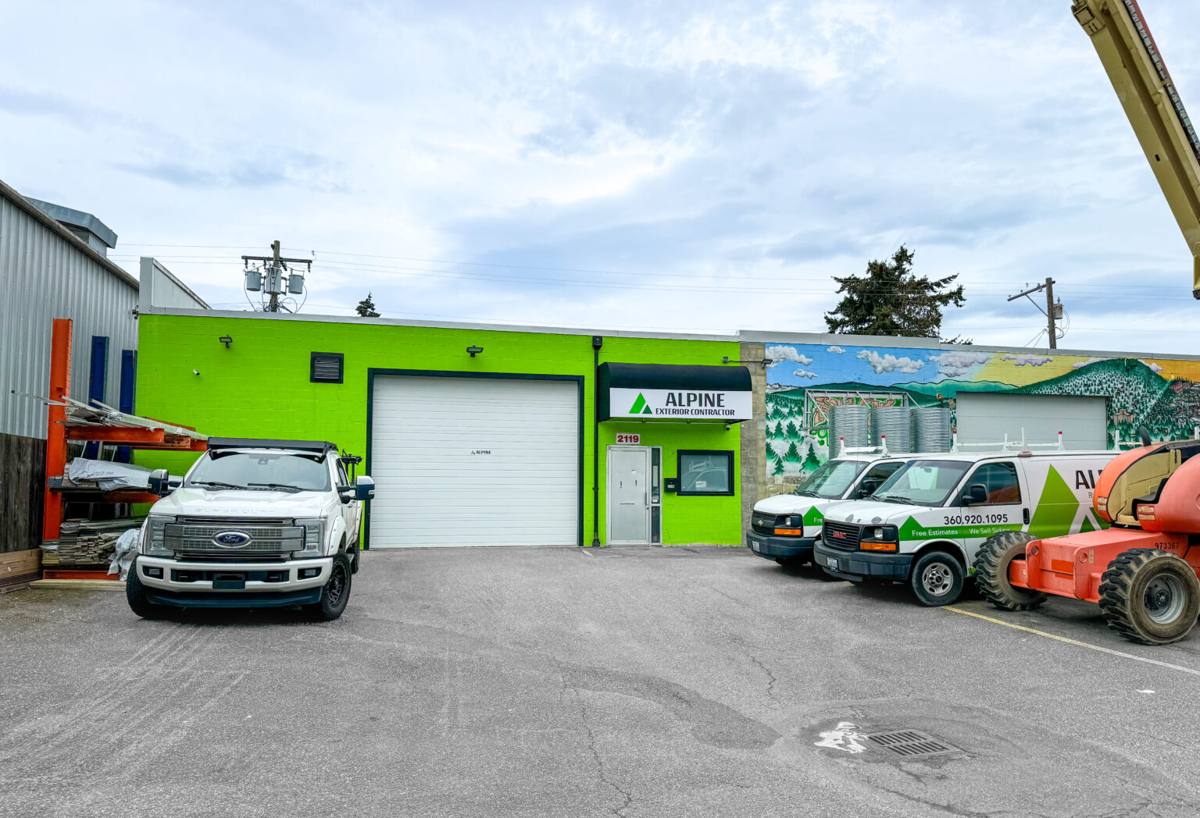
What a Correct New Roof Installation Actually Involves
Tear-Off and Deck Inspection
A new roof starts with a full tear-off down to the deck, not an overlay. Overlaying a new roof on top of old shingles traps moisture, hides deck damage, and shortens the life of the new roofing material — it's a shortcut we don't take. Once the old roofing is off, the deck gets inspected board by board. On an island property with a history of moss and moisture retention, soft or delaminated sheathing is common enough that we plan for some deck replacement rather than treating it as a surprise.
Underlayment Built for Wind-Driven Rain
Standard felt underlayment is a minimum, not a solution, for a site that takes rain sideways off the water. We use a synthetic or self-adhered underlayment with a real track record against wind-driven moisture, with extra ice-and-water shield style membrane at eaves, valleys, and anywhere water is likely to be pushed uphill under the shingle line rather than just running downhill off it.
Flashing Detail
Flashing failure — not shingle failure — is the most common reason a roof leaks. Every penetration, sidewall, chimney, and valley gets new flashing, properly lapped and sealed, rather than reused or caulked over. In salt air, we pay particular attention to flashing metal choice, since some metals corrode faster than others in a coastal environment.
Choosing a Roofing Material for Guemes Island Conditions
There's no single "right" roofing material for every home, but on Guemes Island the salt air, moss pressure, and wind exposure narrow the field. Here's how the common options actually compare in this specific environment:
| Material | How It Handles This Climate | Maintenance Reality | Best Fit |
|---|---|---|---|
| Architectural asphalt shingle (algae-resistant) | Good wind rating when properly nailed and sealed; algae-resistant granules slow moss/algae growth | Periodic soft-wash cleaning recommended; moderate | Most homes wanting a proven, cost-effective option |
| Standing seam metal | Excellent shedding of wind-driven rain; sheds moss better than textured surfaces; strong wind uplift resistance | Low; occasional fastener/sealant check at penetrations | Homes prioritizing longevity and low upkeep |
| Cedar shake | Traditional look, but absorbs moisture and holds it in a shaded, damp environment | High; requires regular treatment and moss removal to avoid premature rot | Homeowners committed to ongoing maintenance for the aesthetic |
We're upfront that cedar shake carries the highest maintenance burden in this specific climate — not because it's a poor product everywhere, but because shaded, moisture-holding sites like much of Guemes Island are the hardest environment for any wood roofing material to age well in. That's a maintenance and moisture-behavior trade-off, not a knock on the material itself, and we'll walk through it honestly if it's what you want.
Ventilation, Moss, and Moisture Control
Balanced Attic Ventilation
A new roof is also a chance to correct attic ventilation, which is often overlooked on older island homes. Balanced intake at the eaves and exhaust at the ridge keeps the underside of the deck dry and temperature-stable, which reduces condensation buildup and extends the life of the decking and the roofing material above it.
Slowing Moss Before It Starts
Algae-resistant shingle granules and, where appropriate, zinc or copper strips near the ridge help slow moss and algae regrowth after installation. Nothing eliminates moss entirely on a shaded, damp lot, but the goal is to buy years between cleanings rather than watching moss take hold within a single wet season.
Trimming and Debris Management
Roofing work aside, keeping overhanging branches trimmed back and gutters clear of needle litter does more for moss prevention long-term than almost any product choice. We'll flag problem areas during the estimate if they're contributing to what brought you to a new roof in the first place.
Why Island Logistics Change the Job
Roofing a home on Guemes Island isn't the same logistical exercise as roofing one in downtown Anacortes, and pretending otherwise leads to blown schedules. Materials, dumpsters, and crews all move over on the ferry, which runs on a fixed schedule rather than on demand. That means a job here gets planned around ferry sailings, tide-dependent access on some properties, and weather windows that matter more when a delay means waiting for the next available crossing rather than just driving back tomorrow.
We stage materials and coordinate crew and dumpster timing in advance specifically for island jobs, so a rain delay doesn't turn into a multi-day gap with a partially torn-off roof exposed to the weather. That planning is part of what "we already work Guemes Island" actually means in practice — it's not just familiarity with the place, it's a logistics plan built around how the island actually works.
Our Installation Process, Start to Finish
- On-site inspection and estimate: We walk the roof and attic, check for deck damage, ventilation issues, and flashing condition, and give you an honest read on what the job actually needs.
- Material selection: We go over the trade-offs above based on your home, budget, and how much maintenance you want to take on long-term.
- Scheduling around ferry and weather: Materials, dumpster, and crew timing are coordinated in advance so the job runs on a tight, predictable window.
- Tear-off and deck inspection: Old roofing comes off completely; any soft or damaged decking is identified and replaced before anything new goes down.
- Underlayment and flashing installation: Wind-rated underlayment and new flashing go in at every penetration, valley, and edge.
- Roofing material installation: Installed to manufacturer spec and wind-rating requirements, not just "close enough."
- Ventilation check and correction: Intake and exhaust are balanced before final close-out.
- Cleanup and final walkthrough: Site is cleared of debris and nails, and we walk the finished roof with you before considering the job done.
A Homeowner's Pre-Estimate Checklist
Before we come out, it helps to know what you're seeing and when. A few things worth checking or noting ahead of time:
- How old is the current roof, and was it a full replacement or an overlay?
- Are there visible moss mats, especially on the shaded or north-facing slopes?
- Any staining, sagging, or soft spots visible from inside the attic?
- Daylight visible through the roof deck when the attic light is off?
- Granules collecting in gutters or at downspout outlets?
- Any known leak history, even minor or seasonal?
- Is the property accessible by standard vehicle and equipment, or does it require special ferry/dock coordination?
Cost Factors for a New Roof on Guemes Island
Every roof is priced on its own specifics, but the variables that actually move the number on an island job are fairly consistent. Broad ranges depend heavily on these factors, so treat this as a guide to what drives cost rather than a quote:
| Factor | Why It Affects Cost |
|---|---|
| Roof size and pitch | More surface area and steeper pitches both increase material and labor time |
| Number of existing layers | Tear-off of multiple old layers takes more labor and disposal capacity than a single-layer tear-off |
| Deck condition | Rot or soft sheathing found under old roofing adds replacement material and labor |
| Material choice | Asphalt shingle, metal, and cedar shake carry different material and installation costs |
| Roof complexity | Valleys, dormers, chimneys, and skylights each add flashing detail and labor time |
| Ferry and site logistics | Material transport, dumpster placement, and access coordination factor into scheduling and cost |
A straightforward asphalt shingle replacement on an accessible island home typically runs less than a complex roof with steep pitches, multiple valleys, and deck repair. The only way to get an accurate number is a walk of the actual roof, which is what the estimate is for.
Why Hiring a Crew That Already Works Guemes Island Matters
A roofing crew that hasn't worked the island before is learning the ferry schedule, the access quirks, and the moisture behavior of shaded island lots on your job — not before it. That shows up as delays, underestimated tear-off scope, or a roofing spec that was designed for a drier, less exposed site. A crew that already schedules around Skagit County ferry sailings, already knows what wind-driven rain does to under-flashed penetrations here, and already accounts for moss pressure in the ventilation and material plan isn't guessing on any of that — it's routine.
That experience also means fewer surprises mid-job. Deck damage gets caught and priced before the roof is half torn off, not discovered after materials are already ordered for a different scope. And because the logistics are already worked out, weather delays get absorbed into the schedule rather than turning into an exposed roof waiting on the next ferry crossing.
If you're weighing a new roof for a Guemes Island home, we're happy to take a look and give you a straightforward, no-pressure estimate — including an honest read on your current roof's condition, what material makes sense for your specific site, and what the job would actually involve. Use the form below to get started.