 Anacortes Siding
 Conway's Siding Problem Is a Climate Problem
Conway sits in the Skagit River delta between Anacortes and the water, which means homes here take on a specific combination of weather that a lot of siding products simply weren't built to handle. Salt-laden air moves in off Puget Sound and Skagit Bay, driving rain comes in sideways during fall and winter storms, and the shaded, damp conditions that stick around for much of the year create one of the longer moss and algae seasons in western Washington. None of that is unusual for Skagit County. But it adds up fast on a wall system that isn't engineered for it.
We install James Hardie fiber cement siding exclusively, and we've built our process around what Conway homes actually face — not a generic install script written for a drier climate. This page covers what that means in practice: how the climate stresses siding, what a correct Hardie installation looks like on a home in this area, and how our process is set up specifically for Conway jobs.
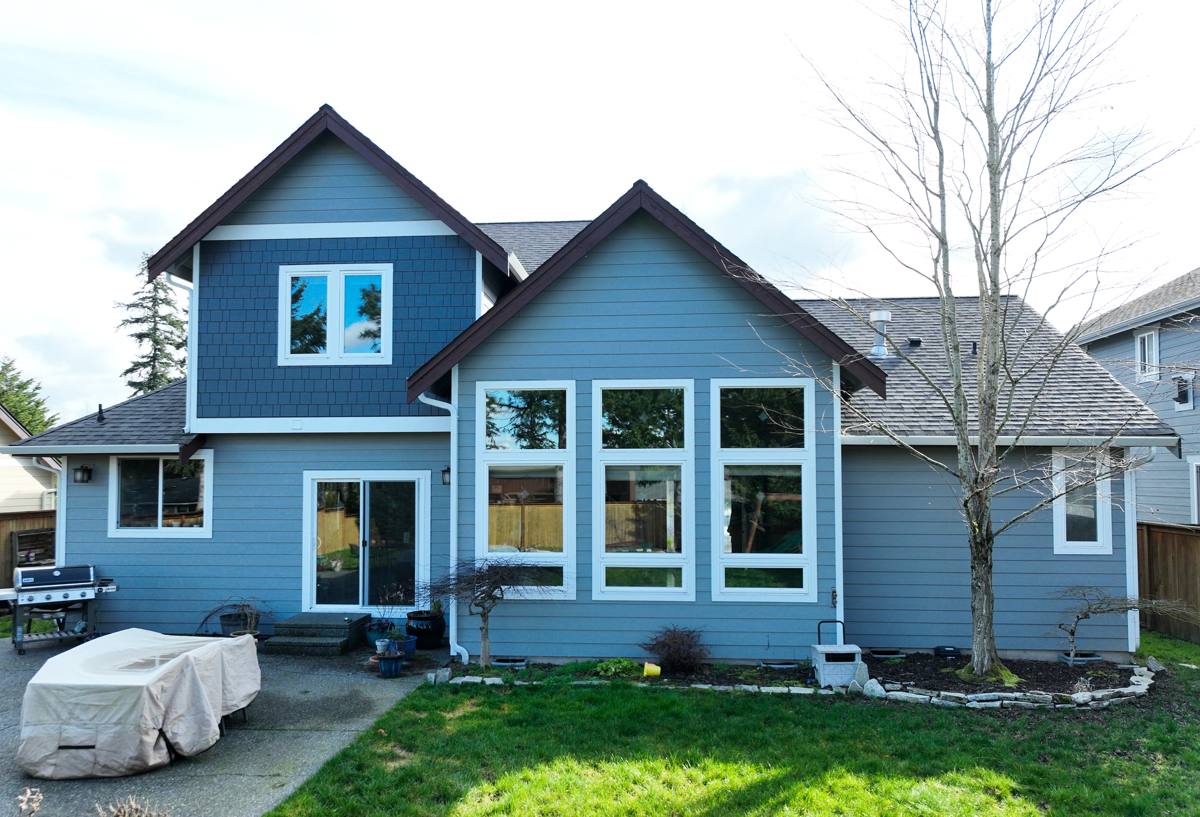
What Salt Air, Rain, and Moss Actually Do to a Wall
Salt Air
Airborne salt is corrosive to metal fasteners, flashing, and trim, and it accelerates the breakdown of paint films and caulk. On homes closer to the water, you'll often see faster fading, chalking, or finish failure on siding that isn't factory-finished to resist it. Salt exposure doesn't ruin siding on its own, but it shortens the life of every weak point in the system — nail heads, joints, and any spot where the finish has already started to thin.
Driving Rain
Wind-driven rain doesn't just fall on a wall, it gets pushed into it — behind trim, into butt joints, and through any gap that wasn't properly flashed or caulked. Over years, that moisture intrusion is what causes rot in the sheathing and framing behind the siding, not just cosmetic damage to the siding face. This is the single biggest reason installation detail matters more than the siding material itself.
Extended Moss and Algae Season
Conway's tree cover, humidity, and mild temperatures mean north-facing and shaded walls can stay damp for long stretches, especially from late fall through spring. That's ideal growing conditions for moss and green algae staining. On porous or textured products, that growth can work into the surface and become difficult to fully remove without damaging the finish underneath.
Why James Hardie Fits This Climate
James Hardie fiber cement is non-combustible, dimensionally stable, and doesn't absorb and swell with moisture the way wood-based products can. For a coastal Skagit County property, three things matter most:
- ColorPlus factory finish — baked-on, not field-applied, which holds up better against salt air and UV than site-applied paint, and won't need repainting on the same schedule.
- HZ5 climate-engineered formulation — Hardie's HZ5 product line is formulated for wetter, harsher climates like ours, which is what we spec for Conway installs by default.
- Non-combustible, moisture-resistant core — it won't rot, and it resists the swelling and warping that drives paint failure and joint gaps on other materials.
None of that replaces good installation. Hardie is a durable material, but it's still a system — siding, flashing, house wrap, fasteners, and joints all have to work together, or moisture finds the gaps anyway.
What a Correct Installation Involves
A lot of siding problems we see on older Conway homes weren't caused by the product — they were caused by shortcuts during installation. Here's what we do differently:
Weather Barrier and Flashing First
Before a single piece of siding goes up, we confirm the weather-resistive barrier is intact and properly lapped, and we install flashing at every window, door, and horizontal joint. This is the layer that actually keeps driving rain out of the wall assembly — the siding is the second line of defense, not the first.
Proper Clearances and Gaps
Hardie's own installation specs call for clearance from grade, roofing, decks, and other abutting surfaces, plus specific gaps at butt joints to allow for expansion. Skipping these clearances is one of the most common causes of moisture wicking and premature paint failure we see on improperly installed fiber cement.
Fastener Placement and Type
We use corrosion-resistant fasteners placed according to Hardie's specifications for our wind and exposure zone. In a salt-air environment, fastener quality and placement isn't optional — it's one of the first things to fail on a cut-rate install.
Factory-Cut Edges Where Possible
Every field cut exposes raw fiber cement that needs to be sealed. We minimize field cuts where the layout allows and seal every cut edge per manufacturer spec, because an unsealed edge is a moisture entry point waiting to happen.
Our Process for a Conway Job
- On-site assessment — we look at existing siding, moisture damage, trim condition, and how exposed the home is to wind-driven rain and shade-driven moss growth.
- Product and color plan — we spec the right Hardie line (HZ5 as our climate default) and go over ColorPlus color and texture options.
- Tear-off and substrate check — we remove the old siding and inspect sheathing for hidden rot before anything new goes up. This step is where problems from a prior installation usually surface.
- Weather barrier and flashing install — repaired or replaced as needed, then fully lapped and sealed.
- Siding installation to spec — proper clearances, fastener schedule, and sealed cuts throughout.
- Final walkthrough — trim, caulking, and touch-up review with you before we call the job done.
Hardie vs. Other Siding Options in a Coastal Skagit County Climate
| Factor | James Hardie Fiber Cement | Vinyl | Wood / Cedar |
|---|---|---|---|
| Moisture resistance | Non-combustible, doesn't rot or swell | Won't rot, but can warp and gap in heat/cold cycling | Absorbs moisture, prone to rot without diligent upkeep |
| Finish durability in salt air | Factory ColorPlus finish resists fading and chalking | Color molded in, but can fade and become brittle over time | Field-applied paint/stain needs frequent recoating |
| Moss and algae resistance | Dense surface resists growth, cleans up well | Resists growth but can trap moisture at seams | Porous surface, moss can embed and stain |
| Fire resistance | Non-combustible | Combustible, can melt or deform in heat | Combustible |
| Long-term maintenance | Occasional wash, factory finish reduces repainting | Low maintenance but limited repair options if damaged | Regular painting/staining and moisture monitoring required |
We don't install vinyl, cedar, LP SmartSide, or other fiber cement brands. That's a deliberate standard, not a limitation — we'd rather stand behind one system we know performs in this climate than offer options we're not confident will hold up on a home exposed to Skagit County weather for the next 30 years.
Signs Your Current Siding Is Losing the Fight
- Persistent moss or green staining on shaded or north-facing walls that returns quickly after cleaning
- Caulk that's cracked, shrunk, or pulled away from trim and joints
- Soft or spongy spots when you press on the siding, especially near the bottom courses
- Paint that's peeling, bubbling, or chalking heavily on siding facing prevailing wind and rain
- Visible gaps or warping at butt joints and corners
- Rust streaking from fasteners or trim hardware
Any one of these on its own isn't necessarily urgent. Several together, especially combined with visible warping, usually means moisture has already gotten past the surface.
Maintaining Hardie Siding in Conway's Climate
Hardie is low-maintenance, not no-maintenance. A simple annual routine keeps it performing the way it's designed to in this environment:
- Rinse siding annually with a garden hose and soft brush to clear salt residue, pollen, and early moss growth — avoid high-pressure washing, which can force water behind joints
- Inspect caulking at trim, windows, and joints yearly, and re-caulk any cracked or gapped sections before winter rains set in
- Keep gutters and downspouts clear so water isn't sheeting down the siding face
- Trim back vegetation and tree cover where practical to reduce shaded, damp conditions that feed moss growth
- Address any impact damage or exposed cut edges promptly rather than waiting for the next project
Why Hiring a Crew That Already Works Conway Matters
Conway isn't a large market, and that's exactly why local installation experience matters here. A crew that regularly works Skagit County homes already knows which exposures take the worst weather, how local permitting and inspection typically go, and what HZ5 detailing looks like on homes built to handle this specific mix of rain and salt air. That's different from a crew installing Hardie occasionally as one option among several — installation quality on fiber cement is detail-dependent, and those details are learned through repetition in a specific climate, not from a manufacturer's general spec sheet alone.
We install James Hardie siding only, which means every job we run, every crew member we train, and every detail we double-check is focused on getting one system right for homes like yours — not spread across several products we'd have to compromise on.
If your Conway home's siding is showing wear, or you're planning ahead of a renovation, we're happy to take a look and walk you through what we'd recommend. Reach out for a free, no-pressure estimate — there's no obligation, and you'll get a straight answer about what your home actually needs.