 Anacortes Siding
 Board & Batten on a Peninsula: Why March Point Is a Different Job
March Point sits out on the water, bordered by bay on more than one side, and that changes what siding has to deal with day to day. Homes here take on salt-laden air, wind that isn't slowed down by much before it hits an exterior wall, and long stretches of damp, overcast weather that keep surfaces wet longer than they would be a few miles inland. Board and batten siding has a strong, clean vertical look that suits a lot of the homes out here, but that look only holds up if the installation underneath it accounts for this specific exposure. A board and batten job that would be fine in a sheltered inland neighborhood can fail early on a peninsula lot.
We install board and batten siding on homes across Anacortes and Skagit County, and March Point gets treated as its own case, not a smaller version of a standard job. The wind loading, the moisture cycling, and the salt exposure all factor into material choice, fastening, and detailing before a single board goes up.
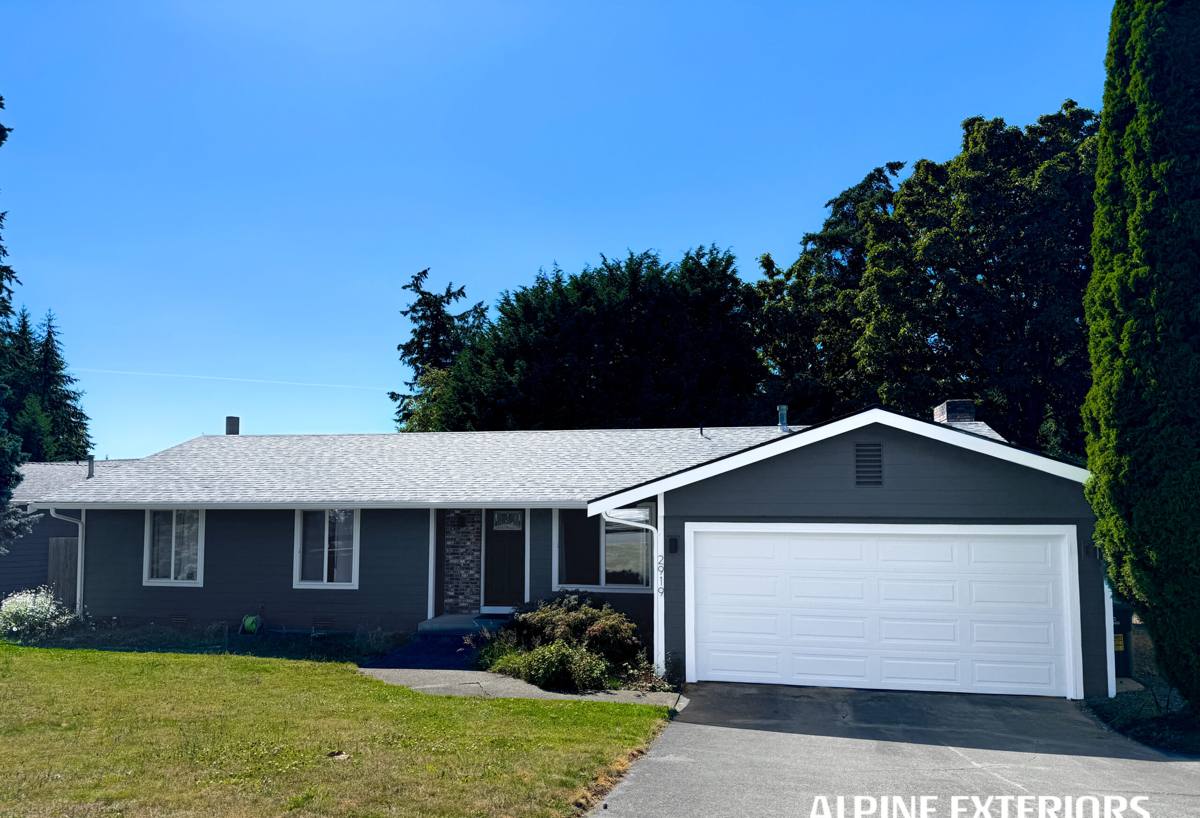
What Salt Air, Driving Rain, and Moss Season Actually Do to Siding
These three conditions don't act alone — they compound each other, and board and batten siding has more seams and vertical joints than lap siding, which means more places where the compounding shows up.
- Salt air accelerates corrosion on fasteners, flashing, and any exposed metal trim. Standard fasteners that hold up fine inland can start showing rust streaks and weakening within a few years this close to the water.
- Driving rain off the bay tends to hit walls at an angle instead of falling straight down, which pushes water into board-to-batten seams and butt joints that a calm-weather installation might not have accounted for.
- Moss season in this part of Skagit County runs long — the same shaded, damp conditions that keep roofs mossy also keep siding surfaces wet for extended periods, which matters more for some siding materials than others.
None of this means board and batten is the wrong choice for a March Point home. It means the material, the water management behind it, and the fastening schedule all need to be chosen for this exposure specifically.
What a Correct Board & Batten Installation Involves
Water Management Behind the Boards
Board and batten relies on vertical battens covering the seams between wider boards (or on engineered vertical panels with integrated battens, depending on the system). Either way, the wall behind it needs a proper drainage plane — a weather-resistant barrier and, ideally, a rainscreen gap that lets any water that does get past the surface drain and dry out rather than sitting against the sheathing. On a wind- and rain-exposed peninsula lot, skipping or shortcutting this step is where problems start, usually invisibly, behind the siding rather than on top of it.
Flashing at Every Transition
Windows, doors, roof-to-wall intersections, and any horizontal trim all need flashing detailed to shed water outward, not into the wall assembly. Board and batten's vertical lines can actually make flashing details more visible if they're done sloppily, so this is a place where craftsmanship shows.
Fastening for Wind and Corrosion Resistance
Fastener spacing has to account for wind loading on an exposed site, and fastener material has to account for salt air. We don't cut corners here with generic fasteners that look fine going in but corrode within a few seasons.
Board and Batten Spacing and Reveal
Consistent batten spacing and reveal is what makes board and batten look intentional rather than uneven. This is a finish-quality detail, but it's also functional — inconsistent spacing can concentrate water flow in certain seams more than others.
Why We Only Install James Hardie for This Application
Board and batten siding is available in wood, vinyl, engineered wood, and fiber cement. On a site like March Point, the material choice matters more than usual because the exposure is harsher than average.
| Material | How it handles salt air & moisture | Long-term maintenance on this site |
|---|---|---|
| Solid wood (cedar, primed spruce) | Absorbs moisture, prone to swelling, cupping, and rot at exposed grain and end cuts | Frequent refinishing; caulk and paint fail faster in coastal, moss-prone conditions |
| Vinyl | Doesn't rot, but can warp or become brittle with sustained wind and temperature cycling; seams can allow water intrusion behind panels | Low upkeep but limited repairability; color fades over time with no refinish option |
| James Hardie fiber cement | Non-combustible, engineered to resist moisture absorption, holds dimensional stability in wind and damp cycling | Factory ColorPlus finish reduces repainting; backed by a strong transferable warranty |
We standardized on James Hardie because it's the product we're confident will still be doing its job on this kind of site in fifteen or twenty years, not just at the walkthrough. Hardie's HZ5 product line in particular is engineered for wetter, harsher climates, which is a meaningfully better fit for a peninsula lot than a general-purpose siding product.
Our Process on a March Point Project
1. Site & Exposure Assessment
We look at which sides of the home take the most wind and rain, how close the lot sits to open water, and what the existing wall assembly looks like before recommending a specific approach.
2. Tear-Off and Substrate Check
Old siding comes off and we check the sheathing underneath for any hidden moisture damage before it gets covered back up — this is the point where problems from a prior install, if any exist, get found and dealt with rather than sealed in.
3. Weather-Resistant Barrier and Drainage Plane
A proper barrier and, where appropriate, a rainscreen gap go on before any siding, giving the wall a way to manage moisture that gets past the surface.
4. Flashing and Trim Details
Every window, door, and horizontal transition gets flashed before boards go up around it.
5. Board and Batten Installation
James Hardie boards and battens go on with corrosion-resistant fasteners and spacing built for the wind exposure of the specific lot.
6. Final Walkthrough
We walk the exterior with the homeowner, checking reveal consistency, caulking, and trim before calling the job finished.
Maintenance: What March Point Homeowners Should Expect
James Hardie board and batten is low-maintenance compared to wood, but "low-maintenance" isn't "no-maintenance" on a site this exposed. A simple annual check goes a long way:
- Rinse salt residue and moss buildup off siding surfaces, especially on shaded or north-facing walls
- Check caulking at trim, window, and door joints for cracking or separation once a year
- Look at ground-level boards for splash-back staining or standing water against the base
- Keep gutters clear so roof runoff isn't sheeting down onto siding it wasn't designed to absorb
- Have any fastener corrosion or rust staining addressed early rather than left through another wet season
Why Local Experience on This Specific Peninsula Matters
A crew that's worked March Point before already knows how the wind behaves on an open lot near the bay, what wall assemblies tend to look like in homes built out here, and which details actually matter for this exposure versus a standard inland job. That's not something you get from a general siding crew working from a one-size-fits-all install method. It shows up in small decisions — fastener spacing, flashing sequence, drainage detailing — that don't get noticed until years later, when they either held up or didn't.
We also know the practical side: permitting through Skagit County, working around tide-influenced access on low-lying lots, and scheduling around the wetter stretches of the year so installation isn't fighting the weather it's meant to protect against.
Questions Worth Asking Before You Hire
- Will the wall assembly include a proper weather-resistant barrier and drainage plane, not just siding over the old sheathing?
- What fastener material is being used, and is it rated for coastal, salt-air exposure?
- How will flashing be handled at windows, doors, and roof-to-wall transitions?
- Is the board and batten reveal spacing planned out, or left to be decided on the fly?
- Does the crew have experience with this specific stretch of Anacortes, or is this their first project out here?
If you're weighing board and batten siding for a home on March Point, we're glad to walk the property, talk through what the exposure on your specific lot calls for, and put together a straightforward, no-pressure estimate. There's a form below to get that started.