 Anacortes Siding
 Metal Roofing Built for March Point's Waterfront Climate
March Point sits out on the water, and that location shapes everything about how a roof needs to be built there. Homes on this stretch near Anacortes take wind and salt-laden air coming straight off the surrounding water with little to break it up, and that exposure works on roofing materials year-round, not just during storms. Rain here doesn't always fall straight down — it gets pushed sideways and driven up under roof edges during the wetter months, and on shaded or north-facing slopes, moss and algae settle in for a long stretch of the year and don't let go easily. Metal roofing holds up well against all of that when it's specified and installed correctly, which is exactly what this page walks through.
This isn't a generic overview of metal roofing. It's specifically about what a correct metal roof install looks like for a home on March Point — the details that matter given this particular waterfront exposure, how we scope and run the job, and why a crew that already works this area brings something a roofer unfamiliar with it can't.
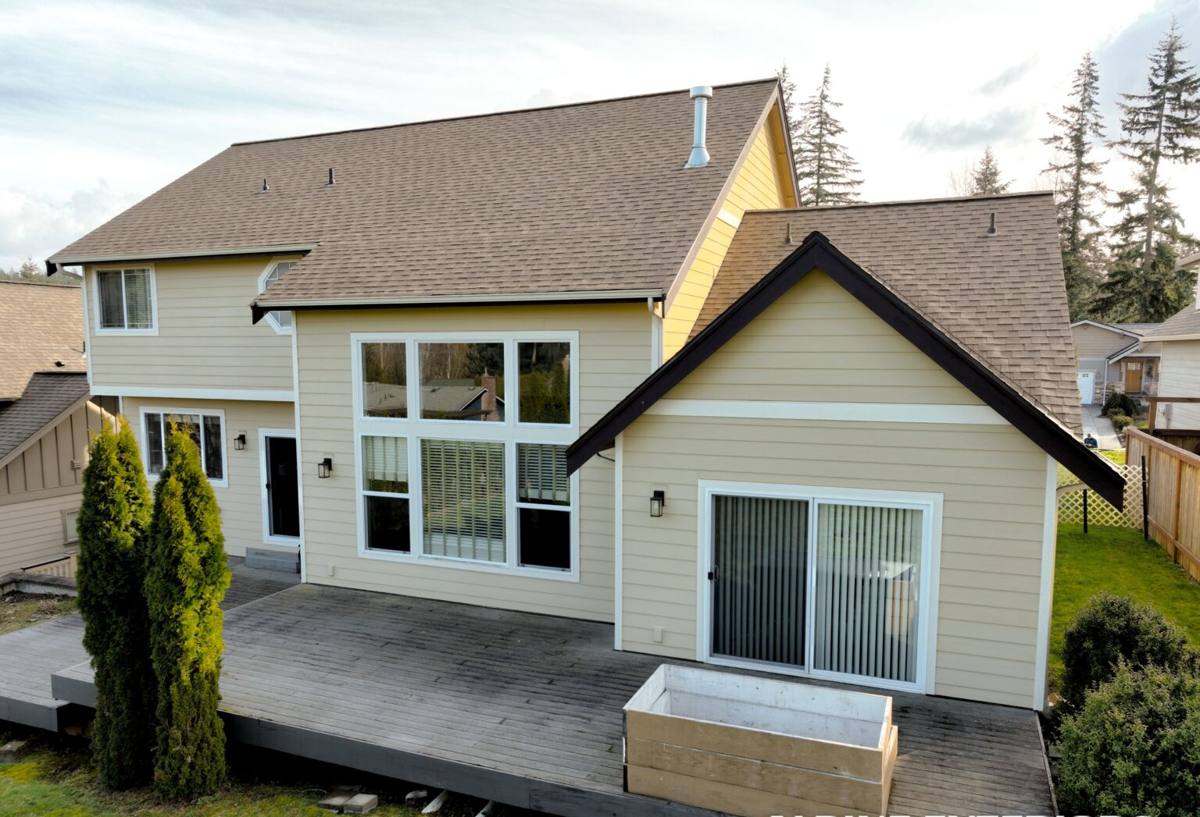
Why Metal Roofing Fits a Peninsula Property
Metal roofing has a real, practical edge on an exposed waterfront property like the ones on March Point. It sheds wind-driven rain more effectively than a shingle roof because there are no overlapping tabs for water to work its way under, it doesn't hold moisture against its surface the way asphalt granules can, and it's far less hospitable to moss and algae growth on the shaded sides of a roof. It's also a strong performer in wind, which matters directly on a point of land with open exposure and few windbreaks compared to a lot tucked back among trees or buildings.
None of that means metal is automatically the right choice for every home, or that it's maintenance-free. It means the material's strengths line up well with what March Point's climate actually demands, provided the panels, fasteners, and flashing are all specified for coastal exposure rather than treated like a standard inland install.
What Local Weather Actually Demands
- Corrosion-resistant panel and fastener metal: Salt air accelerates corrosion on unprotected or mismatched metals faster near open water than it does even a short distance inland.
- Concealed or properly gasketed fastening: Exposed fasteners that aren't sealed and maintained correctly are a common source of leaks on wind-exposed metal roofs over time.
- Underlayment built for wind-driven rain: A secondary water barrier matters more on an open waterfront lot than on a sheltered one, since wind can force moisture toward seams and edges that would otherwise stay dry.
- Panel and coating rated for coastal UV and salt exposure: Not every finish system is built to hold its color and integrity in this kind of environment over the long haul.
Choosing the Right Metal System for March Point
Standing Seam vs. Exposed-Fastener Panels
The biggest decision on a metal roof is whether to go with standing seam or exposed-fastener panels, and the trade-offs matter more on an exposed site than on a sheltered one. Standing seam panels use concealed clips and interlocking seams, so there are no fasteners penetrating the panel face for water or salt air to work on directly. That makes them the stronger long-term choice for a waterfront property, though they cost more upfront. Exposed-fastener panels are less expensive and installed faster, but the screws penetrating the panel face need to be maintained and eventually replaced as their washers age, which is a real ongoing consideration this close to the water.
| System | Fastening | Best Fit |
|---|---|---|
| Standing Seam | Concealed clips, no face penetrations | Waterfront and wind-exposed properties, longer ownership horizon |
| Exposed-Fastener (Ribbed/Corrugated) | Screws through the panel face with gasketed washers | Budget-conscious projects, outbuildings, sheltered lots |
| Metal Shingles/Shakes | Concealed or interlocking, varies by product | Homeowners wanting a traditional roof profile with metal's durability |
Steel vs. Aluminum: Substrate Matters Here
The base metal underneath the finish coating matters as much as the panel style on a lot like this. Galvalume or galvanized steel panels are strong, widely available, and cost-effective, but steel relies entirely on its coating and finish to resist corrosion — any breach in that coating near salt air can start rust from the inside out. Aluminum doesn't rust at all, since it forms its own naturally protective oxide layer, which makes it a common recommendation for homes with direct or near-direct water exposure, March Point included. It costs more than steel, but for a property sitting right on the water, that's often the more honest long-term recommendation rather than the cheaper option that looks fine for the first several years.
One detail that gets overlooked: fasteners and any exposed trim need to match the panel metal, or be isolated from it, to avoid galvanic corrosion — the reaction that happens when two dissimilar metals stay in contact in a wet, salty environment. It's a small detail on paper that causes real, visible failures at fastener points and flashing seams when it's ignored.
What a Correct Metal Roof Install Involves
Tear-Off and Deck Prep
A metal roof is only as good as what it's fastened to, so we start with a full tear-off and deck inspection rather than laying new panels over old roofing or a deck with hidden rot or soft spots. This is also when we catch any prior water damage that's been developing quietly, which is common on older roofs in a climate this wet.
Underlayment and Ice-and-Water Protection
Metal panels need a synthetic, high-temperature-rated underlayment underneath them — metal gets hot in direct sun and standard felt can degrade against it over time. On a wind-exposed site like March Point, we pay particular attention to self-adhered ice-and-water membrane at eaves, valleys, and any low-slope transitions, since that's where wind-driven rain is most likely to test the roof.
Panel Layout and Fastening
Panel spacing, clip placement, and fastening pattern all need to follow the manufacturer's specification for the wind exposure category the property actually sits in, not a generic inland default. A point of land with open water on multiple sides typically calls for tighter fastening schedules than a sheltered lot a few miles inland would need.
Flashing, Trim, and Penetrations
Most roof leaks, metal or otherwise, start at flashing rather than in the open field of the roof. Valleys, chimney and vent penetrations, and wall transitions all need flashing that's integrated with the underlayment and panel system, not caulked on afterward as a patch. This is one of the areas where installation quality shows up most clearly years down the road.
Cost Factors Worth Understanding
Metal roofing bids can vary widely for what looks like the same basic scope, and the difference usually comes down to real factors rather than one contractor simply padding a number.
| Factor | What It Affects |
|---|---|
| Panel system (standing seam vs. exposed fastener) | Upfront cost, long-term maintenance, and leak resistance at fastener points |
| Base metal (steel vs. aluminum) | Corrosion resistance and expected service life this close to the water |
| Panel gauge/thickness | Dent resistance and overall structural performance under wind load |
| Coating system (PVDF/Kynar vs. standard paint) | How well color and finish hold up under coastal UV and salt exposure |
| Tear-off vs. layover | Whether deck damage gets found and repaired before new panels go on |
| Roof complexity and access | Labor time for valleys, penetrations, and site staging on a waterfront lot |
A written bid that itemizes these components separately is worth far more than a single lump-sum number, especially on a metal roof where the panel and coating spec can swing both cost and lifespan significantly.
How Our Process Works
- In-person inspection: We walk the roof and attic ourselves and document the property's actual wind and water exposure, not just its square footage.
- Written estimate: A clear, itemized bid covering tear-off, underlayment, panel system, fastening, flashing, and cleanup — not a single vague line item.
- Material selection: We walk through panel style, base metal, and coating options honestly, including trade-offs, so the decision fits your home and your budget.
- Scheduling around weather: We build reasonable flexibility into the timeline, since wet-season delays are a normal part of working in this region.
- Tear-off and deck repair: Old roofing comes off completely, and any deck damage gets repaired before anything new goes down.
- Underlayment, panel installation, and flashing: Each layer goes on to manufacturer specification, with extra attention at valleys, penetrations, and wall transitions.
- Final walkthrough and cleanup: We review the finished roof with you in person and do a full site sweep before calling the job done.
Why Hiring a Crew That Already Works March Point Matters
A crew that regularly works on March Point has already seen how quickly unmatched fasteners corrode on an exposed roof, how wind off the water finds gaps in underlayment that wouldn't be a problem a few miles inland, and which roof orientations hold moss the longest through the wet season. That knowledge shows up in small decisions throughout a job — fastening schedule, base metal choice, flashing details — that a crew unfamiliar with this specific stretch of Skagit County waterfront might not think twice about.
It also matters once the job is finished. A workmanship warranty only means something if the company behind it is still reachable years later, which is a real consideration with any contractor, not just a nice-to-have.
A Practical Checklist Before You Choose a Metal Roofer
- Do they perform a full tear-off with deck inspection, not just a layover?
- Does the estimate specify base metal, coating system, and panel type, not just "metal roof"?
- Is flashing work at valleys, penetrations, and wall transitions explicitly written into the bid?
- Do fasteners and trim match the panel metal to avoid galvanic corrosion?
- Do they carry current WA contractor licensing, liability insurance, and workers' compensation?
- Can they point to recent, real metal roofing work in or near March Point or the surrounding area?
Signs Your March Point Roof May Need Attention
Metal roofs generally give plenty of warning before a real problem develops, but only if someone knows what to look for.
- Visible rust or discoloration starting at fastener heads, seams, or panel edges
- Loose or backed-out screws on exposed-fastener panels, especially on wind-facing slopes
- Chalking, fading, or peeling on the panel finish, particularly on sides that take the most direct sun and salt exposure
- Moss or algae buildup collecting at seams or low-slope transitions rather than shedding cleanly
- Water staining on interior ceilings or in the attic, especially near valleys or roof penetrations
If any of that sounds familiar, it's worth having the roof looked at before the next round of winter weather rather than waiting for a leak to make the decision for you.
If you own a home on March Point and want an honest look at what your roof actually needs, we're glad to come take a look. Use the form below to request a free, no-pressure estimate.