 Anacortes Siding
 Metal Roofing in Conway: A Different Climate Problem Than Anacortes Proper
Conway sits low in the Skagit River delta, on flat farmland between the river and the tidal flats that feed into Skagit Bay. That geography matters more than most homeowners realize when it comes to roofing. Low ground holds moisture longer after a storm passes. Fog off the river bottom and the nearby bay lingers into the morning more often than it does on higher ground closer to Anacortes. And because the area sits near open water, the air carries a steady trace of salt that settles on every exterior surface, roofs included. A roofing system that holds up fine in a drier inland town can wear out faster here, and that's the starting point for any honest conversation about what a Conway roof actually needs.
None of this means metal roofing is a poor fit for Conway — quite the opposite. Properly specified and installed, metal is one of the better answers to this exact combination of salt exposure, standing moisture, and heavy moss pressure. But "properly specified and installed" is doing a lot of work in that sentence, and it's where a lot of jobs in this area go wrong.
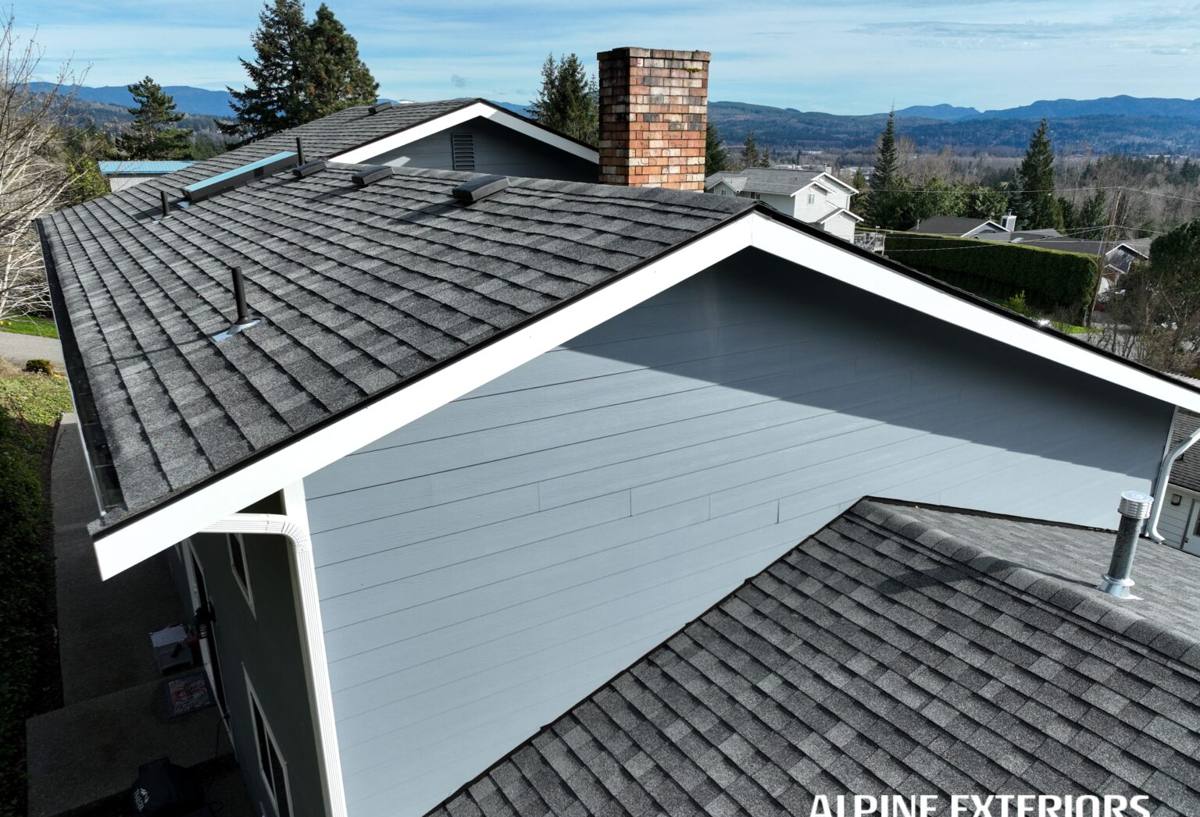
Why Salt Air and Driving Rain Change the Job
Salt-Tinged Air
Salt in the air doesn't just sit on a roof and wash off with the next rain. Over years, it accelerates corrosion at any point where the protective coating on a metal panel is thin, scratched, or interrupted — cut edges, fastener heads, and areas where two dissimilar metals touch. This is why panel coating and fastener material selection matter more here than they would 20 or 30 miles inland. It's also why we're careful about mixing metals that shouldn't be in direct contact with each other; galvanic corrosion between the wrong pairing of metal panel, flashing, and fastener will show up as pitting and staining well before the roof is anywhere near the end of its expected life.
Driving Rain
Storms coming off the Sound tend to arrive with wind, and wind-driven rain doesn't behave like rain falling straight down. It gets pushed sideways and upward under laps, around penetrations, and into any seam that isn't properly sealed or mechanically locked. On a lowland lot like most of what you find around Conway, there's often less natural drainage fall to work with, so water that does get past a weak point has more opportunity to sit rather than run off quickly. That raises the stakes on underlayment quality, seam design, and flashing detail at every valley, wall transition, and roof penetration.
A Long Moss Season
Shade, moisture, and moderate temperatures are exactly what moss wants, and Conway's tree cover and damp lowland air give it a long season to work with — often close to year-round on north-facing slopes and shaded sections. Moss itself doesn't damage metal panels the way it damages composition shingles, but it does trap moisture against the surface, hold debris in place, and accelerate wear at seams and fastener points if it's left to build up unchecked.
What a Correct Metal Roof Installation Actually Involves
A metal roof is only as good as what's underneath it and how it's fastened down. In a climate like Conway's, we treat several details as non-negotiable rather than optional upgrades:
- A full synthetic or self-adhered underlayment — a continuous water and ice barrier under the panels, not just at eaves and valleys, given how much moisture this area sees.
- Corrosion-appropriate fasteners and flashing matched to the panel metal, to avoid galvanic reaction in salt-influenced air.
- Properly lapped and sealed seams, sized and installed to shed wind-driven rain rather than just vertical rainfall.
- Ventilation that actually moves air through the attic or roof assembly, so condensation doesn't build up on the underside of the panels during cool, damp stretches.
- Valley and penetration flashing cut and formed on site to fit the actual roof geometry, not generic stock trim forced into place.
- Panel and trim edges kept clean and coated, since cut edges are the most common place corrosion starts.
Skip any one of these and the roof can still look fine for a few years. The problems that show up from cutting corners on underlayment, flashing, or fastener choice tend to surface slowly, as staining, soft spots in the decking, or seam failure — and by the time they're visible, the fix is usually more involved than it would have been to do the job right the first time.
Standing Seam vs. Exposed Fastener Panels for a Conway Roof
Both systems are legitimate metal roofing options, and the right choice depends on the roof, the budget, and how long you plan to own the home. Here's how they compare for this specific climate:
| Factor | Standing Seam | Exposed Fastener |
|---|---|---|
| Fastener exposure | Concealed under the seam — no exposed screw heads for salt air or rain to work on | Screws penetrate the panel face directly, each one a potential future leak point |
| Maintenance | Very low — no fastener gaskets to inspect or replace | Requires periodic checks; fastener gaskets compress and can fail over time |
| Upfront cost | Higher material and labor cost | Lower upfront cost |
| Best fit | Long-term ownership, low-slope sections, high-exposure areas | Budget-conscious projects, outbuildings, steeper simple roof planes |
| Expected lifespan in this climate | Long service life with minimal upkeep when installed correctly | Solid option but generally shorter service life due to fastener wear |
Given the salt exposure and driving rain typical of the Conway lowlands, we lean toward standing seam for primary roof planes whenever the budget allows, and reserve exposed fastener systems for secondary structures or situations where cost is the deciding factor. Either way, the panel is only half the system — flashing and underlayment quality matter as much as which panel style you choose.
Living With Moss and Debris on a Metal Roof
Metal sheds moss more easily than shingles do, but it isn't moss-proof. Needles, leaves, and organic debris collect in valleys and against any flashing that interrupts water flow, and once that debris holds moisture, moss and algae can establish even on a metal surface. Left alone through a wet Skagit County winter, that buildup can hold water against seams longer than the roof was designed to tolerate.
The fix isn't complicated, but it does need to happen on a schedule that matches this climate rather than a drier one. A yearly check of valleys and roof-to-wall transitions, especially on shaded north-facing sections, catches debris buildup before it becomes a moisture problem. This is a lighter maintenance load than a moss-covered composition roof requires, but it isn't zero, and we tell every Conway customer that up front rather than overselling metal as maintenance-free.
Signs a Conway Roof Needs Attention
Whether you're on an older metal roof or another material and considering a switch, these are the signs worth acting on rather than watching:
- Streaking or rust-colored staining running down from fastener heads or seams
- Moss or dark algae buildup concentrated in valleys or shaded slopes
- Soft or spongy feeling decking noticeable from inside the attic
- Visible daylight or water staining around chimney, vent, or wall flashing
- Panels that have loosened, oil-canned, or show fastener backing out
- Persistent damp or musty smell in attic space after wet weeks
Any of these can start small and stay small if addressed early. In this climate, they rarely fix themselves by waiting.
Our Process for a Metal Roofing Project in Conway
We start with an on-site look at the existing roof, the framing underneath where accessible, and the specific exposure the house faces — how close it sits to open water or low ground, how much shade and moss pressure the roof deals with, and how the roof drains in a heavy rain. From there we walk through panel and finish options with you, including where standing seam makes sense versus where an exposed fastener system is a reasonable, honest trade-off for the budget.
On install day, that means stripping down to solid decking, replacing anything compromised by prior moisture damage, installing a continuous underlayment, and forming flashing to fit the actual roof rather than relying on generic trim pieces. We check ventilation as part of the same visit, since a new roof installed over a poorly ventilated attic just moves the moisture problem rather than solving it. Before we leave, we walk the roof and the ground around the house with you so you know exactly what was done and what to expect from it going forward.
Why It Matters to Hire a Crew That Already Works This Area
Conway isn't a large town, and it doesn't get the volume of roofing work that Anacortes or Mount Vernon see. That's exactly why experience specific to this stretch of Skagit County is worth asking about when you're vetting a contractor. A crew that regularly works low-lying, salt-influenced, moss-heavy properties around here already knows which fastener and flashing choices hold up and which ones show problems in a few years rather than a few decades. That's knowledge you can't fully get from a spec sheet — it comes from seeing how roofs in this specific geography actually age.
We also know this area well enough to set honest expectations. Not every roof needs the top-tier standing seam system, and not every homeowner needs to worry about every item on a maintenance checklist. Part of doing this job right in Conway is telling you plainly what your specific roof, slope, and exposure actually call for, rather than upselling a system your house doesn't need.
Cost Factors to Expect
Metal roofing costs vary by panel style, roof complexity, and current roof condition, so we won't quote a number without seeing the roof. What we can tell you is what tends to move the price up or down on a Conway project:
| Factor | Effect on Cost |
|---|---|
| Standing seam vs. exposed fastener panels | Standing seam runs higher due to material and specialized installation |
| Roof complexity (valleys, dormers, penetrations) | More cuts, seams, and custom flashing add labor time |
| Condition of existing decking | Rot or soft decking found during tear-off adds repair cost |
| Ventilation upgrades | Adding or correcting attic ventilation is often worth bundling into the same project |
| Roof access and pitch | Steeper or harder-to-access roofs add labor and safety equipment time |
We'll walk through all of these with you at the estimate so the number you get reflects your actual roof, not a generic average.
Get a Straight Answer on Your Conway Roof
If you're weighing metal roofing for a home in Conway, the honest first step is a look at the roof itself. We'll tell you what condition it's really in, what a correct install would involve for your specific exposure, and what it would cost — no pressure, no upsell beyond what the roof and climate actually call for. Use the form below to request a free estimate.