 Anacortes Siding
 Roofing on Fidalgo Island Isn't Generic Roofing
Fidalgo Island sits where marine weather off Rosario Strait and the Guemes Channel meets the kind of moisture load that most inland Skagit County roofs never see. Homes here deal with three things at once, year-round: salt-laden air off the water, driving rain that comes in sideways during winter southerlies, and a moss season that can run eight months or longer under tree cover. A roof spec that works fine in Mount Vernon or Burlington can underperform on the island simply because it wasn't chosen with those three factors in mind. When we install a new roof for a Fidalgo Island home, the material selection, ventilation plan, and flashing details all get adjusted for that combination, not treated as an afterthought.
This page is specifically about full new roof installations for homes in and around Anacortes and Fidalgo Island — not repairs, not general roofing services everywhere in our service area. If you're weighing a full replacement, here's what actually matters for a roof that has to hold up on this particular piece of land.
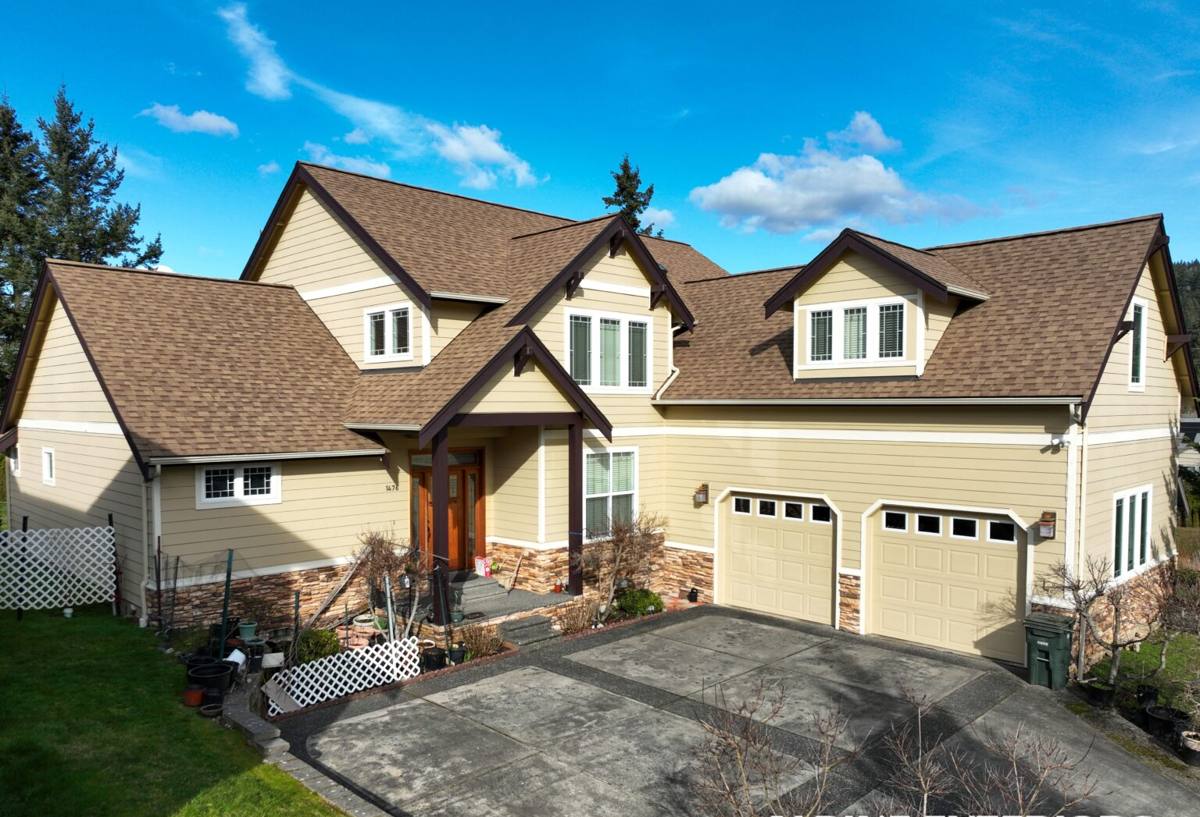
What Salt Air, Rain, and Moss Actually Do to a Roof
Salt Air
Airborne salt from Puget Sound accelerates corrosion on any exposed metal — nails, flashing, vent stacks, and fastener heads. On homes closer to the water, that corrosion shows up faster than most manufacturers' generic warranty language accounts for. It doesn't ruin a roof overnight, but it steadily weakens the metal components that hold everything together and keep water out at the details.
Driving Rain
Anacortes doesn't just get a lot of rain — it gets wind-driven rain that hits roof planes at an angle instead of falling straight down. That matters because wind-driven rain can work its way up under shingles or through marginal flashing laps that would be fine in calmer weather. Underlayment quality and flashing technique matter more here than they would somewhere with mostly vertical rainfall.
Moss
The long wet season plus shaded, tree-covered lots common on the island create ideal moss conditions. Moss isn't just cosmetic — it holds moisture against the roofing material, lifts shingle edges as it grows, and can work its way under tabs and into fastener penetrations over time. A roof installed without moss resistance in mind will need more aggressive maintenance and will age faster in shaded areas of the property.
What a Correct New Roof Installation Includes
A new roof is more than laying down shingles or panels. On Fidalgo Island, we treat every one of these steps as non-negotiable, because skipping any of them is exactly how a roof develops problems that don't show up for a year or two:
- Full tear-off and inspection of the decking underneath — plywood or sheathing that's soft, delaminated, or water-stained gets replaced, not covered over
- Ice-and-water shield or equivalent self-adhering membrane at eaves, valleys, and around every penetration, since these are the spots wind-driven rain finds first
- A synthetic underlayment rated for the exposure the roof will actually see, not the cheapest code-minimum option
- Corrosion-resistant flashing and fasteners appropriate for a marine environment, especially on homes with a direct water view or exposure
- Balanced intake and exhaust ventilation, so the attic isn't trapping moisture that feeds moss and rot from the inside out
- Proper nailing pattern and exposure per the manufacturer's spec — not a faster pattern that voids the warranty and shortens the roof's life
- Clean, correct step flashing and counterflashing at every wall intersection, chimney, and skylight
Any one of these done wrong can undercut the rest. A premium shingle installed over rotten decking, or with underlayment that's a step down from what the exposure calls for, is still a roof that will fail early.
Choosing Roofing Material for a Fidalgo Island Home
There's no single "best" roofing material for every home — the right choice depends on your home's exposure, roof pitch, budget, and how much tree cover you have. Here's how the common options actually compare for this specific climate:
| Material | Moss & Moisture Behavior | Salt Air Durability | Typical Lifespan Here |
|---|---|---|---|
| Architectural asphalt shingle | Needs periodic cleaning in shaded areas; algae-resistant granules help | Good, especially with corrosion-resistant flashing and fasteners | 20–30 years |
| Standing seam metal | Sheds moss and debris well due to smooth, steep-shed surface | Very good with a proper coastal-rated finish and stainless or coated fasteners | 40–50+ years |
| Cedar shake | Higher moisture retention risk; needs consistent maintenance and airflow underneath | Moderate — decay resistance varies with upkeep | 20–30 years with diligent maintenance |
| Composite/synthetic shingle | Generally resists moss better than wood; low water absorption | Good | 30–50 years depending on product |
We'll walk through these trade-offs honestly during your estimate. Metal roofing costs more up front but sheds moss and handles this climate with the least ongoing maintenance. Asphalt architectural shingles remain the most common choice on the island because they balance upfront cost, appearance, and durability well when installed correctly. Cedar shake can look great but asks more of the homeowner in terms of upkeep in a climate this wet.
Our Process for a Fidalgo Island Roof Replacement
1. On-Site Assessment
We look at your roof's current condition, pitch, exposure to wind and water, tree cover, attic ventilation, and any trouble spots — valleys, chimneys, skylights, low-slope sections. This tells us what the roof actually needs, not just what it currently has.
2. Material and Scope Recommendation
Based on that assessment, we recommend a material and spec suited to your specific exposure — not a one-size-fits-all package. We'll explain the trade-offs in plain terms so you can make the call that fits your budget and how long you plan to stay in the home.
3. Written Estimate
You get a clear, itemized estimate before any work starts. No surprise change orders for things we should have caught during the assessment.
4. Tear-Off and Deck Inspection
Old roofing comes off, decking gets inspected board by board, and any compromised sheathing is replaced before anything new goes down.
5. Installation
Underlayment, flashing, and roofing material go in per manufacturer spec, with the coastal-climate details — corrosion-resistant fasteners, proper membrane coverage at vulnerable points, balanced ventilation — built in rather than treated as upgrades.
6. Final Walkthrough
We walk the finished roof and the site with you, confirm cleanup is complete, and go over care and maintenance specific to your new roofing material.
Why Hiring a Crew That Already Works Fidalgo Island Matters
Roofing crews that mostly work drier, inland areas sometimes underspec underlayment or skip extra flashing detail because it's never bitten them before. On Fidalgo Island, those shortcuts show up as leaks, premature moss growth, or corroded fasteners within a few years — not decades. A crew that regularly works this specific stretch of Skagit County knows which roof details actually matter here: where wind-driven rain concentrates on a given roof orientation, which shaded north-facing slopes need extra moss consideration, and how much ventilation an island home really needs given the humidity load. That local pattern recognition is the difference between a roof that's technically installed to code and one that's actually built for where it sits.
Signs Your Fidalgo Island Roof May Need Replacing, Not Repairing
- Granule loss heavy enough that you can see bare asphalt in multiple spots, not just isolated wear
- Shingles that are curling, cupping, or cracking across large sections rather than a few isolated spots
- Persistent moss growth that comes back within a season or two of cleaning, especially on shaded slopes
- Soft spots, sagging, or visible daylight in the attic near the roof deck
- Repeated leaks in different locations rather than one recurring, easily traceable spot
- A roof at or past the manufacturer's expected service life for our climate, even if it looks okay from the ground
If you're only dealing with one isolated issue — a damaged section after a windstorm, a single failed flashing point — a repair may be the right call instead. We'll tell you honestly if replacement isn't necessary yet.
Timing a Roof Replacement Around Anacortes Weather
Roofing can be done in most seasons here, but scheduling around drier stretches makes for a cleaner tear-off and installation, since an open roof deck needs to stay protected from rain during the work window. We plan installation timing around realistic weather windows for this area rather than rushing a job into a wet stretch, which is part of why a decking or underlayment issue found mid-project doesn't turn into a bigger problem.
If your roof is showing its age or you're planning ahead for a replacement, we're happy to come take a look. The estimate is free, there's no pressure, and you'll get a straight answer about whether you need a full replacement now, later, or not at all — use the form below to get started.