 Anacortes Siding
 Oak Harbor Decks Face a Different Kind of Wear
Oak Harbor sits close enough to the water that salt air is part of daily life, and that changes how a deck ages compared to one built inland. Salt-laden moisture works its way into wood grain and metal fasteners alike, and combined with the driving rain that rolls through Skagit County for much of the year, it creates conditions that most generic deck-repair advice doesn't account for. Add in a moss season that can stretch from late fall through spring, and you have a structure that's under near-constant moisture pressure for a good portion of the year.
None of that means a deck is doomed — it means the repair work has to account for how this specific climate attacks wood, fasteners, and finishes. A patch job that would hold up fine in a dry inland climate can fail within a season or two out here if it doesn't address moisture intrusion, drainage, and corrosion resistance from the start.
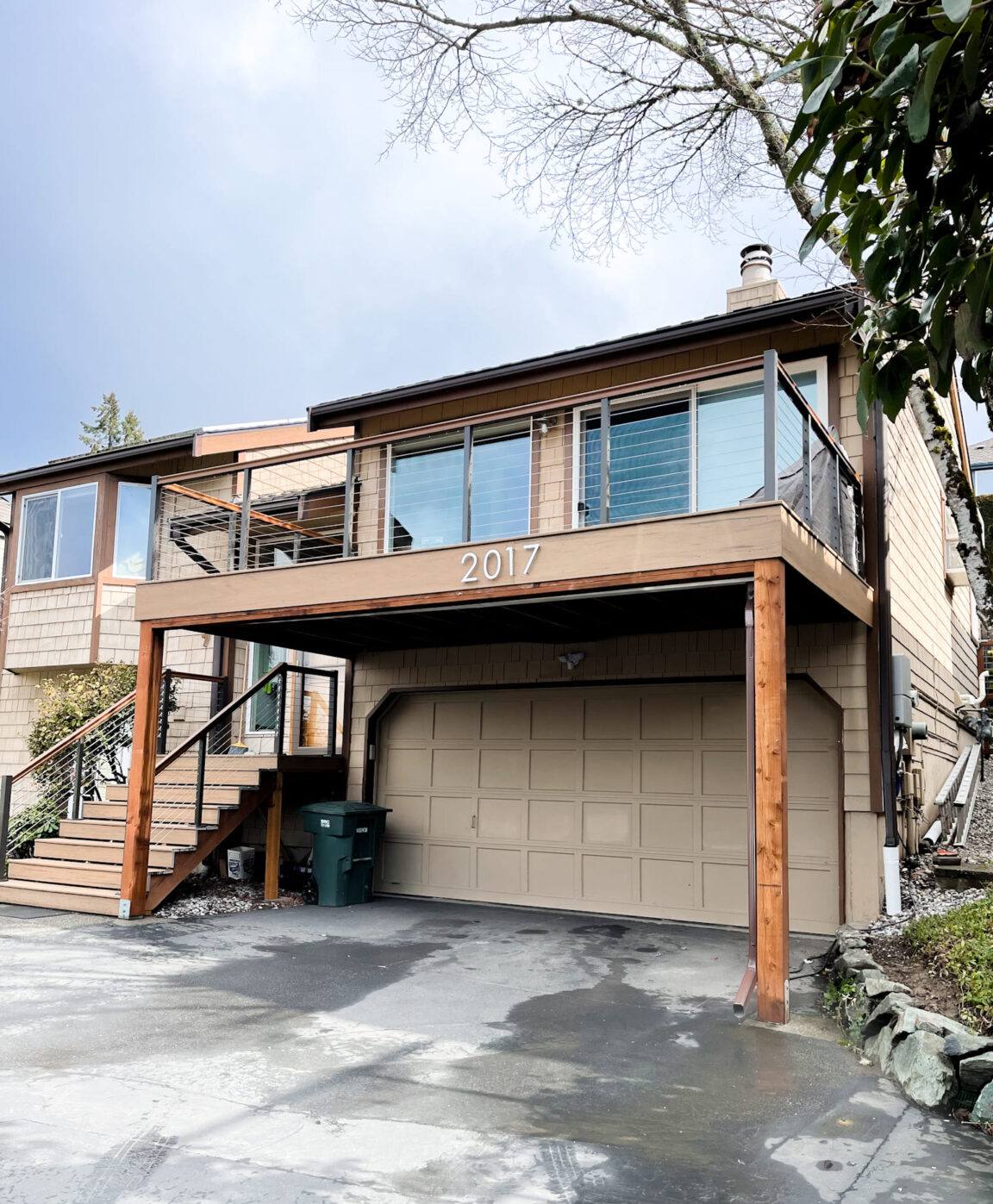
How Salt Air, Rain, and Moss Actually Damage a Deck
Salt Air and Metal Fasteners
Salt in the air accelerates corrosion on nails, screws, joist hangers, and bolts. Once a fastener starts rusting, it loses grip strength and can stain the surrounding wood. Corroded ledger bolts or hanger nails are one of the more serious issues we find, because they affect the structural connection between the deck and the house, not just the surface boards.
Driving Rain and Water Intrusion
Wind-driven rain doesn't just fall straight down — it gets pushed sideways into gaps, under flashing, and into any joint that isn't properly sealed. Over time this shows up as soft spots in decking boards, staining on the ledger board where it meets the house, and rot starting at board ends and screw holes, which are the most vulnerable entry points on any deck.
Moss and Sustained Moisture
A long moss season means extended periods where a deck surface simply doesn't get to dry out fully between rain events. Moss and algae hold moisture against the wood, and on shaded or north-facing decks this can lead to a slick, slippery surface as well as accelerated wood breakdown underneath the growth. Left alone, moss can also work into board seams and joints, further trapping water at exactly the spots where boards are already most likely to fail.
Signs a Repair Is Needed Now — Not Later
Deck problems rarely start big. They start as small, fixable issues that get expensive once they're ignored through another wet season. Homeowners in Oak Harbor should watch for:
- Soft, spongy, or bouncy spots when walking across the deck
- Boards that have visibly cupped, split, or pulled away from joists
- Rust streaks running down from screw or nail heads
- Gaps or movement where the deck attaches to the house (the ledger board)
- Wobbly railings or posts that shift under hand pressure
- Persistent moss or algae buildup in the same spots year after year
- A musty smell coming from underneath the deck
Any one of these on its own might be a minor fix. Several appearing together, especially near the ledger or support posts, usually means the moisture problem has been going on longer than it looks from the surface.
What a Correct Deck Repair Actually Involves
A repair that's done right starts underneath the deck, not on top of it. Surface boards are the easiest thing to see, but they're rarely the whole story.
Structural Inspection First
Before replacing a single board, we check the framing: joists, beams, posts, and — critically — the ledger board connection to the house. This is the single most important structural point on most decks, and it's also the point most exposed to water runoff from the house itself. If the framing underneath is compromised, cosmetic repairs on top of it are a short-term fix at best.
Fastener and Hardware Review
Given how salt air affects metal over time, we check the condition of joist hangers, structural screws, and any exposed bolts. Corroded hardware gets replaced with fasteners rated for coastal exposure, not just whatever matches what was originally used.
Board-Level Repair
Individual boards that are rotted, cupped, or split get replaced rather than patched — patched boards tend to fail again at the same spot. We also check the gaps between boards, since proper spacing is what allows water to drain instead of pooling and feeding rot at the joints.
Drainage and Ventilation
A lot of long-term deck damage traces back to poor drainage underneath the structure. We look at grading, any obstructions trapping moisture near posts, and whether airflow under the deck is being blocked — all of which matter more in a climate that doesn't give wood much chance to dry out.
Repair or Replace? What Actually Decides It
Not every deck with problems needs to be torn out. The decision usually comes down to how much of the structural framing is affected versus how much is limited to the surface boards and railings.
| Factor | Points Toward Repair | Points Toward Replacement |
|---|---|---|
| Ledger board condition | Solid, minor surface wear only | Soft wood, visible rot, or separation from house |
| Joists and beams | Sound, isolated soft spots | Widespread soft or crumbling framing |
| Decking boards | Under 25-30% need replacing | Majority of boards cupped, split, or rotted |
| Posts and footings | Stable, no shifting | Settling, rot at ground contact, or movement |
| Age of original build | Under 10-15 years | Original materials well past typical service life |
In a lot of Oak Harbor cases, the framing is actually in better shape than the surface boards suggest, because the boards take the brunt of standing water and sun exposure while the structure underneath stays protected. That's exactly why the inspection step matters — it's the difference between an honest repair estimate and an unnecessary full rebuild.
How Our Process Works
1. On-Site Inspection
We walk the deck, check underneath it, test the ledger connection, and look at fastener condition before quoting anything. This isn't a quick visual scan from the surface — it's the step that determines whether you actually need a repair or a replacement.
2. A Clear, Honest Scope
We tell you what's structural and what's cosmetic, and we price them separately so you're not paying for framing work you don't need or skipping framing work you do need.
3. The Repair Itself
Structural issues get addressed first — ledger, framing, hardware — followed by board replacement, then railings and any surface finishing. We don't reverse that order, because sealing or finishing over a hidden structural problem just hides it for another season.
4. Final Check and Finish
Once repairs are complete, we make sure drainage, board spacing, and fastener choices are set up to handle the next wet season, not just look good on the day the work is finished.
Material Choices That Make Sense for This Climate
Wood decking is common in Oak Harbor and can absolutely be repaired to last, provided it's properly sealed and maintained on a realistic schedule given how much moisture it sees. Composite decking is another option for sections being fully replaced, since it doesn't absorb water the way wood does — though it comes with its own trade-offs, including higher upfront material cost and the fact that composite doesn't take stain or paint the way wood does if you want to change the look down the road.
Whichever material a section is repaired or replaced in, the more important factor is usually the fasteners and flashing underneath — that's what determines how well the repair holds up to salt air and driving rain, regardless of what the top board is made of.
Why a Crew That Already Works Oak Harbor Matters
Deck repair isn't a one-size-fits-all trade. A crew that regularly works this specific area already knows what moisture damage looks like on a two-year-old deck versus a fifteen-year-old one in this climate, and that experience shows up in faster, more accurate diagnosis. It also means fewer surprises — the kind of hidden ledger rot or hardware corrosion that a crew unfamiliar with coastal Skagit County conditions might miss on a surface-level look.
Being local also means we're available for a straightforward follow-up if a question comes up after the repair, rather than working with a company that treated the job as a one-time drive-in visit.
Keeping a Repaired Deck in Good Shape
After a repair, a little regular upkeep goes a long way given the local conditions:
- Clear moss and algae from the surface before it has a chance to establish, especially on shaded sections
- Keep gutters and downspouts clear so runoff isn't draining directly onto or under the deck
- Check fastener heads periodically for early rust and address it before it spreads to the wood
- Re-seal or re-stain wood decking on the schedule appropriate for coastal exposure, not just a standard inland timeline
- Keep vegetation trimmed back from the deck edges to allow airflow and sun exposure to help it dry between rains
A repaired deck that gets this kind of basic attention will hold up far longer than one that's left to fend for itself through another wet Skagit County winter.
If your deck in Oak Harbor is showing any of the signs above, we're happy to take a look and give you a straightforward, no-pressure estimate — just fill out the form below and we'll get in touch.