 Anacortes Siding
 Why Roofs in the Oak Harbor Area Wear Out Faster Than People Expect
Homes around Oak Harbor sit in a tough spot for a roof. You've got salt-laden air coming off the water, near-constant moisture from driving rain and fog, and long stretches of shade and dampness that turn into prime moss habitat. None of these things destroy a roof overnight. Instead, they work slowly, on every seam, nail, and shingle edge, until a roof that should have another five or ten years left in it starts failing early.
Salt air is corrosive to exposed metal — nails, flashing, vent boots, and fasteners all take a hit over time if they aren't rated for it or properly protected. Driving rain doesn't just fall straight down here; it gets pushed sideways under eaves and around penetrations, which means underlayment and flashing details matter more than they would in a drier climate. And moss doesn't just look bad — its root structure lifts shingle edges and holds water against the roof deck for months at a time, which is exactly the kind of slow, constant moisture that rots wood and voids warranties.
A new roof installed for this specific environment looks a little different than a generic roof job. The materials, the flashing approach, and the ventilation plan all need to account for what the climate actually does to a house here, not just what a manufacturer's spec sheet assumes for an average U.S. home.
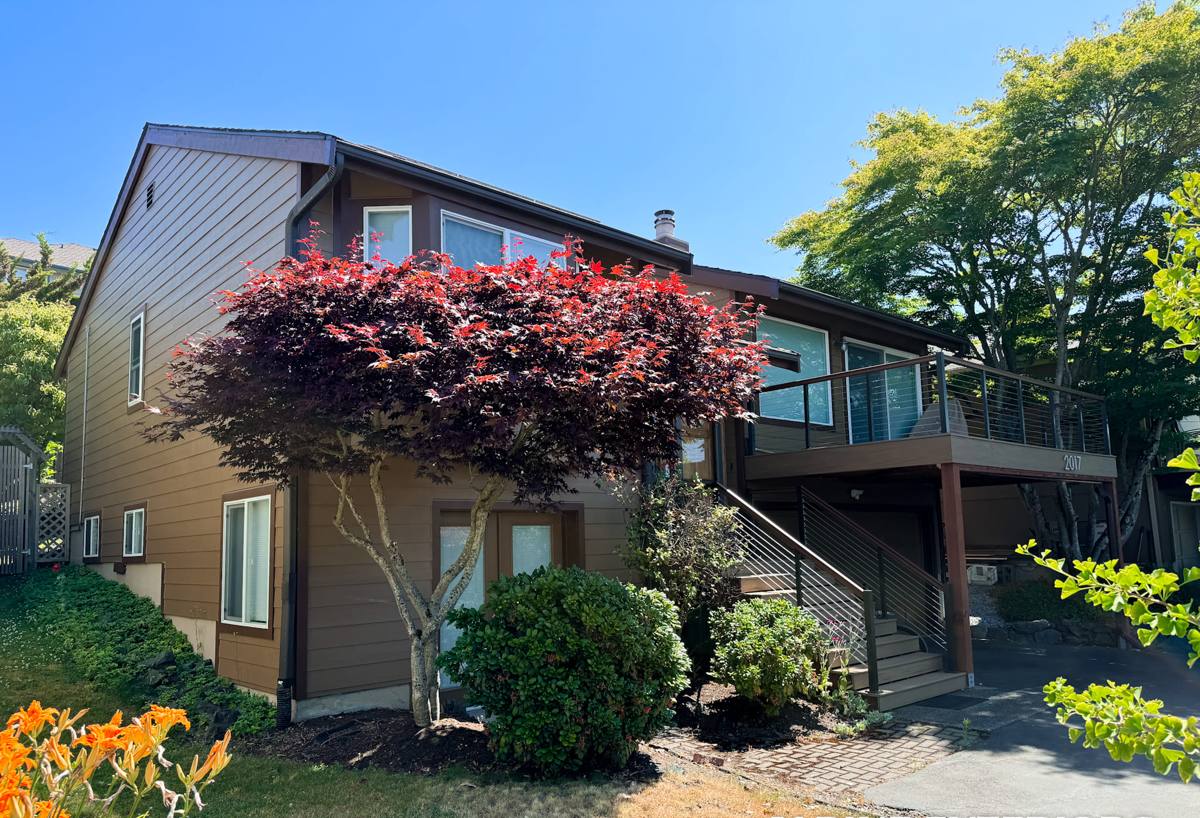
Signs It's Time for a New Roof, Not Another Patch
Repairs make sense when a roof has isolated damage and years of usable life left. A full replacement makes sense when the underlying materials are failing broadly, or when repeated patching is just delaying an expense that's going to happen anyway. Some signs point clearly toward replacement:
- Granule loss heavy enough that you're finding grit in gutters and downspouts every season
- Shingles that are curling, cupping, or cracking across multiple slopes, not just one spot
- Moss or algae that keeps returning within a year or two of cleaning, even after treatment
- Soft spots in the decking you can feel when walking the roof, or sagging visible from the ground
- Daylight visible through the roof deck from inside the attic, or water stains on rafters
- Flashing around chimneys, skylights, or roof-to-wall transitions that's rusted, lifted, or caulked-over instead of properly formed
- A roof that's already 20+ years old and has never been fully re-decked or re-flashed
If you're seeing two or three of these at once, it's usually a sign the roof system as a whole has reached the end of its service life, even if a few individual shingles still look fine.
What Correct New Roof Installation Actually Involves
A new roof is more than shingles laid over the old ones or a quick tear-off and re-cover. Done right, it's a system, and every layer has a job to do.
Tear-Off and Deck Inspection
We remove the old roofing down to the deck rather than layering over it. That's the only way to actually see the wood underneath — and in a climate with this much sustained moisture, hidden deck rot around old flashing, vent penetrations, and eaves is common enough that skipping this step means building a new roof on a compromised base. Any soft or delaminated decking gets replaced before anything else goes down.
Underlayment and Water Protection
Underlayment is the roof's backup plan for the moments shingles alone aren't enough — wind-driven rain, ice damming in a cold snap, or wear right before a re-roof. In this area, that means synthetic underlayment across the field and self-adhered ice-and-water membrane at the vulnerable spots: eaves, valleys, and around any roof penetration where water tends to concentrate.
Flashing Details
Flashing is where most roof leaks actually start, not out in the open field of shingles. Chimneys, skylights, dormers, and roof-to-wall intersections all need step flashing, counter-flashing, or kick-out flashing formed and installed correctly — not just sealed with a bead of caulk, which fails long before the roofing around it does.
Ventilation
A roof deck that can't breathe traps moisture underneath it, which accelerates rot and helps moss and mold get a foothold from below as well as above. Balanced intake and exhaust ventilation is part of a correct installation, not an upgrade — it protects the deck, the insulation below it, and the shingles themselves, which run hotter and fail faster on a poorly ventilated roof.
Roofing Materials: What Actually Holds Up in Salt Air and Moss
There's no single "best" roofing material for every home, but some perform noticeably better than others in a marine, moss-prone climate. We install what suits the specific roof, budget, and homeowner's priorities, but here's how the common options compare for this environment specifically.
| Material | Moss Resistance | Salt Air Durability | Typical Lifespan Here |
|---|---|---|---|
| Standard 3-tab asphalt shingle | Low — flat profile holds moisture | Fair with proper fasteners | 15–20 years |
| Architectural (laminate) asphalt shingle | Moderate — better runoff, some algae-resistant granule options | Good | 25–30 years |
| Metal (standing seam or panel) | High — sheds moisture, little surface for moss to grip | Very good with coated/coastal-rated fasteners | 40–50+ years |
| Cedar shake | Low without diligent maintenance — natural material retains moisture | Fair — needs treatment and upkeep | 20–30 years with upkeep |
Algae-resistant shingles — the kind treated with copper or zinc granules — genuinely help slow moss and moss-adjacent growth compared to untreated shingles, and we consider them a smart upgrade for most homes in this area rather than an unnecessary extra. Where we're more cautious is with materials that demand regular homeowner maintenance to perform as advertised, like untreated cedar shake — it's a good-looking product, but in a climate this wet, it asks a lot of upkeep to avoid the moisture and moss problems it's naturally prone to. That's a trade-off we'll walk through honestly rather than talk anyone out of a look they want.
Our Installation Process, Step by Step
- On-site assessment — we walk the roof and attic, check the decking, flashing, and ventilation, and take photos of anything that affects the scope or price before quoting.
- Written estimate — a clear breakdown of material, labor, and any deck repair or ventilation work, so there are no surprise line items mid-project.
- Material selection — we go over the realistic options for the home's style, budget, and exposure, including how each holds up against moss and salt air specifically.
- Scheduling around the weather — in a climate that doesn't always cooperate, we plan installation windows carefully and protect the open deck if conditions turn.
- Tear-off and deck repair — old roofing comes off, the deck is inspected, and any compromised sheathing is replaced before moving forward.
- Underlayment, flashing, and ventilation installed — the parts of the system that don't show but do most of the long-term work.
- Roofing material installed to manufacturer spec, including proper nailing patterns and exposure — shortcuts here are what void warranties later.
- Final walkthrough and cleanup — magnetic sweep for stray fasteners, gutter check, and a final look together before we consider the job done.
What Actually Drives the Cost of a New Roof
Pricing a roof over the phone without seeing it is guesswork, but there are consistent factors that move the number up or down on any given home. Most full roof replacements in this area land somewhere in a broad range from around ten thousand dollars for a smaller, simpler roof in asphalt shingle up to well over thirty thousand for a larger home, steep pitch, or premium material like standing seam metal. Where a specific project falls in that range depends on a handful of things.
| Factor | Why It Matters |
|---|---|
| Roof size and number of stories | More square footage and harder access both add labor time |
| Roof pitch and complexity | Steep roofs and lots of valleys, dormers, or penetrations take longer and use more flashing |
| Deck condition | Rotted sheathing found at tear-off needs replacing before roofing goes on |
| Material choice | Asphalt, architectural shingle, and metal carry very different material and labor costs |
| Ventilation upgrades | Adding proper intake/exhaust venting where none existed adds some cost but protects the whole system |
| Tear-off layers | Removing multiple old roofing layers takes more labor and disposal than a single layer |
We'd rather walk a roof in person and give an honest number than guess low and revise upward once we're on the deck. That's part of why the estimate includes photos and specifics, not just a lump-sum figure.
Why Hiring a Crew That Already Works in Oak Harbor Matters
Roofing crews that mostly work drier, inland climates sometimes underbuild for what this area actually throws at a house — lighter underlayment, minimal flashing at transitions, or ventilation sized for a different climate. A crew that regularly works homes around Oak Harbor and the broader Anacortes area already knows where the driving rain gets pushed by prevailing winds, which roof details tend to fail first in salt air, and how aggressively moss comes back if the material and airflow underneath it aren't right the first time.
That local familiarity shows up less in the sales pitch and more in the small decisions on the roof — how flashing gets formed at a tricky transition, whether a valley gets extra underlayment, where intake vents actually need to go given the home's orientation. Those are the details that separate a roof that looks fine for a year or two from one that holds up for decades in this specific climate.
Ready for an Honest Look at Your Roof?
If your roof is showing its age, growing moss faster than it used to, or you're just not sure whether it needs a patch or a full replacement, we're happy to take a look and give you a straight answer — no pressure, no inflated scope. Use the form below to request a free estimate for your Oak Harbor home.