 Anacortes Siding
 Roof Repair Built for Oak Harbor's Marine Climate
Homes around Oak Harbor take a different kind of beating than roofs further inland. Sitting close to the water in the Anacortes area, roofs here deal with salt-laden air, wind-driven rain off the Strait, and a moss season that can run most of the year in shaded spots. A roof repair that works fine in a dry, sheltered neighborhood can fail fast out here if it doesn't account for those conditions. We've repaired enough roofs in this stretch of Skagit and Island County to know which failures are cosmetic and which ones are the first sign of a much bigger problem underneath.
This page is about roof repair specifically — patching, flashing work, leak tracing, and targeted section replacement. If your roof is beyond the point where repair makes sense, we'll tell you that plainly. Most of the time, though, a well-done repair buys years of extra life from a roof that isn't actually done yet.
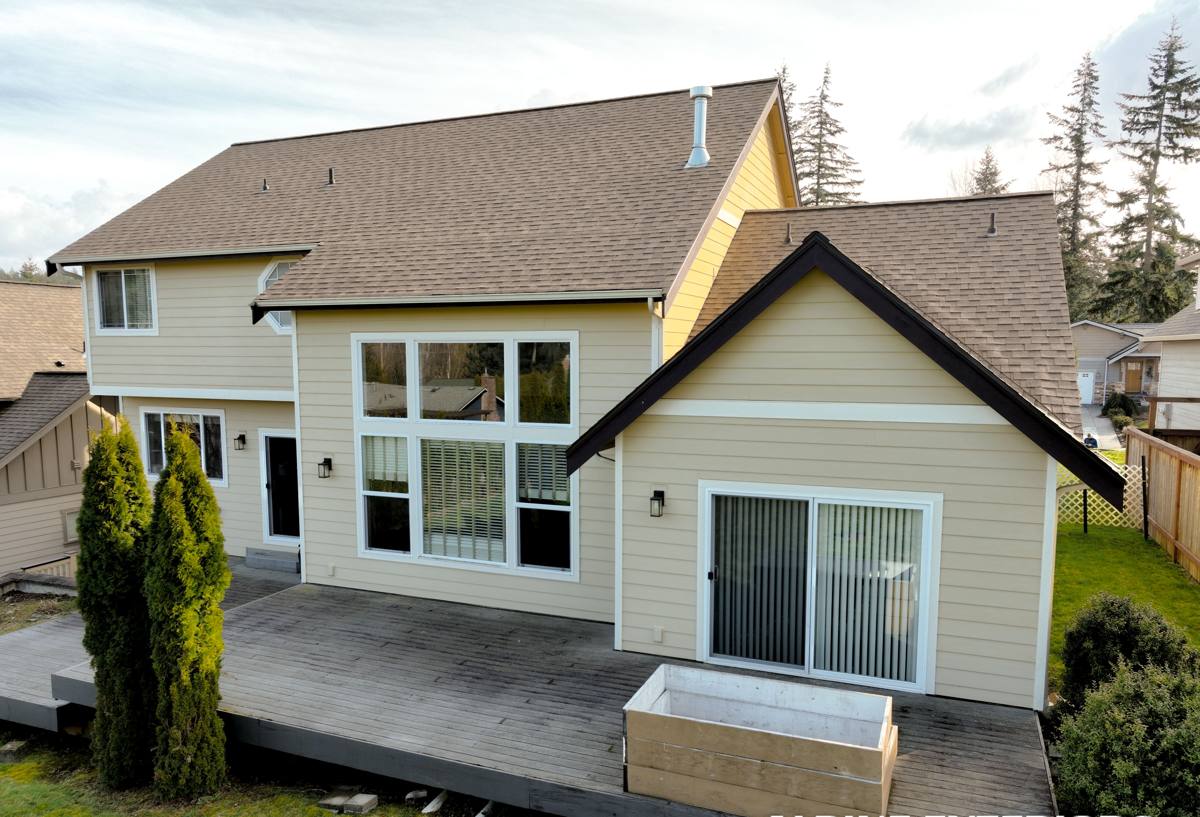
What Salt Air, Rain, and Moss Do to an Oak Harbor Roof
Salt air and corrosion
Proximity to saltwater accelerates corrosion on anything metal on your roof — flashing, fasteners, vent boots with metal collars, gutter hardware. Standard galvanized fasteners can start rusting years before they would inland, and once a fastener corrodes, it loses its grip and stops sealing properly. A repair that reuses old, corroded hardware is a repair that's already halfway to failing again.
Driving rain and wind-driven water
Storms coming off the water don't just fall straight down — wind pushes rain sideways and up under shingle edges, flashing laps, and anywhere a seal has started to open. This is why so many "mystery leaks" in this area actually trace back to flashing around chimneys, skylights, and roof-to-wall transitions rather than the shingle field itself. A repair that only addresses the spot where water is showing up inside the house, without checking upslope flashing and laps, often doesn't hold.
Moss, shade, and moisture retention
Tree cover and the region's long damp stretches give moss plenty of time to establish itself, especially on north-facing slopes and anywhere debris collects. Moss holds moisture against the roofing material far longer than it would otherwise dry out, which softens shingles, degrades granule protection, and can lift edges enough for wind-driven rain to get underneath. Left alone, moss growth turns a roof that has years of life left into one that's failing from the surface down.
Signs Your Oak Harbor Roof Needs Repair
Some of these are obvious from the ground; others you'll only notice from inside the attic or after a hard storm.
- Water stains on ceilings or upper walls, especially ones that appear or worsen after wind-driven rain rather than steady rain
- Granules collecting in gutters or at downspout outlets — a sign of shingle wear, not just age
- Visible moss or dark streaking concentrated on shaded or north-facing slopes
- Lifted, curled, or missing shingles, particularly along ridges and edges exposed to wind
- Rusting or lifting flashing around chimneys, skylights, and vent pipes
- Daylight visible through the roof deck from inside the attic
- Soft or spongy spots when walking the roof (we check this, not something to test yourself)
- Sagging in the roofline or along gutters, which can point to deck or structural issues beyond a simple patch
What a Correct Roof Repair Actually Involves
A good repair isn't just sealing the spot where water showed up inside — it's tracing the actual entry point, which can be several feet away from the stain, and fixing the underlying cause, not just the symptom.
| Repair Step | Why It Matters Here |
|---|---|
| Leak tracing from the interior stain back to the actual entry point | Wind-driven rain can travel along the deck before dripping, so the visible stain rarely marks the real problem area |
| Inspection of flashing at all penetrations and transitions | Flashing failure is the most common repair cause in coastal, storm-exposed areas like Oak Harbor |
| Removal and replacement of corroded fasteners, not just resealing them | Salt air corrosion means a fastener that's already rusting will keep failing even if re-caulked |
| Moss and debris clearing beyond just the repair area | Moss elsewhere on the roof will cause the next leak if it's left in place |
| Matching shingle or material type and color where possible | Mismatched patches shorten the visual life of an otherwise sound roof and can affect resale appeal |
| Checking deck condition under the removed section | Soft or delaminated decking needs to be addressed before new material goes down, not covered over |
Our Roof Repair Process
- Inspection and diagnosis. We get on the roof (weather permitting) and in the attic if needed, tracing the leak or damage to its actual source rather than guessing from the visible symptom.
- Honest assessment. We tell you what we find in plain terms — what's failing, why, and whether repair is the right call or if you're better served knowing a bigger issue is coming.
- Written scope and estimate. You get a clear description of the work and cost before anything is touched. No surprise add-ons mid-job.
- Repair work. Corroded fasteners and flashing get replaced, not just resealed. Matching materials are used where available. Moss and debris are cleared from the surrounding area.
- Final check. We confirm the repair holds under close inspection before calling the job done, and we point out anything else worth keeping an eye on.
What to expect on cost
Roof repair pricing depends heavily on the scope — a single flashing fix is a different job than a section of storm-damaged shingles with deck work underneath. We give a firm, written estimate after inspection rather than a phone-quote guess, because guessing on a roof you haven't walked usually means either lowballing the homeowner or padding the number to cover risk. Neither serves you well.
Repair vs. Replacement: How We Decide
Not every roof problem is a replacement, and not every leak is "just a patch." Here's the general logic we use, though every roof gets a real inspection before we recommend either direction.
| Factor | Favors Repair | Favors Replacement |
|---|---|---|
| Roof age relative to material lifespan | Well within expected service life | At or past the end of expected life for its material |
| Extent of damage | Localized to one or two areas | Widespread across multiple slopes |
| Deck condition | Solid, dry decking under damaged area | Soft, rotted, or delaminated decking in multiple spots |
| Granule loss / shingle wear | Isolated to the repair zone | Consistent across most of the roof |
| History of repairs | First or second repair on this roof | Repeated repairs to the same areas over recent years |
If your roof lands clearly on the repair side, we won't push a replacement conversation you don't need. If it's borderline, we'll walk you through both options honestly, including the trade-offs of continuing to repair an aging roof versus replacing it on your own timeline instead of an emergency one.
Materials We Use and Why
For repairs, matching your existing roofing material is usually the right call — mixing shingle types or profiles on one roof creates uneven aging and can complicate future warranty or insurance claims. Where flashing and fasteners are concerned, we favor corrosion-resistant metals and coatings given how much faster standard materials break down this close to saltwater. It costs a bit more up front than using whatever's cheapest on the shelf, but redoing the same flashing repair in three years costs more than that difference ever saved.
For underlayment in vulnerable areas — valleys, eaves, and around penetrations — we lean toward self-adhering waterproof membrane rather than felt alone, since it seals around fastener penetrations instead of just shedding water over them. In a climate where wind-driven rain regularly tests every seam on a roof, that extra layer of protection at the weak points is worth the cost.
Why Hiring a Crew That Already Works Oak Harbor Matters
A roofer who mostly works dry, inland neighborhoods will diagnose an Oak Harbor roof the same way they'd diagnose any other roof — and that's exactly how leaks get missed. Someone who works this stretch of coastline regularly already knows to check upslope flashing before assuming a shingle is the culprit, knows which fastener grades hold up against salt air, and knows how aggressively moss needs to be managed on a shaded north slope out here versus a roof a few miles inland. That local pattern recognition is the difference between a repair that lasts and one you're calling someone back out for after the next big storm off the water.
It also matters for scheduling and honesty. A crew that's in the area regularly can get to a active leak faster, and has a reputation in the community worth protecting — which means straight answers about what your roof actually needs, not upselling work it doesn't.
Get a Straight Answer About Your Roof
If you're dealing with a leak, storm damage, or just want a second opinion on a roof that's showing its age, we're happy to take a look. We'll give you a clear, honest assessment and a written estimate — no pressure, no scare tactics. Use the form below to request a free estimate for roof repair in Oak Harbor.