 Anacortes Siding
 Oak Harbor Sits in a Tough Spot for Siding
Oak Harbor homes take on a specific combination of weather that most siding products were never really built for. The town sits close to the water on Whidbey Island, just across Deception Pass from our home base in Anacortes, which means salt-laden air moves through the area constantly. Add in driving rain off the Sound, wind that funnels through the passes and inlets, and a long, damp shoulder season that runs from fall through spring, and you get a climate that finds every weak point in a home's exterior. Siding here doesn't fail because homeowners neglected it. It fails because the assembly underneath it, the flashing details, the caulking, the material itself, wasn't matched to what this stretch of the Salish Sea actually does to a building envelope year after year.
We've repaired enough siding on this side of the water to see the pattern repeat: damage clusters on the sides of a house that face prevailing wind and rain, near ground contact where splash-back keeps material wet, and around any penetration (vents, hose bibs, light fixtures) where the original flashing was an afterthought. A repair that doesn't address why the damage happened in that specific spot is just delaying the same call a year or two later.
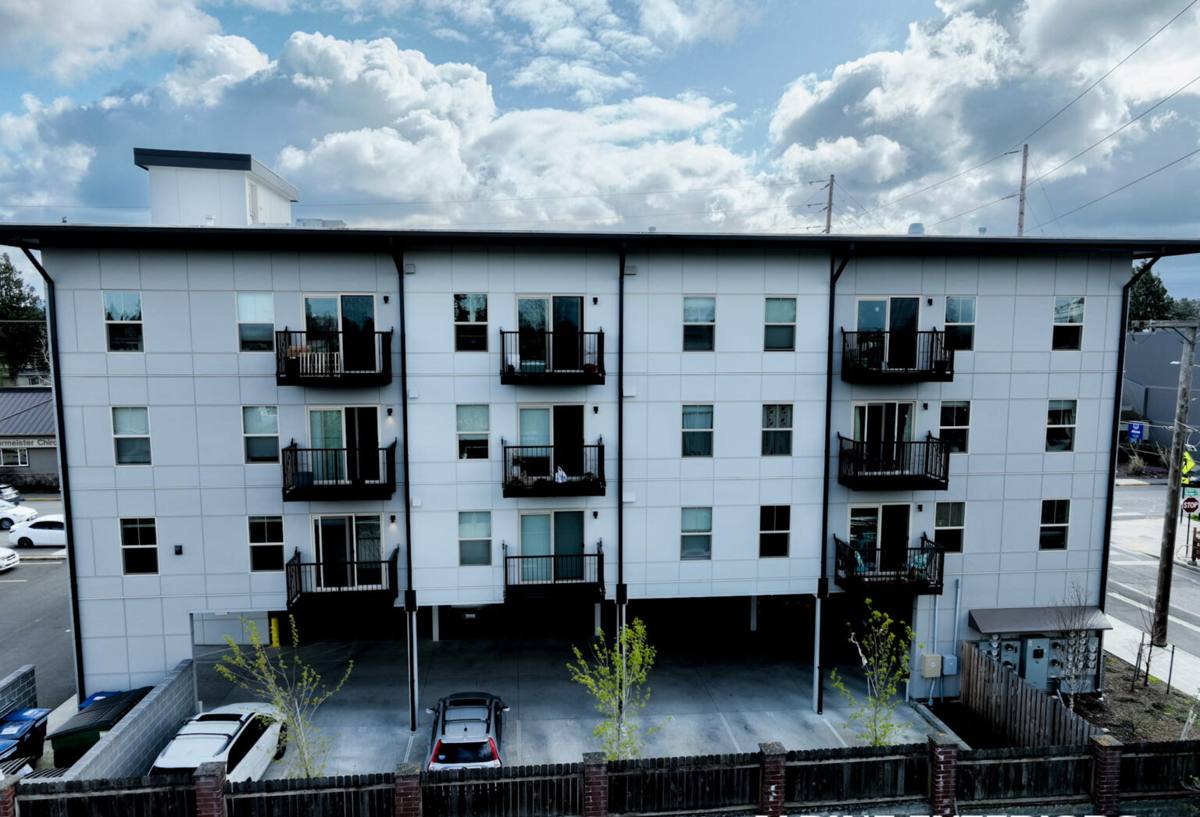
What Salt Air and Moss Season Actually Do to Siding
Salt Air and Coastal Humidity
Airborne salt is corrosive to fasteners and metal flashing, and it holds moisture against a wall longer than dry inland air would. On wood-based and engineered wood siding products, that extra moisture dwell time accelerates swelling, delamination, and rot at edges and seams. On vinyl, salt air combined with UV exposure speeds up chalking and brittleness, which shows up as cracking around fastener points during repairs.
Driving Rain and Wind-Driven Water
Rain in this region rarely falls straight down. Wind pushes it sideways and up under laps, trim, and J-channel, which is why so many repair calls turn out to be water management failures rather than simple cosmetic wear. If a house doesn't have proper weather-resistive barrier overlap, correctly lapped flashing, and adequate clearance at the bottom edge, wind-driven rain will find its way behind the siding regardless of how good the surface material looks.
Moss and Prolonged Dampness
Moss doesn't just grow on roofs here. It takes hold in shaded, north-facing wall sections and anywhere siding stays damp for extended stretches, holding moisture against the surface and, over time, breaking down caulk joints and paint film. On absorptive materials, that trapped moisture is often the real driver behind soft spots, bubbling paint, and edge rot that homeowners first notice as a cosmetic issue.
Signs Your Oak Harbor Home Needs a Repair Call
Most homeowners catch siding problems late because early symptoms look minor. Here's what we tell Oak Harbor clients to watch for between now and their next full exterior check:
- Soft or spongy spots when you press on the siding, especially near the bottom courses or below windows
- Visible gaps, cracks, or separation at seams, corners, and trim joints
- Paint that's bubbling, peeling, or flaking in patches rather than evenly across a wall
- Dark staining or streaking that doesn't wash off, often a sign of moisture tracking behind the panel
- Persistent moss or algae growth concentrated in one section of the house
- Warping, buckling, or panels that no longer sit flat against the wall
- Interior signs: musty smells, peeling interior paint, or soft drywall on an exterior wall
Any one of these on its own might be minor. Two or three together in the same area usually means water has been getting behind the siding for a while, and the repair needs to go deeper than the visible surface.
What a Correct Siding Repair Actually Involves
Diagnosing Before Cutting Anything
The first step isn't pulling boards, it's figuring out why that section failed. We check the flashing at windows, doors, and penetrations, look at how water sheds off the roofline onto that wall, and probe the sheathing behind the damaged siding for rot. Repairing the visible siding without fixing the water source behind it is the single most common shortcut we see, and it's why some "repairs" don't last.
Removing Only What Needs to Come Out
A correct repair removes damaged material back to solid substrate, not just the obviously cracked piece. That often means pulling a few extra boards to expose the framing, checking for hidden rot, and confirming the weather-resistive barrier is intact before anything new goes back on.
Getting the Water Management Right
New flashing, corrected laps, proper fastener placement, and adequate clearance at grade and at trim all matter more than the siding material itself. A repair that reinstalls the same siding over the same flawed water path will fail again on the same timeline.
Matching and Blending
Where the repaired section meets existing siding, we match reveal, profile, and color as closely as the original product allows. On factory-finished products this is far more consistent than trying to field-match paint on an older, weathered surface.
Repair or Replace? How We Help You Decide
Not every damaged section needs a full re-side, and we don't push replacement when a targeted repair will genuinely hold up. The table below outlines how we think through that decision on Oak Harbor calls.
| Factor | Favors Repair | Favors Replacement |
|---|---|---|
| Extent of damage | Isolated to one or two wall sections | Spread across multiple elevations |
| Substrate condition | Sheathing and framing are dry and sound | Rot has spread into structural framing |
| Age of existing siding | Siding is mid-life, otherwise sound | Siding is near or past its expected service life |
| Material match | Product is still available and matchable | Product is discontinued or badly weathered |
| Underlying cause | Cause is a fixable local flashing detail | Cause is a systemic issue (grading, roof drainage, original install) |
We walk every homeowner through where their home lands on this table before we recommend anything, in writing, with our reasoning attached.
Why Material Choice Matters, Even for a Repair
We install and repair James Hardie fiber cement siding, and it's the only siding product we install new. When we're called out to repair a home that has vinyl, LP SmartSide, cedar, or primed spruce siding, we'll still do an honest repair job on the existing material where that makes sense. But it's worth being direct about why material choice keeps coming up on repair calls in this climate.
Wood-based and engineered wood products are sensitive to the moisture cycling that salt air and driving rain create here; once water gets past the surface, rot can spread faster than it would in a drier inland climate. Vinyl doesn't rot, but it becomes brittle with UV and salt exposure over time, and it can't be patched invisibly, since color fades unevenly and profiles change between production runs. James Hardie fiber cement is non-combustible, dimensionally stable, and its ColorPlus factory finish is engineered to hold color and resist the fading and moisture damage that drives most of the repair calls we see. When a full re-side is the right call, we explain why we install Hardie exclusively rather than offering a menu of lower-cost options that tend to bring homeowners back into this same cycle sooner.
Our Process for an Oak Harbor Repair Call
- Site visit and assessment — we inspect the damaged area and the surrounding wall assembly, not just the spot you called about
- Written scope — you get a clear explanation of what's damaged, why, and what the repair involves, before any work starts
- Material sourcing and matching — we confirm what's available to match your existing siding, or discuss options if a match isn't realistic
- Repair and water management correction — removal, substrate check, flashing correction, and reinstallation
- Cleanup and final walkthrough — we review the finished repair with you before we consider the job done
Because our crew is based in Anacortes and already works in Oak Harbor regularly, we're not estimating travel time or scheduling around a rare special trip across the water. That familiarity also means we've seen how specific neighborhoods and exposures in the area tend to fail, which speeds up the diagnosis step considerably.
Scheduling and Access Considerations Specific to This Area
Getting equipment and materials to a jobsite in Oak Harbor from Anacortes means factoring in the drive across Deception Pass and normal Whidbey Island traffic patterns, which we build into our scheduling rather than treating as a surprise. We also plan repair work around weather windows more carefully out here than we would somewhere with fewer rain days, since fresh caulking, flashing sealant, and paint all need dry cure time to perform the way they're supposed to. A repair rushed into a wet forecast is a repair that's likely to need attention again sooner than it should.
Keeping Repaired Siding From Becoming a Repeat Call
A good repair should outlast the reason you needed it. A few habits make a real difference in this climate:
- Keep gutters clear so roof runoff doesn't concentrate onto one section of wall
- Trim back vegetation and tree cover that keeps a wall section shaded and damp
- Rinse accumulated salt residue and grime off siding once or twice a year
- Address small caulk cracks or paint failures early, before water gets behind the surface
- Have a full exterior looked at every few years, not just when something visibly fails
We're happy to point out early warning signs during a repair visit even if they're not part of the immediate scope of work, since catching a problem early is almost always cheaper than fixing it after it's spread.
If you've got a section of siding on your Oak Harbor home that's cracking, staining, or feels soft to the touch, we'll come take an honest look and tell you what we actually find, no pressure either way. Fill out the form below for a free estimate from a crew that already knows this stretch of the Sound.