 Anacortes Siding
 Decking Built for Old Town Anacortes' Marine Climate
Old Town Anacortes sits close to the water, which means its homes take a different kind of weathering than houses further inland in Skagit County. Salt-laden air, near-constant marine moisture, and long stretches of shade under mature trees put real stress on any outdoor structure, and a deck is one of the first things to show it. A lot of the older homes in this part of town were built well before composite materials existed, so their original decks were wood, and many current decks were replaced once or twice already using the same wood-on-wood approach that struggles here. If you're planning a new deck or replacing a tired one, it's worth understanding what this specific environment does to decking materials before you pick what goes under your feet.
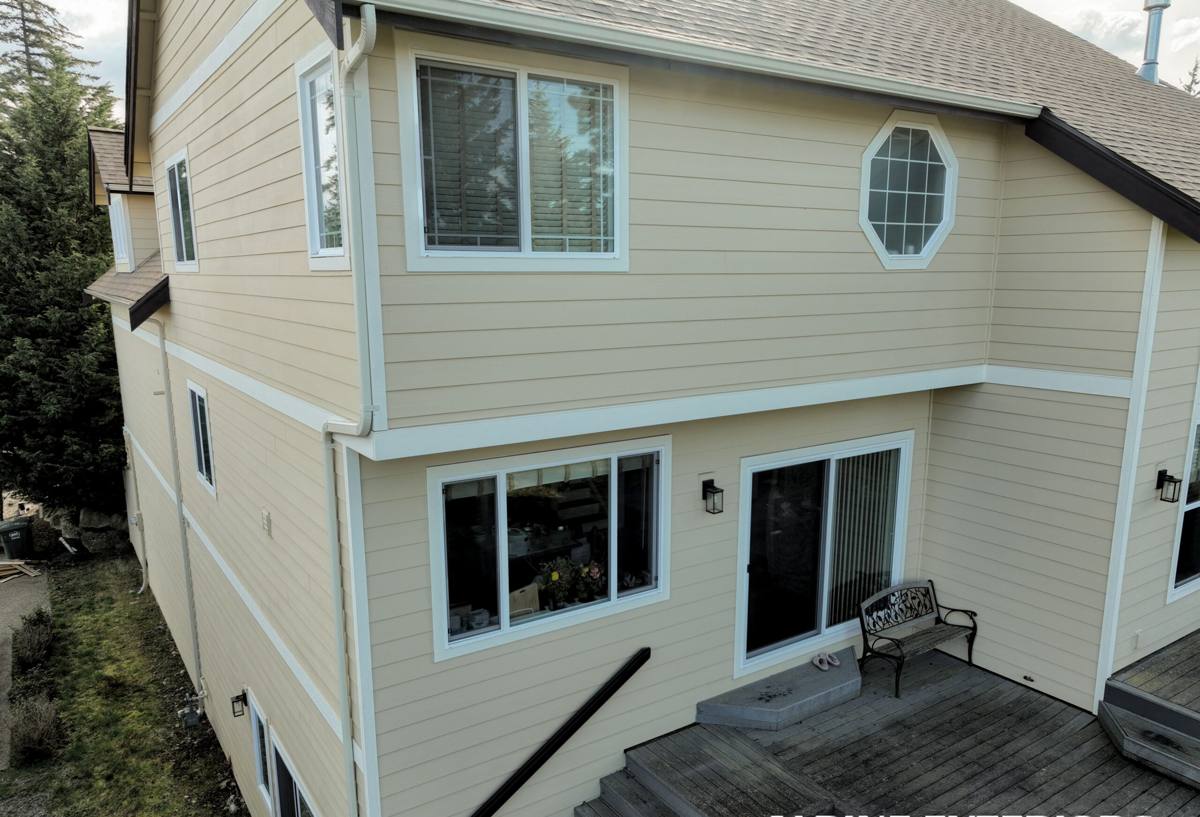
What Salt Air, Rain, and Moss Actually Do to a Deck
Salt air doesn't just sit on the surface of a deck — it works its way into fasteners, hinges, and any exposed metal hardware, accelerating corrosion even on materials rated for exterior use. Driving rain, common through the fall and winter months here, doesn't fall straight down; it gets pushed sideways under railings, into end grain, and through any gap where flashing or caulking has failed. And moss, which thrives in this climate practically year-round, holds moisture directly against a deck's surface long after the rain has stopped. On a wood deck, that combination shows up as soft spots, graying and splintering boards, rusted fastener heads bleeding through the finish, and eventually rot in the framing underneath — often starting in places you can't see until you're standing on them.
Why Composite Decking Is a Strong Fit for This Neighborhood
Moisture and Rot Resistance
Composite decking boards are engineered from a blend of wood fiber and plastic, and the better products on the market are capped with a polymer shell on all four sides. That cap means the board isn't absorbing water the way raw lumber does, so it isn't swelling, cupping, or rotting from the inside the way wood eventually will in a wet climate. This matters more in Old Town Anacortes than it would somewhere drier, simply because the deck spends more days of the year wet than dry.
Moss and Algae Resistance
Moss and algae need organic material and consistent moisture to establish themselves. Wood decking gives them both. A properly capped composite board gives moss far less to grab onto, and what does grow on the surface typically washes or brushes off instead of staining into the wood grain permanently. It's not a moss-proof material — nothing installed outdoors in this climate truly is — but it holds up noticeably better over a multi-year moss season than untreated or even stained wood.
Less Upkeep Over the Life of the Deck
A wood deck in this climate typically needs cleaning, brightening, and re-staining or re-sealing every year or two to keep water out and hold its color. Composite decking doesn't need staining or sealing at all — it needs periodic washing to keep moss and pollen from building up, which is a fraction of the time and cost over the life of the deck.
What a Correct Composite Deck Installation Actually Involves
Composite boards are only as good as what's underneath and around them. A lot of deck failures we see aren't a materials problem — they're an installation problem, and in a wet coastal climate those mistakes show up faster than they would somewhere dry.
Substructure and Framing
The joists and framing under a composite deck still matter enormously, even though the visible boards resist moisture. We use pressure-treated framing lumber rated for ground or exterior exposure, and we run protective joist tape over the top of every joist before boards go down. That tape keeps rainwater that gets between the deck boards from soaking directly into the framing — which is exactly the kind of slow, hidden damage that turns into a costly repair a few years down the road.
Ledger Board Flashing — Especially on Older Homes
Where a deck attaches to the house, the ledger board and its flashing are the single most common source of water intrusion into the structure itself. On older Old Town Anacortes homes, we often find the original ledger flashing was minimal or has failed outright after decades of driving rain. We flash this connection properly with materials designed to shed water away from the house rather than trap it against the siding or rim joist, because a deck that leaks at the ledger can damage the home itself, not just the deck.
Board Spacing, Gapping, and Airflow
Composite boards need consistent gapping between them for drainage and to allow the boards to expand and contract with temperature changes. Too tight, and water pools on the surface and can't drain, which is exactly the standing moisture that invites moss growth. Too loose, and the deck feels unfinished and debris collects in the gaps. We also make sure there's real airflow underneath the deck itself, not just between the boards — a low, closed-off deck skirt traps humid air against the framing and slows everything from drying out after a rain.
Fasteners and Hardware Rated for Coastal Exposure
Given how hard salt air is on exposed metal, we use stainless steel or coated fasteners and structural hardware rated for coastal or marine-grade exposure, and we favor hidden fastener systems on the visible deck surface where possible. That keeps fastener heads from becoming rust streaks down the face of the boards, which is one of the more common cosmetic complaints on decks built with standard hardware in this kind of environment.
Railings, Stairs, and Code Compliance
Anacortes and Skagit County follow the state building code for deck height, guardrail requirements, stair rise and run, and footing depth. We pull permits and build to those requirements as a baseline, not an afterthought — it protects you at resale and keeps the structure safe, which matters more once you're dealing with wet, sometimes slick decking surfaces for a good portion of the year.
Composite vs. Other Decking Materials for This Climate
| Material | Moisture & Moss Behavior Here | Ongoing Maintenance | Typical Lifespan |
|---|---|---|---|
| Pressure-treated wood | Absorbs water, swells and grays; moss and algae take hold readily in shaded, damp spots | Annual cleaning, periodic staining or sealing | 10–15 years before major repair or replacement |
| Cedar or other natural wood | More rot-resistant than pine but still absorbs moisture and needs finish upkeep | Regular sealing to preserve color and water resistance | 15–20 years with consistent maintenance |
| Capped composite | Resists water absorption and rot; moss doesn't anchor into the surface the way it does on raw wood | Periodic washing, no staining or sealing | 25–30+ years, backed by manufacturer warranty |
| Uncapped composite (older-style) | Better than wood but can still absorb some moisture at cut edges and stain over time | Occasional cleaning; more prone to surface staining than capped boards | 15–25 years |
We install capped composite as our standard for exactly this reason: in a climate where the deck is wet more often than it's dry, the extra moisture resistance pays for itself in reduced maintenance and a longer service life.
Our Process, From Estimate to Finished Deck
- Free on-site walkthrough — we look at your existing deck or the planned footprint, note drainage patterns, shade, and any existing rot or ledger issues.
- Straightforward written estimate covering materials, labor, permitting, and any substructure repair or replacement that's needed.
- Permit pulled through the City of Anacortes or Skagit County as applicable, before any work starts.
- Demo of the old deck if applicable, with a check of the framing and ledger connection underneath.
- Framing, joist tape, and ledger flashing installed to current code and manufacturer specification.
- Composite decking installed with proper gapping, hidden or coastal-rated fasteners, and railing and stairs built to code.
- Final walkthrough with you before we consider the job done.
What Affects the Cost of a Composite Deck
| Factor | Why It Moves the Price |
|---|---|
| Size and shape | More square footage and multiple angles or levels mean more material and labor |
| Substructure condition | Rotted framing or a failed ledger connection on an older home adds repair work before the deck itself is built |
| Board tier and color | Composite lines vary in cap thickness, color-fastness, and warranty length |
| Railing style | Composite or metal cable railing costs more than a basic composite baluster system |
| Stairs and landings | Each set of stairs adds framing, footings, and code-required railing |
| Tear-off and disposal | Removing and hauling away an old wood deck adds labor and disposal cost |
We give you an honest range once we've actually seen the site — square footage alone doesn't tell the whole story, especially on older lots where the substructure needs a closer look before we can quote it accurately.
Maintaining a Composite Deck in a Marine Climate
- Sweep debris and standing organic matter (leaves, needles, moss) off the surface regularly, especially in shaded areas
- Wash the deck with a soft-bristle brush and a mild deck cleaner once or twice a year to keep moss and pollen film from building up
- Rinse salt residue off railings and hardware after storms or high-wind days off the water
- Keep gutters and downspouts near the deck clear so runoff isn't dumping directly onto the decking or framing
- Check that the gap under the deck hasn't been blocked by landscaping, storage, or added skirting that cuts off airflow
- Have fasteners and any visible hardware checked periodically for corrosion, especially closer to the water
Why Hiring a Crew That Already Works in Old Town Anacortes Matters
A contractor who's done decks in this specific part of town already knows what the framing under a 1940s or 1950s Old Town home is likely to look like, how much moss pressure to expect on a shaded north-facing deck, and which flashing details actually hold up against wind-driven rain off the water. That's different knowledge than what a crew working mostly on new-construction subdivisions inland has built up. It shows in fewer surprises during demo, more accurate estimates up front, and a deck that's built for the conditions it will actually sit in, not a generic climate.
If you're considering a new composite deck or need to replace one that's showing its age, we're happy to come take a look and give you a straightforward, no-pressure estimate. Use the form below to get in touch and we'll set up a time to walk the site with you.