 Anacortes Siding
 Building a Deck in Old Town Anacortes: What's Different
Old Town Anacortes is one of the oldest residential pockets on Fidalgo Island, and it shows in the housing stock — older framing, a mix of foundation styles, mature trees, and lots close enough to the water to catch salt-laden air on a regular basis. A deck built here has to answer to conditions that a generic "deck installation" guide from a national franchise never accounts for. We've worked on homes throughout this neighborhood and the surrounding Anacortes area long enough to know that the decks that fail early almost always fail for the same reasons: wrong fasteners, poor drainage, or a ledger board that was never properly flashed against the house. This page walks through what a deck actually needs to hold up in Old Town Anacortes, and how we build to that standard rather than to the minimum a permit will allow.
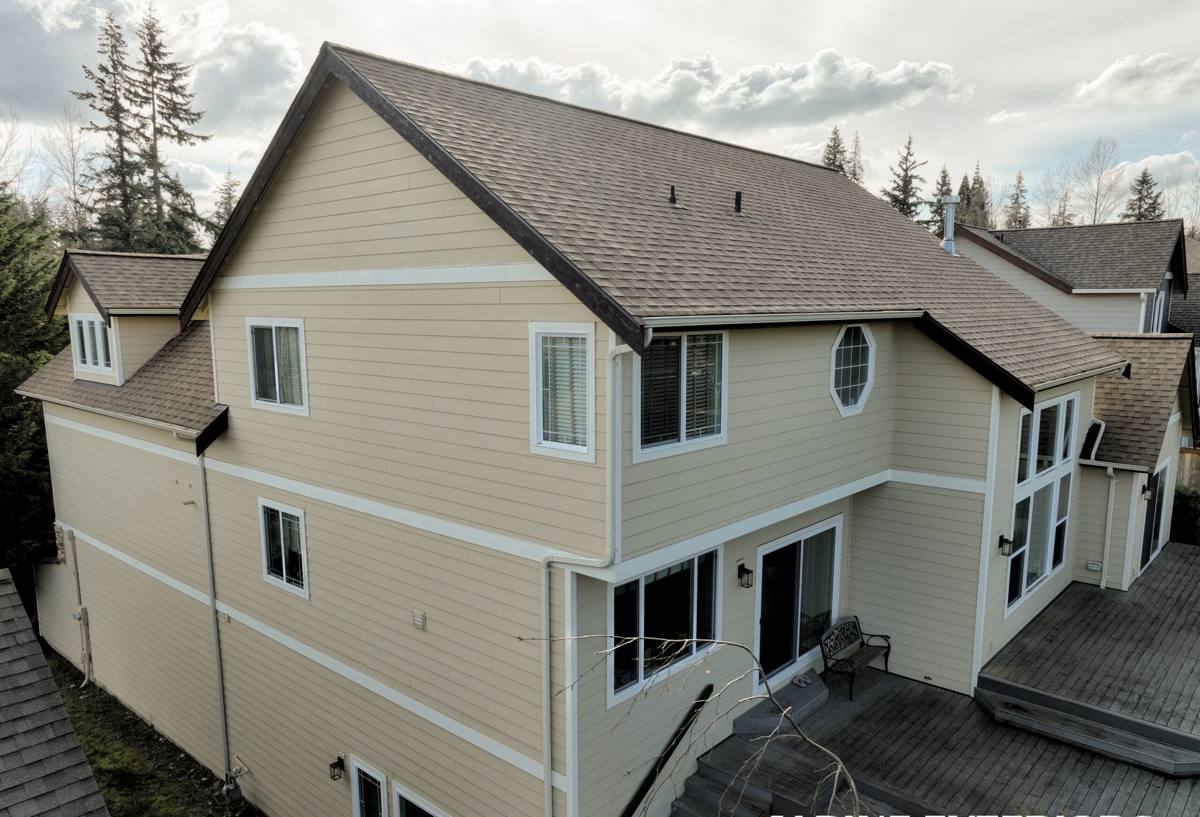
What Fidalgo Island's Marine Climate Does to a Deck
Anacortes sits right on the water, and Old Town is close enough to Fidalgo Bay and the surrounding shoreline that salt air, wind-driven rain, and shade-fed moss growth are simply part of the deal. None of these are dramatic on their own, but over years they compound, and a deck that wasn't built with them in mind starts showing problems well before it should.
Salt Air and Corrosion
Airborne salt accelerates corrosion on anything metal — fasteners, joist hangers, railing hardware, even the heads of exposed screws. On a deck a few miles inland this might never matter. On a deck in Old Town Anacortes, standard electro-galvanized fasteners can start showing rust bleed and weakening within a handful of seasons, long before the wood or decking around them is due for replacement. The fix isn't complicated — it's using the right grade of hardware from day one — but it does mean the deck can't be built to a generic spec sheet.
Driving Rain and Hidden Rot
Skagit County doesn't get the heaviest rainfall in the Pacific Northwest, but what it does get often arrives sideways off the water, driven by wind. That matters most where the deck meets the house. Rain that gets behind an unflashed ledger board doesn't dry out quickly in our climate — it sits, and it starts rotting the house's rim joist and sheathing from the inside, often for a year or more before anyone notices a soft spot underfoot. Most of the serious deck failures we get called out to inspect in this area trace back to that one connection point.
The Long Moss Season
Between the tree cover common in older Old Town lots and the extended damp season, moss and algae growth on deck surfaces isn't a rare occurrence — it's close to a given, especially on north-facing or shaded decks. Moss holds moisture against the decking surface, makes boards slick and dangerous underfoot, and on untreated wood accelerates surface decay. The design and material choices below are as much about managing moss as they are about managing rain.
Working With Old Town's Older Homes
A big part of what makes deck work in this neighborhood different from a new-construction subdivision is what we're attaching to. Old Town homes were framed decades before current deck-ledger standards existed, and every one of them is a little different once you open up the siding.
Ledger Attachment on Historic Framing
Before any ledger board goes up, we need to know what's actually behind the siding — solid dimensional lumber, older sheathing, sometimes framing that's been patched or altered over the years. On some homes the rim joist isn't in a condition to safely carry a bolted ledger connection at all, and the honest answer is a freestanding deck design that carries its own load independently of the house, rather than forcing a ledger attachment that isn't structurally sound. We'd rather have that conversation up front than build something that looks fine on day one and pulls away from the house in five years.
Permits, Setbacks, and Shoreline Rules
Anacortes requires a permit for most new deck construction, and lots in and around Old Town that are near the shoreline can fall under additional setback or shoreline management review depending on proximity to the water. We handle the permit application and pull the specifics for your lot rather than assuming a standard suburban setback applies — it's a step that's easy to skip and expensive to fix after the fact.
Choosing the Right Decking Material
There's no single "best" decking material — there's the material that fits your budget, your maintenance appetite, and how much sun or shade the deck actually gets. In a climate that pushes moss and moisture year-round, that last factor matters more here than it does in drier parts of the country.
| Material | Upfront Cost | Moss & Moisture Behavior | Maintenance |
|---|---|---|---|
| Pressure-treated fir/pine | Lowest | Needs sealing to resist moss staining and moisture uptake | Annual cleaning, periodic sealing |
| Cedar | Moderate | Naturally rot-resistant but still needs cleaning where shaded | Periodic oiling/sealing to hold color and resist moss |
| Composite decking | Higher | Doesn't absorb moisture; still needs occasional washing to keep moss from taking hold on the surface | Low — washing, no sealing |
| PVC/capped composite | Highest | Best resistance to staining and moisture damage over time | Lowest |
For a lot of Old Town homeowners, the deciding factor isn't which material performs best in isolation — it's how much time you want to spend on upkeep against how shaded the deck site is. A deck tucked under mature trees is a much stronger case for composite or capped PVC than a full-sun deck where wood will actually get a chance to dry out between rains.
The Structural Details That Actually Matter
The visible decking is the part everyone notices, but the parts that determine whether a deck lasts fifteen years or forty are underneath and out of sight.
Footings and Drainage
Footings need to be set below frost depth and, just as importantly in this climate, positioned so water doesn't pool against them. On older Old Town lots with uneven grading or clay-heavy soil, that sometimes means adjusting footing placement or adding drainage that a flatter, newer lot wouldn't need.
Flashing the Ledger
This is the single most important structural detail on any deck attached to a house in our climate. Proper ledger flashing directs water away from the house rather than letting it wick behind the ledger board, and it should be paired with a housewrap or building-paper integration that matches how the existing siding sheds water. Skipping or shortcutting this step is the number one cause of the rot failures we see on older decks in this area.
Fasteners and Hardware
Given the salt air discussed above, we use fasteners and structural hardware rated for coastal or corrosive environments — stainless steel or heavy hot-dip galvanized, depending on the application — rather than standard-grade hardware that's fine fifty miles inland but undersized for a deck near Fidalgo Bay.
Railings and Code Compliance
Any deck more than 30 inches above grade needs a code-compliant guardrail, and Washington's building code sets specific requirements for railing height, baluster spacing, and load resistance. Beyond meeting code, railing material choice matters for the same climate reasons as decking — wood railings need the same maintenance commitment as wood decking, while metal or composite railing systems hold up with less upkeep. We build railings to pass inspection and to actually hold up to years of wind and rain, not just to look right on install day.
Our Process From Estimate to Finished Deck
- Site visit: we look at your home's existing framing, grading, sun exposure, and tree cover before recommending a design or material.
- Design and quote: you get a clear scope covering materials, footing layout, railing type, and a realistic cost range — no vague allowances.
- Permitting: we handle the City of Anacortes permit application, including any setback or shoreline review specific to your lot.
- Construction: footings, framing, ledger flashing, decking, and railings, built in that order with inspections at the required stages.
- Final walkthrough: we go over the finished deck with you, including what maintenance it will and won't need.
Keeping Your New Deck Looking Good
Whatever material you choose, a little seasonal attention goes a long way in this climate. A short annual routine keeps moss from getting a foothold and catches small issues before they become expensive ones.
- Sweep leaves and debris off the deck surface regularly in fall, especially under tree cover
- Rinse or lightly scrub shaded areas where moss tends to establish, before it gets thick
- Check railing connections and fasteners for looseness or rust staining once a year
- Reseal wood decking and railings on the manufacturer's recommended schedule, not just when it looks faded
- Keep gutters and downspouts near the deck clear so runoff isn't draining directly onto or under it
- Look underneath the deck occasionally for standing water or soft framing near the ledger connection
Why Hire a Crew That Already Works Old Town Anacortes
A deck contractor who mostly builds in drier inland markets will often spec the same materials and fasteners they'd use anywhere else, because that's what their standard package includes. Working regularly in Skagit County's marine climate means we default to corrosion-resistant hardware, proper ledger flashing, and materials suited to a long moss season — not as an upsell, but as the baseline. We also know the kind of older framing common to Old Town homes and plan around it instead of being surprised by it mid-project. That familiarity is the difference between a deck that needs attention in year three and one that's still solid twenty years out.
If you're planning a new deck or replacing one that's failing in Old Town Anacortes, we're happy to take a look and walk you through your options. Fill out the form below for a free, no-pressure estimate — there's no obligation, and you'll get a straight answer about what your home and lot actually need.