 Anacortes Siding
 Why Old Town Anacortes Decks Take More Abuse Than Most
Homes in Old Town Anacortes sit close enough to the water that salt-carrying air isn't an occasional event — it's just part of the daily weather. That air works its way into every exposed fastener, hinge, and joist hanger on a deck, and over years it does what salt air always does to metal: corrode it quietly, often from inside a joint where nobody can see it happening. Add in Skagit County's long stretch of driving rain from fall through spring, and a deck here spends most of the year wet, briefly drying, and wet again.
The Moss Season Nobody Escapes
Anacortes doesn't get a real dry season the way inland Washington does. Moss and algae get a running start on any horizontal wood surface that holds shade, and a deck is practically built for it — flat boards, gaps that trap organic debris, and posts and railings that shadow half the surface at any given time. Moss holds moisture against wood long after the rain itself has stopped, which is exactly the condition that lets rot take hold in boards that still look fine from a few feet away.
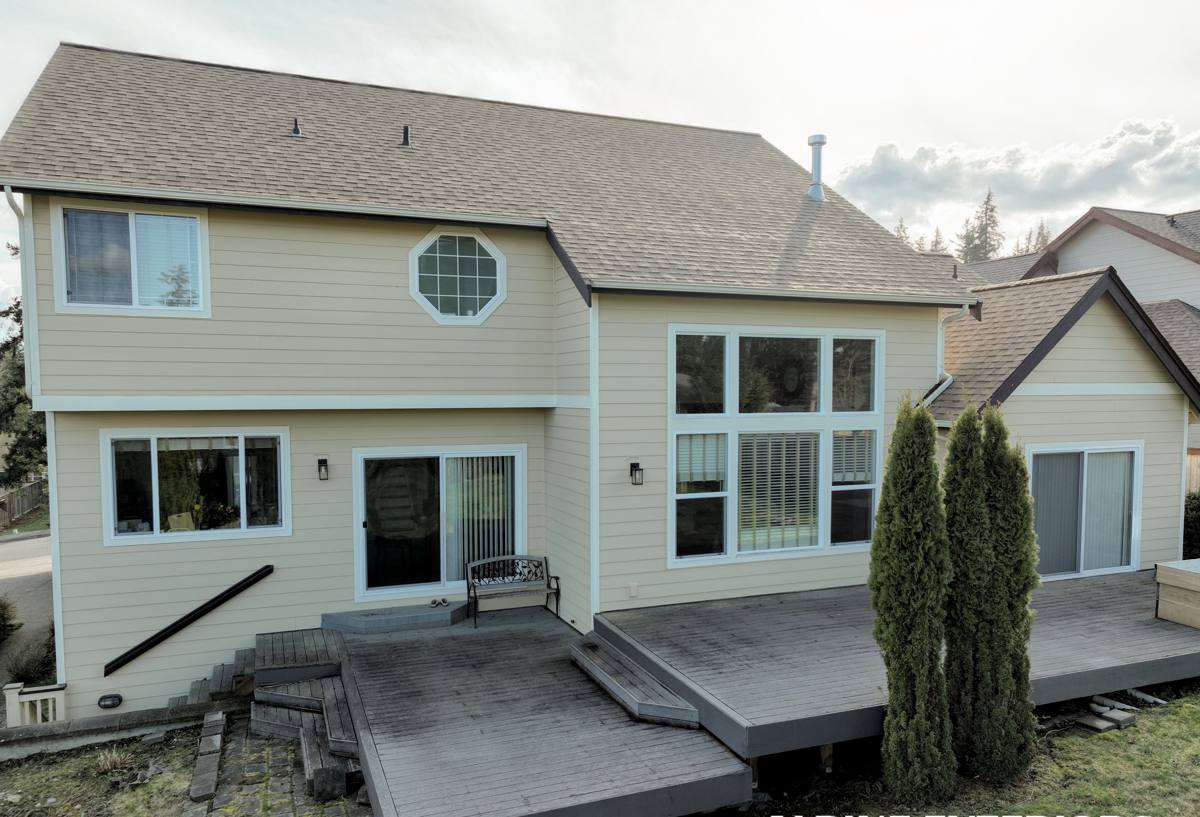
Warning Signs Worth Calling A Contractor About
Most deck failures don't happen all at once. They show up first as small things a homeowner notices and puts off for another season. Catching these early is usually the difference between a repair that costs a few hundred dollars and one that means rebuilding a good chunk of the structure.
- Boards that feel spongy or flex underfoot, especially near the house
- Rust streaks bleeding out from screw or nail heads
- Gaps between boards that have closed up tight or widened noticeably
- A stair stringer or railing post that wobbles when you lean on it
- Moss or a dark green film that comes back within weeks of cleaning
- Standing water that doesn't drain away within an hour or two of the rain stopping
- Dark staining or a visible gap where the deck meets the house wall
- Nail or screw heads that have started popping up above the board surface
What's Actually Holding the Deck Up
Decking boards are the part everyone sees, but they're the least important part structurally. What actually keeps a deck safe is underneath — the ledger, the framing, and the footings — and that's where a repair has to start if it's going to mean anything.
The Ledger Board and Its Flashing
The ledger is the board bolted directly to the house that carries a large share of the deck's total weight. It only works as long as the flashing behind it keeps water from tracking down between the ledger and the siding. When that flashing was installed poorly, or wasn't installed at all, water gets behind the wall covering and into the ledger connection itself — which is a structural problem, not a cosmetic one, since it's the joint tying the whole deck to the house.
Joists, Beams, and Posts
Joists sit hidden under the decking boards, so rot at a joist end usually goes unnoticed until someone actually gets underneath to look. The most common failure point is where a joist meets the ledger or a beam, since that's where water collects and lingers. Posts have their own version of the same problem when they sit close to grade, in landscaping beds, or anywhere soil or mulch stays damp against the wood.
Footings and Post Bases
Footings can settle or heave slightly over the years, and post base connectors — the metal brackets tying a post to its footing — corrode at roughly the same rate as any other exposed fastener in this air. A footing that's shifted even slightly changes how the whole frame carries load, which is why we check these even on repairs that look, on the surface, like they're only about the decking.
Decking Boards, Fasteners, and Railings
The boards and railings take the most visible wear, but they also tell an honest story about what's happening underneath. Uneven wear patterns, fastener corrosion, and railing posts that have loosened all point back to moisture getting somewhere it shouldn't. Washington's building code also has specific requirements for railing height and baluster spacing, which matters any time a railing section is being replaced rather than just patched.
Repair or Replace? How We Make That Call
Not every deck problem means starting over, and not every deck can be saved with surface repairs. We look at the framing condition first, since that's what determines whether a repair will actually hold.
| Factor | Points Toward Repair | Points Toward Full Replacement |
|---|---|---|
| Framing and joists | Solid, dry, no soft spots when probed | Rot found at multiple joist ends or the beam |
| Ledger board and flashing | Flashing intact, ledger dry | Missing flashing or rot at the house connection |
| Decking surface | Isolated soft or split boards | Widespread cupping, splitting, or fastener failure |
| Age of original structure | Newer construction with a localized problem | Original decking nearing or past its practical service life |
| Budget and timeline | Targeted fix fits the goal | Repeated repairs would cost more over time than one rebuild |
Materials That Actually Hold Up in This Climate
Fastener choice matters more here than in drier parts of the state. Standard coated screws and nails corrode faster in salt-influenced air, so we favor stainless steel or hot-dip galvanized hardware for anything structural — joist hangers, post bases, and ledger bolts — even though it costs more upfront. That difference in fastener quality is often the single biggest factor in how long a repair actually lasts.
Decking material is a more personal decision, and we're upfront about the trade-offs rather than pushing one option. Cedar looks and smells the part but needs re-sealing on a regular schedule to keep water out of the grain. Pressure-treated fir or hem-fir is the most economical option and performs well structurally, but it moves, checks, and needs upkeep as it weathers. Composite decking cuts down on the sanding, staining, and splinter concerns of wood, but it isn't maintenance-free — it still needs proper gapping and airflow underneath to avoid trapping moisture against the framing below it, and it comes with its own installation tolerances that matter more than people expect.
Moss, Algae, and Keeping Water Moving
The biggest ongoing maintenance issue for any deck in this area isn't the wood itself — it's what grows on it. Proper board spacing lets water and debris pass through instead of collecting in the gaps, and that spacing is easy to lose over time as boards swell, shrink, and get reinstalled slightly tighter than they should be. When we repair a deck, we pay attention to that spacing on every board we touch, not just the ones that are visibly damaged. For upkeep between repairs, a soft wash with an appropriate cleaner works better than a pressure washer, which can drive water into the wood grain or strip a protective finish faster than it removes the moss.
Our Deck Repair Process
We walk every deck the same way, whether the call started as "one soft board" or "the whole thing feels off."
- On-site inspection of the decking, railings, stairs, and visible framing
- Probing suspect boards, posts, and the ledger connection with a moisture meter and awl
- A written estimate that separates what's cosmetic from what's structural
- A clear repair-versus-replace recommendation, with the reasoning explained
- Repair work performed with corrosion-resistant fasteners and proper flashing details
- Site cleanup, including removal of any old decking or hardware
- A final walkthrough so you know exactly what was done and why
Permits and Code Considerations in Anacortes and Skagit County
Deck work that touches structural elements — replacing framing, changing footings, or rebuilding a significant portion of the deck attached to the house — typically requires a permit through the local jurisdiction, and railing height and guardrail spacing are governed by building code any time a railing section is replaced rather than patched. Purely cosmetic work, like swapping a handful of decking boards without touching the frame, generally falls outside that requirement, but the line between the two isn't always obvious from a homeowner's side. We factor permitting into the scope of work when it applies, so there aren't surprises partway through the job.
Why a Crew That Already Works Old Town Anacortes Matters
Old Town Anacortes is a mix of home ages, lot sizes, and original construction methods, and that variety matters more on a deck than people assume. A ledger connection built decades ago doesn't always meet the same standard as one built last year, and a crew that's worked this neighborhood before knows what to expect before they even pull the first board. Narrower lots and established landscaping also mean access for equipment and material staging takes more planning than it would on a newer, more open property — the kind of detail that's easy to underestimate until it slows down a job. Knowing the neighborhood's typical failure points, from ledger flashing to shaded framing that never fully dries, means less time diagnosing and more time actually fixing the problem.
If you're noticing soft spots, rust stains, or a deck that just feels different underfoot than it used to, we're happy to come take an honest look. The estimate is free, there's no pressure attached to it, and you'll get a straight answer about whether you're looking at a repair or something bigger — just fill out the form below to get started.