 Anacortes Siding
 Old Town Anacortes Sits Right at the Water's Edge
Old Town Anacortes is one of the older residential pockets of the city, tucked close to the water on Fidalgo Island in Skagit County. Homes here range from older construction to more recent remodels, but nearly all of them share the same exposure: they sit close enough to the water that salt air, wind, and moisture are a constant part of the equation, not an occasional event. That proximity is part of what makes the neighborhood appealing, and it's also exactly why siding decisions here carry more weight than they would on a home fifteen miles inland.
We install James Hardie fiber cement siding, and only James Hardie fiber cement siding, on every job we take on — including the ones in Old Town Anacortes. This page walks through why that specific product makes sense for this specific neighborhood, what a correct installation actually looks like, and how we approach a job here.
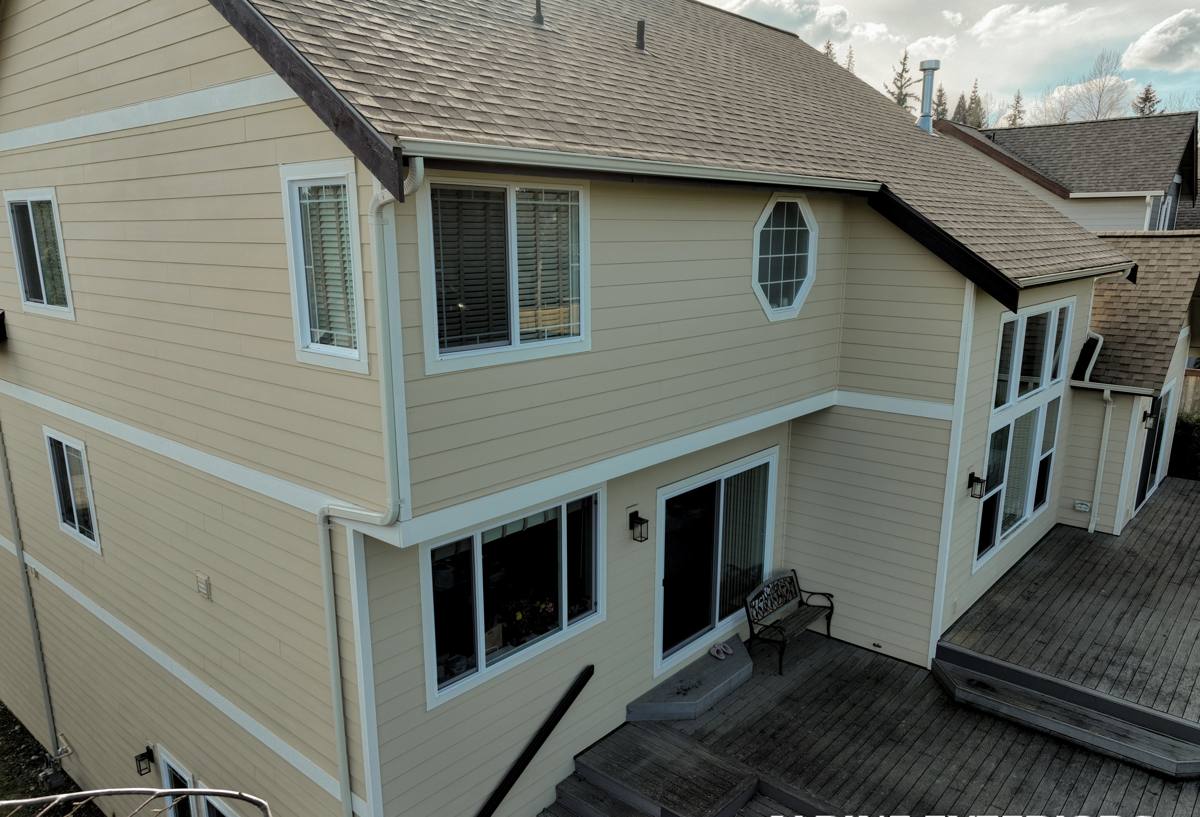
What Salt Air, Driving Rain, and a Long Moss Season Do to a House
Three things define exterior wear in this part of Anacortes, and they compound each other rather than acting independently.
Salt Air and Metal Fatigue
Homes close to the water take on airborne salt that settles on every exterior surface, not just the siding. Over years, salt exposure accelerates corrosion on fasteners, flashing, and any exposed metal trim. A siding system that relies on ordinary fasteners or thin coatings will show that wear years before the siding material itself gives out — rust streaks, loosened panels, and failed flashing joints are usually the first visible sign, and by the time they show up, water has often already found a way behind the wall.
Driving Rain, Not Just Rain
Anacortes gets weather that moves in off the water, and it doesn't always fall straight down. Wind-driven rain pushes moisture sideways into siding laps, corner trim, and window flashing in a way that a calm, straight-down rain never would. Siding and trim that aren't detailed to shed rain coming in at an angle tend to fail first at seams and corners — exactly the joints that a rushed installation is most likely to shortcut.
A Moss Season That Runs Long
Shaded and north-facing walls in this climate stay damp for extended stretches of the year, and that dampness is exactly what moss and mildew need to establish. Once organic growth takes hold on a wall, it holds moisture directly against the surface underneath it. On a wood-based product, that's a direct path to rot. On fiber cement, it's mostly cosmetic if the wall assembly behind it is sound — but only if it was built that way from the start.
Why We Install Only James Hardie Fiber Cement Here
We narrowed our siding lineup to one manufacturer and one material after years of exterior work around Skagit County, watching which products actually held up to this kind of sustained coastal exposure and which ones quietly turned into maintenance problems. For a neighborhood like Old Town Anacortes, sitting this close to the water, the case for fiber cement is straightforward:
- Non-combustible core: Fiber cement doesn't feed a fire, which matters for both household safety and insurance underwriting.
- Factory-applied ColorPlus finish: The color is baked on under controlled conditions rather than field-applied, so it resists the fading and chalking that salt air and strong reflected light off the water accelerate.
- Climate-engineered HZ formulations: Hardie builds different product formulations for different climate zones, including versions engineered for sustained moisture exposure rather than a single generic product sold everywhere in the country.
- Dimensional stability: Fiber cement doesn't swell, cup, or warp the way wood-based or engineered wood siding can after repeated wet-season moisture cycles.
- A strong transferable warranty: Provided the installation follows spec, Hardie's warranty gives a homeowner real protection rather than a marketing claim — and it's a genuine selling point if the home changes hands down the road.
We don't install LP SmartSide, vinyl, Cemplank, Allura, primed spruce, or cedar. Each has its place in the broader market, and plenty of homeowners elsewhere are satisfied with them. But for a neighborhood dealing with this much sustained salt and moisture exposure, we'd rather stand behind one system we trust completely than offer a cheaper option that shifts maintenance risk onto the homeowner a few years down the line.
Choosing the Right Hardie Product for an Old Town Home
| Product Line | Best Use | Why It Fits This Neighborhood |
|---|---|---|
| HardiePlank lap siding | Most single-family homes, traditional and updated styles alike | Traditional lap profile sheds wind-driven rain well when installed with correct overlap and flashing |
| HardiePanel vertical siding | Accent walls, gables, and modern remodels | Clean lines that work well on the mix of older and updated homes found in this part of Anacortes |
| HardieShingle siding | Cottage and craftsman-style homes | Textured, traditional look without the moisture absorption of real wood shingle near the water |
| HardieTrim boards | Corners, window and door casing, fascia | Factory-finished trim resists the same salt and moisture exposure as the field siding |
Profile and color choice come down to the individual home, but the underlying decision — what actually holds up given the home's exposure — stays consistent across the neighborhood.
What a Correct Installation Looks Like This Close to the Water
Working Around What's Already There
Many homes in this part of Anacortes have gone through at least one prior siding job, and some still have original material. Before anything new goes up, we check what's underneath: whether the sheathing has taken on hidden moisture, whether old flashing is still doing its job, and whether the wall assembly needs repair before new siding can go on top of it. Installing fiber cement — or anything else — over a wall that's already compromised just hides a problem instead of fixing it.
Fastening and Flashing Detail
Given the salt exposure, fastener selection matters more here than it would inland — we use fasteners rated for this kind of environment, not whatever is cheapest or fastest to run. Flashing at every horizontal joint, window head, and corner is installed to actually shed wind-driven rain, not just to look finished. Correct clearance from grade and from any hardscaping keeps siding from wicking moisture up from below, which is a common failure point on older homes built before that detail was standard practice.
Joints, Caulking, and Drainage
Panel joints are lapped and sealed correctly rather than simply butted together and caulked over. A house wrap and drainage plane behind the siding does the real work of managing bulk water; caulk is a backup detail, not the primary defense. On a wall this close to the water, skipping any one of these steps tends to show up within a season or two, not years down the road.
How Fiber Cement Compares for This Kind of Exposure
| Material | Salt Air / Moisture Performance | Ongoing Maintenance | Typical Lifespan |
|---|---|---|---|
| James Hardie fiber cement | Engineered for sustained moisture exposure; non-combustible | Occasional wash-down; factory finish resists fading | Multiple decades when installed to spec |
| Vinyl siding | Can become brittle under salt, UV, and temperature swings | Low, but fading and chalking can't be repainted easily | Variable; shorter in direct coastal exposure |
| Cedar siding | Absorbs moisture; needs consistent sealing to resist rot | Regular refinishing and inspection required | Depends heavily on maintenance discipline |
| LP SmartSide | Engineered wood core; sensitive to sustained moisture at cut edges and joints | Requires diligent sealing and touch-up | Depends on installation quality and upkeep |
This isn't a claim that the alternatives fail outright — plenty of homes elsewhere carry them without major issues. It's that the trade-offs stack up differently on a lot this close to salt water, and we've made a professional decision about which system we're willing to warranty our work on.
Maintaining Fiber Cement Siding in a Marine Neighborhood
Fiber cement is low-maintenance compared to most alternatives, but "low-maintenance" isn't "no-maintenance" this close to the water. A simple seasonal routine keeps a Hardie installation performing the way it's designed to:
- Rinse salt residue and general grime off the siding surface once or twice a year, especially on walls facing the water
- Check shaded and north-facing walls for moss or mildew buildup and clean it before it spreads
- Inspect caulking at trim joints and window surrounds for cracking or separation
- Confirm gutters and downspouts are directing water away from the foundation and siding base
- Look for any signs of staining or soft spots near grade, where splash-back and ground moisture are most likely to cause problems
- Touch up any impact damage promptly rather than letting exposed edges take on moisture
Our Process for a Job in Old Town Anacortes
Every job in this neighborhood starts with a walk-through of the home, checking existing siding condition, moisture readings where we can get them, and the specific orientation of the house relative to wind and water exposure. From there, we scope tear-off and any substrate repair honestly before we ever price the new siding. Installation follows Hardie's spec for fastening, flashing, and clearance, adjusted for the specific wall orientations that take the worst of this neighborhood's weather. We finish with trim, caulking, and a final walk-through before calling the job done.
Why a Crew That Already Works This Neighborhood Matters
A crew that's worked Old Town Anacortes regularly knows which walls in this neighborhood take the worst of the wind off the water, where moss tends to establish first, and which flashing details actually matter for a lot this close to the shoreline — not just what a spec sheet says in general. That local experience shows up in the small decisions on install day: where extra flashing attention pays off, which fastening details are worth the added time, and how to sequence a job around this area's weather windows. It's the difference between a siding job that looks right on day one and one that's still performing correctly a decade in.
If you're considering new siding for a home in Old Town Anacortes, we're glad to take a look and give you an honest read on what your property needs. Reach out using the form below to schedule a free, no-pressure estimate.