 Anacortes Siding
 Old Town Anacortes Roofs Work Harder Than Most
Old Town Anacortes sits close to the water on Fidalgo Island, and that proximity shapes everything about how a roof ages here. Homes in this part of town tend to be older, many built well before today's ventilation codes and synthetic underlayments existed. Add in the marine air coming off the Sound, the near-constant drizzle through fall and winter, and the shaded, damp conditions that let moss take hold, and you have a roofing environment that's genuinely tougher on materials than what you'd find twenty miles inland in Skagit County. A roof replacement here isn't just about swapping old shingles for new ones. It's about correcting decades of moisture exposure and building back a system that's actually suited to this microclimate.
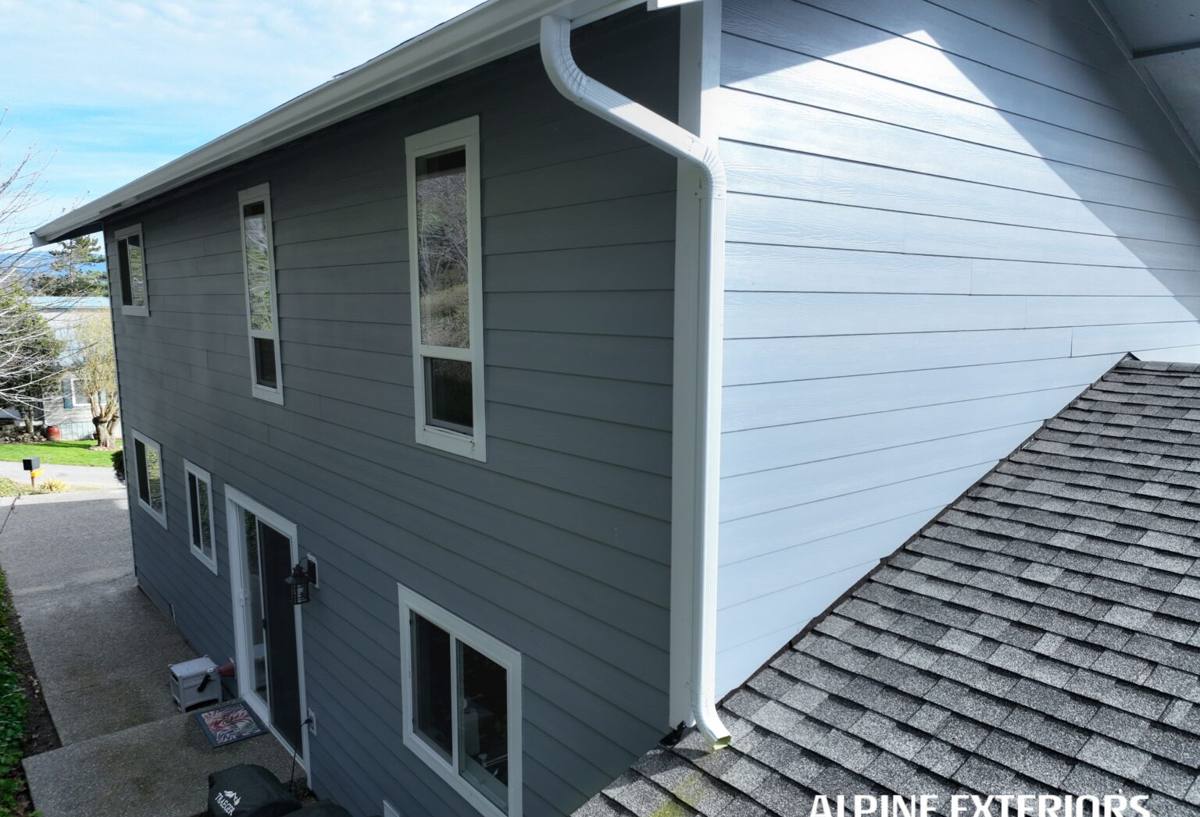
What Older Homes in This Neighborhood Actually Need
Many Old Town homes still have their original roof decking, sometimes skip-sheathed boards instead of plywood or OSB, and ventilation that was adequate for the building codes of their era but falls short by modern standards. When we replace a roof on one of these homes, we're not just working from a generic checklist. We're looking at:
- Whether the existing decking is sound enough to nail into, or needs sistering and partial replacement
- Whether the attic or roof cavity has enough intake and exhaust ventilation to keep moisture from condensing under the new roof
- How the roofline interacts with additions, bump-outs, or dormers that are common on older Anacortes homes and create extra flashing work
- Whether the home's character — trim details, roof pitch, visible fascia — should guide the material choice so the new roof still looks right on an older house
Skipping this assessment is how a homeowner ends up with a roof that looks fine for a season or two and then starts showing problems that trace straight back to what was underneath it.
Why Roof Decking Condition Gets More Attention Here
On a lot of Old Town homes, the roof deck has been slowly absorbing moisture for years through minor leaks, condensation, or just age. You can't always see this from the ground or even from inside the attic without pulling back the old roofing. Part of a correct tear-off is inspecting every section of decking as it's exposed, not assuming it's fine because the old roof "looked okay" from the street.
The Toll of Salt Air, Driving Rain, and Moss Season
Three things define roofing conditions in Old Town Anacortes, and each one attacks a roof differently.
Salt air accelerates corrosion on any exposed metal — flashing, fasteners, vent caps, and gutter hardware. Standard galvanized fasteners and lower-grade flashing corrode faster this close to the water than they would even a few miles inland, which is why material selection for metal components matters more here than in a lot of Skagit County.
Driving rain, especially during fall and winter storms, doesn't just fall straight down — wind pushes it sideways and up under laps, edges, and flashing details that would stay dry in a calmer climate. Every seam, valley, and penetration on the roof has to be built to shed water that's coming from more than one direction.
Moss season runs long here. Shaded roof sections, north-facing slopes, and areas under overhanging trees stay damp for months at a time, which is exactly what moss and algae need to establish. Once moss takes hold, it lifts shingle edges, holds moisture against the roof surface, and shortens the life of even a well-installed roof if it isn't controlled.
Choosing the Right Roofing System for This Location
There's no single "best" roofing material for every home, but some options handle Old Town's conditions better than others. We walk homeowners through the real trade-offs rather than pushing one product.
| Material | How It Handles Salt Air & Moisture | Moss Resistance | Typical Lifespan |
|---|---|---|---|
| Architectural asphalt shingle | Good, with corrosion-resistant flashing and fasteners | Moderate; benefits from zinc/copper strips | 25-30 years |
| Standing seam metal | Very good when specified with a coastal-rated coating and stainless fasteners | High; sheds moss more readily due to smooth surface and pitch | 40-50+ years |
| Basic 3-tab asphalt | Fair; thinner profile is more sensitive to wind-driven rain at edges | Lower; retains moisture longer along tab edges | 15-20 years |
| Synthetic/composite shake | Good, but installation detailing is more sensitive to get right | Moderate | 30-40 years |
For most Old Town homes, we recommend architectural asphalt as the practical middle ground, or standing seam metal when a homeowner wants the longest possible service life and doesn't mind the higher upfront cost. Basic 3-tab shingle is rarely the right call this close to the water — it simply doesn't hold up as well against driving rain and moss the way a heavier profile does.
What a Correct Roof Replacement Actually Involves
A roof replacement done right, in this climate, goes well beyond removing old shingles and laying down new ones. The details that get skipped on a rushed job are usually the ones that cause the next leak.
Tear-Off and Deck Inspection
Full removal of the old roofing down to the deck, with every section inspected for rot, delamination, or soft spots before anything new goes down. Any compromised decking gets replaced, not covered over.
Ice and Water Shield at Vulnerable Areas
Self-adhering waterproof membrane at eaves, valleys, and around penetrations like chimneys and skylights — the spots most likely to take on wind-driven rain.
Synthetic Underlayment
A full synthetic underlayment across the whole deck as a second line of defense, since even a well-installed shingle or metal roof relies on what's underneath it to stay dry through a wet Pacific Northwest winter.
Flashing and Fasteners Rated for Coastal Exposure
Corrosion-resistant flashing and fasteners at every valley, wall intersection, and penetration, since this is where salt air does the most damage to lower-grade materials over time.
Ventilation Correction
Balanced intake and exhaust ventilation, adjusted for the specific attic or roof cavity, so moisture from inside the home doesn't get trapped against the new roof deck.
Our Process, From Estimate to Cleanup
We keep the process straightforward because homeowners deserve to know what's happening at each stage.
- On-site inspection of the current roof, attic ventilation, and any visible problem areas
- A written estimate that spells out material choice, scope of work, and what happens if we find deck damage once tear-off starts
- Scheduling that accounts for Anacortes' rainy stretches, so we're not opening up a roof ahead of a storm system
- Full tear-off, deck inspection and repair, underlayment, flashing, and installation of the new roofing system
- Site cleanup, including magnetic sweep for stray fasteners in yards and driveways
- Final walkthrough so you can see the finished work and ask questions before we consider the job done
Signs Your Old Town Anacortes Roof May Need Replacing
Not every roof problem means full replacement, but these are the signs worth taking seriously in this neighborhood specifically:
- Shingles that are curling, cupping, or losing granules faster than expected for their age
- Moss buildup that keeps coming back within months of cleaning, even after treatment
- Rusted or corroded flashing, vent caps, or fasteners visible from the ground
- Staining or sagging on interior ceilings, especially after a heavy rain event
- A roof that's 20+ years old and has never had ventilation or underlayment upgraded
- Daylight visible through the attic roof deck, or damp insulation near the eaves
Why Local Experience in This Neighborhood Matters
A crew that's worked other roofs in Old Town Anacortes already knows what to expect before the first shingle comes off: the older decking common to homes of this era, the extra flashing work around additions and dormers, the moss patterns tied to shade and pitch on specific streets, and how far wind-driven rain actually travels under an eave here versus a drier part of the county. That experience shows up in fewer surprises mid-project and a roof that's built for the conditions it will actually face, not a generic spec sheet. If your home falls within a designated historic area or has specific neighborhood guidelines, we're also glad to help you understand what that might mean for material choice or approval before work begins.
Keeping Your New Roof Performing After Installation
A correct installation is most of the battle, but a little maintenance extends it further in this climate. Keep gutters clear so water isn't backing up under the roof edge during heavy rain. Have moss growth addressed early, before it has a chance to lift shingle edges or hold moisture against metal panels. And if you notice branches overhanging the roof, trimming them back reduces both shade (which slows moss) and the risk of debris damage during winter windstorms off the Sound.
If your Old Town Anacortes roof is showing its age or you're just not sure how much life it has left, we're happy to take a look and give you a straightforward, no-pressure estimate. Use the form below to get started.