 Anacortes Siding
 Siding Built for Old Town Anacortes, Not Just Installed There
Old Town Anacortes sits close to the water on Fidalgo Island, in one of the older, more established residential pockets of the city. Many of the homes here were built well before modern house-wrap and rainscreen detailing were standard practice, which means the siding on a lot of these houses is doing more work than it was ever designed to do. When we install siding in this part of Anacortes, we're not just matching a color to a house — we're accounting for a marine climate that is genuinely harder on exterior materials than most inland Skagit County neighborhoods.
This page is about one job, done right, in one place: full siding installation for Old Town Anacortes homes. We install James Hardie fiber cement exclusively, and we'll explain exactly why that matters here, what a correct installation actually involves, and how our process works from first look to final walk-through.
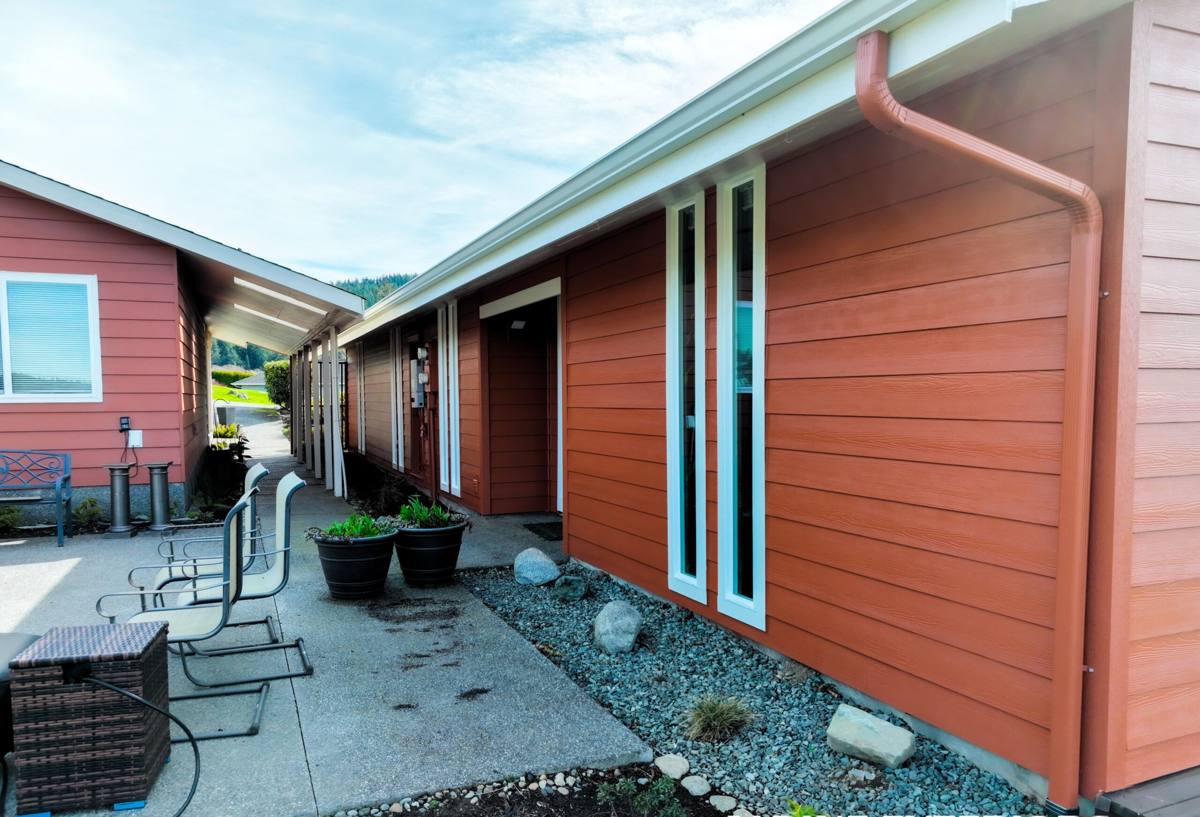
What This Climate Actually Does to Siding
Anacortes' location on Fidalgo Island, surrounded by the Salish Sea, means Old Town homes deal with a combination of stressors that inland siding jobs rarely see all at once.
- Salt air: Airborne salt accelerates corrosion on fasteners, flashing, and any exposed metal trim, and it slowly breaks down cheap paint finishes faster than a standard exterior coat can handle.
- Driving rain: Wind off the water doesn't just drop rain straight down — it pushes it sideways into wall assemblies, seams, and butt joints, which punishes any siding system with weak water management.
- Long moss season: Western Washington's wet stretch runs long, and shaded, north-facing walls near mature trees stay damp for extended periods. Moss and algae find a foothold anywhere moisture lingers, and that constant dampness is exactly what wood-based and wood-composite siding products struggle with over time.
None of this means Old Town Anacortes is an unlivable climate for siding — it means the material and the installation detailing both have to be right. A product that performs fine in a dry inland climate can underperform here, and installation shortcuts that would be minor elsewhere become real problems on a lot exposed to salt spray and sideways rain.
Why We Standardized on James Hardie
We install James Hardie fiber cement siding exclusively. We don't install vinyl, LP SmartSide, primed spruce, cedar, or other fiber cement brands like Allura or Cemplank. That's a deliberate standard, not a default, and in a marine climate like Anacortes the reasoning holds up:
- Fiber cement composition: Hardie's boards are cement, sand, and cellulose fiber — not wood and not vinyl. That means no wood fiber for moisture to swell, rot, or feed moss and mildew growth, and no vinyl panel that can warp or become brittle from UV and temperature swings near open water.
- Non-combustible material: Fiber cement doesn't contribute fuel to an exterior fire, which matters anywhere in Western Washington given regional wildfire risk in dry summer stretches.
- ColorPlus factory finish: Rather than field-applied paint, Hardie's ColorPlus finish is baked on in a controlled factory process, giving it better fade and chip resistance in exposed, sun-and-salt conditions than most site-applied coatings.
- Climate-engineered HZ product lines: Hardie makes region-specific formulations (HZ5 for our climate zone) engineered for moisture cycling and freeze-thaw performance appropriate to the Pacific Northwest.
- Warranty backing: Hardie's transferable limited warranty is a meaningful commitment from a manufacturer that's been producing fiber cement at scale for decades, which carries weight when a product has to perform for 30-plus years on a waterfront-adjacent lot.
We're not going to claim other products are junk — vinyl and engineered wood both have legitimate uses in the right setting. But for the specific combination of salt exposure, driving rain, and sustained damp shade that Old Town Anacortes homes deal with, we've made the call that Hardie fiber cement is the product we're willing to stand behind, and it's the only one we put on a house.
What a Correct Siding Installation Actually Involves
The siding product is only part of the equation. Most siding failures we see — moisture intrusion, premature paint failure, buckling — trace back to installation details, not the material itself. A correct install in a climate like this includes:
Substrate and Moisture Barrier Prep
Before any board goes up, the wall sheathing gets inspected for existing rot or moisture damage, especially around window and door openings, which are the most common entry points for wind-driven rain. A weather-resistant barrier is installed correctly — lapped shingle-style, top over bottom, so water sheds outward rather than working its way behind the barrier.
Flashing at Every Penetration
Windows, doors, hose bibs, vents, and any other wall penetration need proper flashing integrated with the weather barrier, not just caulked over. Caulk is a maintenance item, not a waterproofing strategy — flashing is what actually keeps driving rain out.
Rainscreen or Drainage Gap Where Appropriate
On exposed elevations facing prevailing wind and rain, a drainage gap behind the siding lets any moisture that does get past the cladding drain and dry out instead of sitting against the wall assembly. This detail matters more in a marine climate than almost anywhere else in the state.
Fastener Selection and Placement
Corrosion-resistant fasteners, placed and set according to Hardie's published fastening schedule — not overdriven, not underdriven — hold the boards correctly without cracking the material or leaving gaps that let water behind the panel.
Manufacturer-Specified Clearances
Proper clearance from grade, roof lines, decks, and patios keeps siding out of standing water and constant splash-back, which is one of the most common causes of early siding failure on any home, coastal or not.
Our Process for an Old Town Anacortes Home
| Step | What Happens |
|---|---|
| 1. On-site assessment | We walk the exterior, check existing siding and sheathing condition, and look specifically at north- and west-facing walls for moisture and moss buildup. |
| 2. Scope and estimate | We put together a written scope covering tear-off, any sheathing repair needed, flashing details, and the Hardie product line and color for your home. |
| 3. Tear-off and substrate check | Old siding comes off, sheathing is inspected and repaired where needed before anything new goes up — covering damaged sheathing only hides a problem. |
| 4. Weather barrier and flashing | House wrap, flashing, and drainage detailing are installed per manufacturer spec, with extra attention on wind-exposed elevations. |
| 5. Hardie installation | Boards, trim, and accessories are installed to Hardie's fastening and clearance specifications. |
| 6. Final walk-through | We review the completed work with you, including care and maintenance notes specific to a marine climate. |
Why Hiring a Crew That Already Works Old Town Anacortes Matters
A siding crew that mostly works dry, inland projects can install a technically fine job on paper and still miss the details that matter on a waterfront-adjacent lot. Working regularly in Anacortes and along Skagit County's coastal areas means we already have a working understanding of:
- How older Old Town homes were originally built and where their sheathing and flashing tend to need attention when siding comes off.
- Which elevations on a given lot take the brunt of wind-driven rain off the water, and where drainage detailing needs the most attention.
- How to sequence work around Anacortes' weather windows so a job isn't rushed into a wet stretch mid-install.
- Local permitting expectations for exterior work in Skagit County and the City of Anacortes.
That familiarity doesn't replace good installation practice — it just means fewer surprises and fewer assumptions on a job that's happening in a genuinely tougher climate than most of the state deals with.
Signs Your Old Town Anacortes Home May Need New Siding
Not every issue means a full replacement, but these are worth a professional look, especially on a coastal-exposed home:
- Persistent moss or algae staining that returns shortly after cleaning
- Soft or spongy spots when you press on the siding, especially near the bottom courses
- Paint that's peeling, bubbling, or chalking well before you'd expect a full repaint
- Visible gaps, warping, or buckling at seams and butt joints
- Rising energy bills that suggest the wall assembly isn't sealing the way it should
- Interior signs like musty smells or discoloration on walls that share an exterior with a suspect siding section
What Installation Typically Costs
Siding costs vary based on square footage, home complexity, trim detailing, and how much sheathing repair is needed once old siding comes off — we won't quote a number without seeing the house. In general, expect the total to reflect three cost drivers:
| Cost Factor | Why It Matters |
|---|---|
| Home size and wall complexity | More corners, dormers, and trim details mean more labor and material waste, regardless of siding brand. |
| Substrate condition | Homes with hidden moisture damage from years of wind-driven rain often need sheathing repair before new siding goes on — this is common in Old Town's older housing stock. |
| Product and finish selection | Hardie's plank profiles, panel systems, and ColorPlus color options each carry different material costs. |
A firm number only comes after we've actually looked at your walls and sheathing, which is part of why we start every project with an on-site assessment rather than a phone estimate.
Caring for Hardie Siding in a Marine Climate
Fiber cement is low-maintenance compared to wood or repainted vinyl, but "low-maintenance" isn't "no-maintenance" — especially this close to the water. A periodic rinse to keep salt residue and organic buildup from accumulating, prompt attention to any caulking that shows wear around trim, and keeping gutters clear so water isn't overflowing onto wall sections will all extend the life of a correctly installed system well beyond what a neglected install would achieve, regardless of the brand.
Ready to Talk About Your Siding?
If you're in Old Town Anacortes and dealing with siding that's showing its age against the salt air and rain, we're glad to come take a look. The estimate is free, there's no pressure, and you'll get a straight answer about what your home actually needs — use the form below to get started.