 Anacortes Siding
 Windows in Old Town Anacortes Work Harder Than Most
Old Town Anacortes sits close enough to the water that its houses live with conditions most inland Skagit County neighborhoods never deal with. Salt-laden air off the surrounding channels settles on siding, trim, and window hardware year-round. Wind-driven rain off the water hits window walls at angles that a standard installation in a more sheltered neighborhood was never designed for. And the long stretch of gray, wet months every fall through spring keeps north- and shade-facing exteriors damp long enough for moss and algae to take hold on sills, sashes, and the wood trim around older window openings.
None of that is dramatic on its own. But it's constant, and constant is what wears out a window. Salt air corrodes cheap fasteners and hardware faster than plain moisture does. Driving rain finds gaps in flashing and old caulk lines that a dry-climate window never had to resist. And moss holds water against wood longer than open air ever would, which is exactly the condition that rots sills and lets rot travel into the framing behind them. A window replacement in this neighborhood isn't just a swap-out — it's an opportunity to correct decades of exposure that the original installation was never built to handle.
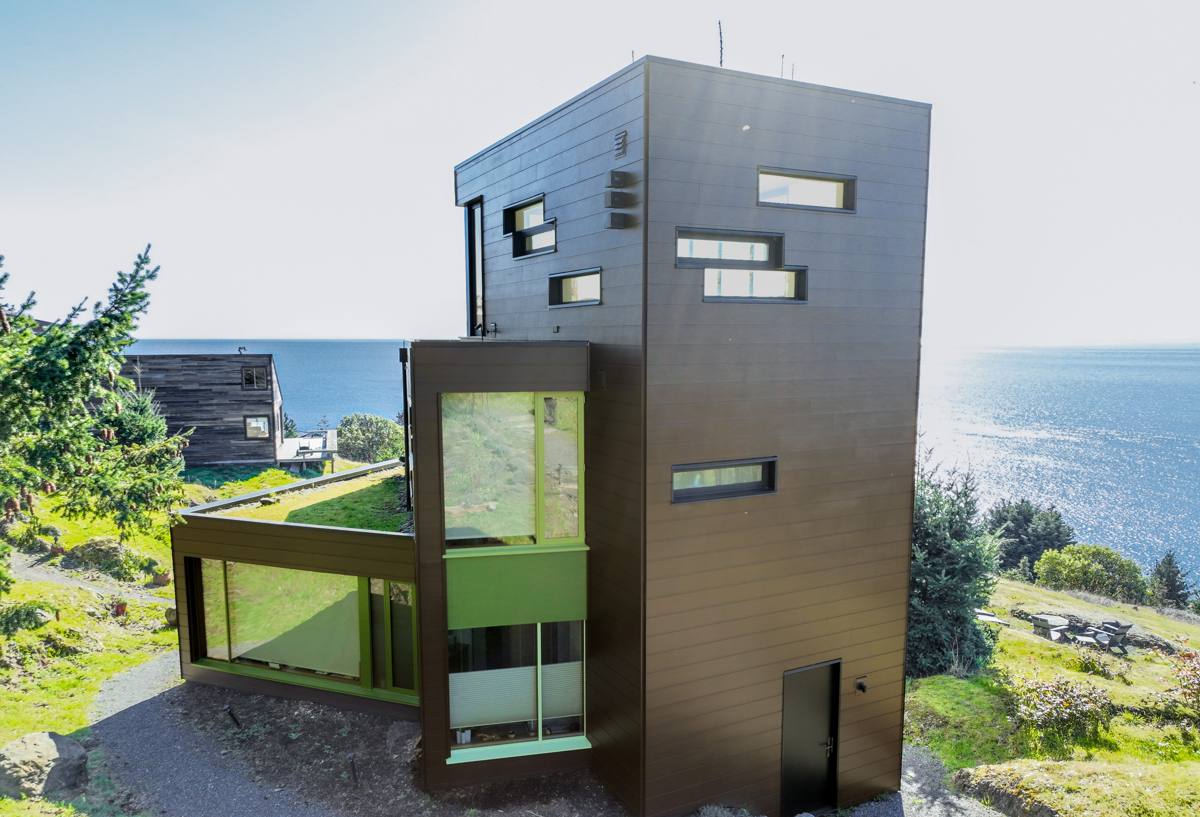
What Old Town's Older Housing Stock Means for a Window Job
A lot of homes in Old Town Anacortes are older builds, and that changes how a window replacement should be approached. Original openings are frequently not standard modern sizes, so off-the-shelf replacement units don't always drop in clean — a crew that doesn't measure carefully ends up either forcing an ill-fitting window or cutting into framing that didn't need to be touched. Many of these homes also still have original wood-frame, single-pane windows, sometimes with storm windows added later as a patch rather than a real fix. That combination means poor insulation, drafts, and — critically — decades-old flashing details (or none at all) hidden behind the trim.
Homes with real age on them also tend to have character worth preserving: original trim profiles, proportions, and sightlines that a mismatched modern window can throw off from the street. A careful contractor treats the exterior appearance as part of the job, not an afterthought, matching sightlines and trim details so the replacement looks like it belongs on the house rather than like a patch.
Common Conditions We Find Behind Old Windows
- Failed or missing flashing that let water track behind the siding for years without visible signs indoors
- Soft or delaminating wood at the sill and lower corners, often hidden under paint that looks fine from the outside
- Non-standard rough openings from early-era construction or prior remodels
- Storm windows or interior plastic film used to mask drafts rather than fix them
- Hardware and fasteners showing corrosion from long-term salt air exposure
Signs It's Time to Replace, Not Just Repair
Not every problem window needs full replacement — sometimes reglazing, new weatherstripping, or a hardware fix solves it. But in a climate like this, certain signs point to replacement being the more honest recommendation.
- Visible gaps, drafts, or condensation between panes that won't clear
- Wood that's soft, spongy, or crumbling at the sill or lower sash — a sign of rot that repair won't stop
- Persistent moss or dark staining on the frame or sill that keeps returning after cleaning
- Windows that are difficult to open, close, or lock, especially near the coast where corroded hardware is common
- Single-pane glass with no storm window, leading to noticeably higher heating costs in winter
- Paint that keeps failing on the same window no matter how often it's redone — usually a sign of moisture working from behind
Choosing Materials for a Salt-Air, High-Rain Climate
Not every window product performs the same way once it's dealing with salt air and sustained wet weather. We steer homeowners toward materials and hardware that hold up to this specific environment rather than whatever is cheapest to stock. The trade-offs are worth understanding before you decide.
| Frame Material | How It Handles This Climate | Maintenance Burden |
|---|---|---|
| Vinyl | Good moisture resistance, no rot risk, holds up well to salt air | Low — occasional cleaning |
| Fiberglass | Excellent dimensional stability, strong resistance to both moisture and corrosion | Low — very stable in temperature swings |
| Aluminum | Durable but prone to corrosion near salt air unless properly coated/finished | Moderate — finish needs monitoring over time |
| Wood (unclad) | Best traditional look, but most vulnerable to moss, rot, and prolonged dampness here | High — regular painting/sealing required |
| Wood-clad | Wood interior look with a weather-resistant exterior shell; good middle ground | Moderate — exterior shell protects the wood beneath |
We're not against wood windows on principle — plenty of Old Town homes look right with them. But we're honest about the maintenance commitment they require in this environment, and we make sure clients choose with that trade-off in mind rather than finding out the hard way after one wet winter.
What a Correct Installation Actually Involves
The window unit itself is only part of the job. Most window failures we see in this neighborhood didn't start with a bad window — they started with a flashing or sealing detail that was skipped or done wrong during a previous installation. A correct job means:
- Removing the old window and inspecting the framing and sheathing underneath for hidden rot or water damage before anything new goes in
- Installing proper flashing, integrated with the home's water-resistive barrier, so water is directed out and down rather than trapped behind the wall
- Sealing and insulating the gap around the new unit correctly — not just caulking the exterior trim and calling it done
- Setting the window level, square, and plumb so it operates smoothly and seals tightly for its full service life
- Finishing exterior trim and sightlines to match the house, especially important on older homes where mismatched trim stands out
Skipping any one of these steps is how a brand-new window ends up with the same rot problem five years later. It's also why we won't quote a "window swap" without accounting for what's behind the old one — you can't price that honestly until you've seen the condition of the framing.
Our Process for Old Town Anacortes Homes
1. On-Site Assessment
We look at each window individually — not just the glass, but the sill, framing, and siding condition around it. In a neighborhood with this much water and salt exposure, hidden damage is common enough that we check for it every time rather than assuming.
2. Honest Recommendation
We tell you which windows need full replacement, which could be repaired, and why — including the maintenance trade-offs of whatever material you're considering.
3. Accurate Measurement and Ordering
Given how many Old Town homes have non-standard openings, we measure carefully before ordering so the install goes smoothly and doesn't turn into a framing project mid-job.
4. Installation with Proper Flashing and Sealing
This is where most of the long-term performance is decided. We treat flashing and sealing as the core of the job, not a step to rush through.
5. Cleanup and Walkthrough
We walk each window with you, confirm smooth operation, and leave the site clean.
What Affects the Cost of a Window Replacement Here
Costs vary by home, but the main factors that move the price up or down are consistent across most Old Town Anacortes jobs.
| Cost Factor | Why It Matters |
|---|---|
| Frame material chosen | Vinyl and fiberglass are generally more budget-friendly than wood or wood-clad |
| Hidden rot or framing damage | Older homes near the water more often need sill or framing repair before install |
| Non-standard window sizes | Custom-sized units cost more than stock sizes and take longer to order |
| Number of windows done at once | Bundling multiple windows in one visit typically reduces per-window labor cost |
| Trim and exterior finish detail | Matching original trim profiles on older homes takes more time than a plain install |
We give straightforward, itemized estimates so you know exactly what you're paying for and why — no vague lump-sum numbers that hide whether hidden damage was found or not.
Why Local Experience in Old Town Anacortes Matters
A crew that regularly works in this neighborhood already knows what to expect before pulling the first old window: the age range of the housing stock, the kind of flashing failures that show up near the water, and how moss and salt exposure behave differently here than on a drier, more inland Skagit County property. That means fewer surprises mid-job, more accurate estimates up front, and a finished install built for the specific conditions this neighborhood deals with every year — not a generic approach borrowed from a different climate.
It also means being upfront when a window doesn't need replacing yet, or when a repair is the more honest answer. We'd rather earn the next job than oversell this one.
Get a Free, No-Pressure Estimate
If your windows in Old Town Anacortes are showing drafts, soft wood, stuck sashes, or recurring moss and staining, it's worth having them looked at before another wet season adds to the damage. Fill out the form below for a free, no-pressure estimate — we'll tell you plainly what we find and what your options are.