 Anacortes Siding
 What Mount Vernon's Weather Does to a Roof
Mount Vernon sits inland from Anacortes but still catches the same marine weather pattern that defines this part of Skagit County: long stretches of driving rain off the Sound, damp air that never fully dries out between storms, and shaded, low-slope roof sections that stay wet for days at a time. None of that is unusual for western Washington, but it adds up differently on a roof than it does on siding or windows. Rain finds every gap in flashing and fastening. Salt-tinged air off the water accelerates corrosion on exposed metal and fasteners faster than it would further inland. And the moss season here runs long — often eight or nine months out of the year in shaded, north-facing sections — which means moss isn't a cosmetic issue, it's a mechanical one that lifts shingles and holds moisture against the roof deck.
We've worked enough roofs in and around Mount Vernon to know which parts of a roof fail first in this climate and why. That's the difference between a repair that holds and one that's patched over a problem that keeps coming back.
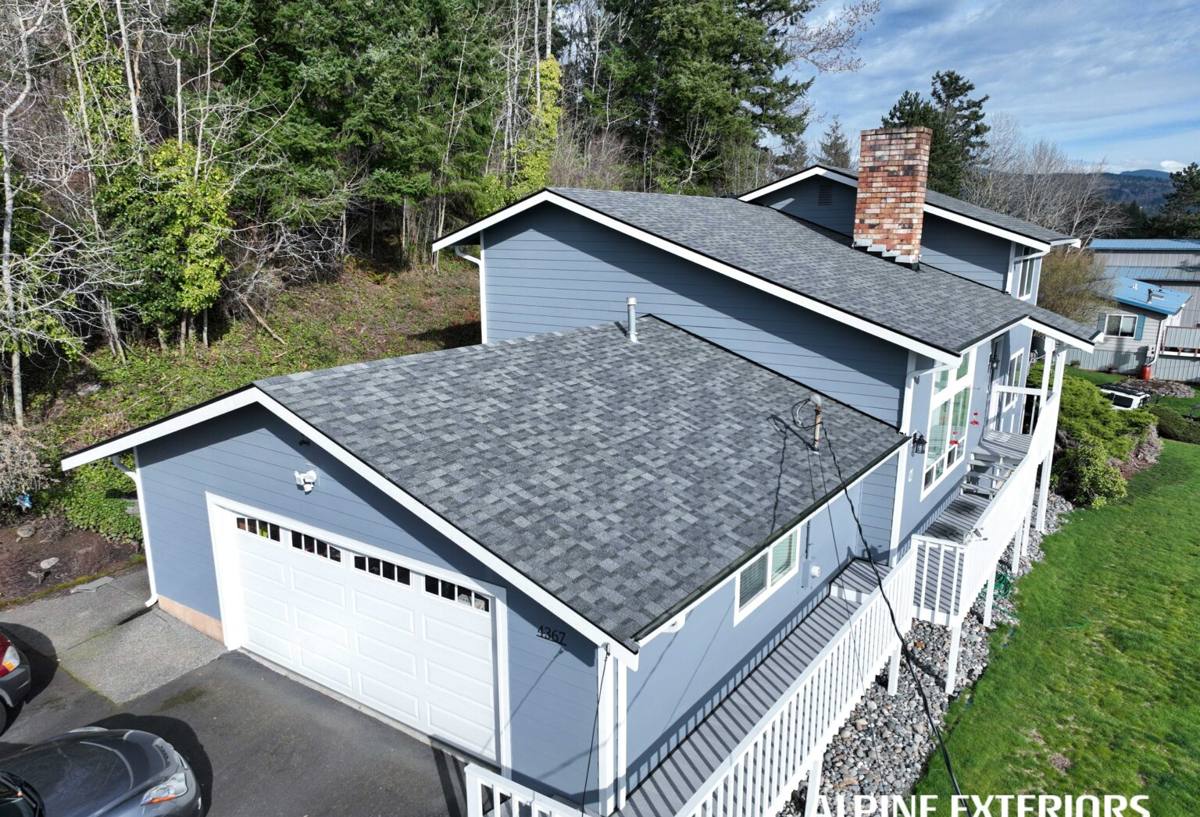
Signs a Mount Vernon Roof Needs Repair
Most roof repairs we're called out for started small and got ignored, usually because the signs weren't obvious from the ground. Here's what we tell homeowners to watch for:
- Water stains on ceilings or upper walls, especially after a heavy rain event
- Shingles that are curling, cracked, or visibly missing granules
- Moss mats thick enough to see from the yard, particularly on north- or shade-facing slopes
- Granules collecting in gutters or at downspout outlets
- Daylight visible through the roof deck when viewed from the attic
- Soft or spongy spots underfoot near valleys, chimneys, or skylights
- Rusted, lifted, or separated flashing around penetrations
Any one of these on its own might be minor. Several together usually means water has been getting past the roofing material for a while, even if it hasn't shown up inside the house yet.
What a Correct Roof Repair Actually Involves
Diagnosis Before Anything Gets Touched
A repair that just covers a leak from the outside without finding where water is actually entering tends to fail again within a season or two. We start every repair by tracing the leak path — which, on a lot of roofs, is not directly above the stain inside the house. Water travels along the underlayment and rafters before it shows up, so a proper diagnosis means getting on the roof and, when needed, into the attic.
Flashing and Underlayment, Not Just Shingles
Most leaks we find in this area trace back to flashing — around chimneys, skylights, dormers, and roof-to-wall transitions — rather than the shingles themselves. Shingles shed water; flashing is what actually seals the joints where water wants to get in. A repair that replaces a few shingles but leaves failed flashing underneath hasn't fixed the problem.
Matching Materials Correctly
Repairs should match the existing roofing material in type, weight, and where possible, color and age, so the patched section weathers evenly with the rest of the roof rather than standing out or creating a new weak seam. On older roofs, exact matches aren't always available — we'll walk you through the closest honest option rather than guessing.
Checking Ventilation While We're Up There
Poor attic ventilation traps moisture against the underside of the roof deck, which shortens the life of a repair no matter how well it's installed. If we see signs of inadequate airflow while diagnosing a leak, we'll flag it — it's often a cheaper fix than another roof repair down the road.
Common Roof Repair Issues We See in Mount Vernon
| Issue | Typical Cause | What the Fix Involves |
|---|---|---|
| Leaks around chimneys or skylights | Failed or improperly stepped flashing | Remove and rebuild flashing, not just caulk over it |
| Moss-lifted shingles | Prolonged moisture and shade on low-slope or north-facing sections | Careful moss removal, damaged shingle replacement, treatment to slow regrowth |
| Granule loss and bald patches | Age combined with sustained wind-driven rain exposure | Section replacement if the mat underneath is still sound |
| Valley leaks | Debris buildup or worn valley metal/underlayment | Clear debris, replace valley material, reset shingle lines |
| Fastener corrosion / nail pops | Salt-influenced air accelerating metal fatigue | Reseat or replace fasteners with corrosion-resistant hardware |
Repair or Replace? How We Help You Decide
Not every roof problem in Mount Vernon needs a full replacement, and we're not going to tell you it does. The honest answer usually comes down to how much of the roof's remaining service life is left and how widespread the damage is.
| Factor | Repair Usually Makes Sense | Replacement Usually Makes Sense |
|---|---|---|
| Age of roof | Under roughly two-thirds of its expected lifespan | Nearing or past its expected lifespan |
| Extent of damage | Localized — one slope, valley, or penetration | Spread across multiple slopes or the whole roof |
| Underlying deck | Solid, no rot found during inspection | Soft or rotted decking found in multiple spots |
| Moss/algae history | First occurrence, caught early | Repeated regrowth despite past treatment |
| Material availability | Matching material still obtainable | Material discontinued or badly mismatched |
We'll give you our honest read after inspecting the roof, including telling you if a repair is the right call even when a replacement would be the bigger job for us. A roof that just needs a repair doesn't need to be sold a replacement.
Our Process, Start to Finish
- Inspection. We get on the roof (and in the attic if needed) to trace the actual source of the problem, not just the visible symptom.
- Written estimate. You get a clear scope of work and price before anything is scheduled — no verbal promises that change later.
- Scheduling around the weather. Roof repairs need a dry work window; we plan around Skagit County's rain patterns rather than rushing a repair into a wet forecast.
- The repair itself. Flashing, decking, underlayment, and roofing material are addressed in that order — surface material is the last thing installed, not the only thing touched.
- Cleanup. Old material, nails, and debris are cleared from the roof, gutters, and ground before we consider the job done.
- Follow-up. We'll tell you what to watch for afterward and are reachable if anything comes up once the next heavy rain tests the repair.
Moss and Algae: Skagit County's Slow Roof Killer
Moss doesn't just sit on top of a roof — it grows into the seams between shingles, holding moisture against the roofing material and the deck underneath for months at a stretch. On shaded or low-slope sections in and around Mount Vernon, that moss season can run most of the year. Left alone, it lifts shingle edges, blocks water from shedding properly, and turns minor granule loss into structural rot underneath.
- Pressure washing a shingle roof to remove moss does more harm than good — it strips granules and shortens the roof's life. Moss removal should be done by hand or with low-pressure methods appropriate to the material.
- Zinc or copper strips near the ridge can slow moss regrowth after future rain events, but they won't remove existing growth.
- Trimming back overhanging branches to let more light and airflow reach shaded roof sections is one of the most effective — and cheapest — ways to slow regrowth long term.
- Moss treatment without addressing the underlying shade and moisture conditions is a short-term fix at best.
Why Hire a Crew That Already Works in Mount Vernon
Roofing crews that don't work this area regularly tend to treat every roof the same, regardless of climate. A crew based out of Anacortes and working throughout Skagit County sees the same failure patterns repeatedly — which flashing details fail first in driving rain, which slopes hold moss the longest, which fasteners hold up against the salt-influenced air near the water — and that shows up in how the repair is done, not just in the sales pitch.
It also matters for response time. A leak found during a storm is a problem you want addressed before the next system moves through, not weeks later when a crew from farther away can fit you in. Local crews can typically get eyes on a roof faster and know which materials to have on hand for this region's common repairs without a special order.
Roof Repair Checklist for Mount Vernon Homeowners
Before you hire anyone for a roof repair, it's worth knowing what a thorough job should include:
- A physical roof inspection, not just an estimate based on photos or a drive-by
- An explanation of where the leak is actually coming from, not just where it's showing up inside
- A written scope of work that specifies flashing, underlayment, and decking — not just "shingles"
- Clarity on whether matching material is available and what happens if it isn't
- A plan for moss or debris removal if that's part of what's causing the problem
- Proof of licensing and insurance before work begins
- A straight answer on repair versus replacement, including if repair is genuinely the right call
If a contractor can't walk you through those points before you sign anything, that's worth asking about before you commit.
If you're dealing with a leak, missing shingles, or moss buildup on a Mount Vernon roof, we're happy to take a look and give you a straight, no-pressure estimate — use the form below to get started.